
A frog in a European painting is usually bad news. It belongs to the plagues of Egypt, to witchcraft, to the swamp and to the devil. In Japan and in Egypt the same animal means luck, rain and rebirth, and painters in both traditions were entirely serious about it.
Learn art the fun way
1 | The plague of frogs
Exodus gives frogs as the second plague, covering houses, beds and ovens. Medieval bibles and later prints show them swarming across floors, and the image is meant to disgust.
The reading system is in what is iconography.
The text is Exodus 8. Medieval bibles show them climbing into ovens and kneading troughs because the passage says so explicitly, which gave illuminators licence to fill the margins.
2 | Bosch and the amphibian hell
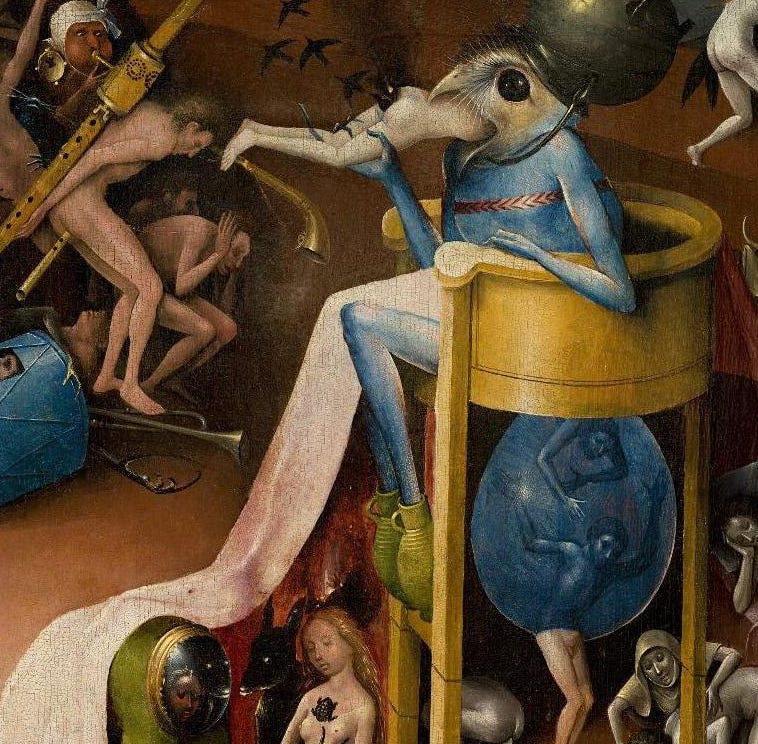
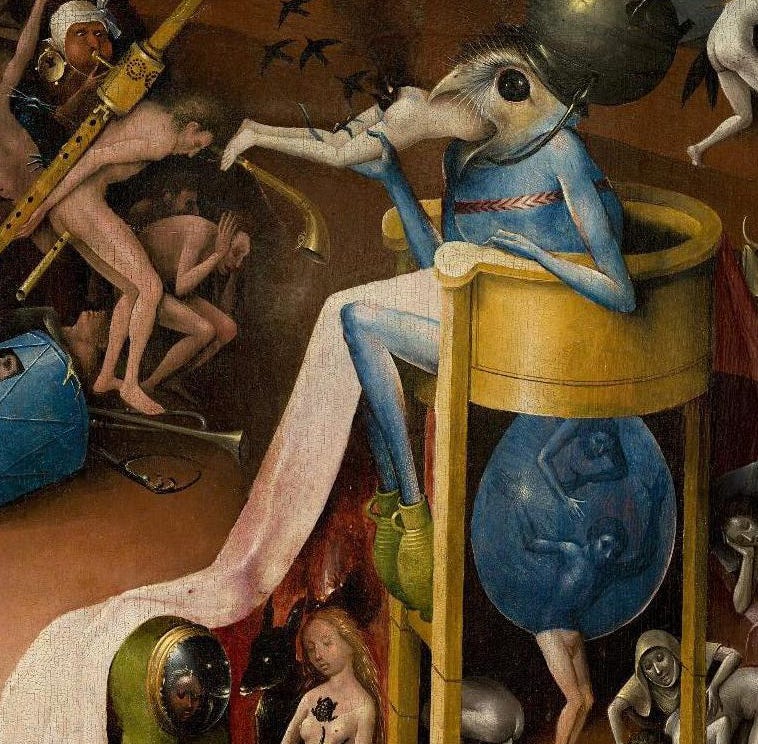
Bosch puts frogs on chests, in mouths and clinging to bodies. An animal that is neither fish nor beast was a natural sign for a soul that belongs nowhere.
More on him in Hieronymus Bosch.
There is more buried in that panel than amphibians. I unpack a few of them in 7 secrets hidden in famous paintings.
The Garden of Earthly Delights was painted around 1500 and hangs in the Prado. The Temptation of Saint Anthony triptych in Lisbon is even denser in hybrids, and both were owned by Philip II of Spain.
3 | The witch’s toad
In Northern European prints of witchcraft the toad sits by the cauldron as a matter of routine. Toads secrete real toxins, which gave the superstition something to hold on to.
More on that world in witches in painting.
4 | Frogs in Dutch still life
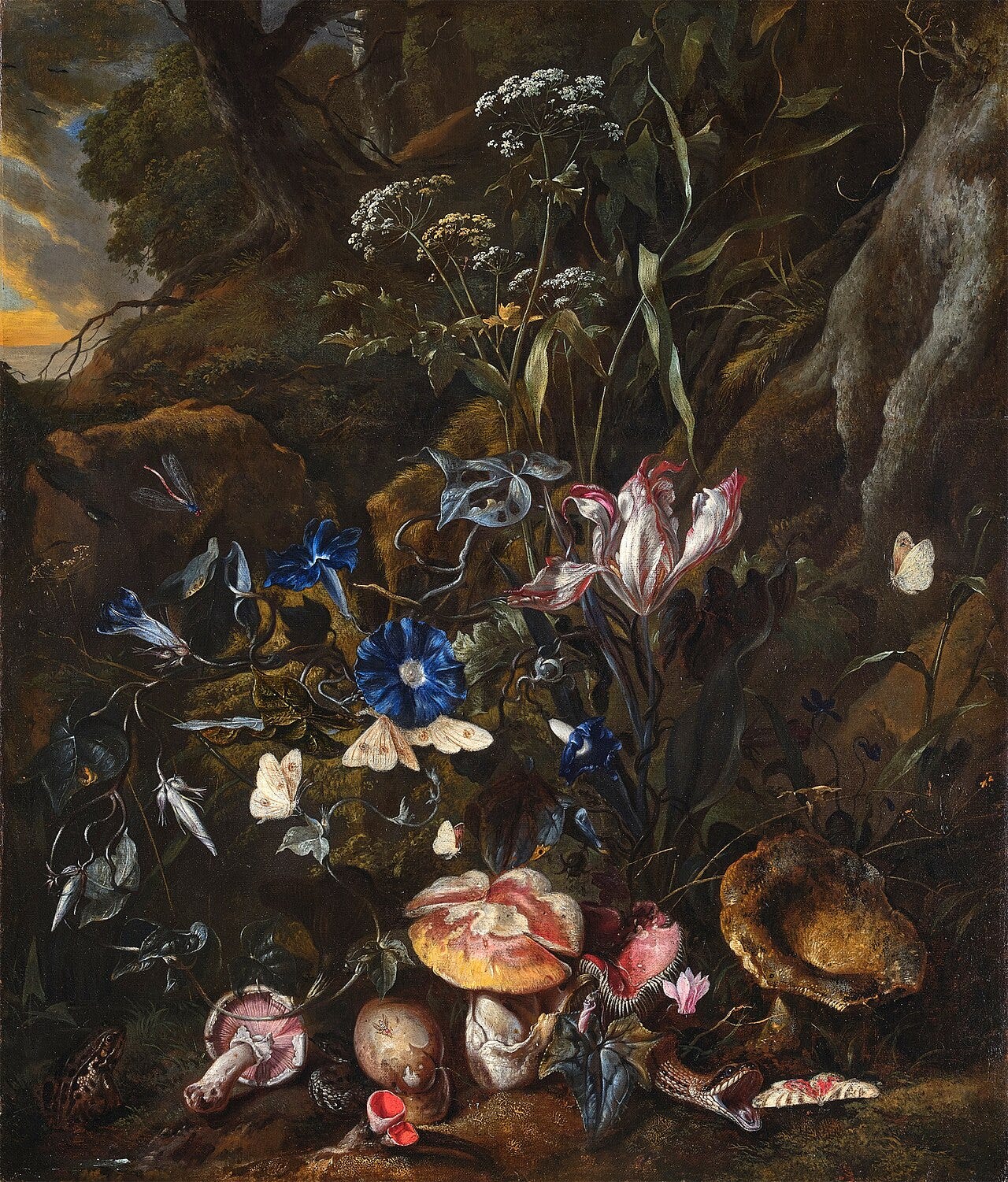
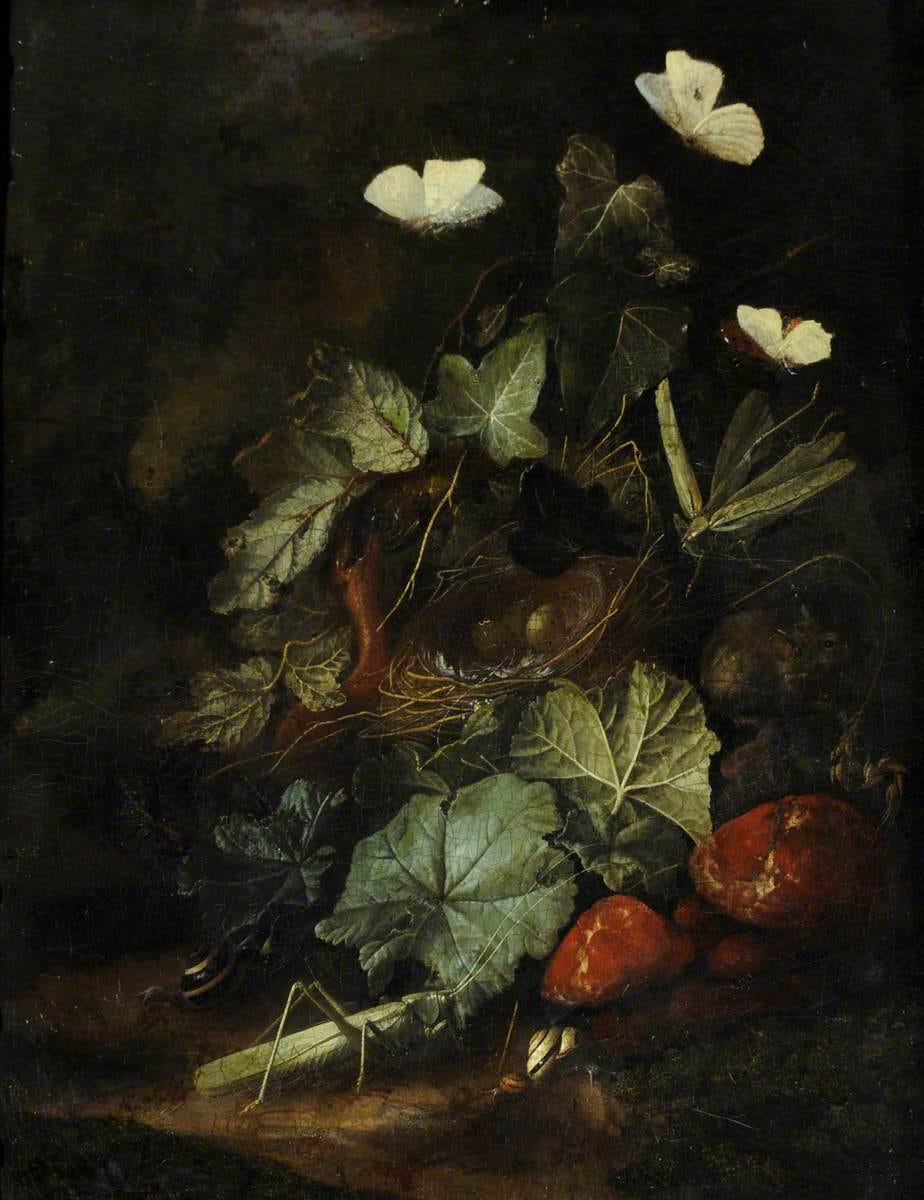
Forest floor still life, a Dutch speciality, puts frogs, lizards, mushrooms and thistles at ground level, painted with the same care as a banquet piece.
More on the genre in what is still life painting.
The genre has a name, sottobosco, the undergrowth piece. Otto Marseus van Schrieck kept live snakes and reptiles in his garden outside Amsterdam so he could paint them from life.
5 | Gama Sennin and the Japanese toad
Japanese and Chinese painting has a sage who travels with a three legged toad, a figure of long life. The animal is a companion, and it is often painted with humour.
More on the tradition in Katsushika Hokusai.
The sage is Liu Hai in Chinese tradition, and the three legged toad is a money spirit. Japanese netsuke carvers turned him into one of the standard subjects, which is why so many small ivory toads survive.
6 | The Egyptian frog goddess
Heqet, a frog headed goddess, was linked to birth and to the flooding of the Nile. Amulets in her shape were worn for safe delivery.
The Nile filled with frogs when the water rose, so the association was practical before it was religious.
7 | Bruegel and the proverb animal
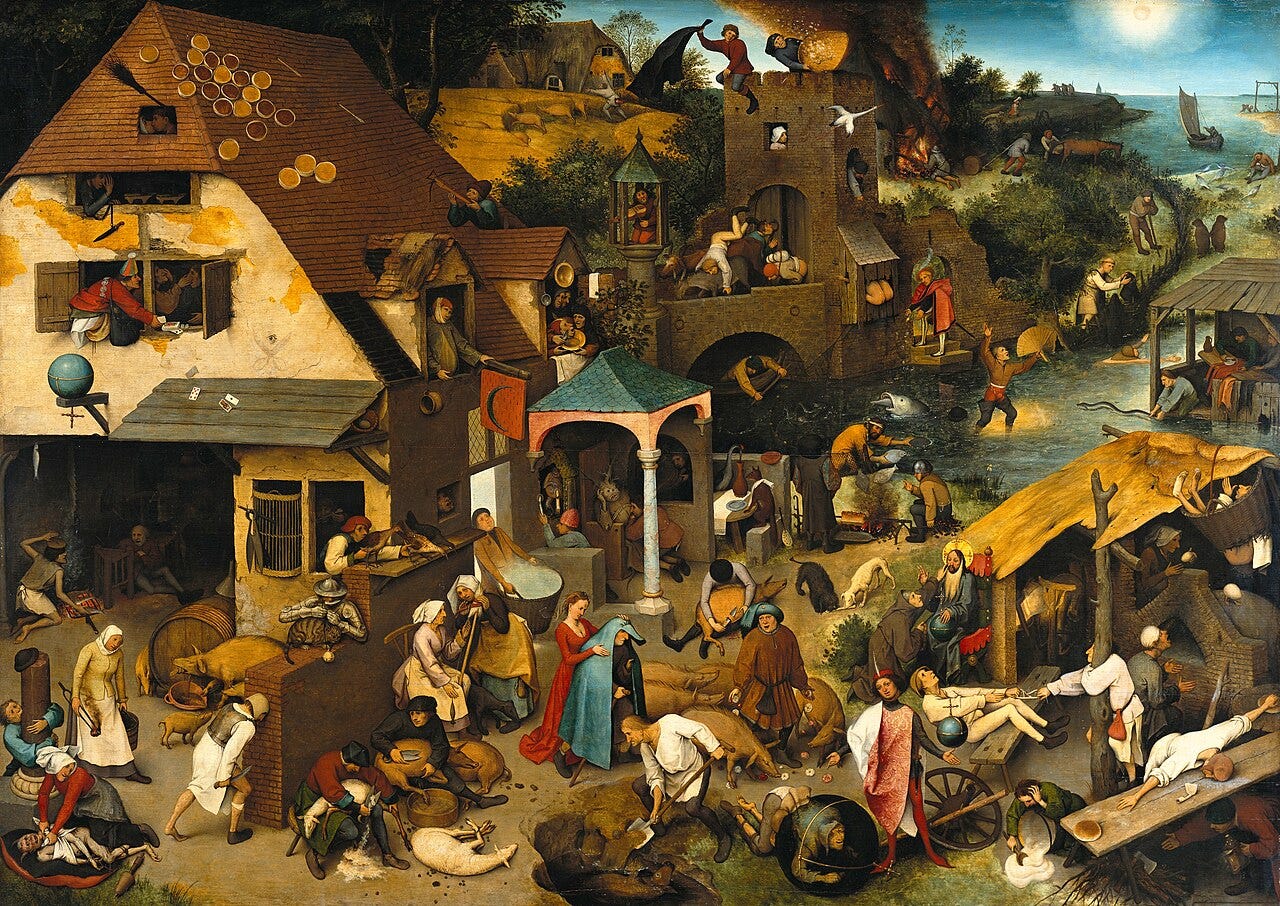
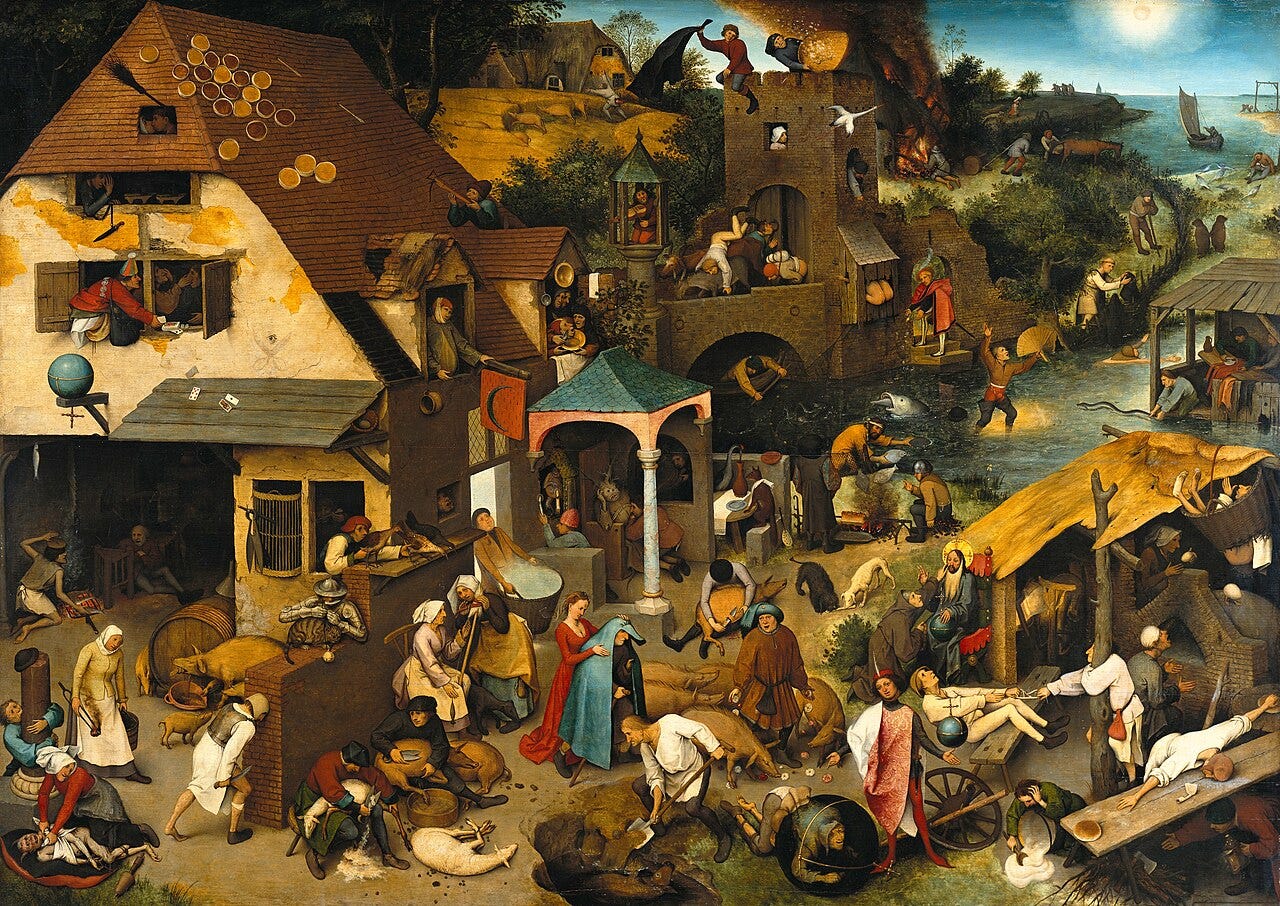
Netherlandish proverb pictures use animals as fixed phrases. A frog in a well, a toad under a stone, each one is a saying the original viewer could name on sight.
More on him in Pieter Bruegel the Elder.
8 | The frog in scientific illustration
From the seventeenth century, anatomists and naturalists drew frogs constantly, because they are cheap, common and easy to dissect. The imagery turns neutral.
Maria Sibylla Merian painted them from life in Suriname in the 1690s.
9 | Alchemy and the toad
Alchemical manuscripts use the toad for the black stage of the work, the putrefaction that has to happen before anything is transformed.
It is the same logic as the skull in a vanitas: decay as a stage, not an end.
The black stage is called nigredo. Michael Maier’s Atalanta Fugiens of 1617 pairs each emblem with a motto and a piece of music, and the toad appears as the weight that drags the eagle down.
10 | The frog prince arrives
The Grimm tale was printed in 1812, and Victorian illustrators turned it into a subject. Before that, a frog in art is almost never charming.
The whole modern reading of the animal dates from a children’s book.
11 | Fairy painting and the Victorian pond
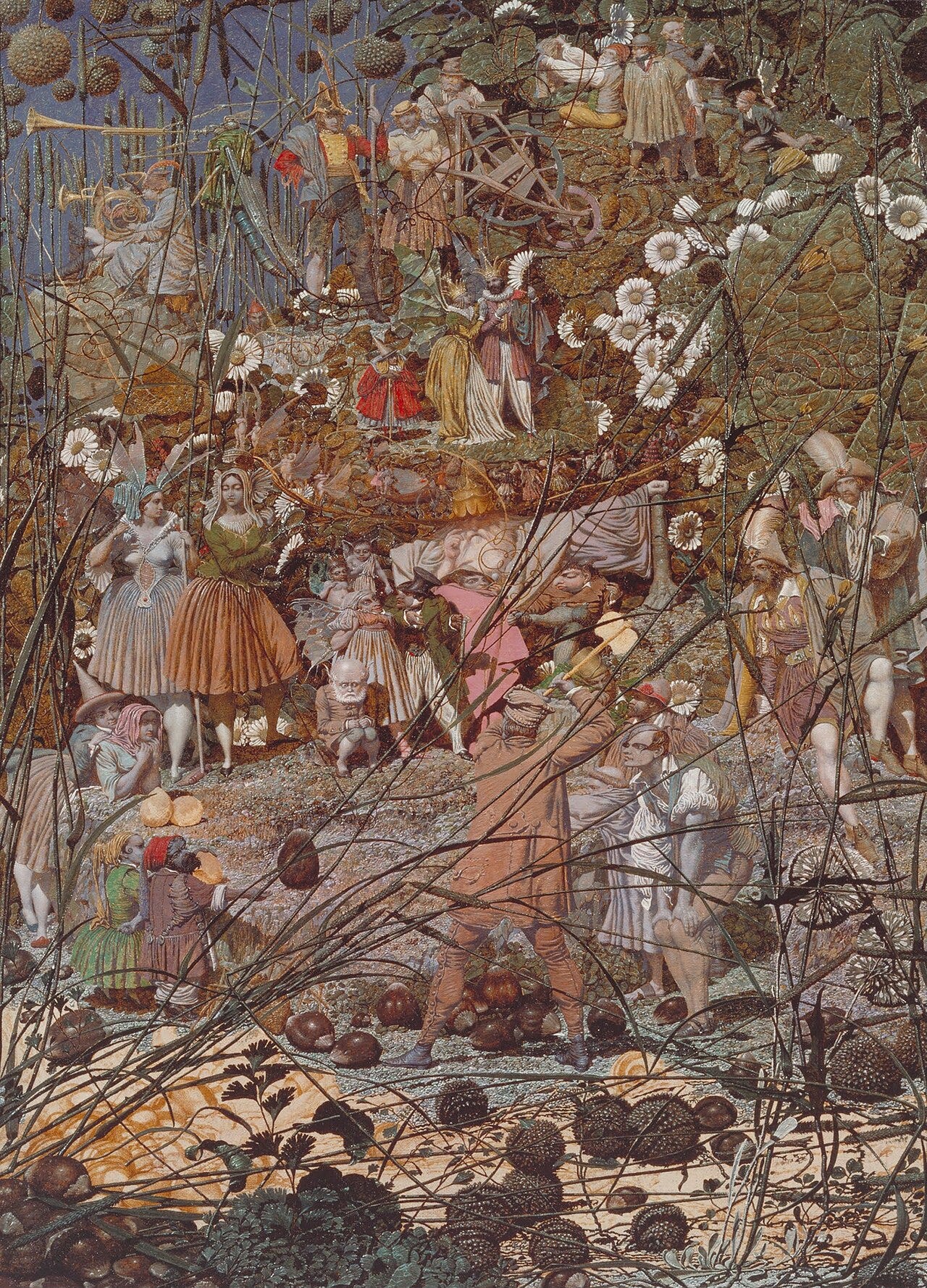
British fairy painters filled ponds with amphibians as small characters, painted with a lens close attention that is halfway to natural history.
Richard Dadd painted his best known work of this kind while confined in an asylum.
Richard Dadd painted The Fairy Feller’s Master Stroke between 1855 and 1864 in Bethlem and then Broadmoor, where he was held after killing his father. It is unfinished and hangs at Tate Britain.
12 | Why an ugly animal is so useful
A frog crosses categories. It lives in two elements, it changes shape completely during its life, and it is common enough that everyone has seen one. That is a symbol waiting to be used.
Look at whether it is in water. In water it is nature. On a bed or a body it is a plague.
Frogs and toads on canvas, questions people send
What do frogs symbolise in art? In European painting usually plague, sin or witchcraft. In Egyptian and East Asian imagery, fertility, rain and long life.
Why are frogs a plague? Exodus lists them as the second plague of Egypt, which put them in Bible illustration cycles from the medieval period onward.
Why is the toad a witch’s animal? Toads secrete genuine toxins, which fed folklore about poisons and potions, and prints repeated the association until it was fixed.
What is the three legged toad? A companion of the sage Gama Sennin in Chinese and Japanese art, associated with long life and good fortune.
Which museum has Bosch’s Garden of Earthly Delights? The Prado for Bosch, the Rijksmuseum for forest floor still life, the British Museum for Japanese prints.
Merian painted frogs in Suriname in the 1690s at her own expense, with her daughter, and produced better observation than most of the men who moralised about them for the previous four hundred years.
Both of these hold far more of it than any list can: the Met and the Rijksmuseum.