
Fruit in art is a code. A peeled lemon means bitterness under a sweet surface, a pomegranate means resurrection or the underworld depending on who is holding it, and Cezanne spent thirty years painting apples until they changed the direction of European art. Twelve pieces of fruit and what they say.
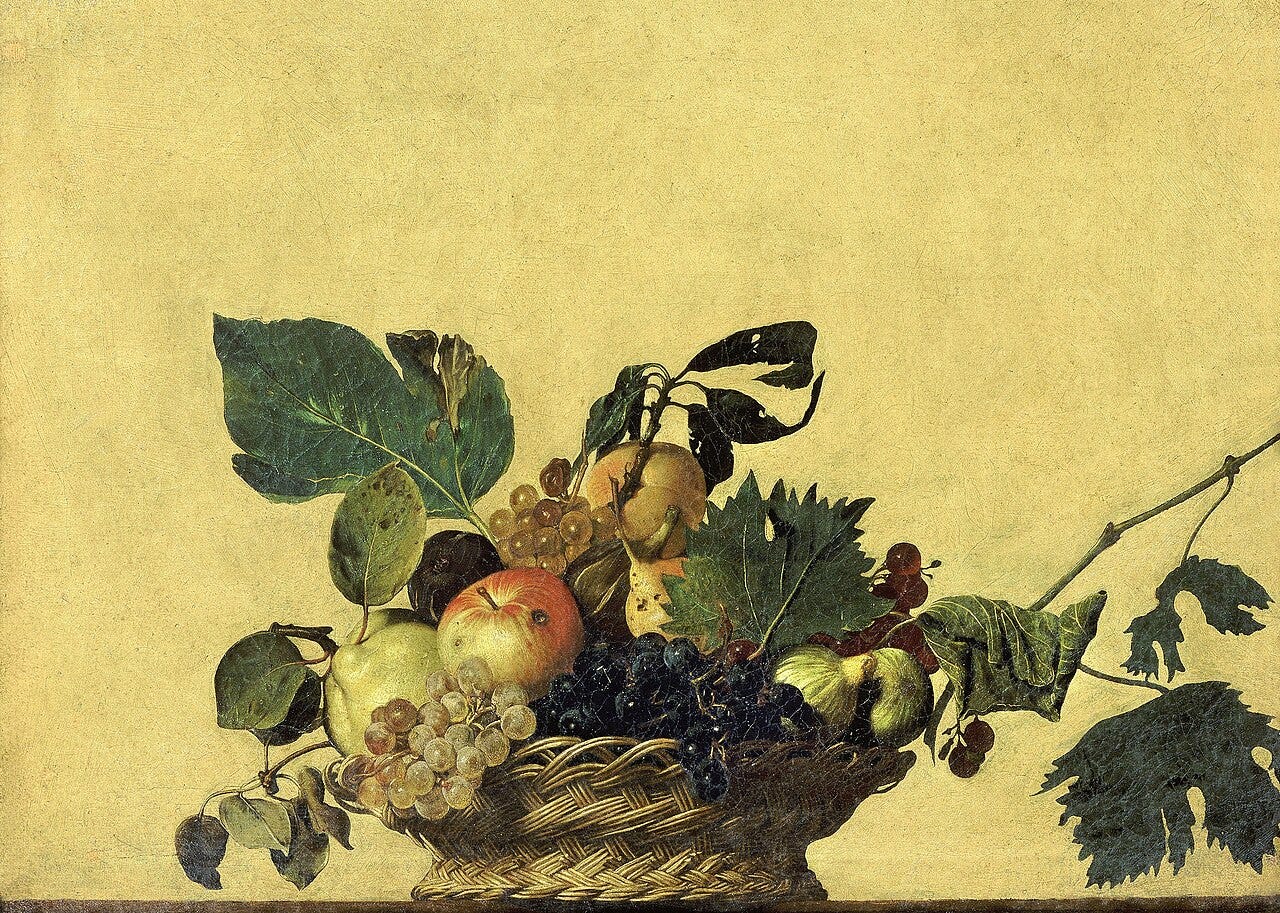
The basket, decoded
The first still life of the modern era is a basket of fruit with wormholes and dying leaves, painted on purpose.
A peeled lemon appears in hundreds of Dutch pictures and almost always means the same thing.
A pomegranate in Mary’s hand and a pomegranate in Persephone’s hand mean opposite things.
One painter built entire human heads out of fruit for a Habsburg emperor.
Learn art the fun way
1 | Basket of Fruit, Caravaggio (about 1599)
A wicker basket on a plain ground, the apple bruised, a leaf curling brown, a worm hole visible. Nobody had made decaying fruit the entire subject of a painting before.
It hangs in Milan and is usually called the first modern still life. The full life is in Caravaggio.
2 | Cezanne and the apples that broke perspective
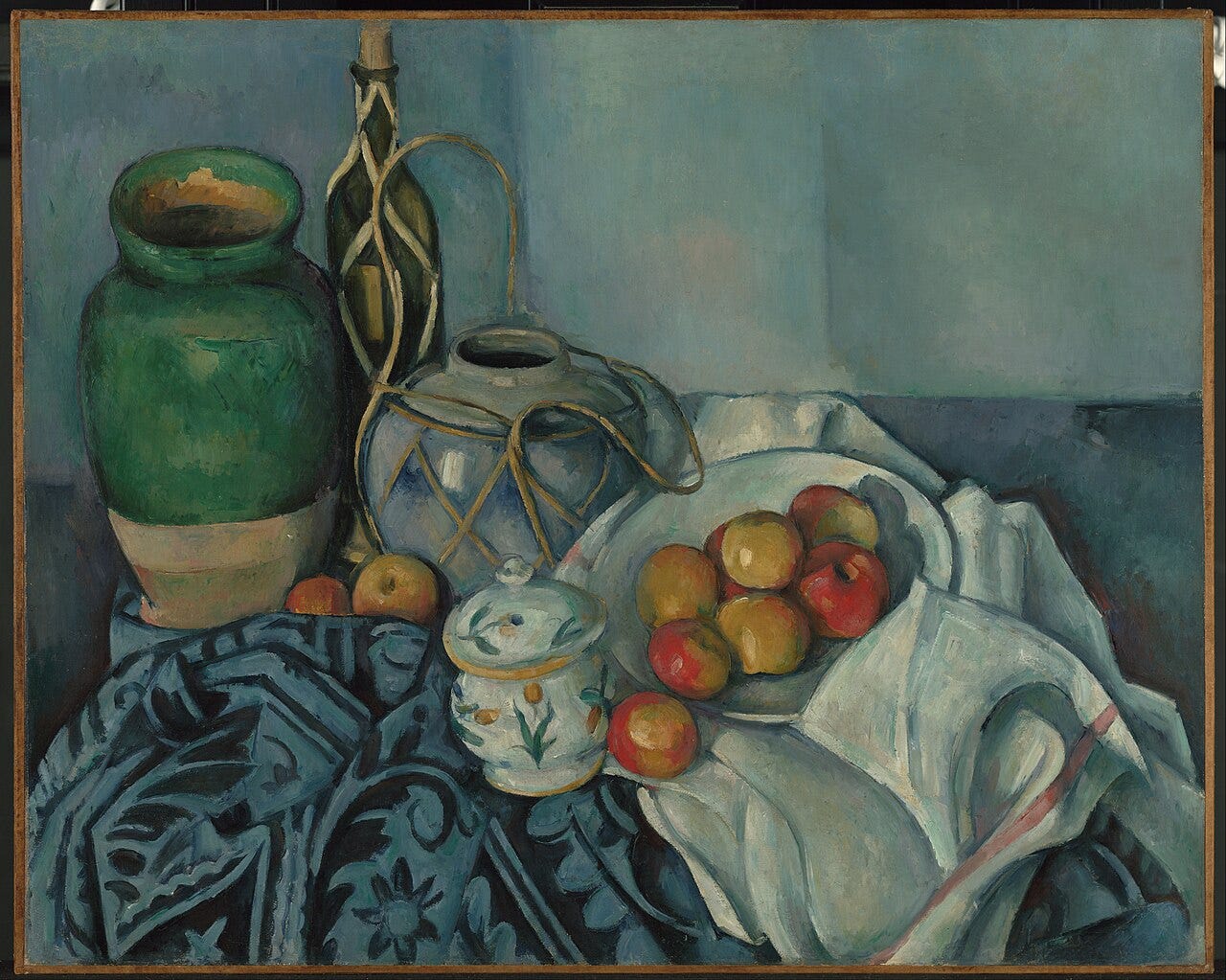
Cezanne said he wanted to astonish Paris with an apple. He painted them from several viewpoints at once, so the table tilts and the fruit refuses to sit still.
Picasso and Braque took that fracture and built Cubism on it. More on him in Paul Cezanne.
3 | The peeled lemon of Dutch painting
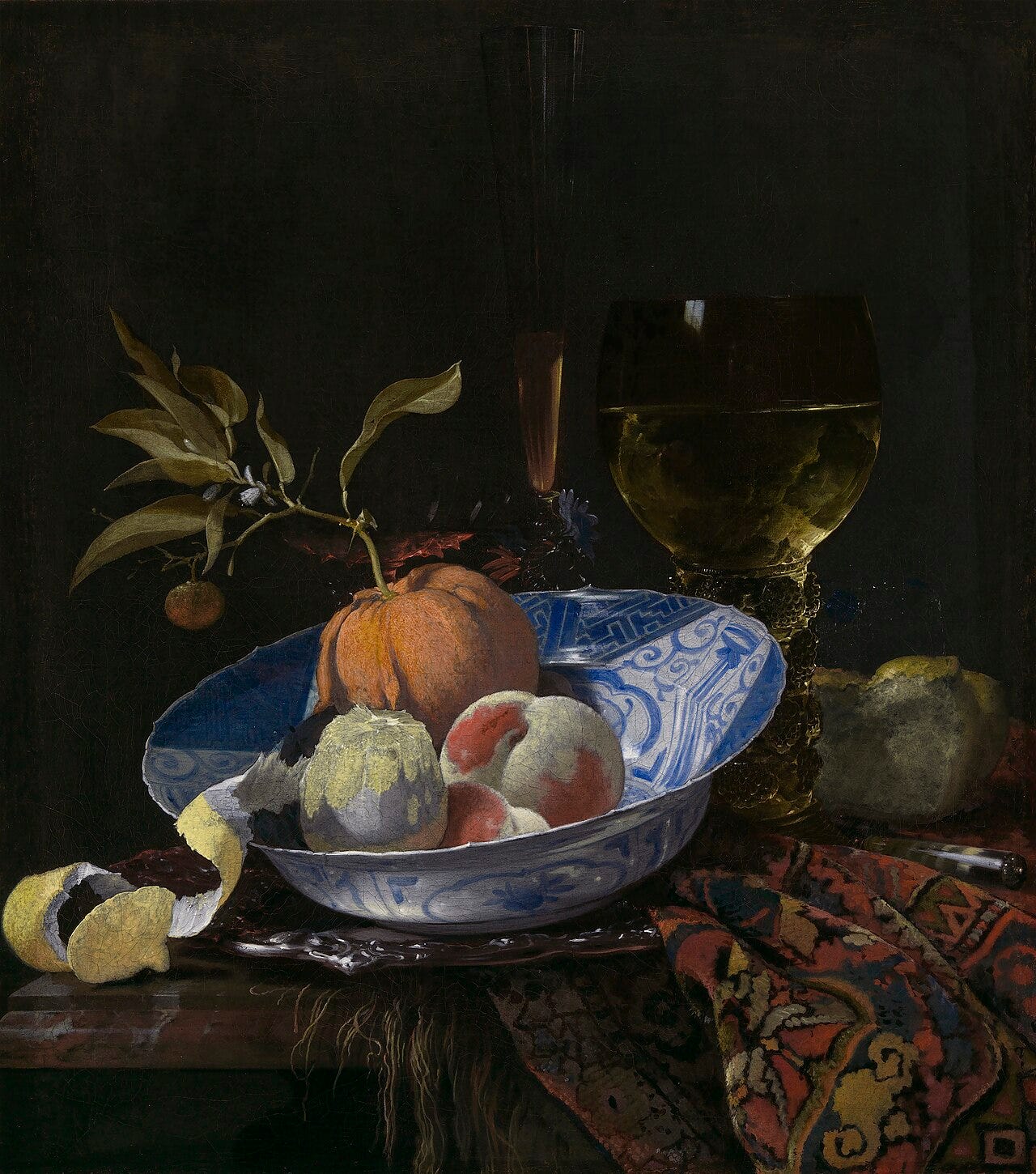
In hundreds of breakfast pieces, a lemon is peeled in a long spiral, showing bright flesh and a bitter interior. It reads as the world: attractive outside, sour within.
Lemons were expensive imports, so the fruit was also a display of wealth. Both meanings run at once. The grammar is in what is vanitas.
4 | The pomegranate, two opposite meanings
In Botticelli’s Madonna of the Pomegranate, the split fruit in the Christ child’s hand means the church and the blood to come. In the Persephone myth, six seeds bind her to the underworld for half of every year.
Same fruit, opposite direction. Botticelli is in my guide, and the myths are in famous Greek mythology paintings.
5 | Vertumnus, Giuseppe Arcimboldo (1591)
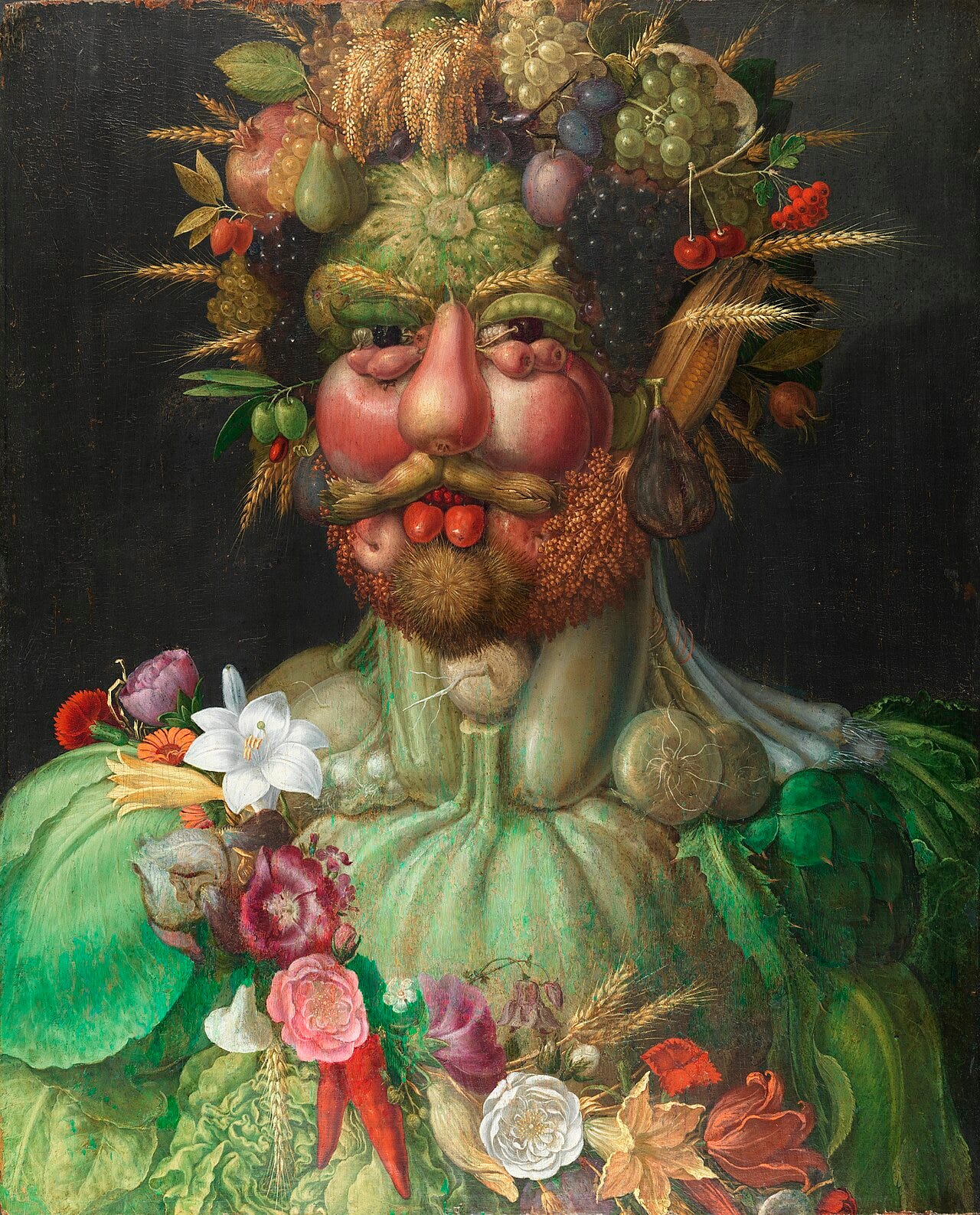
Emperor Rudolf II painted as the Roman god of the seasons, his cheeks made of apples, his brow of gourds, his beard of chestnuts.
The emperor was reportedly delighted. It is flattery and a joke in the same panel.
Arcimboldo painted Rudolf II as the Roman god of the seasons around 1591, made entirely of fruit and vegetables. The emperor was delighted and made him a count, which tells you the joke was intended.
6 | The Fall, and the fruit that is never named
Genesis does not say apple. The Latin for evil, malum, and the Latin for apple, malum, are the same word, and European painters ran with the pun for a thousand years.
Northern painters often painted a fig or a quince instead, which is closer to the text.
7 | Still Life with Lemons, Oranges and a Rose, Zurbaran (1633)
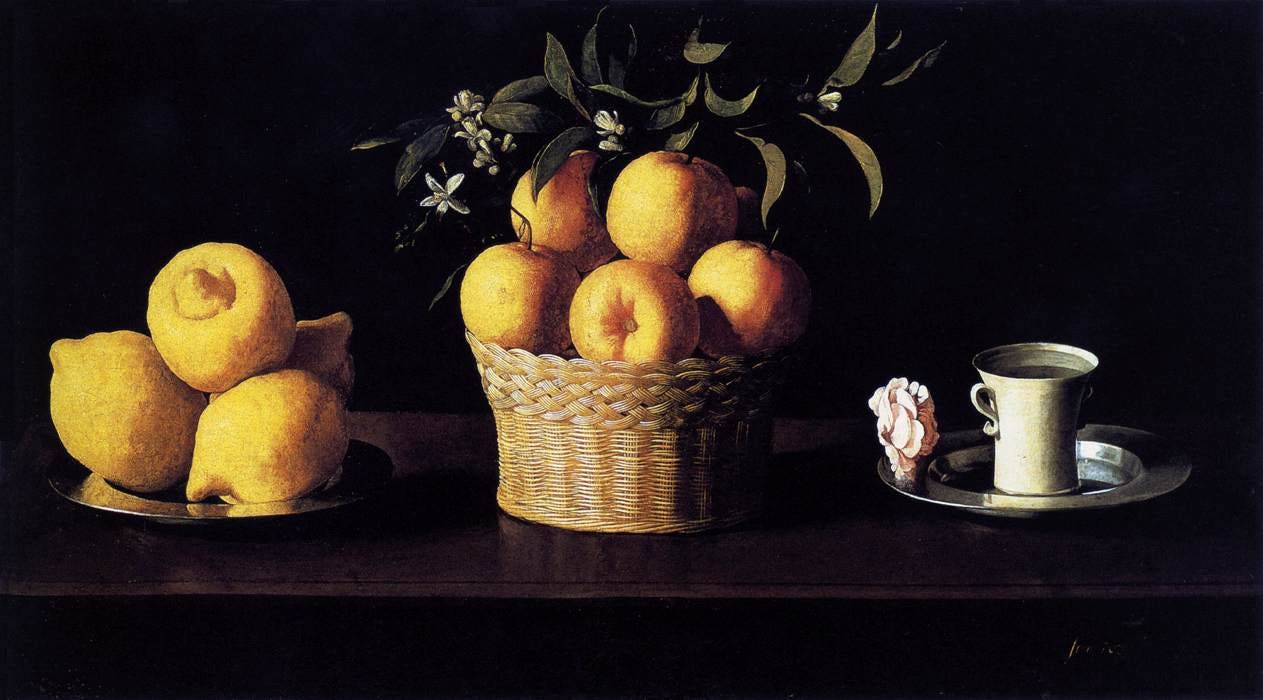
Three groups of objects on a bare ledge, lit like an altar. Zurbaran signed and dated it, which he almost never did for a still life.
Many scholars read it as a devotional picture disguised as a table. More on him in Francisco de Zurbaran.
8 | Grapes, wine and the vine
Grapes carry the Eucharist and Bacchus at the same time, which is why they appear in altarpieces and in drinking scenes with equal frequency.
The classical story goes that Zeuxis painted grapes so convincingly that birds flew at the panel. It is the oldest brag in art history. More wine in famous wine paintings.
9 | Chardin and the fruit nobody stages
Chardin put a few plums and a glass of water on a stone shelf and made them monumental by leaving out everything else.
Diderot said he painted not objects but the air between them. The full account is in Chardin.
He arranged very few objects and painted them over long periods, so the fruit in his pictures is often past its best. Peaches, plums and a glass of water are enough for an entire canvas.
10 | The Fruit Seller and the market stall
The market stall belongs to genre painting, where the sacred story is pushed behind the goods on sale.
Pieter Aertsen and his followers piled market produce across the whole foreground and pushed the religious scene into the background.
It inverted the hierarchy of subjects a century before anyone else dared. More stalls in famous market paintings.
11 | Van Gogh’s oranges and lemons in Arles
Van Gogh painted baskets of oranges and lemons in 1888 mainly to test yellow against blue, and wrote to Theo about the exact tones.
The fruit was a colour experiment with a peel. I go into his whole story in Vincent van Gogh.
He painted crates of citrus in Arles in the winter of 1888 and 1889, partly to practise yellow on yellow. One of them was a gift to Joseph Roulin, the postman, whose family he had painted.
12 | Frida Kahlo’s last painting (1954)
Eight days before she died, Kahlo painted a still life of cut watermelons and wrote across the red flesh: VIVA LA VIDA.
It is the last thing she signed. Her story is in my guide to Frida Kahlo.
She painted Viva la Vida in 1954, a still life of cut watermelons, and wrote the title on the flesh of one of them eight days before she died. It hangs in the Casa Azul.
Fruit, the questions readers send
Was the forbidden fruit an apple? The Bible never says so. The idea comes from a Latin pun between malum meaning apple and malum meaning evil.
What does a peeled lemon mean? Bitterness behind an attractive surface, and also wealth, since lemons were costly imports in northern Europe.
Why did Cezanne paint so many apples? They sat still. He worked so slowly that he used wax fruit, and he used them to break single point perspective.
Which is the first modern still life? Caravaggio’s Basket of Fruit, painted around 1599 with visible decay and a worm hole.
Where is Basket of Fruit today? Milan for the Caravaggio, the Prado for Zurbaran, and Mexico City for Kahlo’s watermelons.
A footnote that changes the picture: when Kahlo wrote VIVA LA VIDA on the watermelon, she was in constant pain and had had a leg amputated the year before. The last words she painted were long live life.
Two collections worth an hour: the Met and the Rijksmuseum.
This subject is one thread in a wider theme. See how it fits into Food and Drink in Art.