
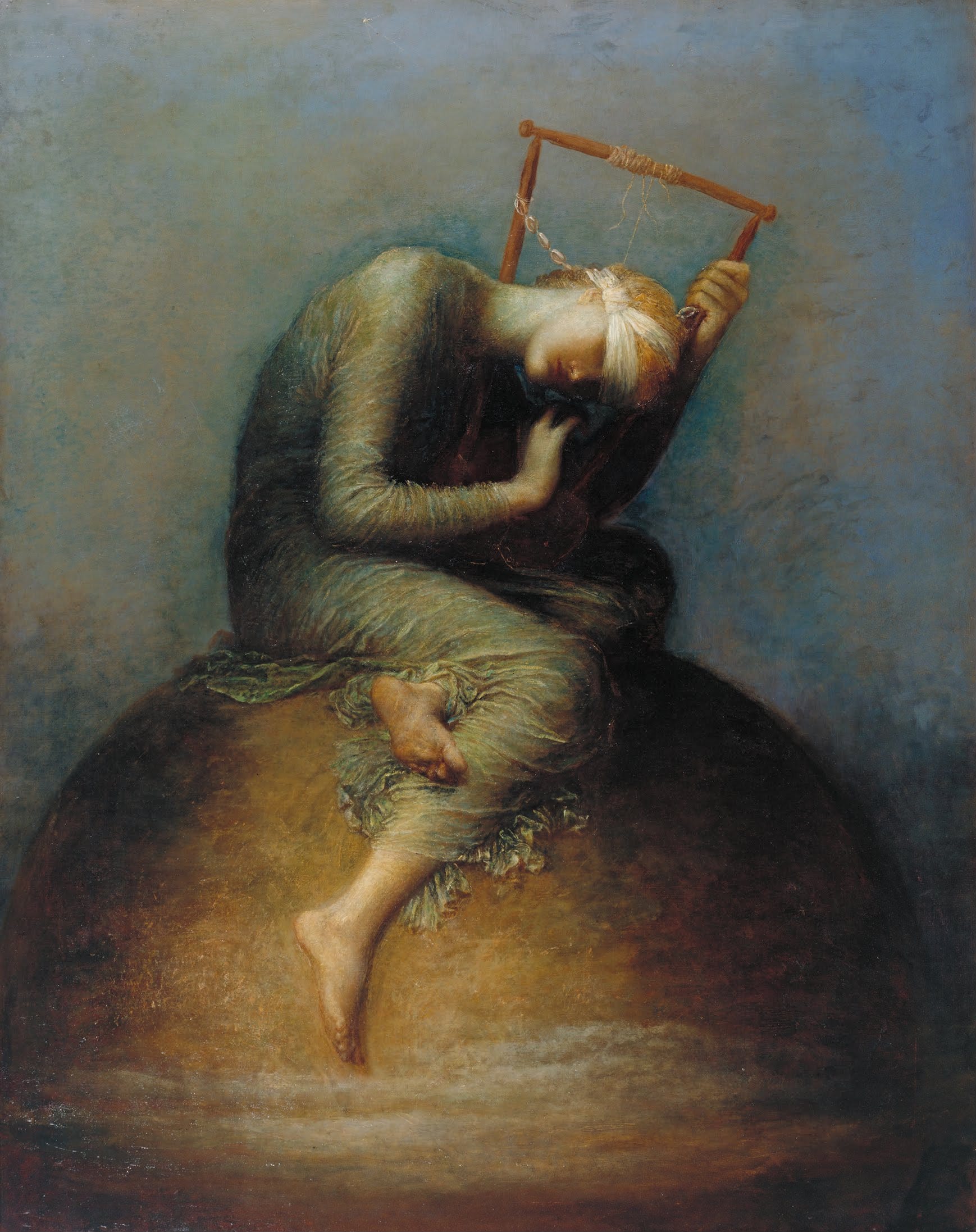
George Frederic Watts (1817 to 1904) was one of the most admired English painters of Queen Victoria's reign. He painted the famous men of his time and pictures of ideas, like Hope, a blindfolded woman bent over a harp with one string, at Tate Britain.
Cool Stories About Art is a newsletter to learn art the fun way.
Join 200,000+ readers and get:
10 new art stories / month
The entire archive of content (140+ articles)
Comment, ask questions, and chat with other readers
Admirers called George Frederic Watts "England's Michelangelo," after the great Italian artist of the 1500s. For decades he painted the most famous men in the country at his own expense and gave their portraits to a public museum. When Queen Victoria offered to make him Sir George, he said no.
George Frederic Watts was born on February 23, 1817, in Marylebone, a district of London. His father made pianos and earned little from them. The boy was often ill, so his father taught him at home, and at ten he began to train in the studio of a London sculptor.
His chance came from a fire. In 1834, the Palace of Westminster, the seat of the British Parliament, burned down. A new palace had to be built, and in 1842 a royal commission opened a competition among artists to decorate its walls.
For the competition, Watts made a huge drawing of an ancient British chief, captured by the Romans and paraded through Rome. In 1843, the drawing won a first prize of 300 pounds, and Watts spent the money on a journey to Italy.
Four decades later, the piano maker's son had painted the best-known statesmen and poets in the country. In 1885, Queen Victoria offered a baronetcy to two painters: Watts and John Everett Millais, who had grown very rich from his pictures.
A baronet is called Sir, and at his death the title passes to his eldest son. Millais accepted and became Sir John. Watts declined and remained Mr. Watts.
Two years later, Watts wrote to The Times, a London daily newspaper. He asked the country to honor someone else, a young woman who had been dead for two years.
Who was the young woman Watts wanted England to honor, and what had she done?
In the rest of the story
How a three-day visit to friends turned into decades under their roof.
Which word critics wanted as the title of Hope instead.
How Hope gave a future American president the title of a book.
Which title Watts's first wife won long after their marriage ended.