
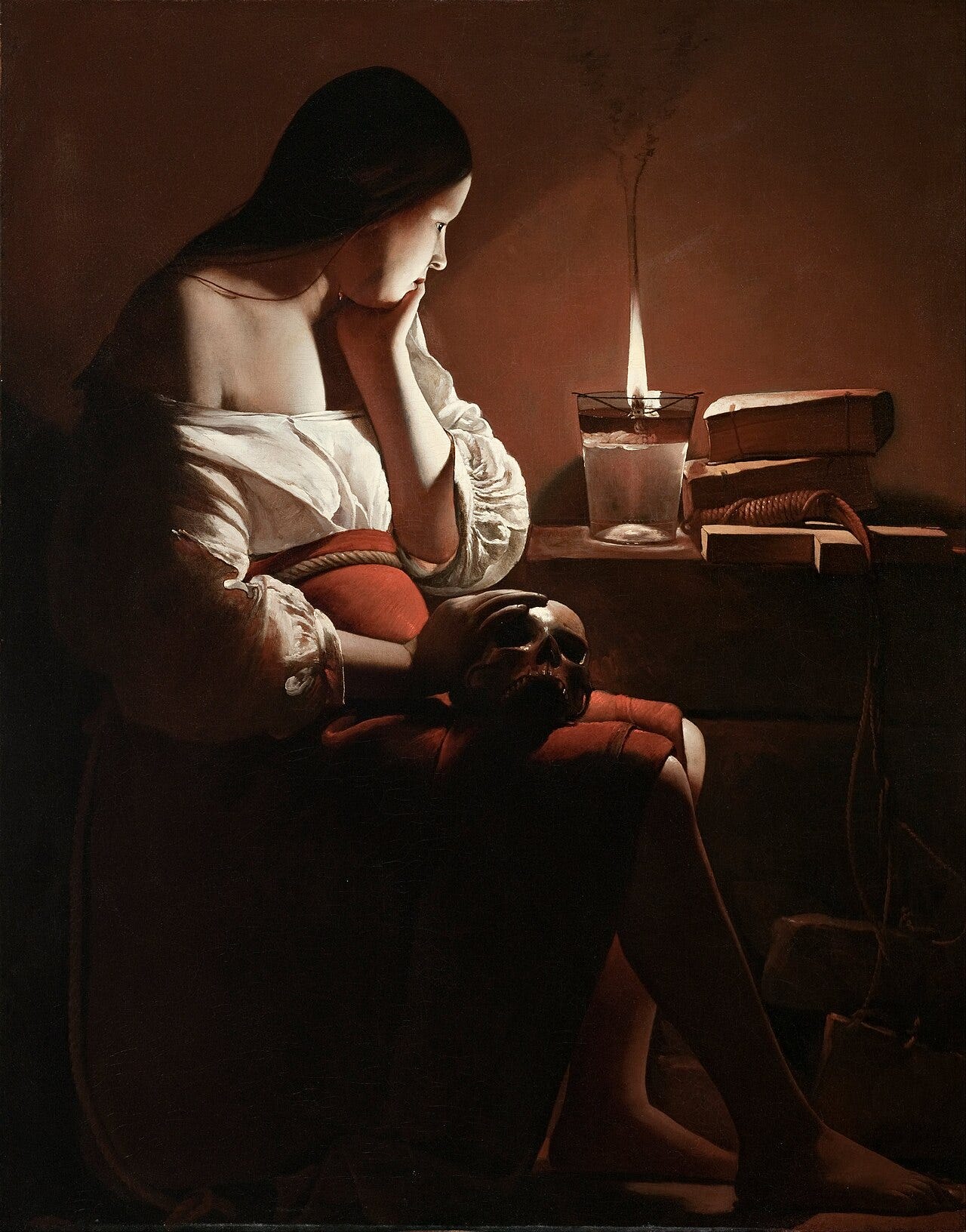
Georges de La Tour was a French painter from Lorraine, born in 1593 and dead in 1652. He is remembered for hushed night scenes lit by a single candle, and for daylight pictures of card cheats and fortune-tellers. For about 250 years, nobody knew who had painted them.
The man behind the calmest light in European painting was a rich landowner who held on hard to his privileges and had a reputation as a hothead.
Cool Stories About Art is a newsletter to learn art the fun way.
Join 200,000+ readers and get:
10 new art stories / month
The entire archive of content (1,000+ articles)
Comment, ask questions, and chat with other readers
The tenderness is hard to square with the man. La Tour was the son of a baker from Vic-sur-Seille, he married into a minor noble family in 1617, and by 1620 he had settled in Lunéville, where the privileges of a local bourgeois, tax exemption among them, made him one of the richest people in town.
The town archives are less gentle than his pictures. In 1626 the municipality paid a locksmith to tear the lock off the granary of La Tour, painter.
Then came the opposite problem. The painter who held the title of painter to the king in 1639 was gone from memory within a few generations. His canvases drifted into other names, and when scholars went looking in the nineteenth century they found his name in a register, Georges Du Ménil-La-Tour, painter, and not a single picture to attach it to.
According to the Lorraine historian Dom Calmet, Louis XIII admired one La Tour so much that he had every other painting taken out of his bedroom. That canvas is lost. The man who made it was forgotten almost as completely.
What You'll Discover
Who the baker's son really was.
What a king did for one painting.
Who is cheating whom at the table.
What the hand hides in the dark.
How a whole painter went missing.