
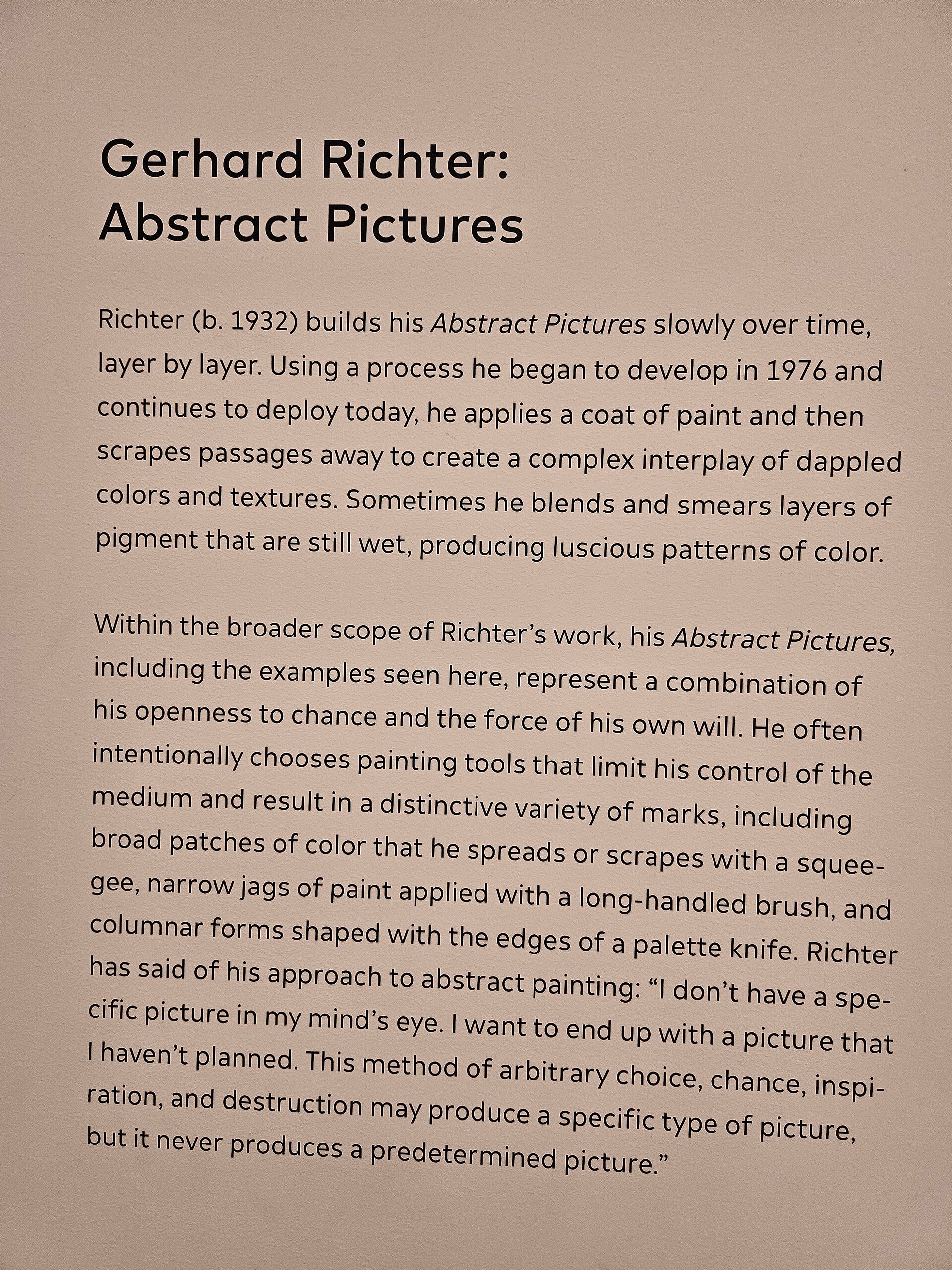
Gerhard Richter is a German painter, born in Dresden in 1932, who left East Germany in 1961 and became famous for two kinds of picture that seem to have nothing in common: gray paintings copied from photographs and then blurred, and large abstract canvases dragged across with a squeegee. People mostly come looking for his Cologne Cathedral window or his cycle on the Baader-Meinhof deaths.
He never chose between the two. For more than fifty years he painted from snapshots, newspaper clippings and police photographs, and the people in them were very often his own family.
Cool Stories About Art is a newsletter to learn art the fun way.
Join 200,000+ readers and get:
10 new art stories / month
The entire archive of content (1,000+ articles)
Comment, ask questions, and chat with other readers
One of those snapshots shows a girl of fourteen holding a baby in the sun. The baby is Richter, four months old. The girl is his mother's sister Marianne, who developed schizophrenia, was sterilised against her will in 1938 and died in February 1945 in a Saxon hospital, one of the victims of the Nazi euthanasia programme. In 1965 he painted the photograph in gray and blurred it.
At that moment he was married to another Marianne, called Ema. Her father, Heinrich Eufinger, was a Dresden gynaecologist and an SS officer who carried out forced sterilisations. Richter has said he knew nothing about it.
It became public around 2005, in a book by the journalist Jürgen Schreiber, and the painter had already spent forty years painting his family's war without knowing that the family included this man.
For Richter the blur was never a trick of style. It is where a story stops being clear, and the rest of his career, from a gray cycle on the deaths in a prison to a window for Cologne Cathedral, keeps asking what a picture can tell the truth about.
What You'll Discover
What he left behind in Dresden.
Why he blurs everything he paints.
What the gray cycle mourns.
Who chose the colors of the window.
What a squeegee does to a canvas.
Why he covered Birkenau.