
Giorgio Morandi (1890-1964) was an Italian painter from Bologna who spent almost fifty years painting the same bottles, jars and boxes in one small room. His quiet, muted still lifes made him one of the most admired artists of the twentieth century, and the thing people come looking for is how the bottles were made to look the way they do.
Look at any of his bottles and the first thing you notice is what is missing. There is no glint on the glass, no bright reflection. Morandi worked hard to take it out.
Cool Stories About Art is a newsletter to learn art the fun way.
Join 200,000+ readers and get:
10 new art stories / month
The entire archive of content (1,000+ articles)
Comment, ask questions, and chat with other readers
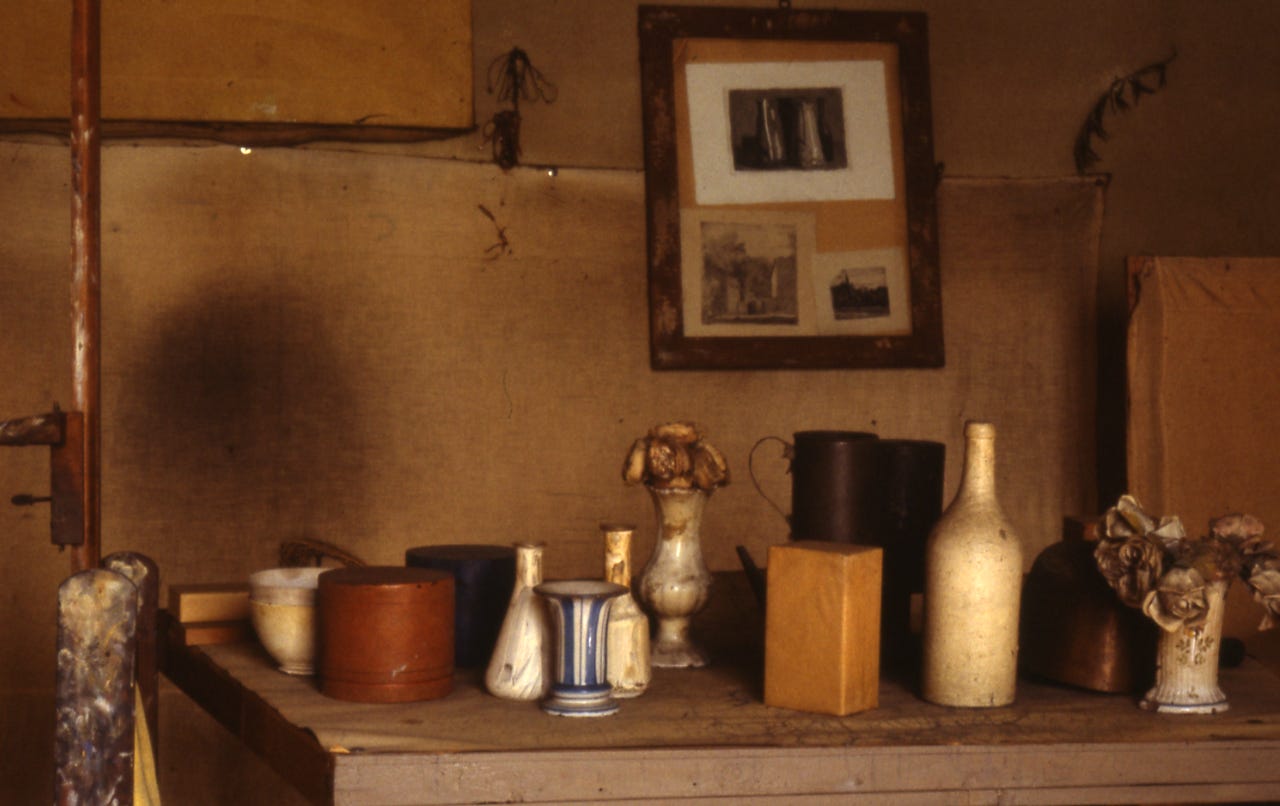
The bottles in his pictures were prepared long before he painted them. He let dust settle on them because it dulled the surfaces and, in his view, kept the objects in time. Some he painted over in flat color, and some he filled with paint, so that no light could flash on the glass.
Then came the staging. On specially made tables he marked the position of each object in pencil on a sheet of paper, sometimes drew the shadows he wanted, and chalked the spot on the floor where his feet had to stand at the easel. Visitors to the room, where he also slept, described a floor crowded with bottles of every size and color.
The painting itself could be finished in a couple of hours. The decision took far longer. He said it took him weeks to make up his mind which group of bottles would go well with a particular colored tablecloth. Nothing in that process is left to chance, which is hard to square with the legend of the simple hermit who painted whatever sat in front of him.
What You'll Discover
The legend of the monk of Bologna.
Why he never changed the subject.
What he said about his bottles.
What his etchings share with his paintings.
How the quietest painter won Venice.