

170 000+ readers. Learn art the fun way.
This is a preview. Paid subscribers get the full story.
You’ll also get:
10 new stories every month
The full archive (130+ Art stories)
Your personal art guide. Comment, ask questions, DM me anytime
iPhone user? Subscribe at coolstoriesabout.art, not via the app. Apple adds 30% to the price.
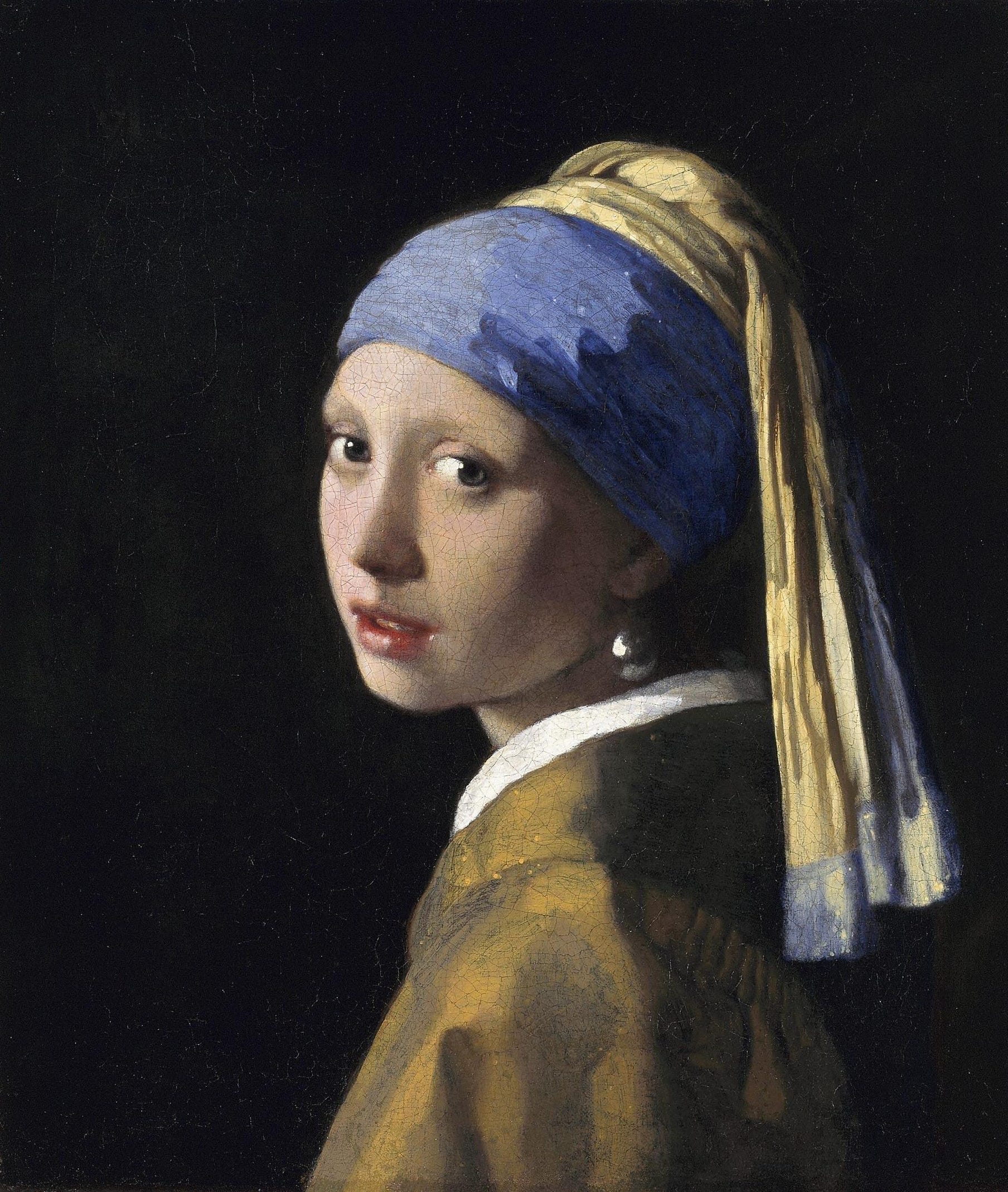
It may be the most famous painting in the world after the Mona Lisa. People even call it the Mona Lisa of the North.
She is everywhere: rings, tote bags, book covers, posters, refrigerator magnets. On screen, Scarlett Johansson lent the girl her own face. She is also the logo of Cool Stories About Art.
Two questions remain, and nobody answers them. Who is this woman? And did she ever exist at all?
Let's take a look together. You will never see this painting the same way again.
Lot Thirty-Eight
On May 16, 1696, in Amsterdam, the collection of a Delft printer went on the block. Twenty-one paintings by Johannes Vermeer came under the hammer that same day.
Lot thirty-eight was described in a single line: a tronie in antique dress, of uncommon artistry. It sold for 36 guilders.
A tronie, in seventeenth-century Dutch, is a head. No client commissioned it. Nobody sat for it.
A painter made one with no buyer in mind, to sell in the shop and to show anyone passing by what he could do. An unlikely costume, a studied expression, difficult light.
They were turned out in bulk. One of Vermeer's neighbors, a dealer on the Voldersgracht, a street in Delft, had more than seventy in stock the day he died.
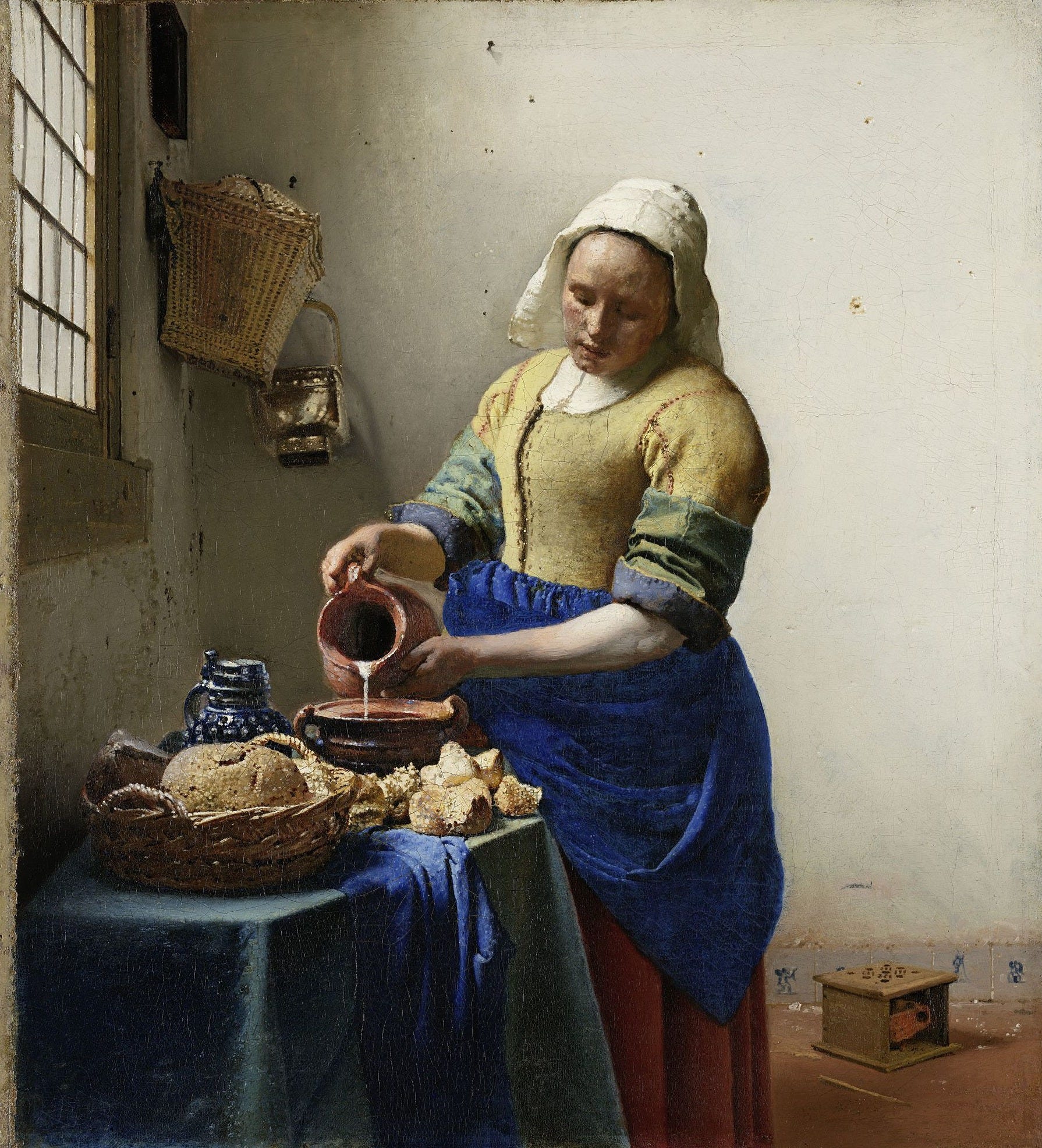
That same afternoon, at the same sale, The Milkmaid sold for 175 guilders.
Discover my new newsletter !

Two Guilders and Thirty Cents
Even in his lifetime, Vermeer could not live off his painting. He died in 1675, at forty-three, buried in debt.
Six weeks after his death, his widow handed two of his paintings to the neighborhood baker to settle a bread tab of 617 guilders.
After the 1696 sale, the canvas vanished. One hundred eighty-five years without a trace.
It resurfaced in 1881 in The Hague, at an estate sale on the Nobelstraat, a street in the city. The catalog read: head of a young girl, her head wrapped in a cloth. In the box for the painter: unknown.
The paint was lifting in places, and the grime made it hard to tell what it even was.
A collector carried it off for two guilders plus thirty cents in fees, about thirty euros today. His neighbor had come to the sale with him, and the two men had agreed not to bid against each other.
It was during the cleaning, the following year, that a signature reappeared in the upper left: IVMeer, the letters I, V, and M knotted into a single mark. They are not the first three letters of Vermeer, but the initials of his real name, Johannes van der Meer.
The Painter's Daughter
Vermeer had eleven living children. He lived in his mother-in-law's house in Delft, in the Catholic quarter, a house on the corner of an alley packed with an old woman, a married couple, a maid, and a brood of children.
The eldest was a girl. Her name was Maria.
The idea that Vermeer used his own daughter as a model is an old one. An American art historian devoted an entire book to it, and argues that the same face appears in three canvases.
The painter did not need to go looking for a model. He had one under his roof, free and available.
It all holds together. The house, the period, the absence of a patron.
Except one detail is off. When the painting was made, around 1665, Maria was eleven. And the face looking back at you is not eleven.
Let's move in closer to the face.
What You'll Discover
What is missing from her face.
The problem with that pearl.
That there is another girl with a pearl earring.
How this painting became a global icon.
Who this girl is.