
Gloves in portraits are a power move. Holding one glove and wearing the other meant you were ready to negotiate, throwing one down meant a duel, and a bishop’s glove meant hands too pure to touch the world directly. Twelve famous portrait paintings where the gloves do the talking, the same close reading jewellery in portraits gives to rings and pearls. Hats in art get the same treatment, twelve paintings where the headwear carries the meaning.
Learn art the fun way
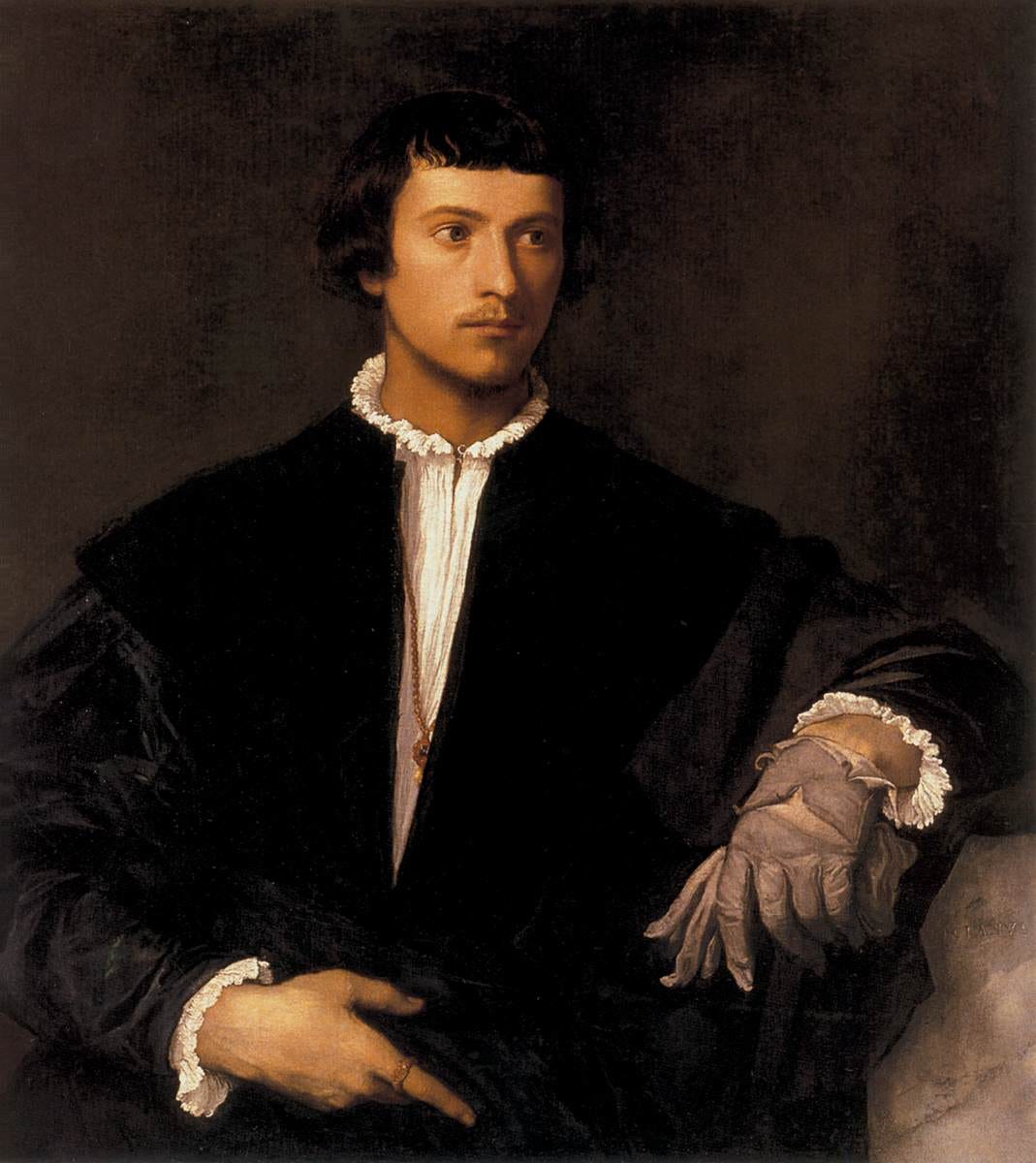
1 | Man with a Glove, Titian (about 1523)
A young man in black, one hand gloved, the other bare and resting on a stone ledge. The bare hand is the tender part of the picture.
The pose became a template: aristocratic, informal, faintly melancholy. It is in the Louvre. I go into his career in Titian.
2 | The Ambassadors, Hans Holbein (1533)
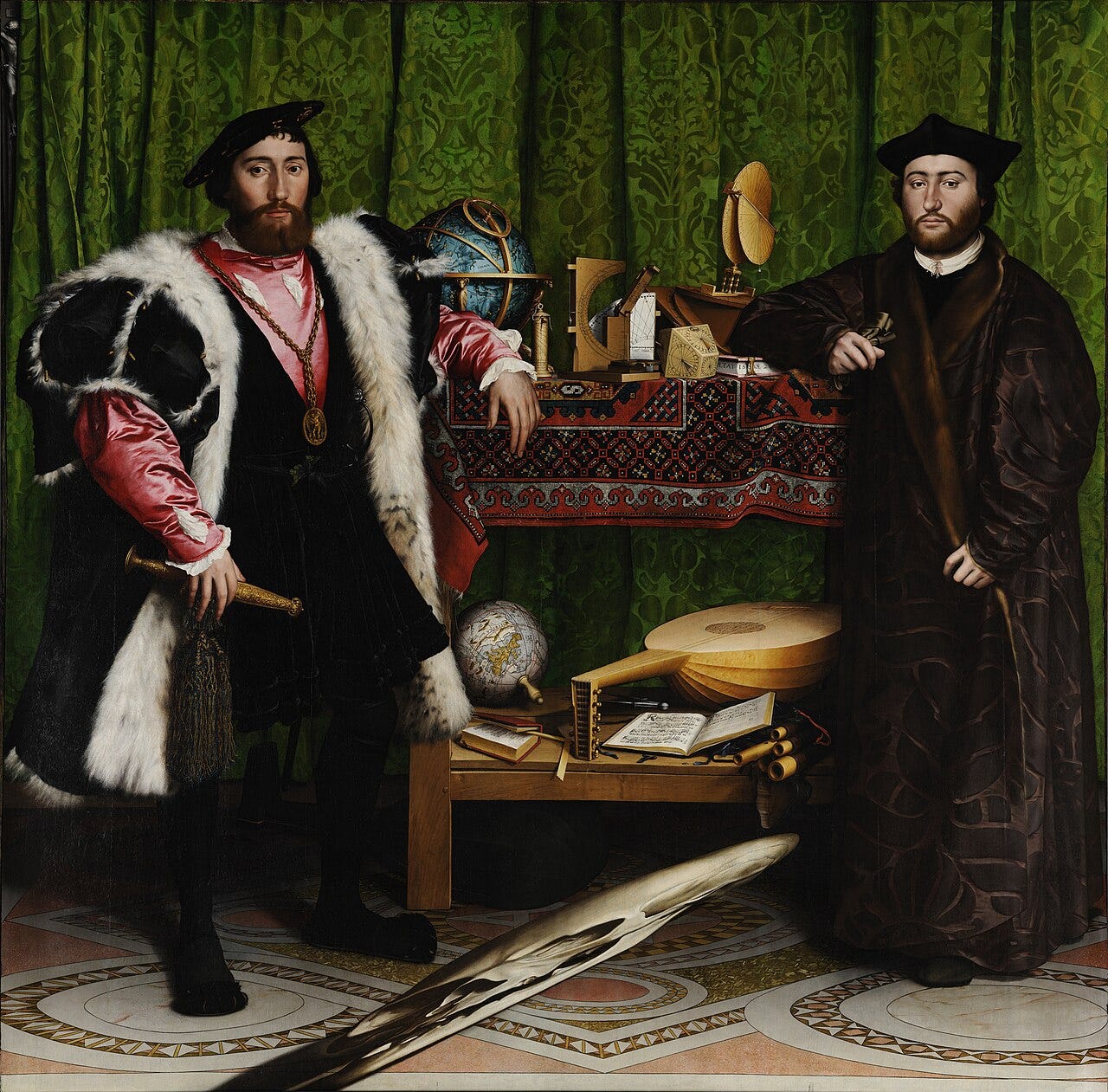
Jean de Dinteville holds a pair of gloves in his right hand and a dagger in the other, a combination that says diplomat and soldier at once.
Every object in that painting is doing work, including the skull. I go into it in The Ambassadors.
3 | Perfumed gloves and the poisoning rumour
Tanning gloves involved substances so foul that gloves were heavily perfumed, and the perfumer to the French court became a figure of suspicion.
Catherine de Medici’s glover was accused of poisoning a rival queen with scented gloves. No evidence supports it, and the story has outlived every denial. More poison in poison in art.
4 | Charles I and the glove as royal ease
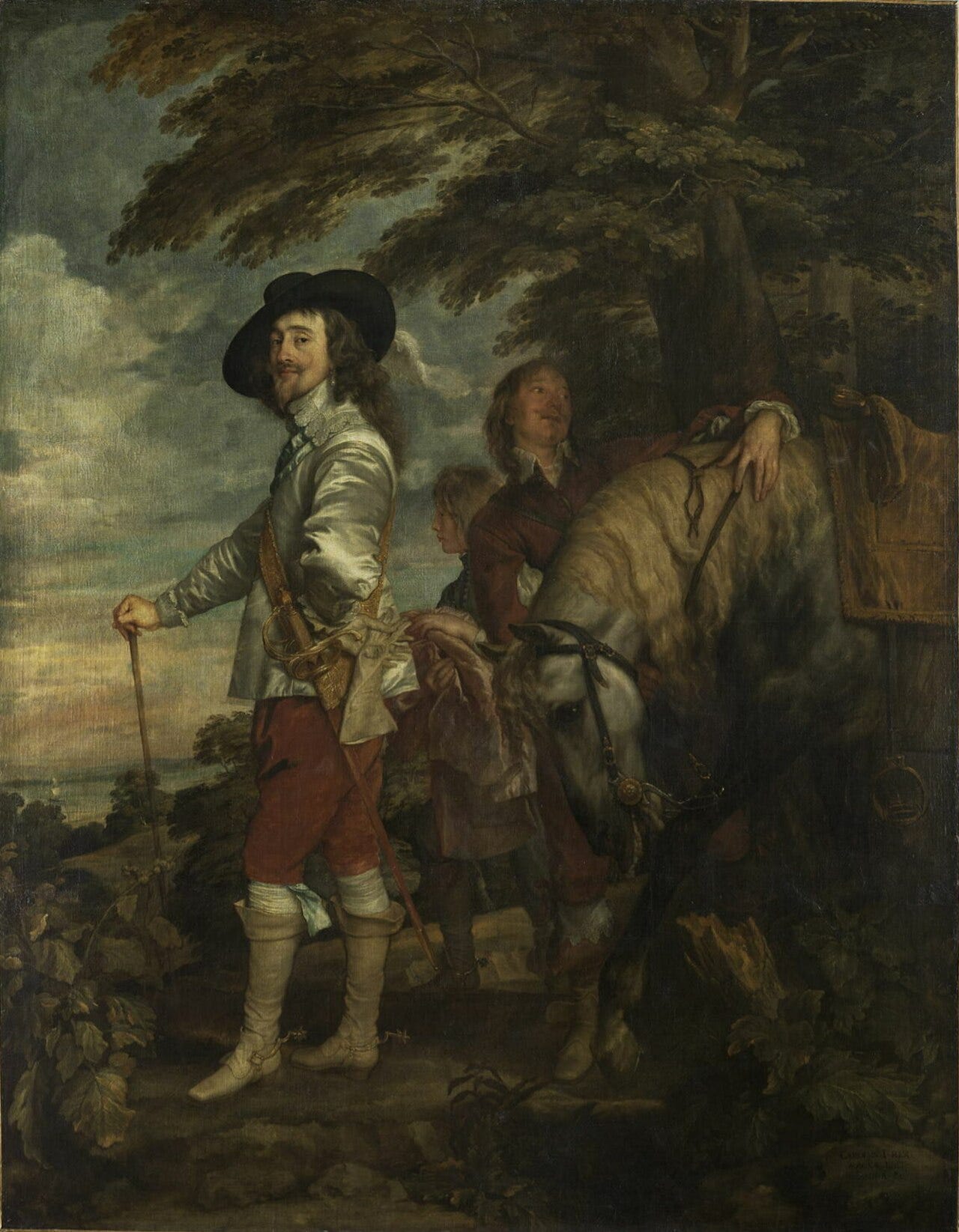
Van Dyck painted the king in hunting dress, one glove off, standing beside his horse as though he had just dismounted.
The removed glove signals informality, which for a king is a claim about confidence. More on him in Anthony van Dyck.
Van Dyck paints him holding one glove and wearing the other, which is the standard formula for aristocratic ease: a man who has just come in from riding and is not staying. It is repeated in English portraiture for two centuries.
5 | The gauntlet thrown down
In armour portraits, a gauntlet resting on a table or fallen at the sitter’s feet reads as a challenge, the visual echo of throwing down the glove.
The phrase survives in English long after the object left the wardrobe.
Throwing a glove was a formal challenge to a duel, and picking it up was acceptance. The gesture survives in the phrase, and painters used a dropped glove to signal a quarrel the viewer already knew about.
6 | Bishops, cardinals and the liturgical glove
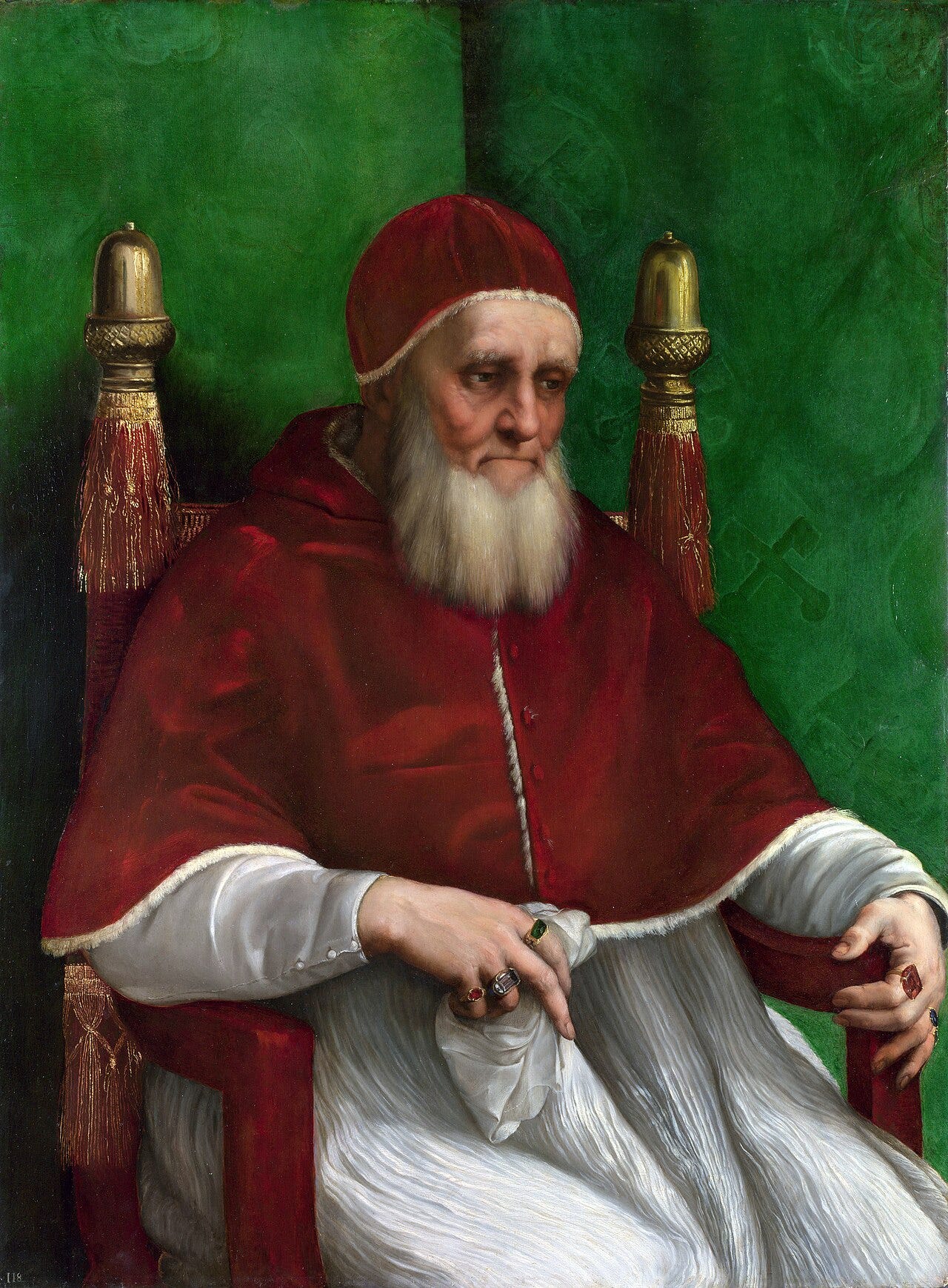
Church portraits show embroidered gloves worn during the mass, a mark that the hands are consecrated and do not handle ordinary things.
Raphael painted Julius II with bare hands instead, which was itself a statement about a pope who behaved like a general. More on him in Raphael.
7 | Rembrandt and the merchant’s glove
In Dutch group and couple portraits, gloves mark the sitter who commissioned the picture and paid the most, usually held rather than worn.
Rembrandt used them as small anchors of status in otherwise sober black and white. More on him in Rembrandt.
Amsterdam merchants had themselves painted with one glove off to show the hand that signs and the ring that guarantees it. The bare hand is the credit, the gloved hand is the rank.
8 | The Milkmaid, and the hands without gloves
Vermeer painted working hands bare and reddened, which is the opposite signal. Nobody who works wears gloves in Dutch painting.
The absence is as legible as the presence. More kitchens in kitchens and cooks in painting.
Vermeer gives her nothing on her hands at all, and the forearms are heavy and reddened. In a genre full of gloved ladies, bare working hands are the whole social statement.
9 | Madame Moitessier and the Second Empire glove
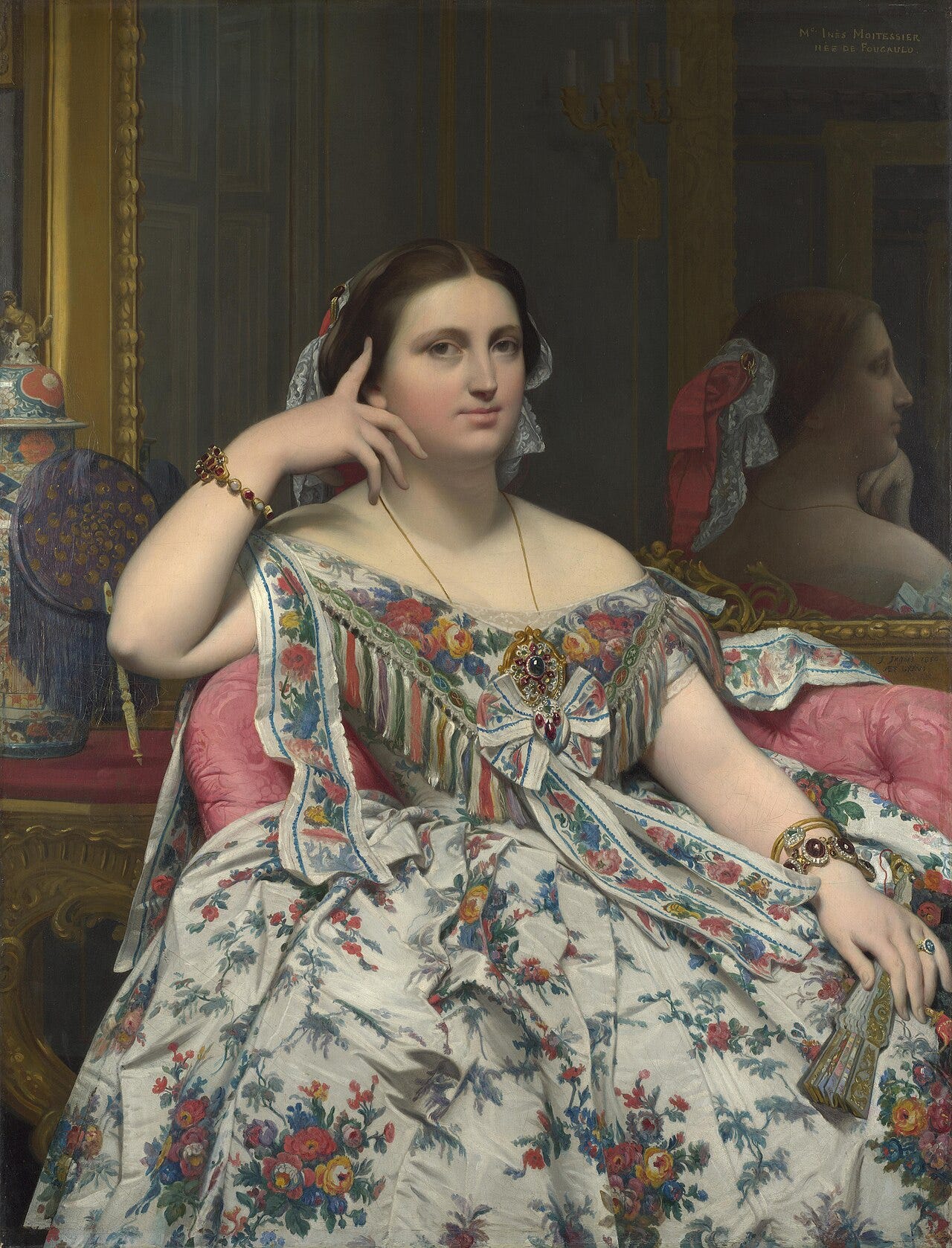
Ingres painted his sitter with gloves discarded on the sofa beside her, silk against silk, a small display of what she could afford to take off.
He took twelve years to finish the portrait. More on him in Ingres.
Ingres worked on the seated portrait from 1844 to 1856 and complained constantly about it. The gloves lie discarded beside her, which in Second Empire terms means she is at home and receiving.
10 | Manet, Degas and the long evening glove
By the 1870s the opera glove reaching above the elbow becomes a marker of the night out, worn in bars, boxes and brothels alike.
Manet paints them peeled halfway down an arm, which is more revealing than bare skin. More on him in Edouard Manet.
11 | The falconer’s glove
Hawking portraits show a heavy leather gauntlet on one hand carrying a bird, which is simultaneously a luxury, a licence and a species of jewellery.
The bird identified the rank of the owner more precisely than the coat did.
A hawking glove is worn on the left hand and reaches the elbow, in thick leather. It identifies the sport, the class and often the specific bird, since only certain ranks were allowed certain species.
12 | Boxing gloves and the twentieth century
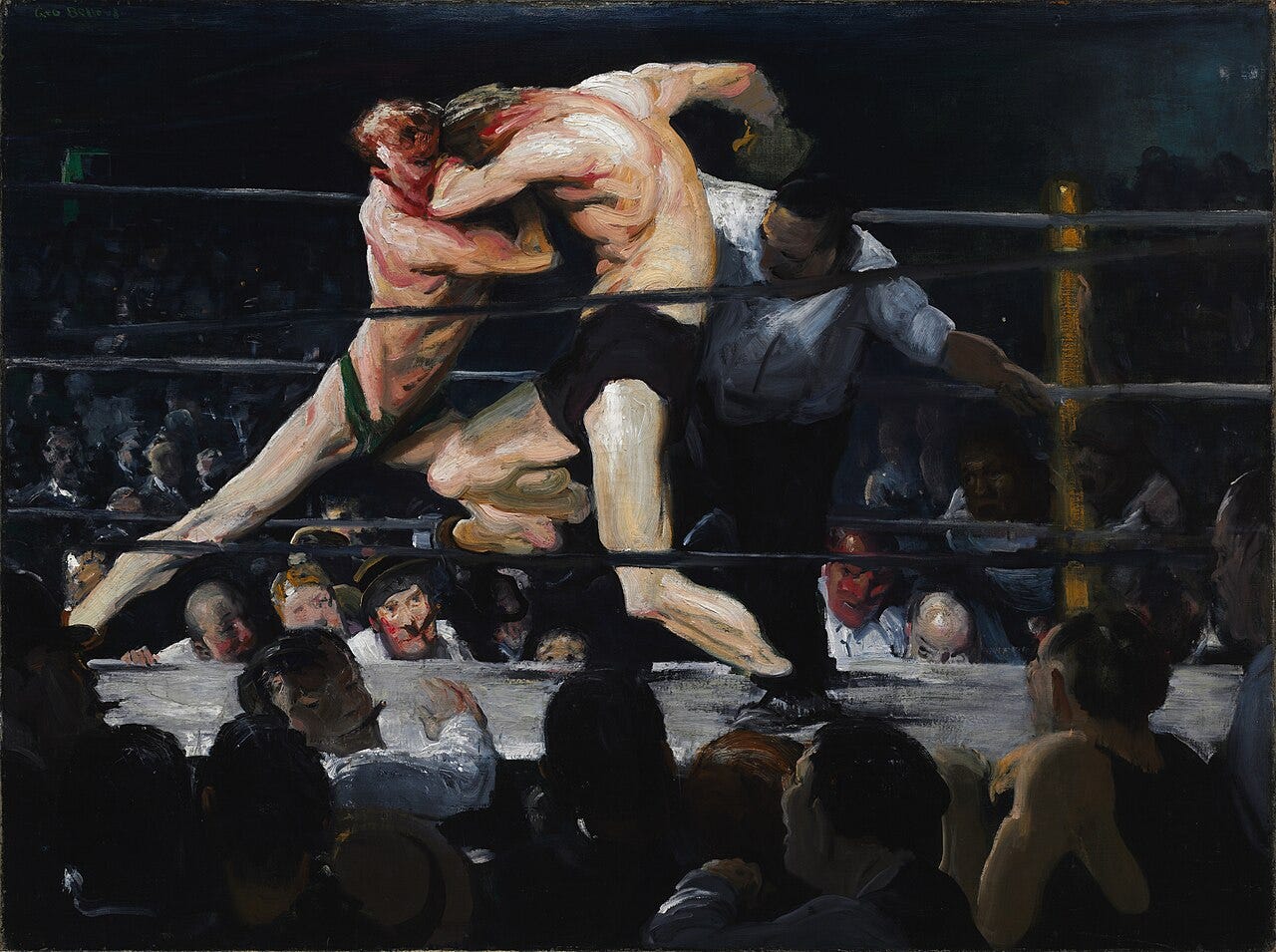
When gloves return to modern painting, they are boxing gloves: George Bellows painted fighters in the illegal clubs of New York around 1909.
The glove has gone from court to ring in four centuries, and it still means the same thing, which is readiness.
The most asked questions on gloves
Why is one glove usually removed? A bare hand signals openness and readiness to shake, sign or touch. The kept glove signals rank. The pose does both at once.
What does throwing down a glove mean? A challenge to a duel. In armour portraits a fallen gauntlet carries that meaning without a word.
Were gloves really perfumed? Yes. Tanning left an unbearable smell, so gloves were scented, and glovers doubled as perfumers.
Which is the model portrait with gloves? Titian’s Man with a Glove, which set the pose for European male portraiture.
Where is Man with a Glove today? The Louvre for the Titian, the National Gallery in London for The Ambassadors and Ingres.
The Titian sitter has never been identified. Four centuries of scholarship, and the most influential pair of hands in portraiture belongs to a man nobody can name, a case worth setting beside other famous hand paintings.
Real gloves survive in costume collections at the Met and the Rijksmuseum.
This subject is one thread in a wider theme. See how it fits into Objects and Symbols in Painting.
Vermeer painted a pearl earring so famous that historians still argue whether it shows a real pearl at all, a question our guide to jewellery in portraits takes on directly. Feet get the same treatment in shoes in painting.