

170 000+ readers. Learn art the fun way.
This is a preview. Paid subscribers get the full story.
You’ll also get:
10 new stories every month
The full archive (130+ Art stories)
Your personal art guide. Comment, ask questions, DM me anytime
iPhone user? Subscribe at coolstoriesabout.art, not via the app. Apple adds 30% to the price.
My first book is out (in French only)

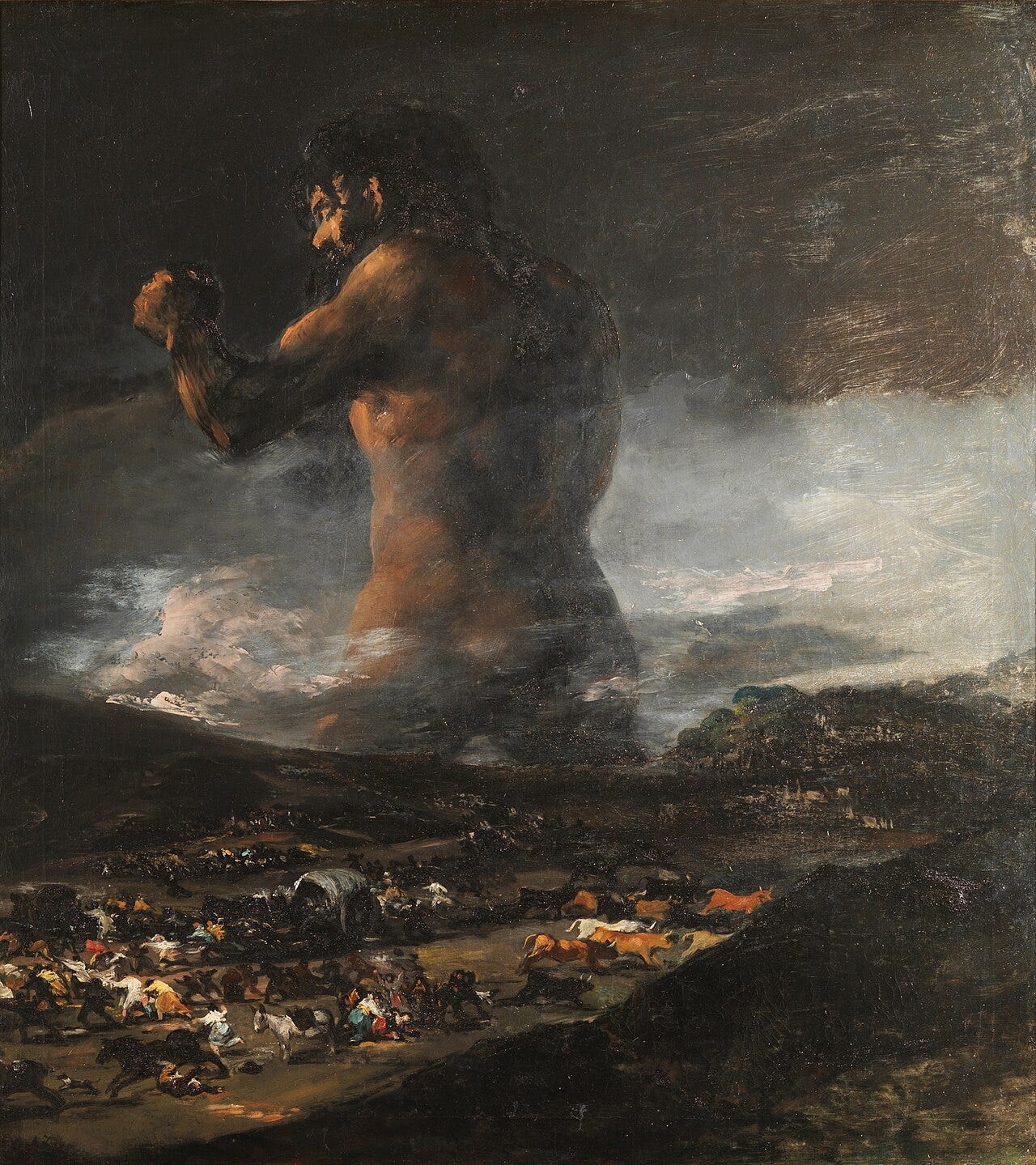
You have seen this image somewhere before.
Fans of Attack on Titan, a Japanese manga and anime turned global phenomenon, post it on forums because it looks so much like the man-eating giants of the series.
The same immense body looming over a tiny world. The same panic below.
Yet it hangs in a museum in Madrid: a painting older than any manga.
But do you actually know what you are looking at?
Let's take a look together. You will never see this image the same way again.
The Giant, The Panic, The Storm
A giant has risen behind the mountains. In the valley below, everything is moving: the people, the animals, the carts.
The scene looks like it explains itself. A monster attacks, a crowd flees.
The names this painting has gone by all tell that same story. Goya never gave it a title, so for a century people christened it after what they thought they saw: The Giant, The Panic, The Storm. The name that stuck, The Colossus, came in 1917 from a historian who, by his own admission, had never seen the painting.
What nobody disputes is that it was painted during a war. Napoleon's army occupies Spain, Madrid has risen up, and the crackdown is brutal.
Goya is in his sixties when all of this happens. Fifteen years earlier, an illness left him deaf. Completely deaf: around him the world is silent, the cannons and the screams alike.
From inside that silence, he watches his country burn.
He paints this one for himself. No commission, no buyer, no one to convince. It will never leave his studio in his lifetime.
Discover my new newsletter !

The Flight, The Donkey, The Fist
Now look closer.
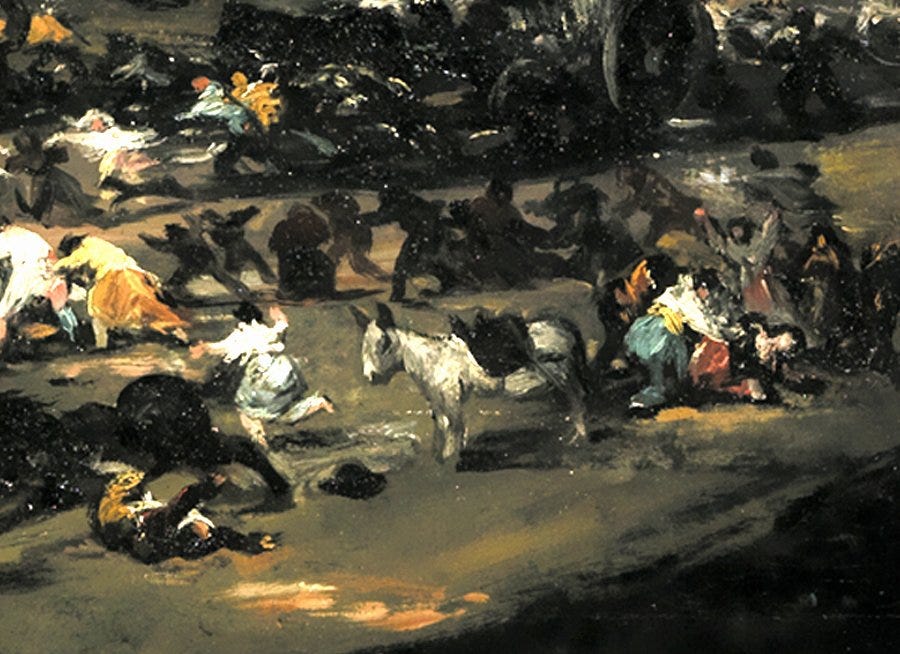
When a monster attacks, a crowd runs away from the monster. Here, it scatters in every direction: the people toward one edge of the picture, the bulls toward the other.
In the middle of the stampede, a single creature does not move. A donkey, standing in the chaos as if nothing were happening.
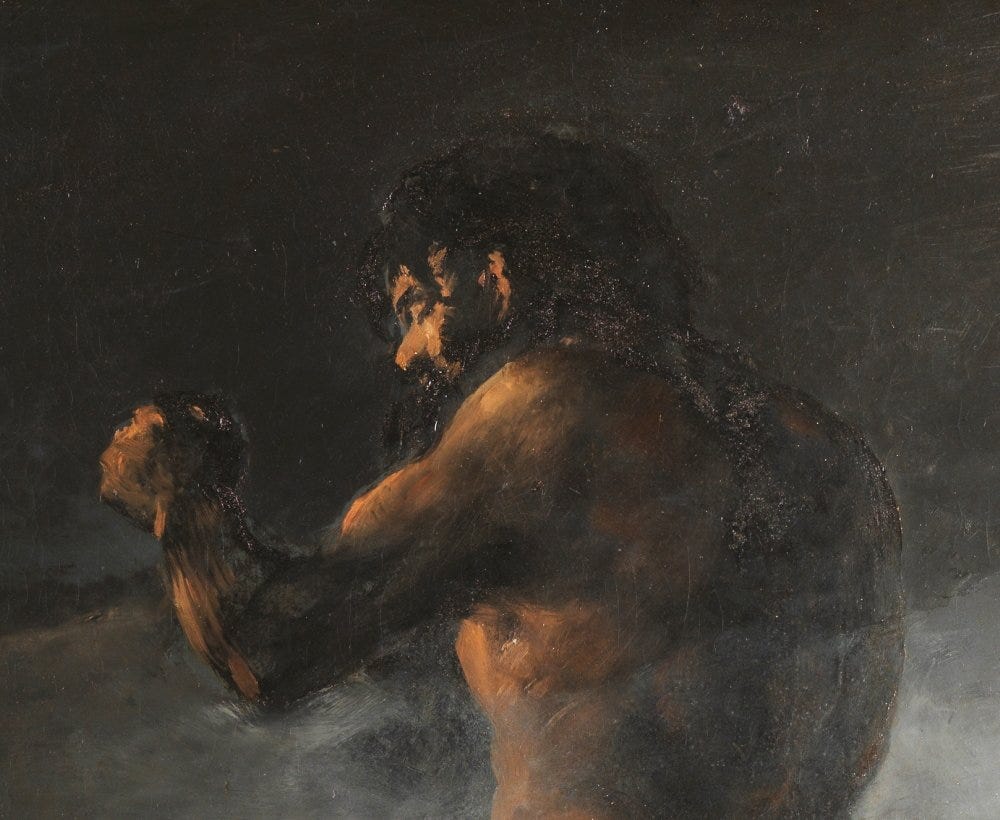
And now look at the giant's raised fist. His back is turned to the crowd, and whatever he is threatening is nowhere in the picture.
What You'll Discover
Who this giant is.
What his fist is about to strike.
Why the donkey stands still in the middle of the panic.
That there is another giant.
But is this really a Goya?