
Hans Holbein the Elder (around 1465 to 1524) was a painter from Augsburg, in southern Germany. He made large pictures for church altars, like the Saint Sebastian Altarpiece, where archers shoot at a saint. His son Hans Holbein the Younger painted for King Henry VIII.
Cool Stories About Art is a newsletter to learn art the fun way.
Join 200,000+ readers and get:
10 new art stories / month
The entire archive of content (140+ articles)
Comment, ask questions, and chat with other readers
For twenty years, Hans Holbein the Elder was one of the leading painters of Augsburg. Monasteries and convents commissioned his altar paintings, and he drew Maximilian I, the emperor who ruled the German lands.
Yet from 1503 on, while the commissions kept coming, he was in court again and again, most often over small debts. No one knows where he died. Two years after his death, his younger son, who had trained under him, left for England.
Hans Holbein the Elder was born in Augsburg. His father, Michael Holbein, worked leather for a living.
By the late 1490s, the painter ran his own workshop in Augsburg, with assistants and apprentices, boys sent to learn the craft. Its main business was altarpieces, large painted panels set above a church altar.
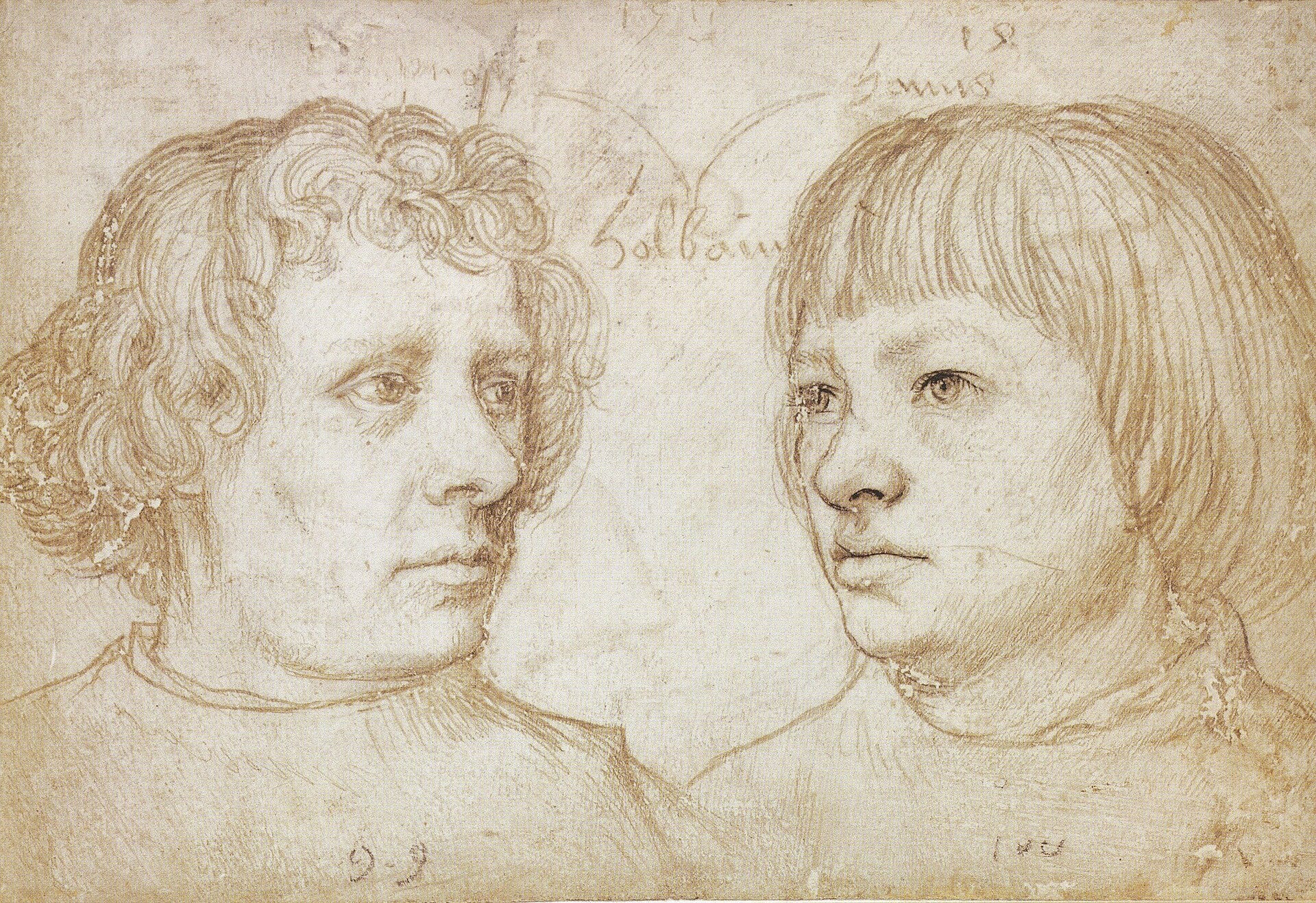
Hans Holbein the Elder had two sons. Ambrosius was born around 1494, and the younger boy, born around 1497, was named Hans, like his father.
To tell father and son apart, the two are known today as Hans Holbein the Elder and Hans Holbein the Younger. Both boys soon appeared in a painting for nuns.
The nuns of Saint Catherine, the largest convent in Augsburg, lived shut away from the world. Christians who traveled to Rome to pray in its seven great churches, called basilicas, were promised the forgiveness of their sins.
The nuns could not make the journey, so from 1499 they commissioned pictures of the seven basilicas from painters of the city. Prayer before the pictures brought them the same forgiveness.
Hans Holbein the Elder painted two of the seven. Around 1504, he finished the Basilica of Saint Paul, named after a church of Rome built over the tomb of the apostle Paul, an early follower of Jesus.
The picture has three panels. The left panel, taller than a grown man, shows Paul being baptized. Paul lived nearly fifteen centuries earlier, yet beside the baptism stand three figures dressed like the people of Augsburg in 1500: the painter and his two sons.
Ambrosius, the older boy, rests a hand on his little brother's shoulder. Hans Holbein the Elder points his finger at the younger boy, Hans, then about seven. No record explains the gesture.
What could a painter dogged by small debts pass on to the boy he pointed at, the future painter of a king?
In the rest of the story
Where the face of one archer in his Saint Sebastian Altarpiece came from.
Which new fashion let rival painters of Augsburg overtake him.
Which member of his own family took the painter to court.
Who still wanted his painting tools back, two years after his death.