
A painted harbour is a balance sheet. Every mast, crate and flag in a seventeenth century Dutch port picture stands for a trade route, and the paintings were bought by the people who owned the ships. Turner’s Fighting Temeraire tells the same story backwards, as a warship being towed off to be scrapped. Painters were just as drawn to empty terrain, a theme covered in Deserts in Painting.
Learn art the fun way
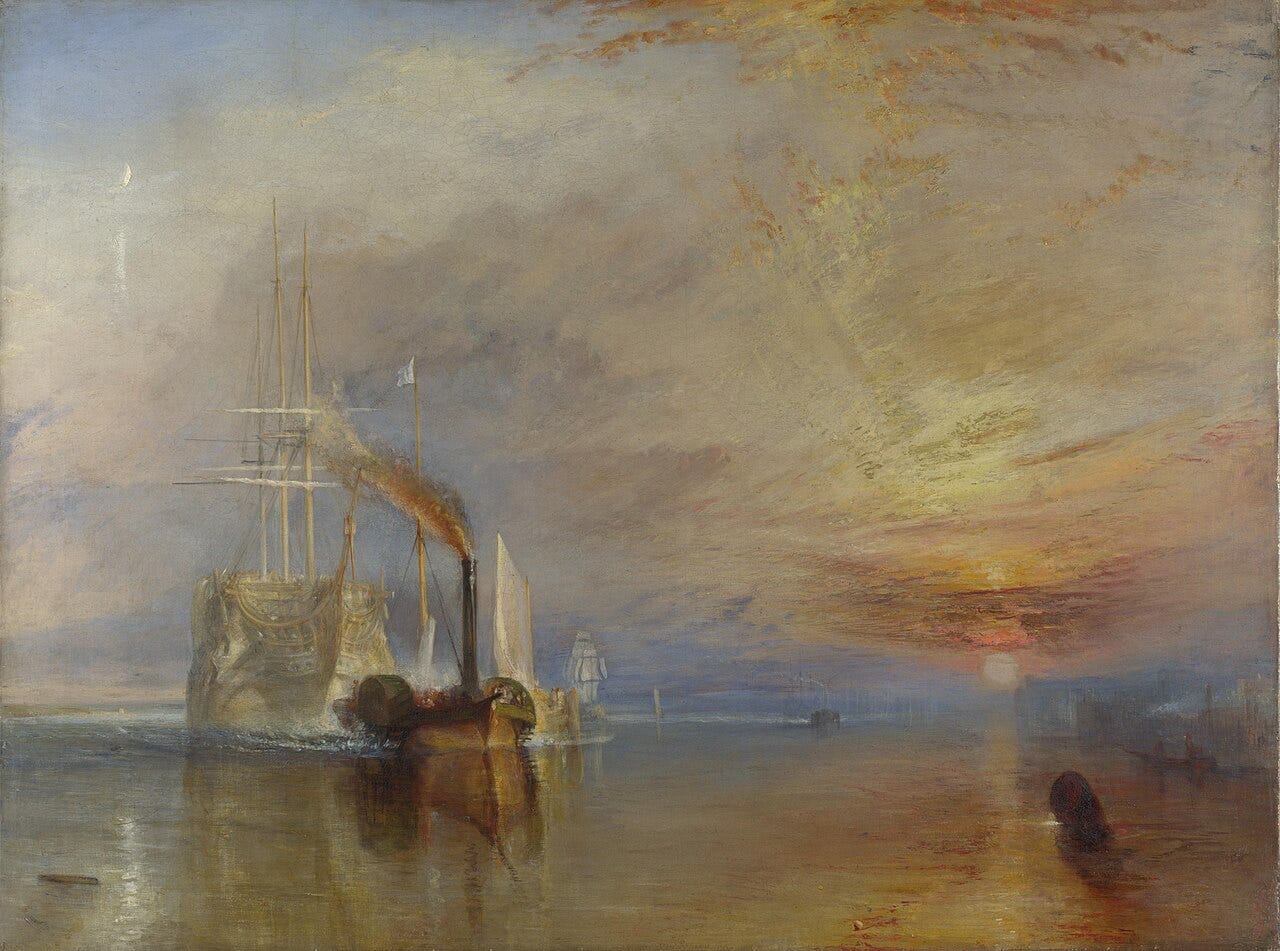
1 | The Fighting Temeraire, JMW Turner (1839)
A veteran of Trafalgar towed up the Thames by a small steam tug to be broken up. Turner put the sunset on the wrong side of the river because it made the point better.
Voted Britain’s favourite painting in 2005. More on him in JMW Turner.
2 | Impression, Sunrise, Claude Monet (1872)
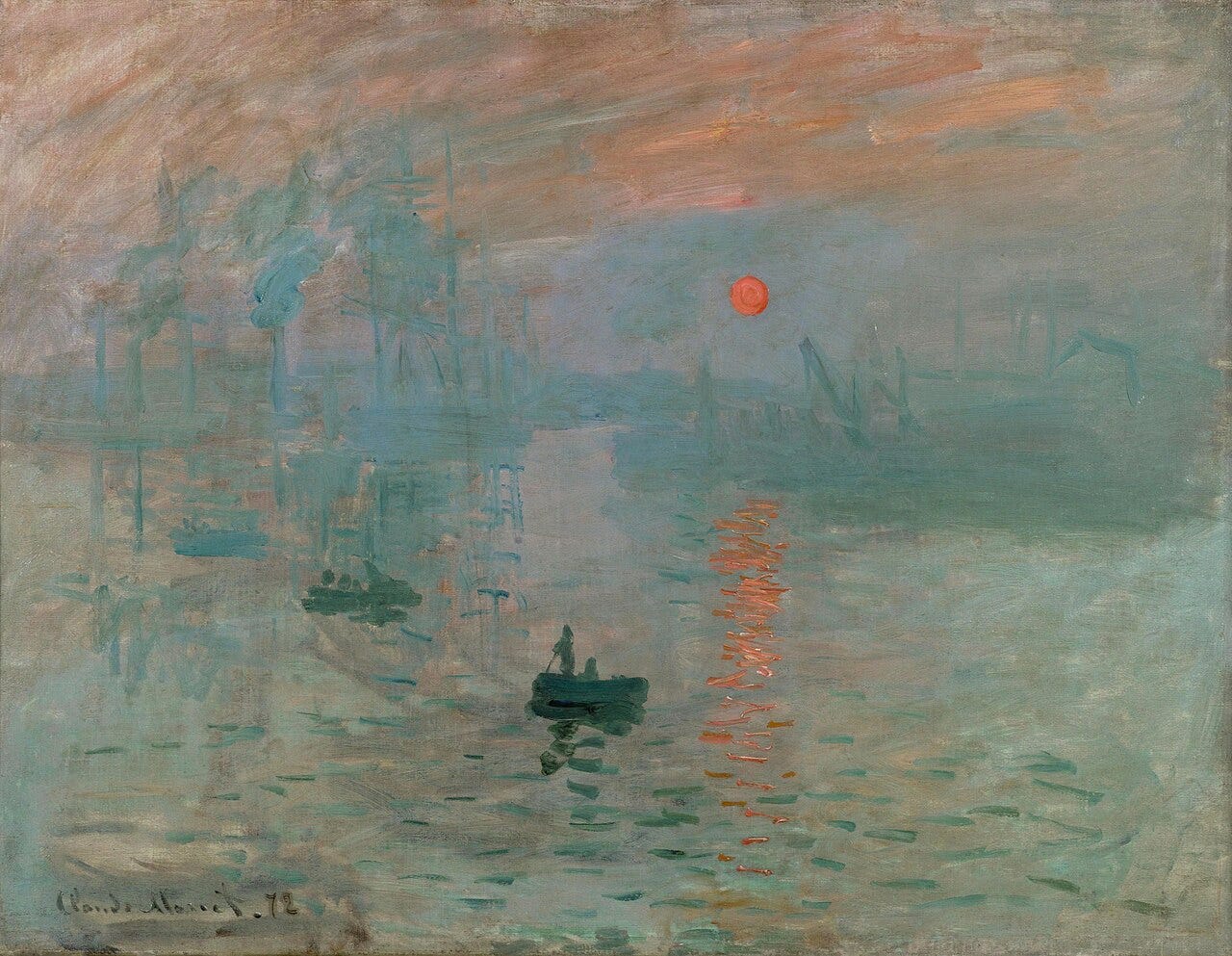
The harbour at Le Havre in fog, with cranes and chimneys behind the boats. A critic used the title to mock the whole group, and the name stuck.
More on him in Claude Monet.
I go through the paintings that made the movement, and the woman who sold them, in the old masters were women too.
3 | Claude Lorrain and the invented port
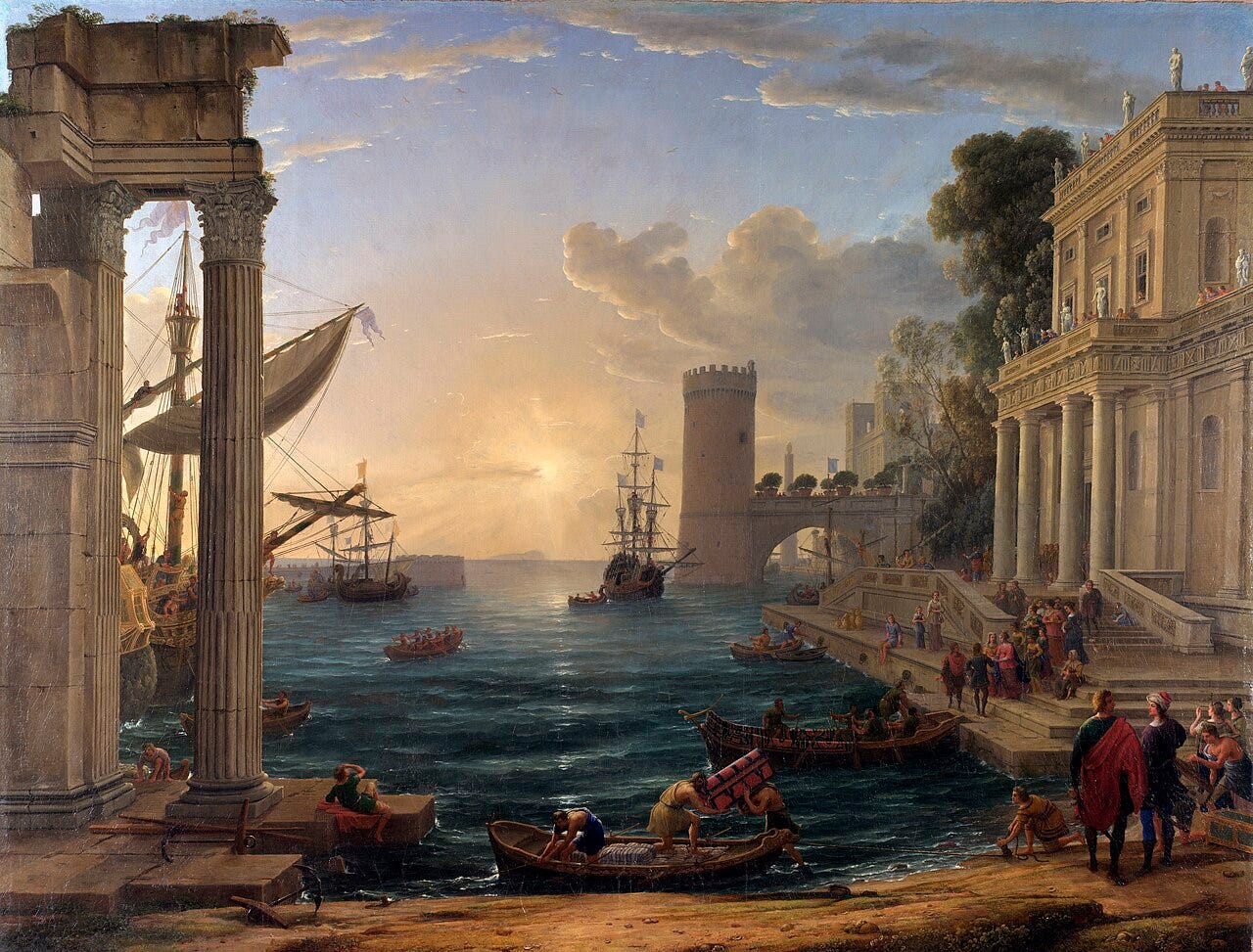
Claude built harbours out of classical architecture, painted the sun in the middle of the canvas and let everything dissolve towards it. None of his ports are real places.
His Liber Studiorum was built to answer Claude print for print.
His harbours are built from Roman fragments he sketched on the spot, then reassembled. Turner left two of his own canvases to the National Gallery on condition they hang beside Claude’s Seaport, which is why they still do.
4 | The Dutch marine painters
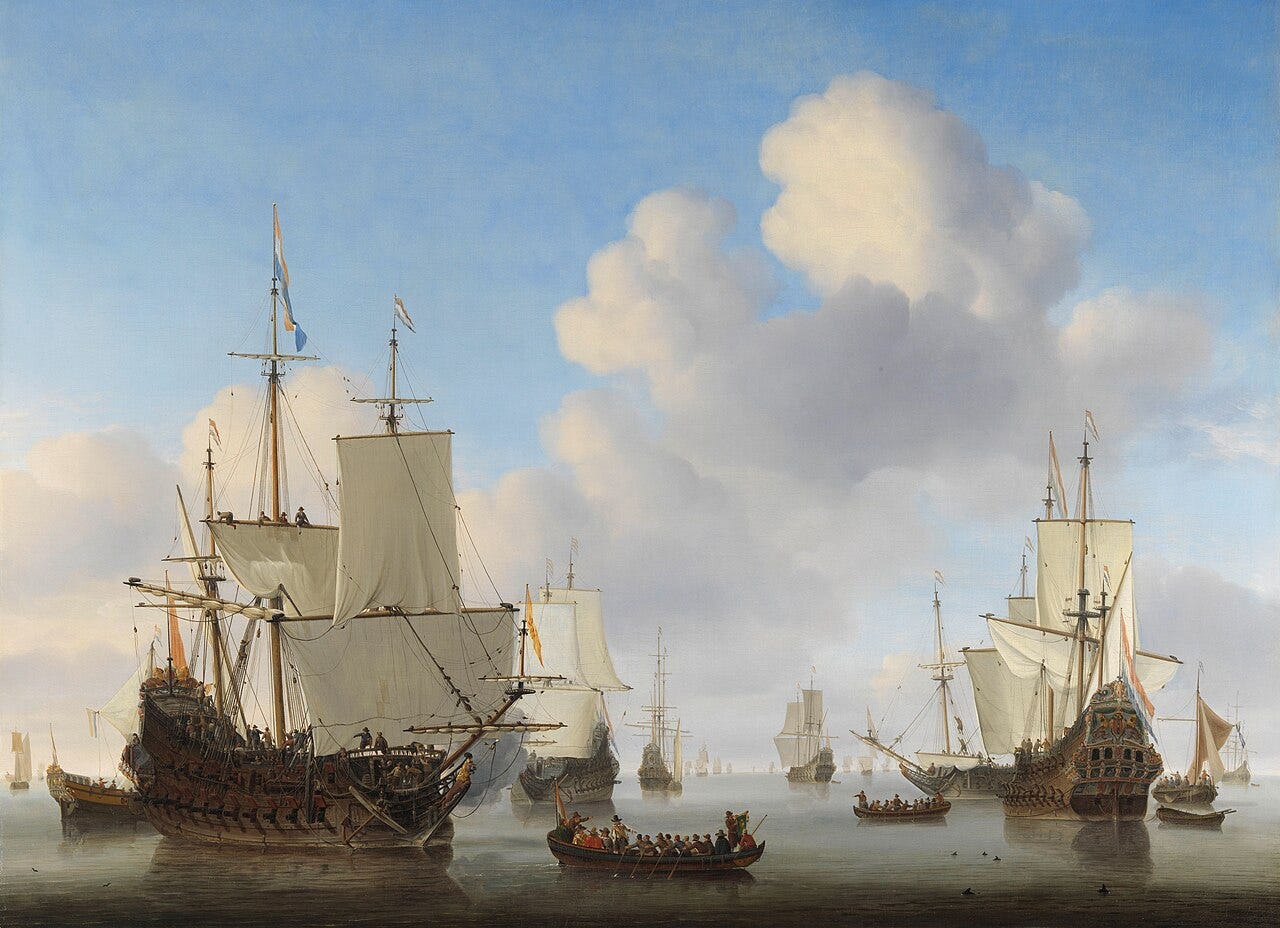
Willem van de Velde the Elder went to sea in a small boat to sketch battles as they happened, and his son turned the drawings into paintings. Both later worked for the English crown.
More on the genre in what is marine painting.
5 | Canaletto and the working lagoon
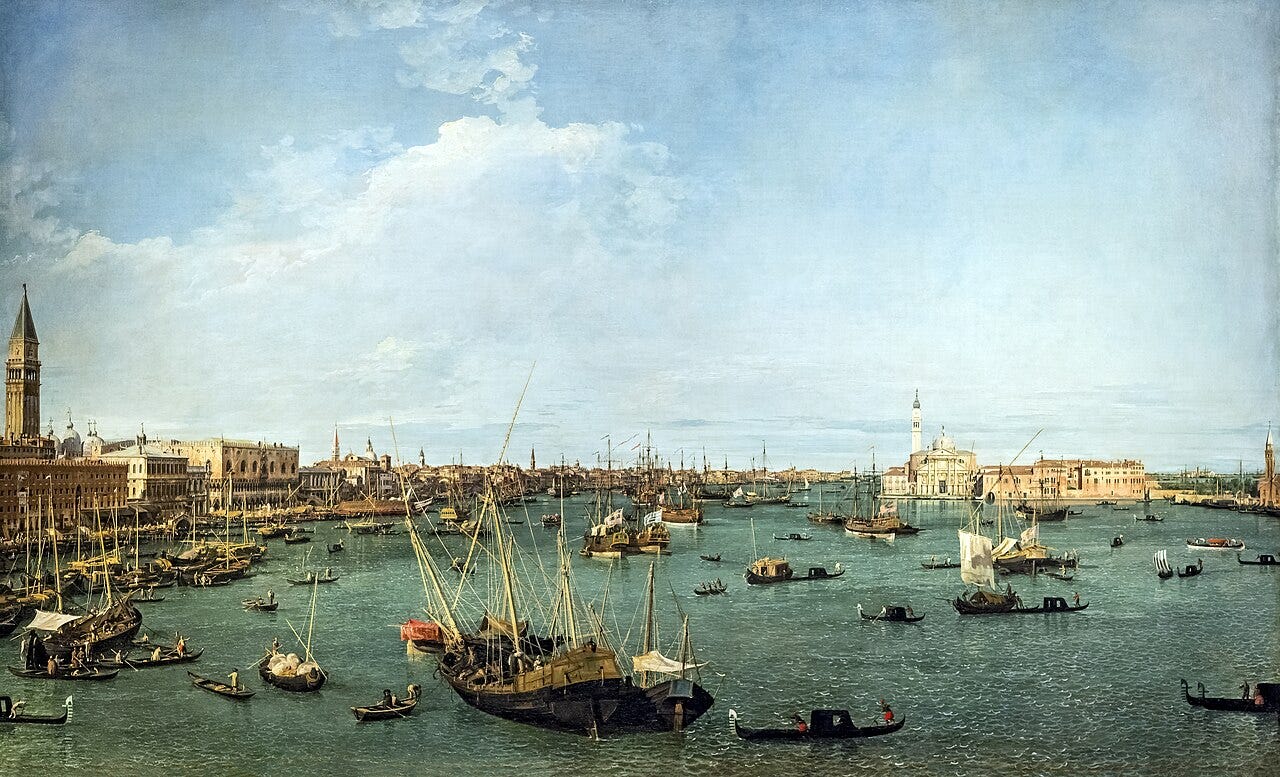
Venice was still a port when Canaletto painted it, and behind the ceremonial gondolas there are cargo boats, scaffolding and men unloading.
More on him in Canaletto.
The lagoon still handled arsenal traffic when he painted it, and his views were sold almost entirely to British visitors. Joseph Smith, the British consul in Venice, acted as his agent and later sold his whole collection to George III.
6 | Vernet and the Ports of France
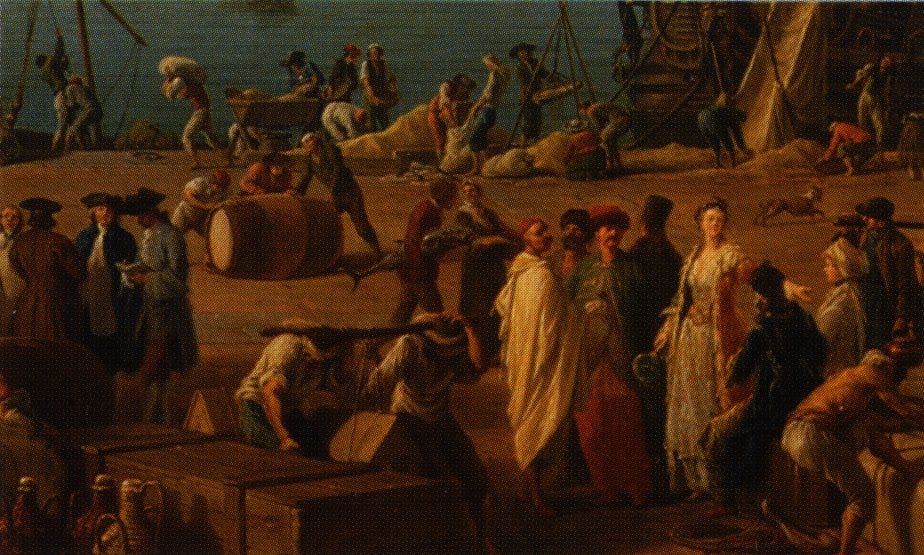
Claude Joseph Vernet was commissioned by Louis XV to paint the main ports of the kingdom. He delivered fifteen large canvases, part landscape and part state inventory.
They now hang in the Musee de la Marine and the Louvre.
7 | Whistler at Wapping
Whistler etched and painted the working Thames at Wapping and Rotherhithe in the 1860s, the wharves rather than the picturesque bends.
More on him in James McNeill Whistler.
He took a room at the Angel Inn at Rotherhithe in 1860 and painted Wapping from the window, a picture that took him three years and several repaintings. The two figures at the table were reworked because the first version was thought indecent.
8 | Boudin at Trouville and Honfleur
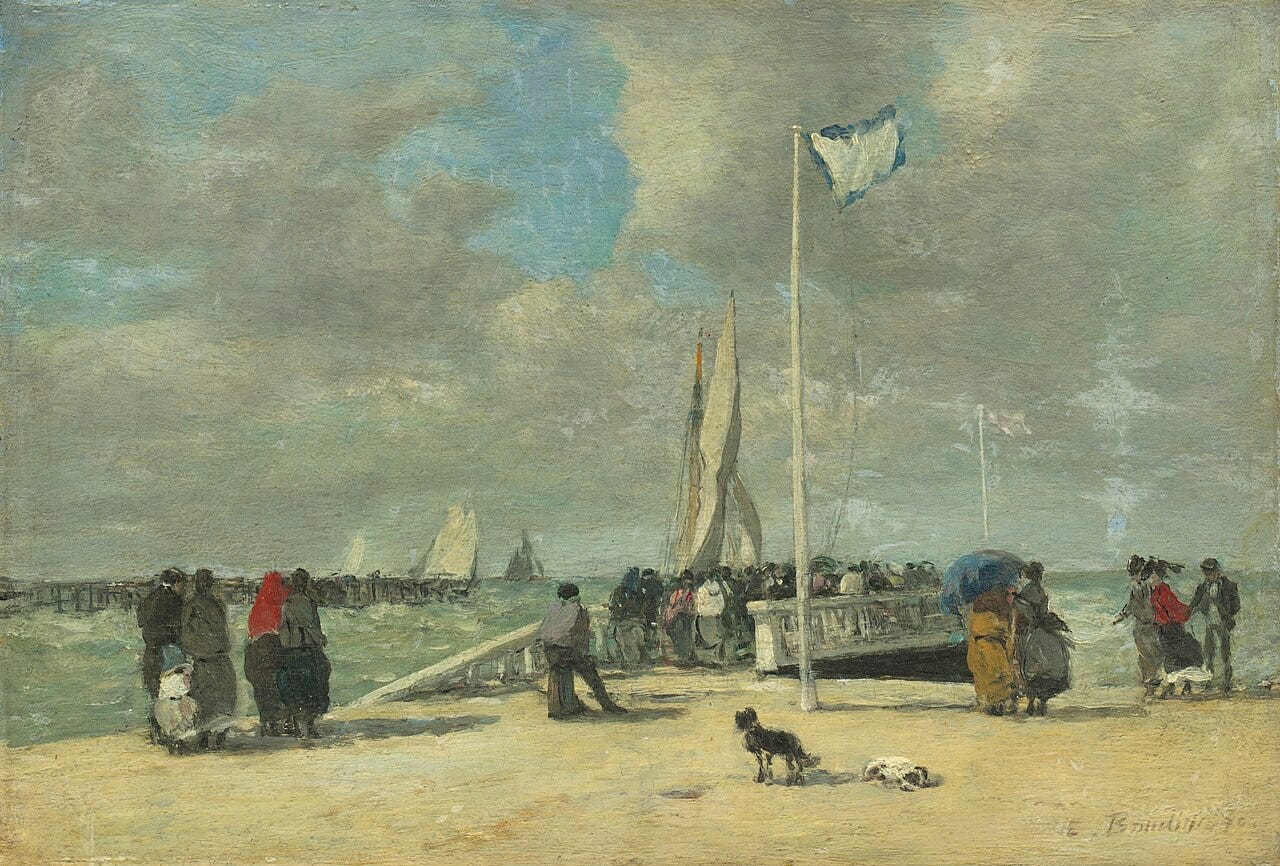
Eugene Boudin painted the Normandy coast and its jetties for decades and taught the young Monet to work outdoors. Corot called him the king of skies.
More on the practice in what is en plein air.
He was the son of a harbour pilot at Honfleur and ran a framing shop where the teenage Monet sold caricatures. He exhibited in the first Impressionist show of 1874 and kept painting the same beaches until his death in 1898.
9 | Hokusai and the Japanese harbour
Japanese prints show ports as a rhythm of boats and cargo, flattened and patterned, with Fuji often placed behind them to fix the location.
More on him in Katsushika Hokusai.
The Thirty six Views of Mount Fuji, published from about 1831, includes several harbour and shipping scenes, and the boats are drawn accurately enough to identify the type. The series eventually ran to forty six prints.
10 | The harbour as the edge of empire
Port pictures were sold as views, but they record what an economy imported and where its ships went. Sugar, tobacco, spices and enslaved people all pass through these harbours without being named.
The painting shows the crates, not the contents.
11 | Ships that can be identified
Marine specialists painted rigging accurately enough that naval historians can name the vessel and often the year. Getting it wrong lost you the commission.
It is the only genre where a customer would check the ropes.
Naval historians use these pictures as evidence. Willem van de Velde the Younger drew rigging so exactly that his paintings are cited in reconstructions of seventeenth century Dutch and English warships.
12 | Why the port suits a painter
A harbour gives you a flat reflective foreground, verticals from the masts, architecture on one side, weather above and human activity throughout. Nowhere else offers all five at once.
That is why so many careers begin at the water’s edge.
Harbours on canvas, questions readers ask
What is the Fighting Temeraire about? A Trafalgar veteran being towed to the breakers in 1838, painted by Turner in 1839, with the sunset placed for effect rather than accuracy.
Why is Impression, Sunrise important? It shows the harbour at Le Havre in 1872, and a mocking review of its title gave Impressionism its name.
Were Claude Lorrain’s harbours real? No. He assembled classical architecture and shipping into invented ports built around a low central sun.
Who were the van de Veldes? A father and son team of Dutch marine painters. The elder sketched naval battles from a small boat, and both later worked for the English crown.
Where is The Fighting Temeraire today? The National Gallery for Turner and Claude, the Marmottan for Monet, the Rijksmuseum for the Dutch marine painters.
Turner put the sunset on the wrong side of the river in the Temeraire. He knew, and he did it anyway, because the picture is about an ending and not about geography.
If you want to keep looking, start with the collections at the Met and the Rijksmuseum.
This subject is one thread in a wider theme. See how it fits into Cities and Places in Painting.