
Hats in painting are rank, religion and disguise in a few square inches of felt. Twelve famous hats, from the red turban Jan van Eyck may have worn himself to the bowler that Magritte used to hide a face, plus the straw hat that made a painter’s fortune.
Learn art the fun way
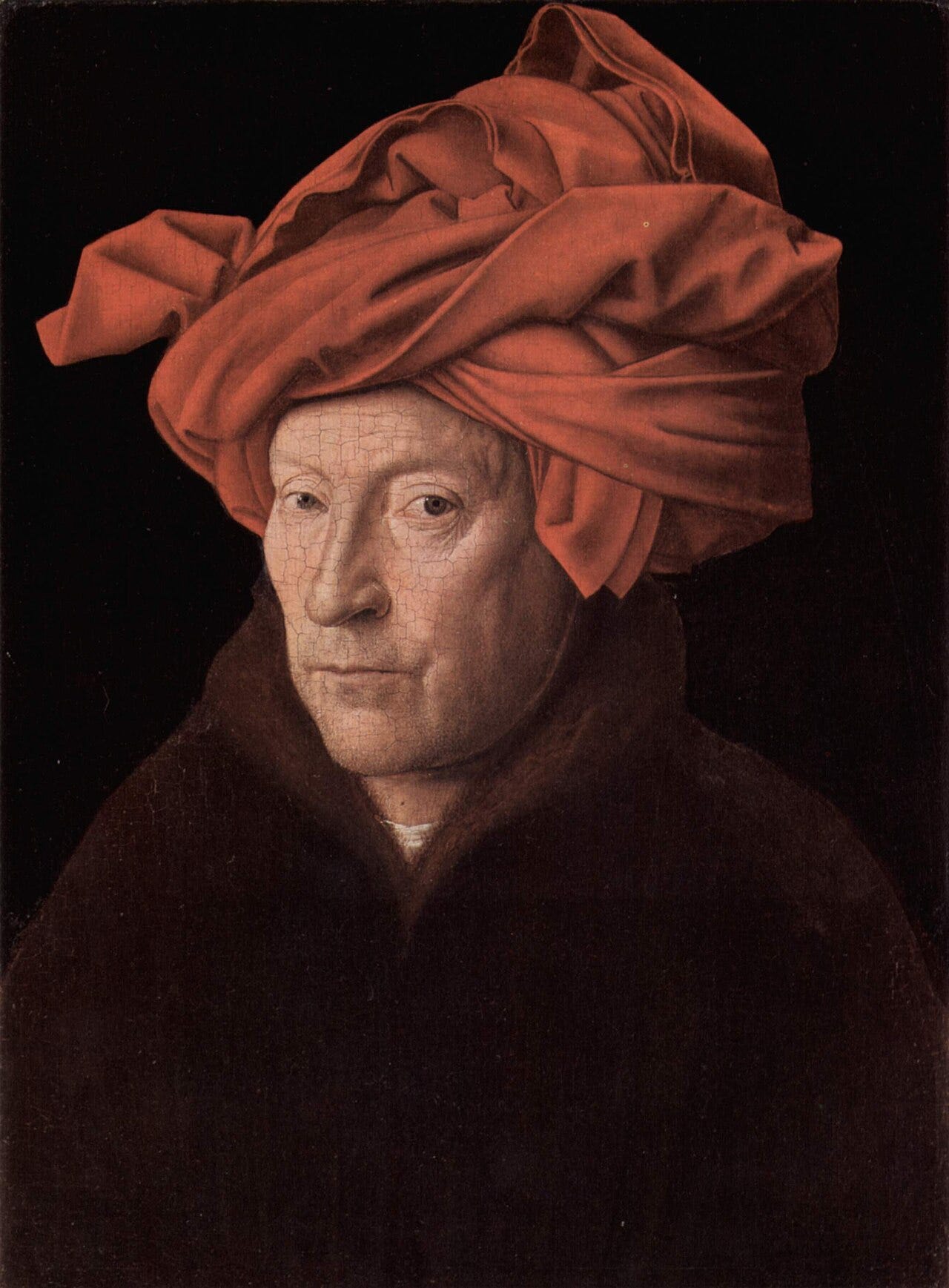
1 | Portrait of a Man in a Red Turban, Jan van Eyck (1433)
A man in a folded red headdress looks directly out, which sitters almost never did. The frame carries van Eyck’s motto: as I can.
Most scholars think it is the painter himself, which would make it the earliest known Western self portrait on panel. I go into his whole story in Jan van Eyck.
2 | Portrait of Susanna Lunden, the Straw Hat, Rubens (about 1625)
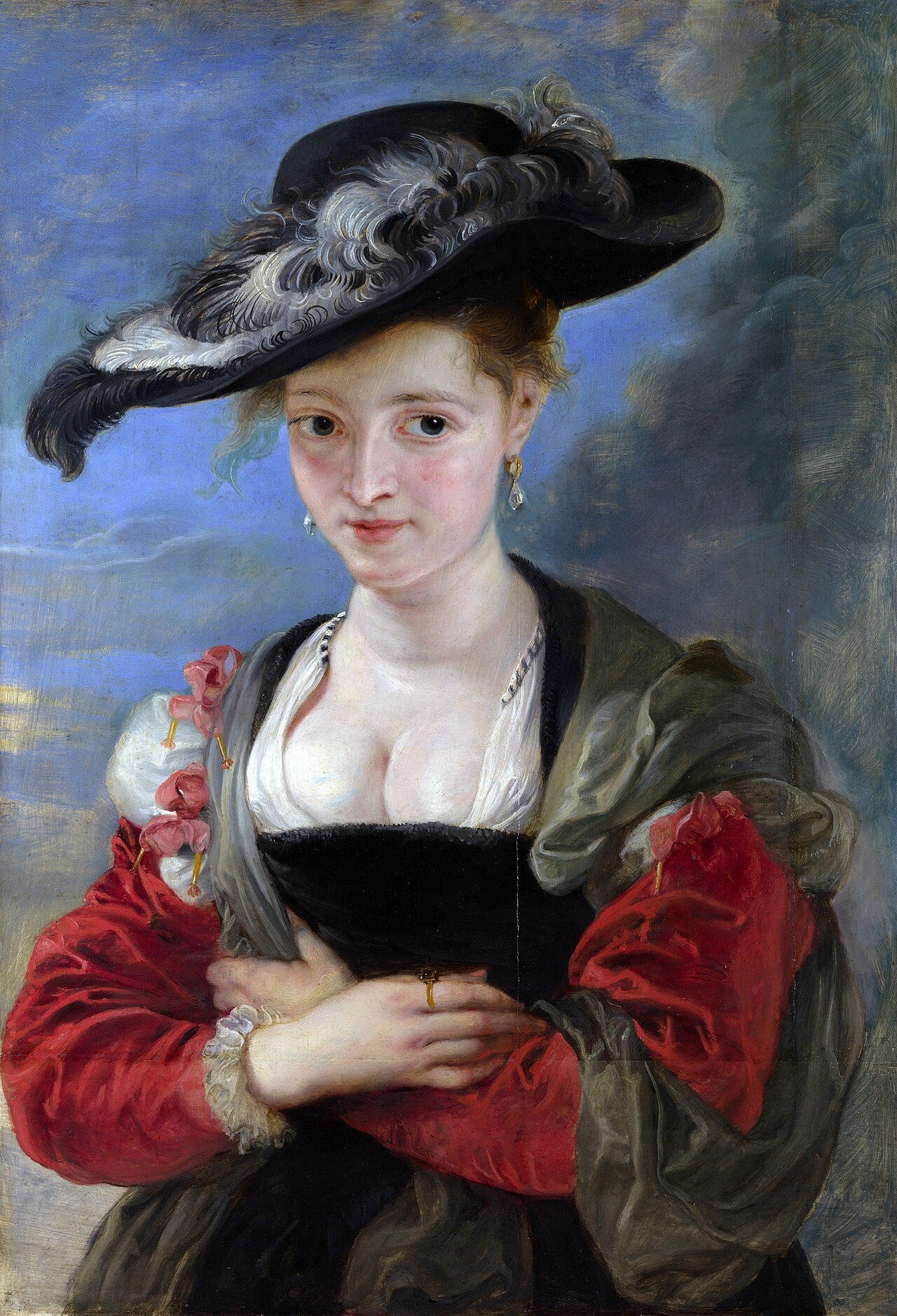
The hat is felt, not straw, and the title has been wrong for centuries. What matters is the shadow it throws across her eyes, which nobody had painted that softly before.
Elisabeth Vigee Le Brun saw it in Antwerp in 1782 and immediately painted herself in the same hat. Her version is in laughter in painting.
3 | The Doge Leonardo Loredan, Giovanni Bellini (about 1502)
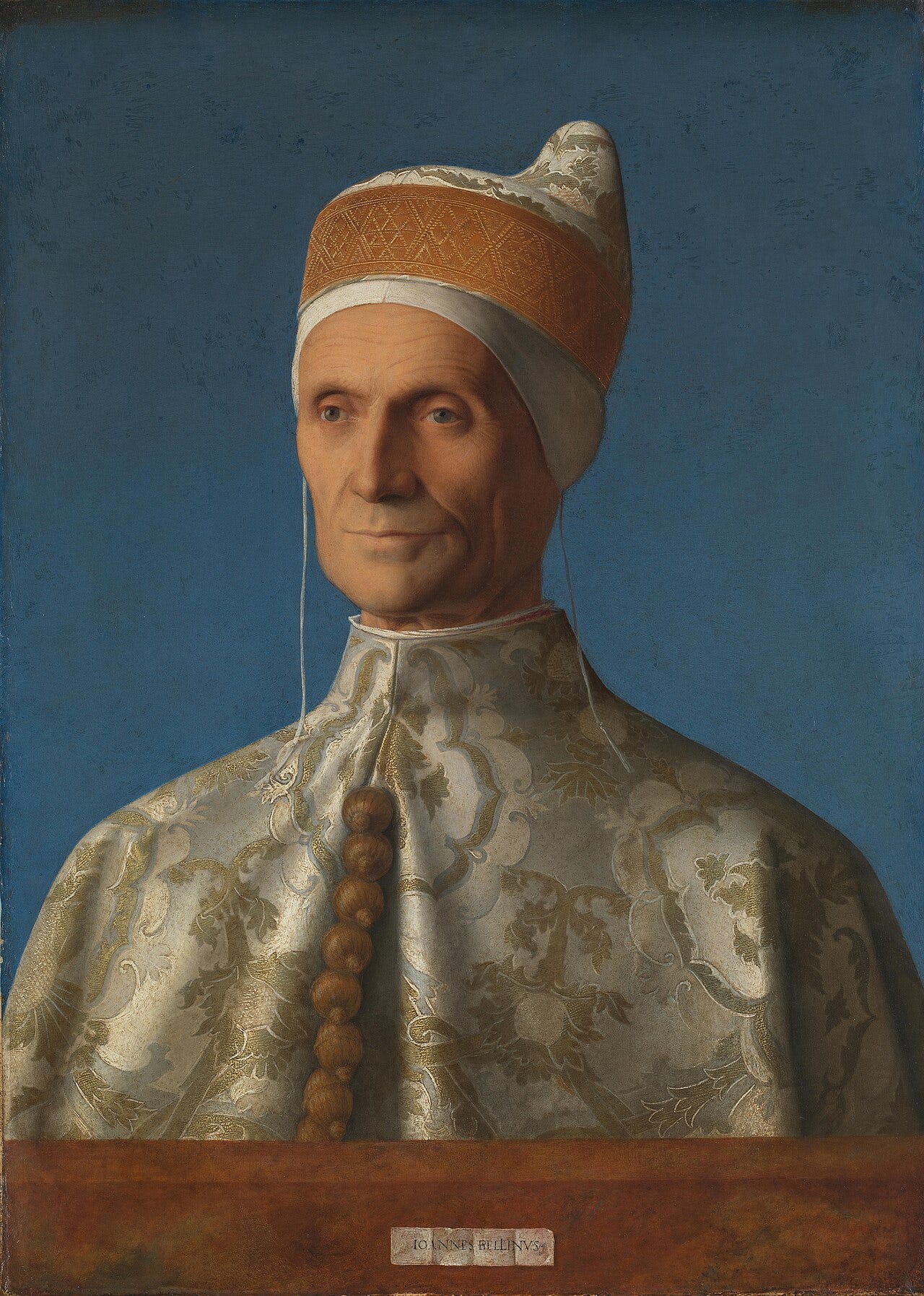
The doge wears the corno ducale, a stiff horned cap worn over a linen cap, the exact shape prescribed for the ruler of Venice.
Bellini painted the fabric buttons so precisely you can count the threads. The founder of Venetian painting I cover that in Giovanni Bellini.
4 | Self Portrait with Grey Felt Hat, Vincent van Gogh (1887)
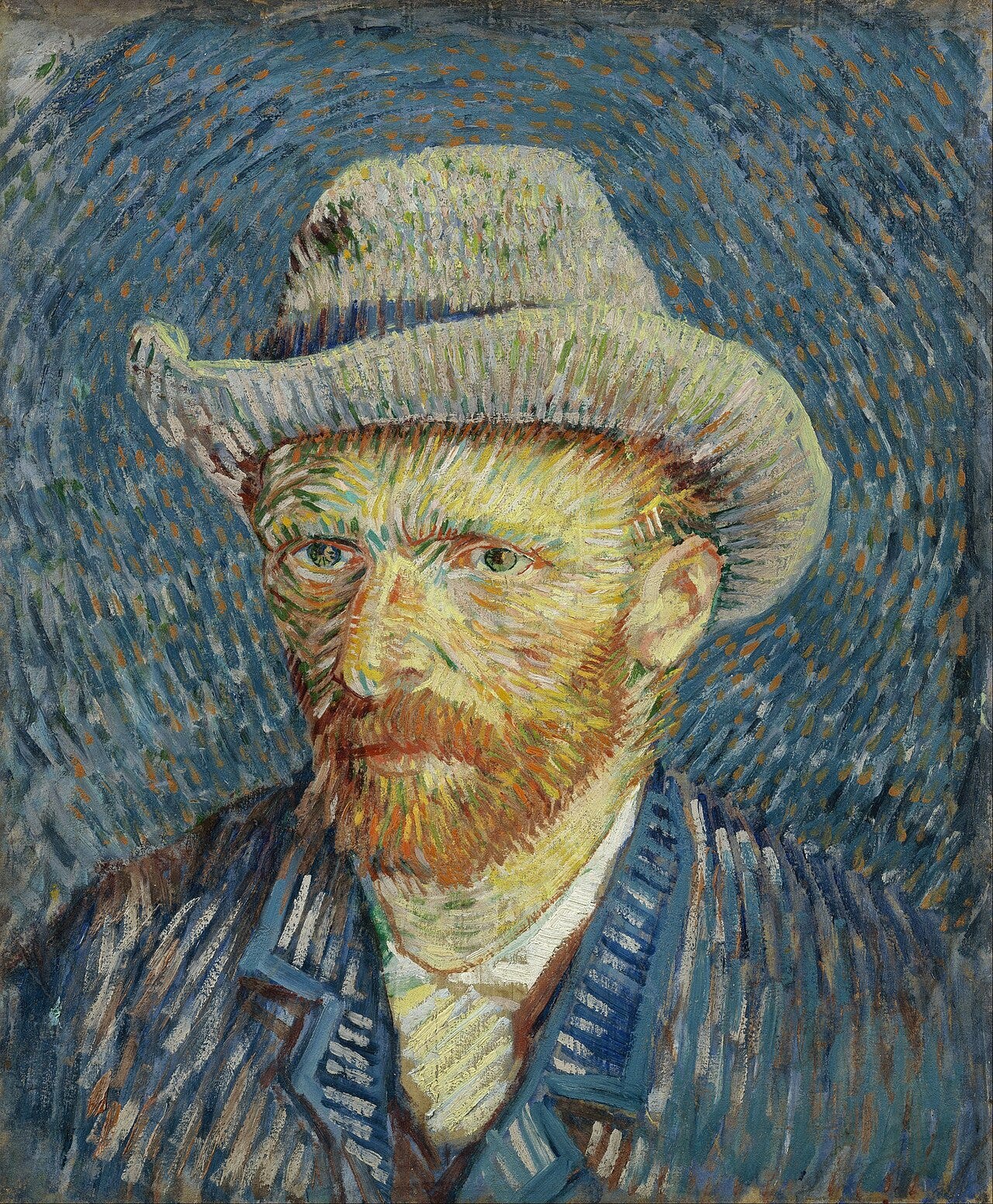
Paris changed his palette: the hat sits in a halo of blue and orange strokes radiating out from the head like a magnetic field.
He painted more than 35 self portraits in about four years, mostly because he could not pay models. More on him in Vincent van Gogh.
5 | The Son of Man, Rene Magritte (1964)
A man in a bowler hat with a green apple hovering where his face should be. Magritte said everything we see hides another thing, and we always want to see what is hidden.
The bowler man appears across dozens of his paintings, always anonymous, always the same uniform.
6 | The Extraction of the Stone of Madness, Hieronymus Bosch (about 1494)
The surgeon operating on a peasant’s skull wears an upturned funnel on his head. In Netherlandish imagery, a funnel hat marks a quack or a fool.
The hat tells you the operation is fraud before you read a word. More of these frauds are in doctors and medicine in painting.
7 | Napoleon in His Study, Jacques Louis David (1812)
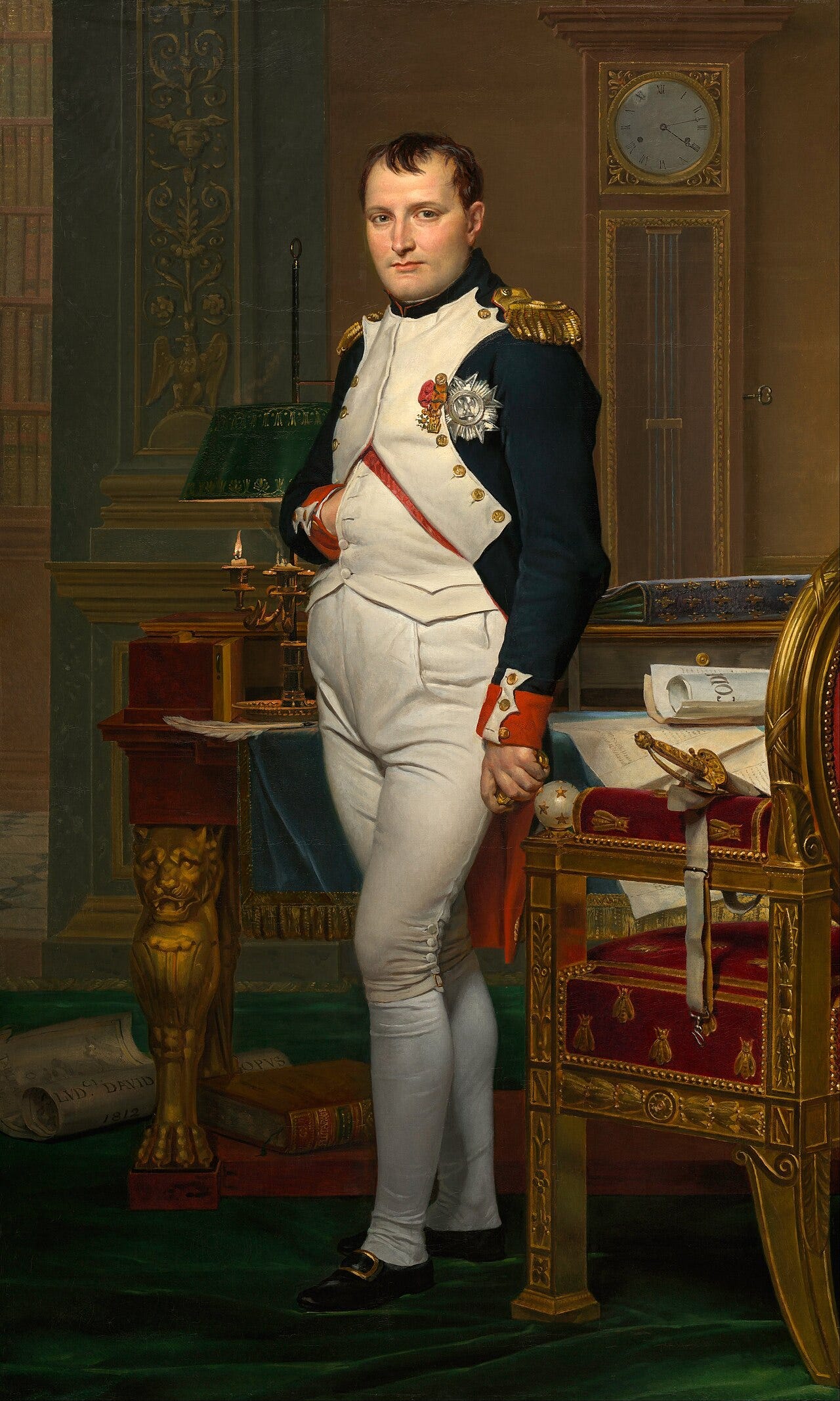
The bicorne hat sits on the chair beside him, worn sideways in his signature style so troops could recognize him across a battlefield.
Napoleon owned roughly 120 of them. One sold at auction in 2014 for about 1.9 million euros. His image maker More of it in Jacques Louis David.
8 | At the Moulin Rouge, Henri de Toulouse Lautrec (1892)
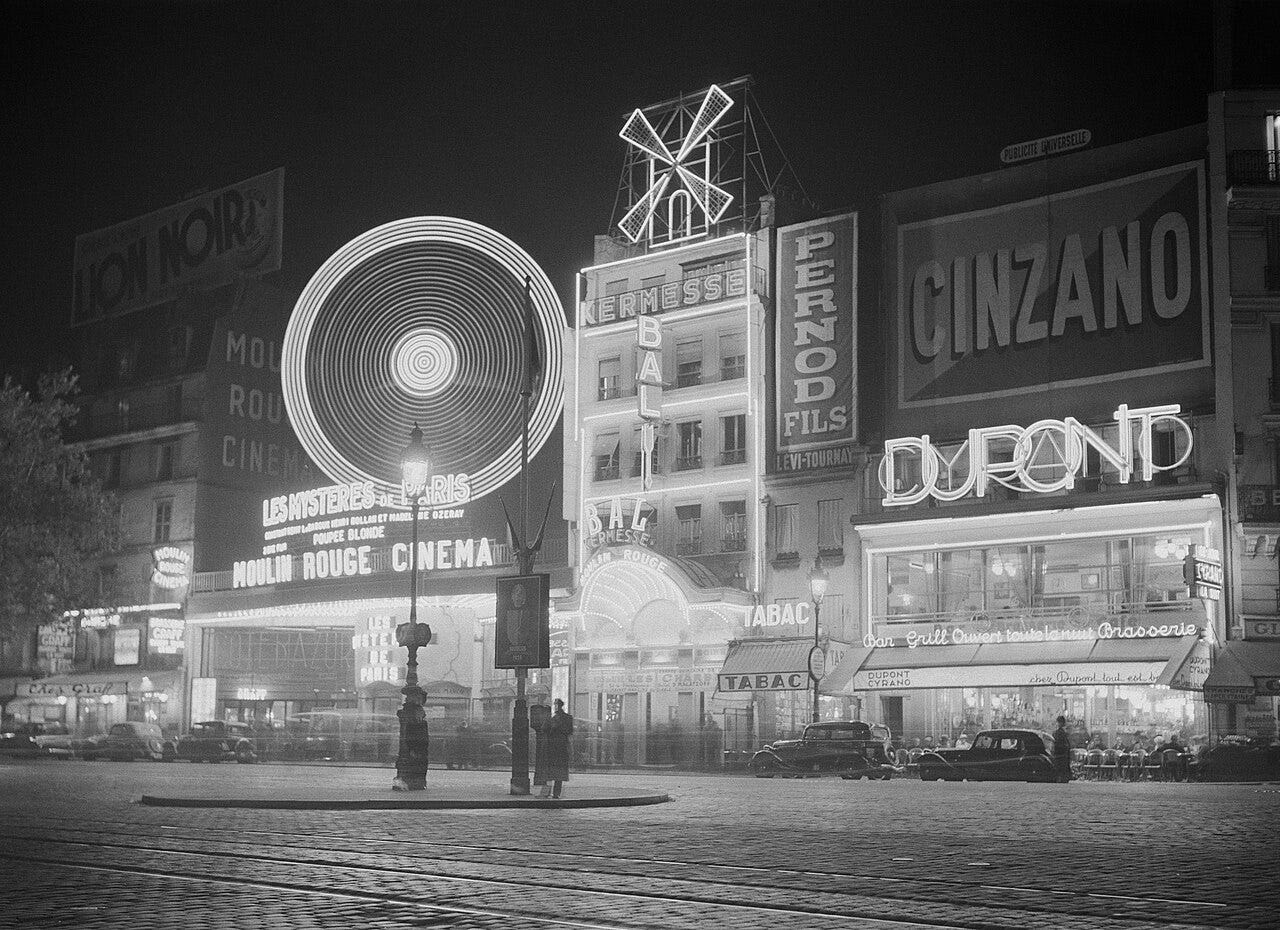
Top hats mark the men, feathered creations mark the performers, and the whole social map of a Paris nightclub can be read from headwear alone.
Lautrec sat in that room most nights for years. The rest of his life is in Toulouse Lautrec.
Lautrec painted himself into the background, the short figure at the back beside his tall cousin Gabriel Tapie de Celeyran. The green lit face at the right is the dancer May Milton, and the panel was cut down and later restored.
9 | Madame Moitessier, Ingres (1856)
No hat, but the most calculated hair ornament in painting, and the pose is lifted from an ancient Roman wall painting at Herculaneum.
Ingres took twelve years to finish it. The perfectionist The full account is in Ingres.
The seated version took Ingres twelve years, from 1844 to 1856, and he abandoned it twice. The mirror behind her shows the back of her head at an angle that is optically impossible.
10 | The Fifer, Edouard Manet (1866)
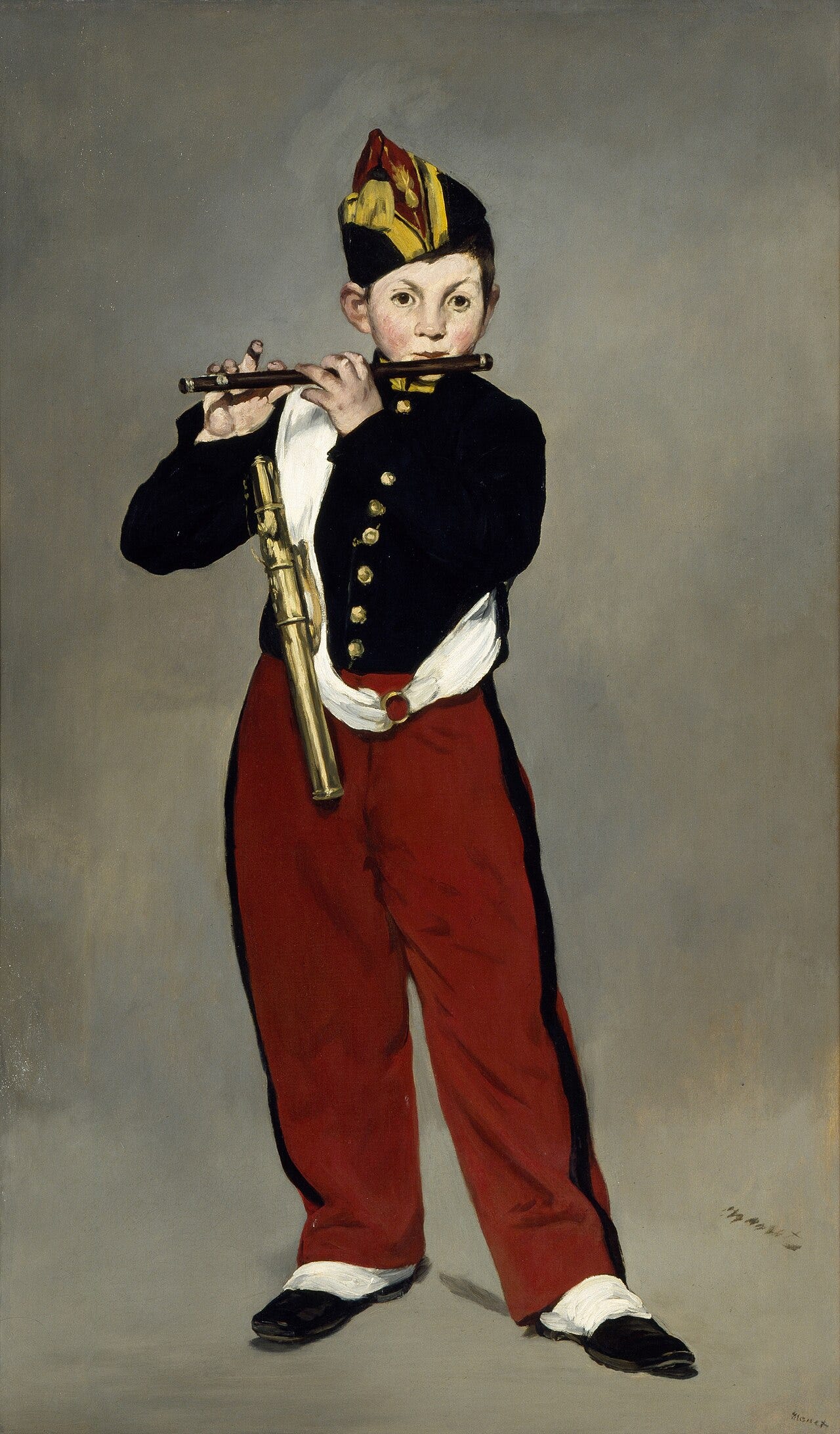
A boy soldier in a flat red cap stands against nothing at all: no floor, no wall, just grey. The Salon rejected it that year.
Manet had just come back from Spain and Velazquez. I cover him properly in Edouard Manet.
Manet painted it in 1866 and the Salon rejected it. Zola defended it in print, calling it a picture reduced to essentials, and the flat background with no floor or wall was exactly what the jury objected to.
11 | Portrait of a Man, called The Man with the Golden Helmet (about 1650)
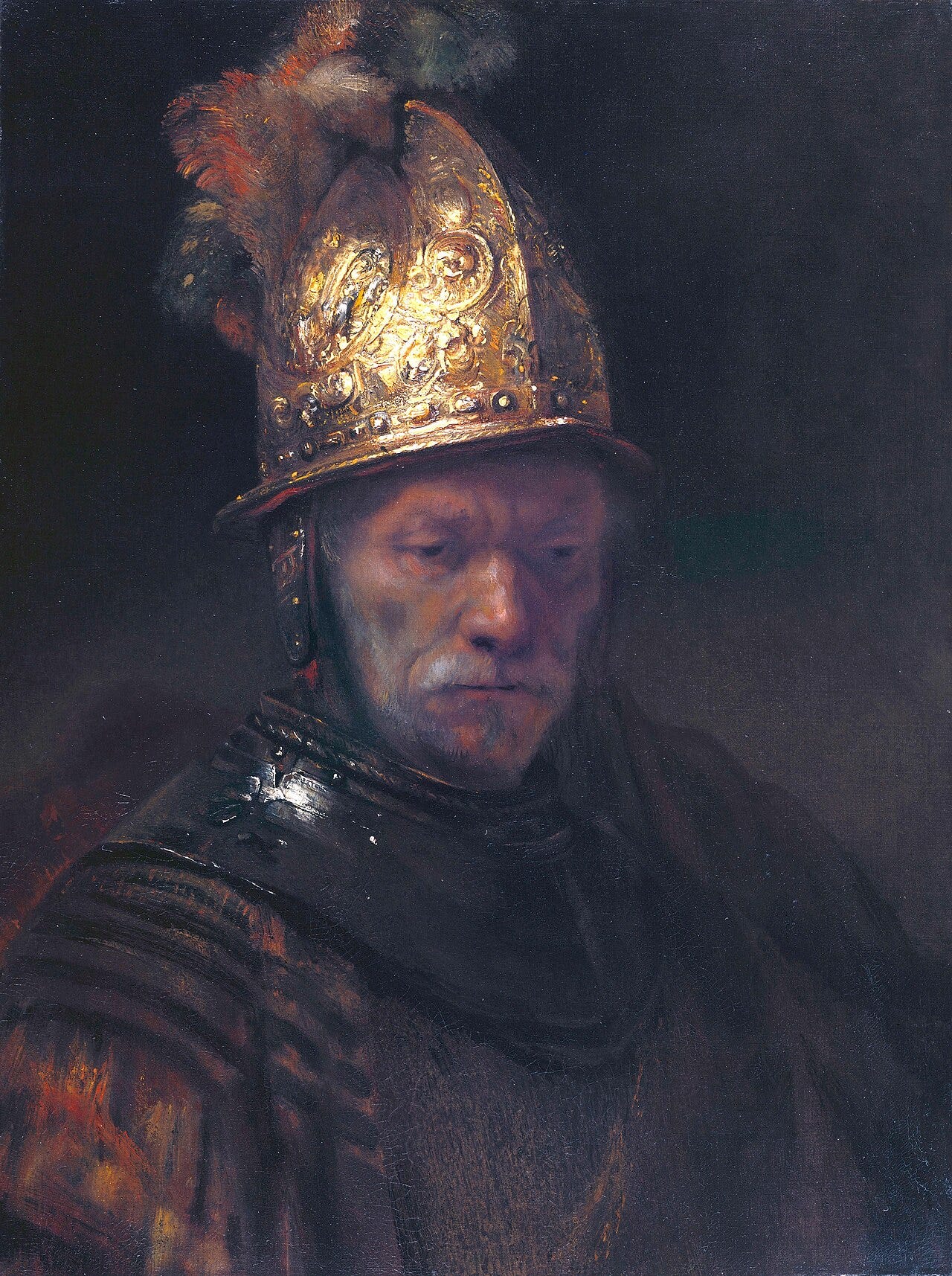
For a century Berlin’s most beloved Rembrandt: an old soldier in a helmet of thick gold impasto. In 1985 scientific study concluded it was painted in his circle, not by him.
Attendance dropped after the announcement. The helmet did not change, only the label. The workshop question I go into it in Rembrandt.
12 | Girl with a Pearl Earring, Johannes Vermeer (about 1665)
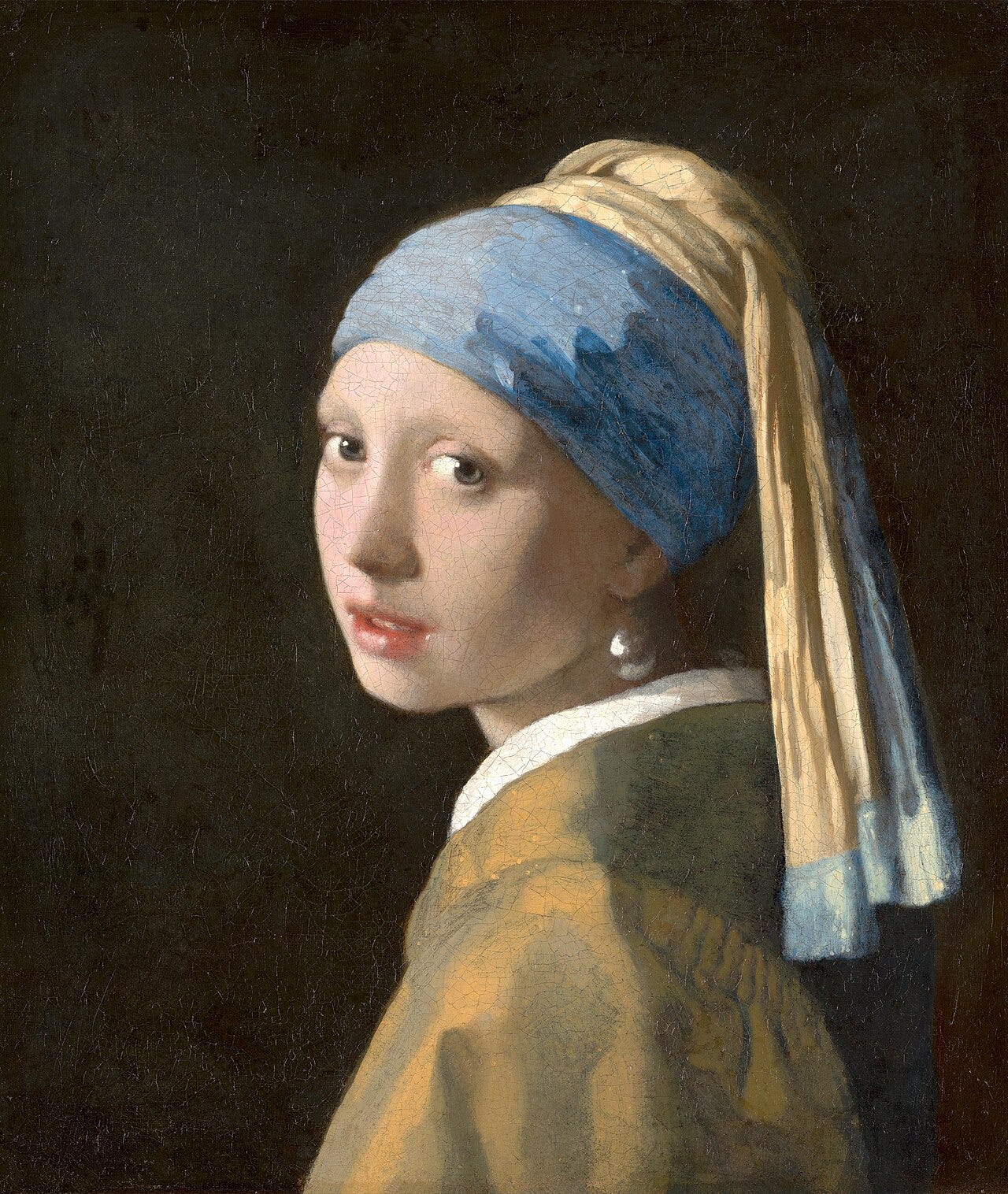
The blue and yellow turban is not Dutch dress at all. It is a costume, which makes the picture a tronie, a study of a type rather than a portrait of a person.
That distinction changes who she is: what is a tronie. And the painter of that turban I cover that in Vermeer.
Both the Rijksmuseum and the Met let you zoom close enough to see how the felt was painted.
Turbans, bowlers and the questions they raise
Which is the one people name? The bowler in Magritte’s Son of Man, with van Eyck’s red turban as the historic answer.
Is the Man in a Red Turban a self portrait? Probably. The direct gaze and the motto on the frame point to van Eyck himself, though it is not proven.
Why is Rubens’ Straw Hat not straw? It is felt. The wrong title stuck from an early inventory and nobody has managed to remove it since.
What kind of hat does the Doge wear? The corno ducale, a horned cap whose shape was fixed by Venetian custom for the head of state.
Where is Portrait of a Man in a Red Turban today? The Rijksmuseum in London for van Eyck, Rubens and Bellini, the Mauritshuis for the Girl, Berlin for the Golden Helmet.
A footnote that changes the picture: when Vigee Le Brun copied Rubens’ hat in 1782, she wrote that the effect came from painting in open daylight rather than studio light. One borrowed hat changed how she lit every portrait afterward.
This subject is one thread in a wider theme. See how it fits into Objects and Symbols in Painting.