
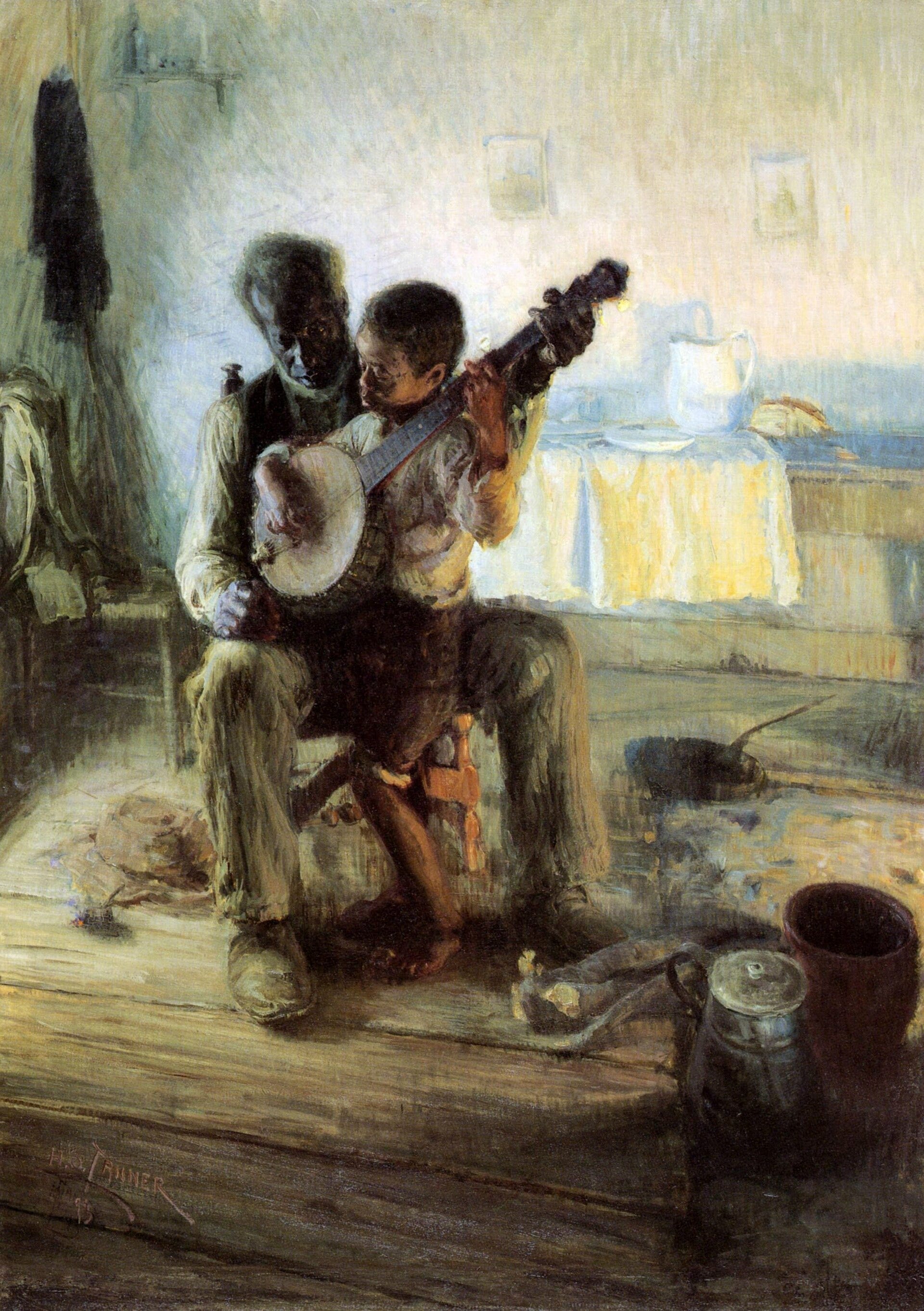
Henry Ossawa Tanner (1859 to 1937) was an American painter, born in Pittsburgh and raised in Philadelphia, who spent most of his career in France. His best-known picture today, The Banjo Lesson (1893), shows an old Black man teaching a boy to play the banjo.
In his lifetime, Tanner was famous for his scenes from the Bible. The French state bought one of them, The Resurrection of Lazarus, for a national museum in Paris.
Tanner's father was a Black bishop who wanted his son to become a minister. The son became a painter, sailed for Europe at thirty-one and lived in France until his death.
Cool Stories About Art is a newsletter to learn art the fun way.
Join 200,000+ readers and get:
10 new art stories / month
The entire archive of content (140+ articles)
Comment, ask questions, and chat with other readers
Henry Ossawa Tanner was the first of nine children. His father, Benjamin Tucker Tanner, was a minister of the African Methodist Episcopal Church, a Black church independent of the white churches. He later became one of its bishops, the senior leaders of the church.
The Tanners settled in Philadelphia. In Fairmount Park, the city's big public park, Henry, aged twelve or thirteen, stopped to watch a landscape painter working outdoors. The sight, he wrote later, "set me on fire." His mother gave him fifteen cents to buy paints.
Benjamin Tucker Tanner expected his eldest son to preach. To turn Henry away from painting, he apprenticed him to a friend who was a miller, a man who grinds grain into flour. The work was so hard that the boy fell seriously ill.
Henry painted anyway. Around 1880, he entered the Pennsylvania Academy of the Fine Arts, the art school of Philadelphia, on Broad Street. Among some two hundred students, Tanner was the only Black one.
Joseph Pennell, a white classmate who later became a well-known illustrator, wrote down what the other students did to Tanner. They resented him, Pennell explained, because the Black student "seemed to want things."
One night, the students carried Tanner's easel, the wooden stand that holds a painter's canvas, into the middle of Broad Street. Tanner, Pennell wrote, was "firmly tied to it and left there."
The student tied to his easel would become famous, but on the other side of the Atlantic. Why did Henry Ossawa Tanner have to leave his own country to make a living as a painter?
In the rest of the story, you'll find out:
how an exhibition that sold nothing paid for his ship to Europe
how a Bible scene by an American ended up in a French national museum
what Tanner himself said about why he could not live in America
what the White House did in 1996 that it had never done before