
Hidden self portraits are the oldest joke in painting. Michelangelo put his own face on a flayed skin in the Sistine Chapel, Caravaggio painted himself as a severed head, and Botticelli looks straight out of a crowd scene at you. Twelve painters who smuggled themselves into their own pictures. That same habit runs in reverse as well, and twelve painters who instead put their face front and center make the point directly.
Where to look
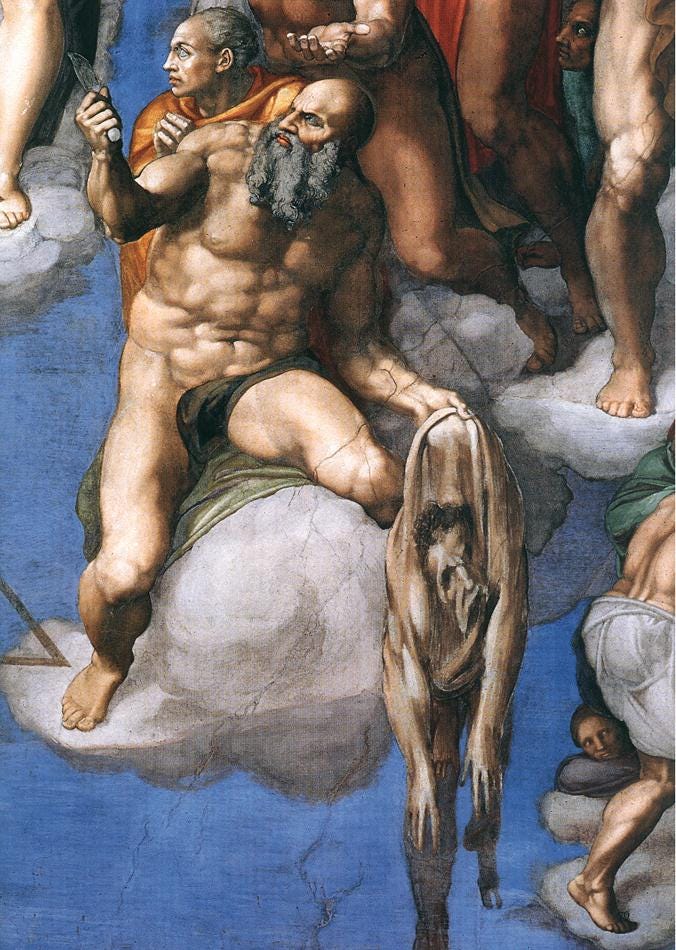
One painter signed himself as a piece of loose skin held by a saint.
One painted his own head being held by the boy who killed the giant.
One put himself in a mirror on the back wall, which also made him a witness.
One stands in a storm on a boat with thirteen apostles, holding a rope and looking at us.
And one appears twice in the same fresco, twenty years apart in age.
Learn art the fun way
1 | Michelangelo, in the flayed skin (1541)
In the Last Judgment, Saint Bartholomew holds his own flayed skin. The face on that empty skin is generally accepted as Michelangelo’s.
He was in his sixties, exhausted by the commission and in conflict with the Vatican. It is the least flattering self portrait in art. More of that wall in censored art.
2 | Caravaggio, as the severed head (1610)
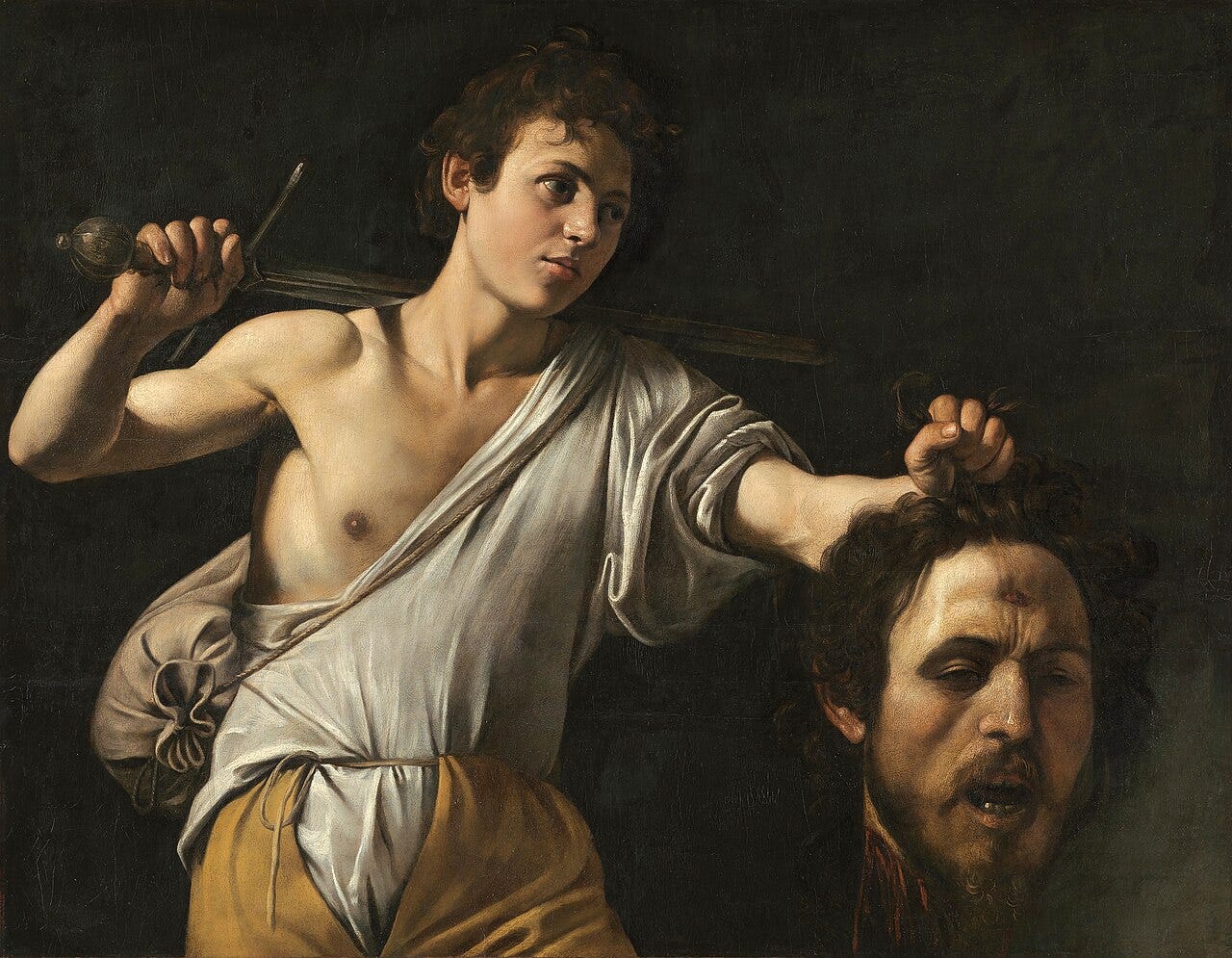
In David with the Head of Goliath, the giant’s head is Caravaggio. He painted it while under a death sentence for killing a man, and sent it to Rome as a plea for pardon.
He died before the pardon reached him. The full story is in why Caravaggio painted himself as Goliath.
3 | Jan van Eyck, in the mirror (1434)
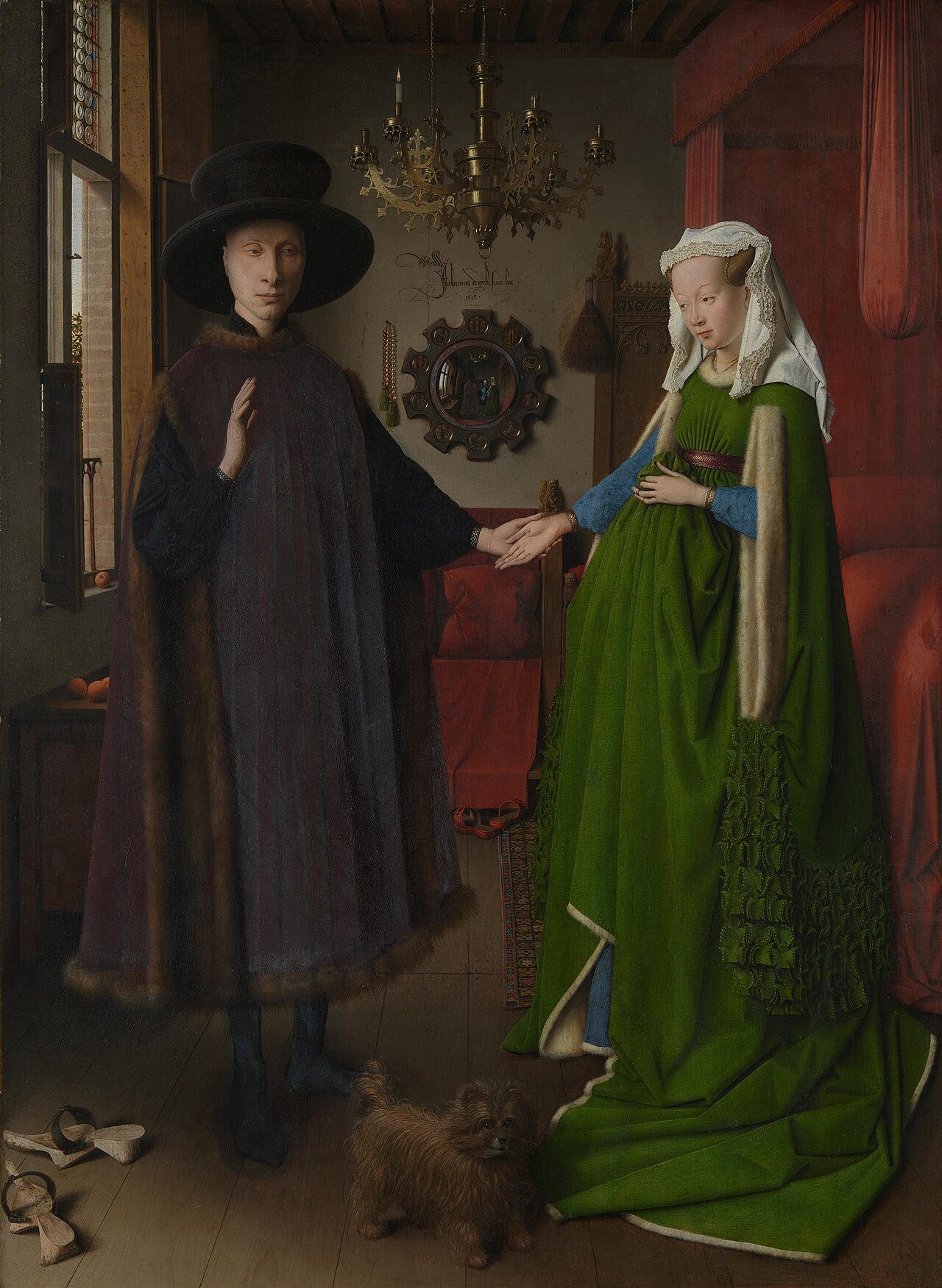
The convex mirror on the back wall of the Arnolfini Portrait shows two extra figures in the doorway. Above it van Eyck wrote that he was here.
One of those tiny reflected figures is usually read as the painter. I go into the whole room in the Arnolfini Portrait.
4 | Rembrandt, in the storm (1633)
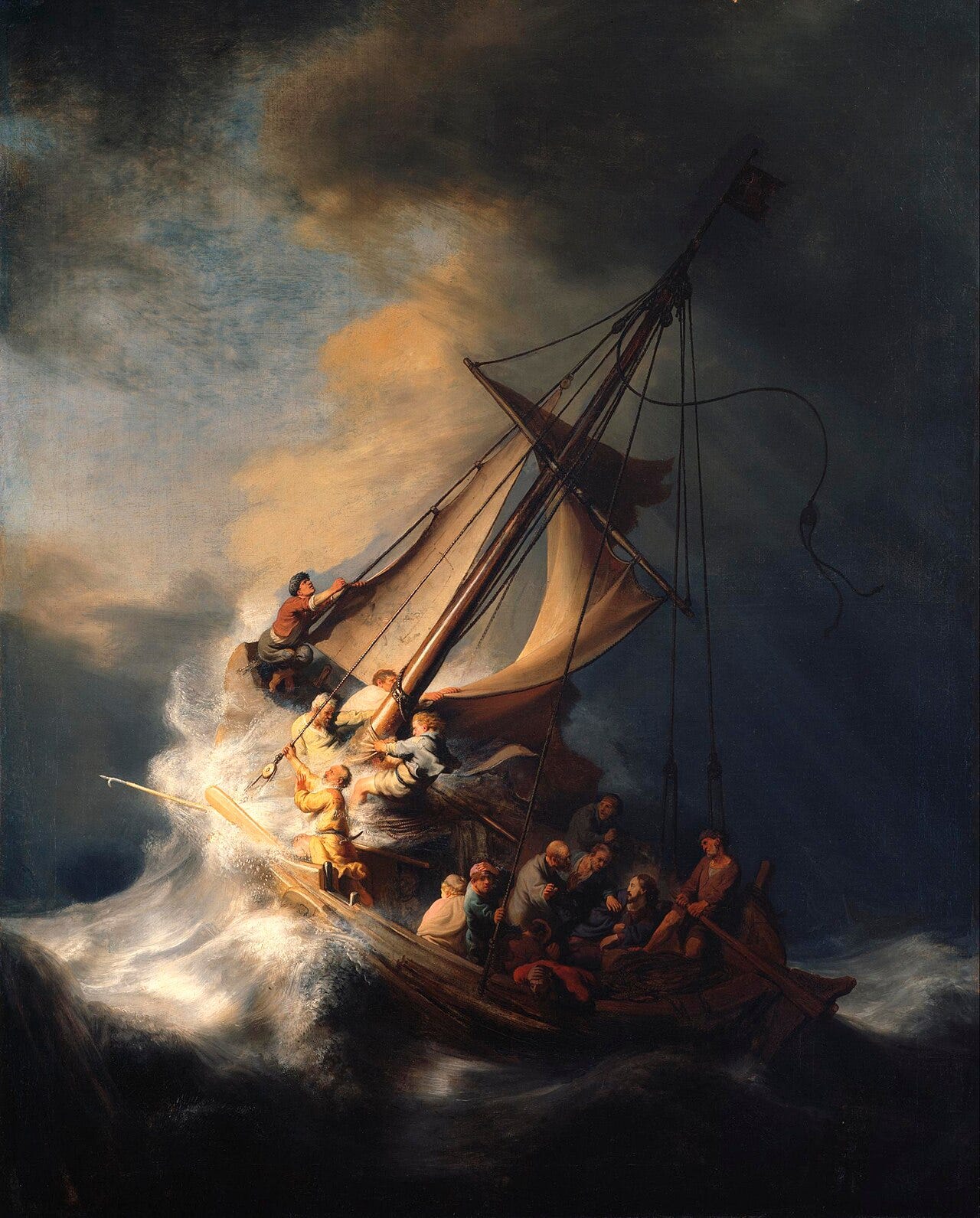
In The Storm on the Sea of Galilee there are fourteen figures for thirteen expected. The extra man grips a rope with one hand, holds his cap with the other, and looks out at us.
The painting was stolen in 1990 and never recovered. The heist is in the most stolen paintings in history.
5 | Botticelli, in the Adoration of the Magi (about 1475)
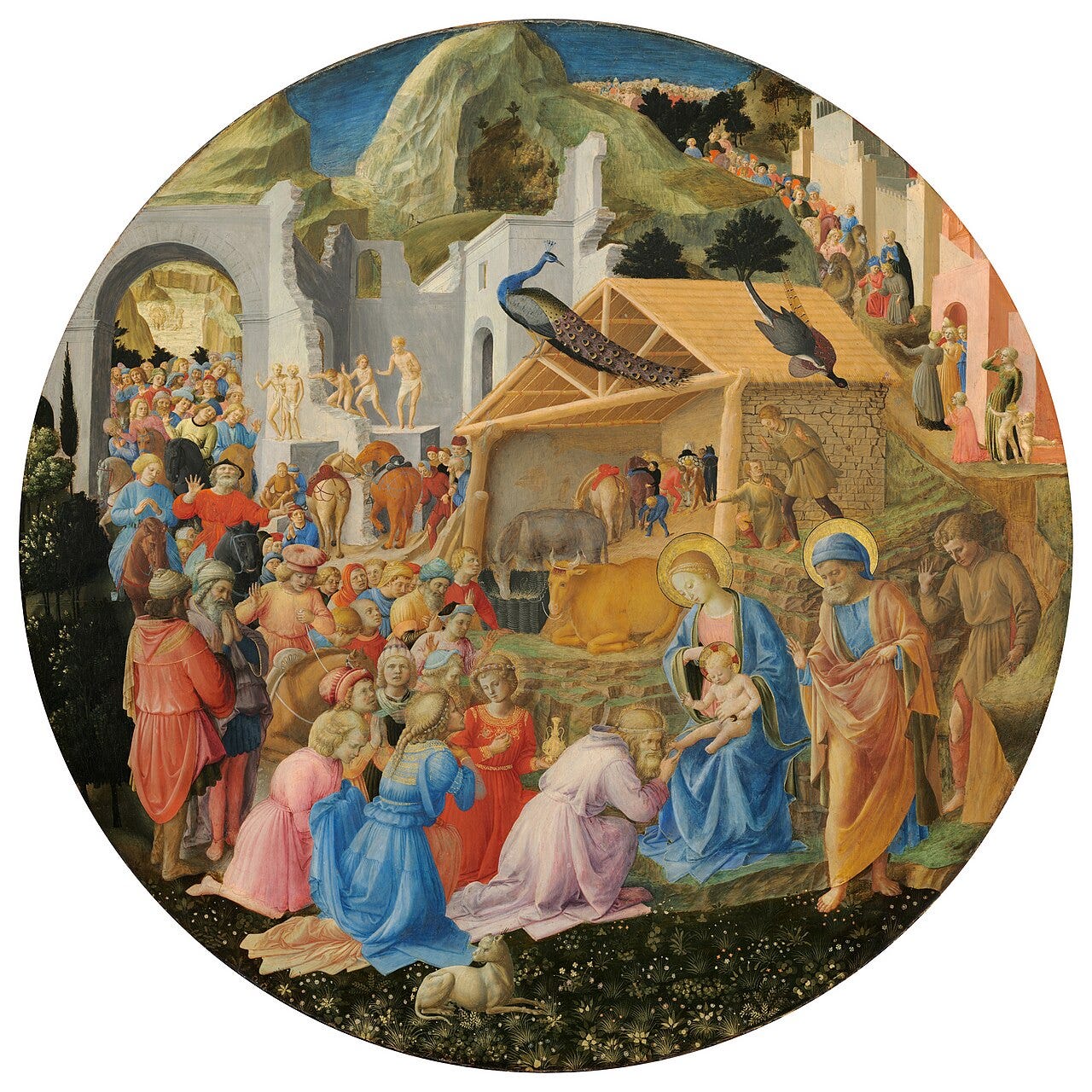
At the right hand edge of the crowd, a young man in a yellow cloak turns away from the Holy Family and looks directly at the viewer.
Vasari identified him as Botticelli. More on him in Botticelli.
6 | Velazquez, at the easel (1656)
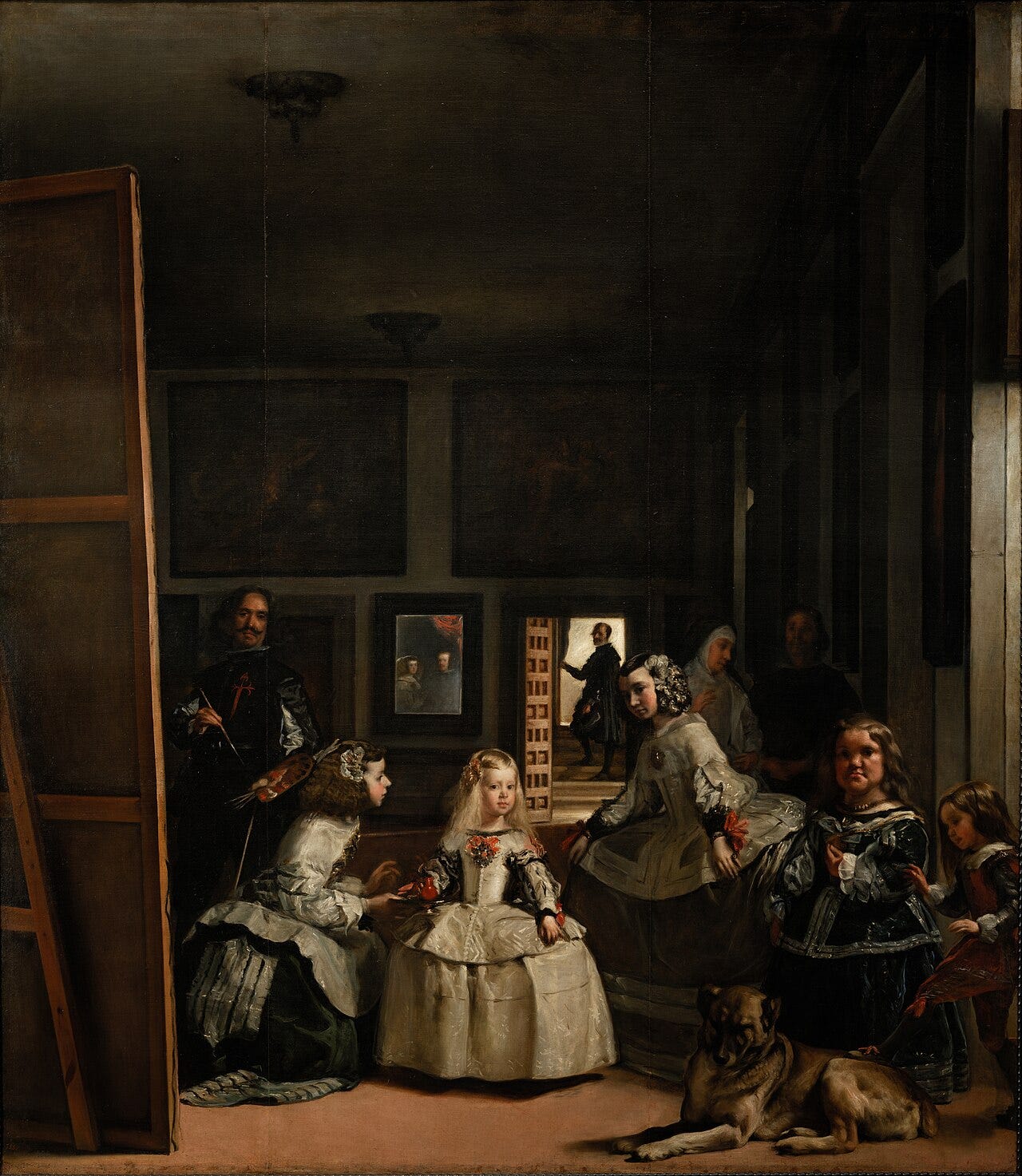
In Las Meninas, Velazquez stands at a huge canvas we cannot see, brush in hand, looking out of the picture at whatever he is painting.
The red cross on his chest was added later, after his death, by royal order. More on him in Diego Velazquez.
7 | Raphael, in the School of Athens (1511)
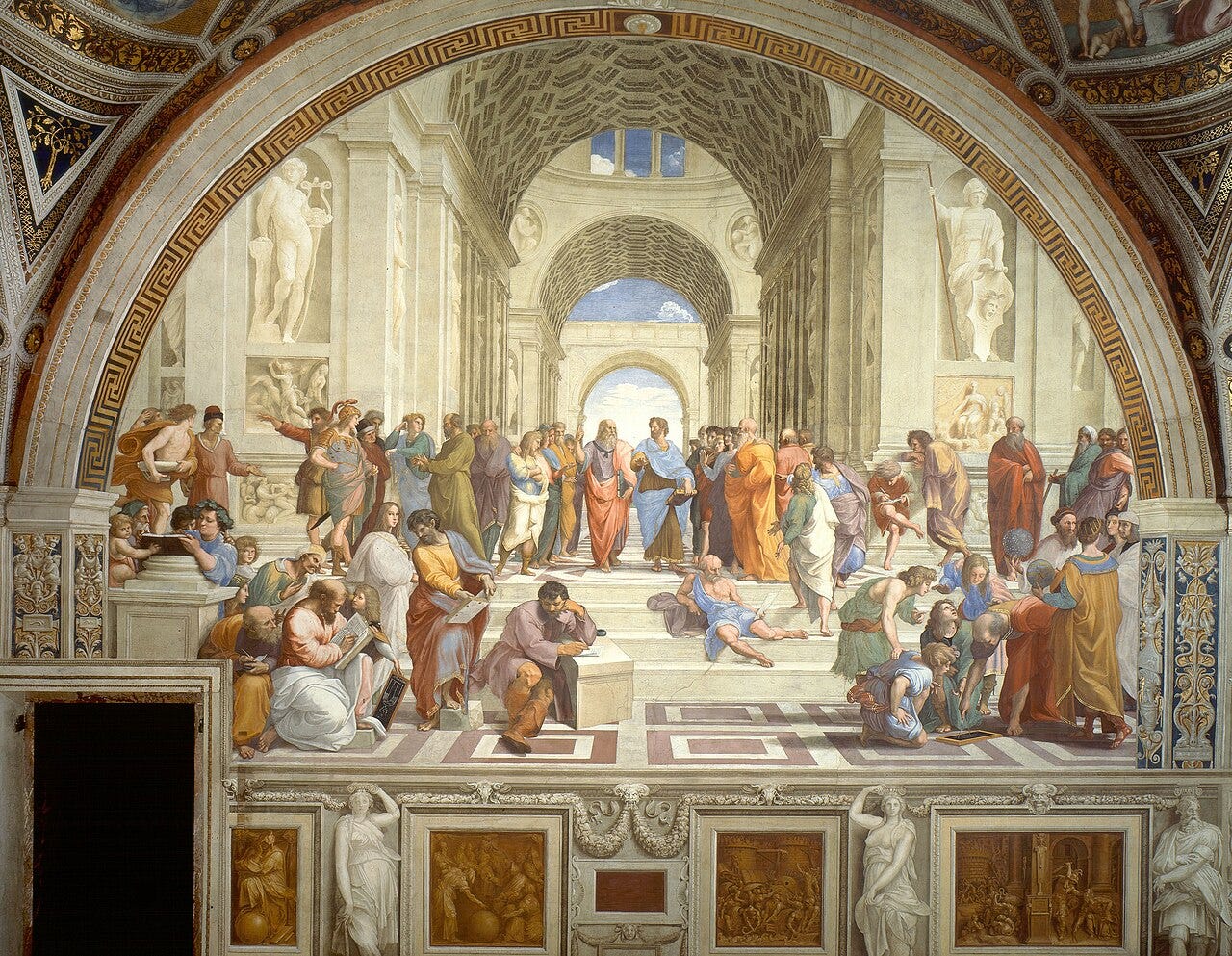
Among the philosophers on the right, a young man in a black cap looks out at us. He is not a philosopher and he is not labelled.
Raphael put himself in the room with Plato and Aristotle, which is not a modest thing to do. More on him in Raphael. A full guide to who is who in that fresco, including which two rivals he painted as Plato and the brooding thinker on the steps, unpacks the rest of the room.
8 | Jan van Eyck again, in the red turban (1433)
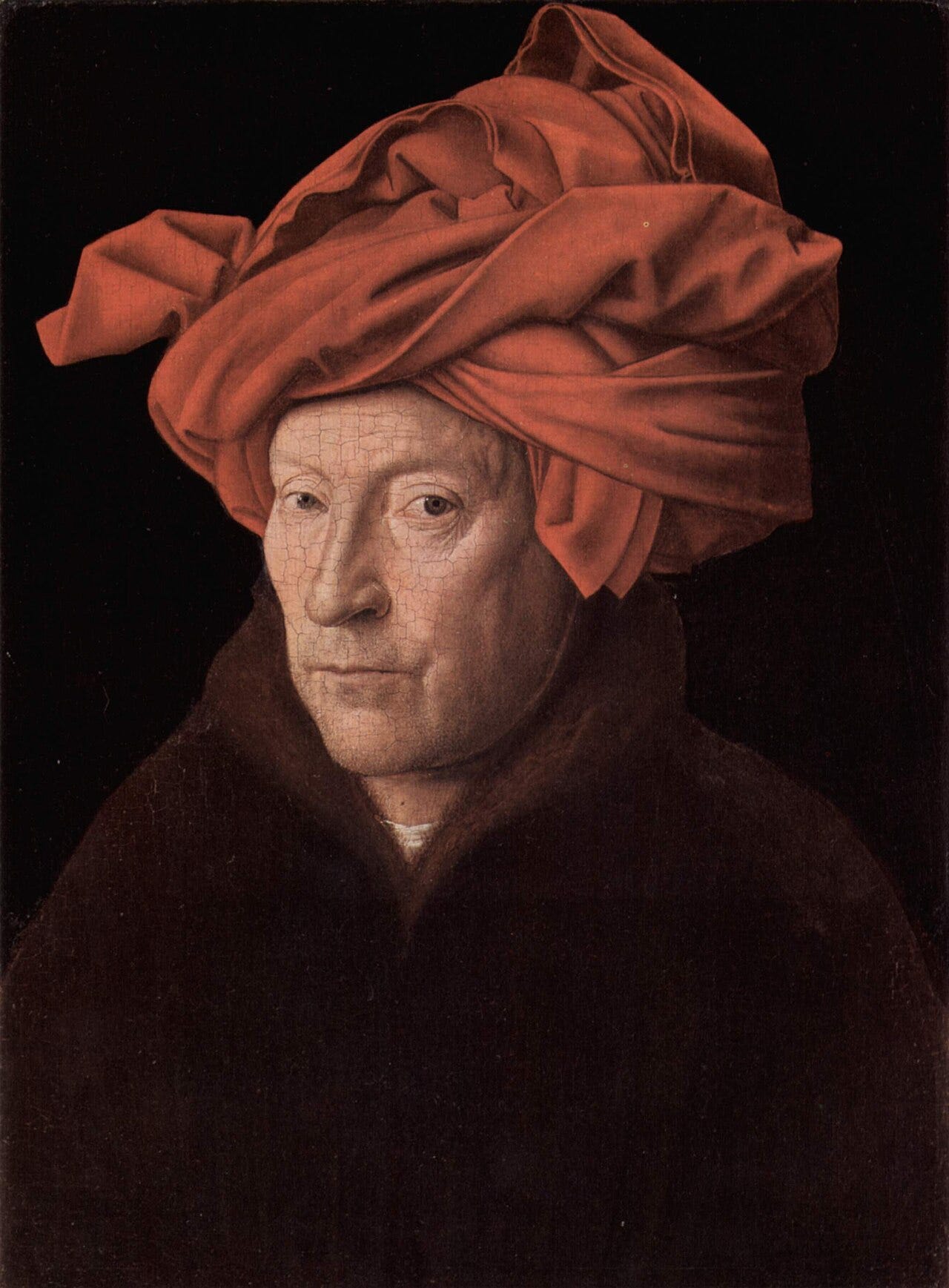
The Portrait of a Man in a Red Turban looks directly out, which sitters almost never did, and the frame carries van Eyck’s personal motto.
Most scholars accept it as the earliest surviving Western panel self portrait. More on that in hats in art.
9 | Gozzoli, twice in the same wall (1459)
In the Magi Chapel in Florence, Benozzo Gozzoli painted himself among the procession with his own name written on his hat, in case anyone missed it.
Renaissance painters used crowd scenes as staff photographs, and patrons expected it.
10 | Ghirlandaio and the Tornabuoni frescoes (1490)
Ghirlandaio inserted himself, his brother and his father in law into sacred scenes commissioned by a Florentine banking family.
The young Michelangelo was in that workshop at the time. More on him in Domenico Ghirlandaio.
11 | Titian, as one of the kings (about 1560)
In several late religious works Titian painted an old bearded man with his own features, kneeling or looking on from the edge.
In his last Pieta, painted for his own tomb, the old man reaching toward the dead Christ is generally read as Titian himself. More on him in Titian.
12 | Diego Rivera and the modern crowd
The habit never stopped. Twentieth century muralists painted themselves into political crowds, standing among the workers they were depicting.
It is the same move as Gozzoli, with a different argument. More group scenes in blacksmiths and workers in painting.
Finding the painter, quick questions
Is the flayed skin really Michelangelo? It is widely accepted, though he never said so. The identification dates from the eighteenth century and has held.
Why did Caravaggio paint himself as Goliath? He was under sentence of death for killing a man and sent the painting to Rome as a plea for pardon.
Is van Eyck in the Arnolfini mirror? Probably. Two figures appear in the doorway reflection, and the inscription above says van Eyck was here.
Why did painters hide themselves in crowds? Partly signature, partly advertising, partly devotion. A face in a sacred crowd was also a request to be remembered in prayer.
Which collections hold these? The Vatican for Michelangelo and Raphael, the Borghese for Caravaggio, the Prado for Velazquez, the Uffizi for Botticelli.
The one I find hardest to forget: Caravaggio gave the severed head his own face and gave David an expression of pity rather than triumph. He painted his own execution as a request for mercy, and the mercy arrived too late.
More painted faces hiding in plain sight are catalogued at the Met and the Rijksmuseum.
Not every hidden face stays on the surface. Whole paintings sometimes lie underneath other paintings, invisible until an X-ray finds them, a different kind of concealment covered in paintings hidden under other paintings.
This subject is one thread in a wider theme. See how it fits into Portraiture and the Human Figure in Art.