

170 000+ readers. Learn art the fun way.
This is a preview. Paid subscribers get the full story.
You’ll also get:
10 new stories every month
The full archive (130+ Art stories)
Your personal art guide. Comment, ask questions, DM me anytime
iPhone user? Subscribe at coolstoriesabout.art, not via the app. Apple adds 30% to the price.
Washington, March 8, 1968. At the Shoreham Hotel, a man steps up to the podium with a few pages in his hand, sets them down, and takes a sip of water.
William Gaud runs the United States Agency for International Development. The room is full of economists, agronomists, and civil servants in gray suits. Gaud has come to talk about wheat.
New seed varieties, fertilizer, and pesticides have just turned the Indian and Pakistani harvests around, and the world still has no name for what is happening.
Gaud has found the word. Revolution.
Revolutions come with a color. Red has belonged to the Soviets since 1917, white to the Shah of Iran since 1963.
"I call it the Green Revolution."
That day, green means sacks of fertilizer.
Three years later, the word belongs to someone else.
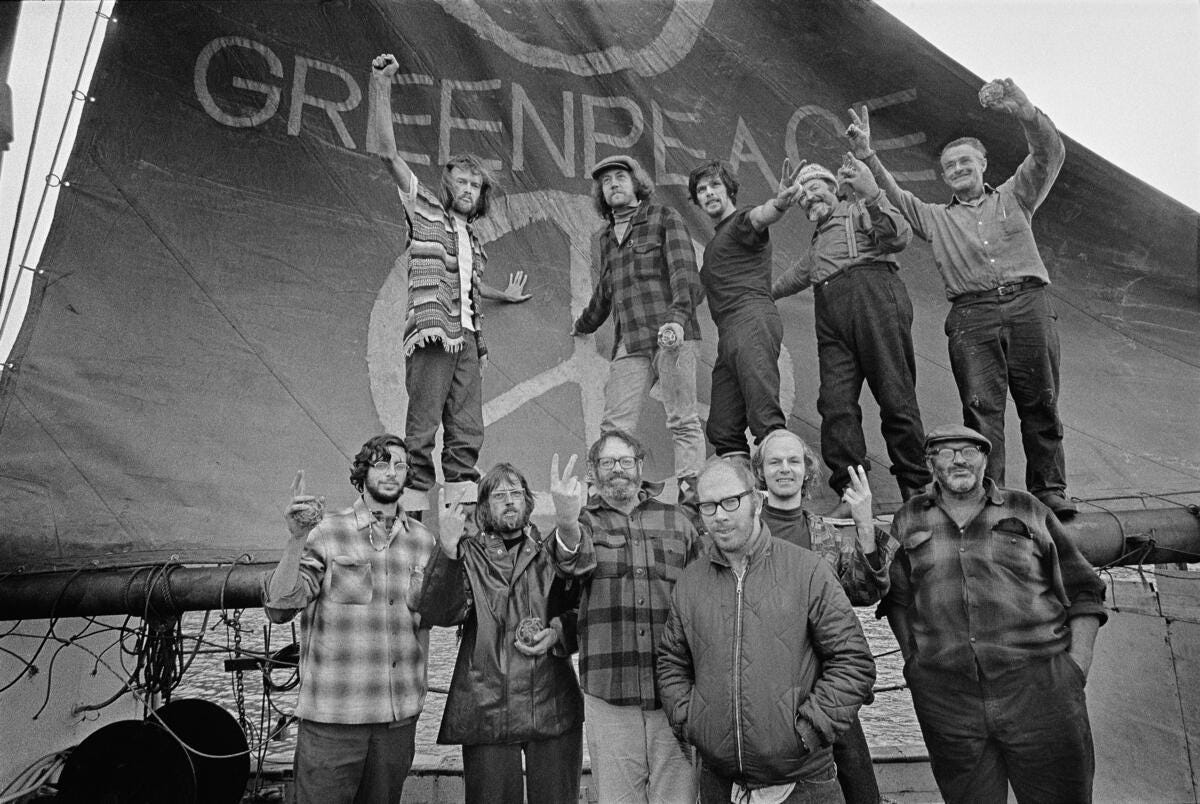
Vancouver, September 15, 1971. An old trawler casts off with 12 men aboard, headed for Amchitka, an island in the Aleutians. The Americans are preparing an underground nuclear test there, and the crew intends to park the boat directly above the bomb so the Americans cannot set it off.
On deck, one of them raises two fingers in a V, the peace sign. Another answers.
"Make it a green peace."
The Coast Guard stops the boat short of the Aleutians, the test goes ahead on November 6, and nothing survives the expedition but those few words spoken on the deck. The name stays with the boat.
Fifteen years go by, and the color starts to pay.
Fiji, 1986. An American student walks into his hotel room and finds a card on the bed. It asks him to reuse his towel for the sake of the reef.
The hotel is busy extending its bungalows out over that same reef, and every towel left unwashed is money the hotel does not spend on laundry.
The student's name is Jay Westerveld. He gives the practice a name. Greenwashing.
Today green is on the detergent bottle that promises it works in cold water. On the bag sold as compostable. On the tomato carton, on the yogurt cup, on the washing machine that advertises less water per cycle.
An entire civilization has handed one color the job of saving it, and the idea is less than 60 years old.
Discover my new newsletter !

The Wadj Sign
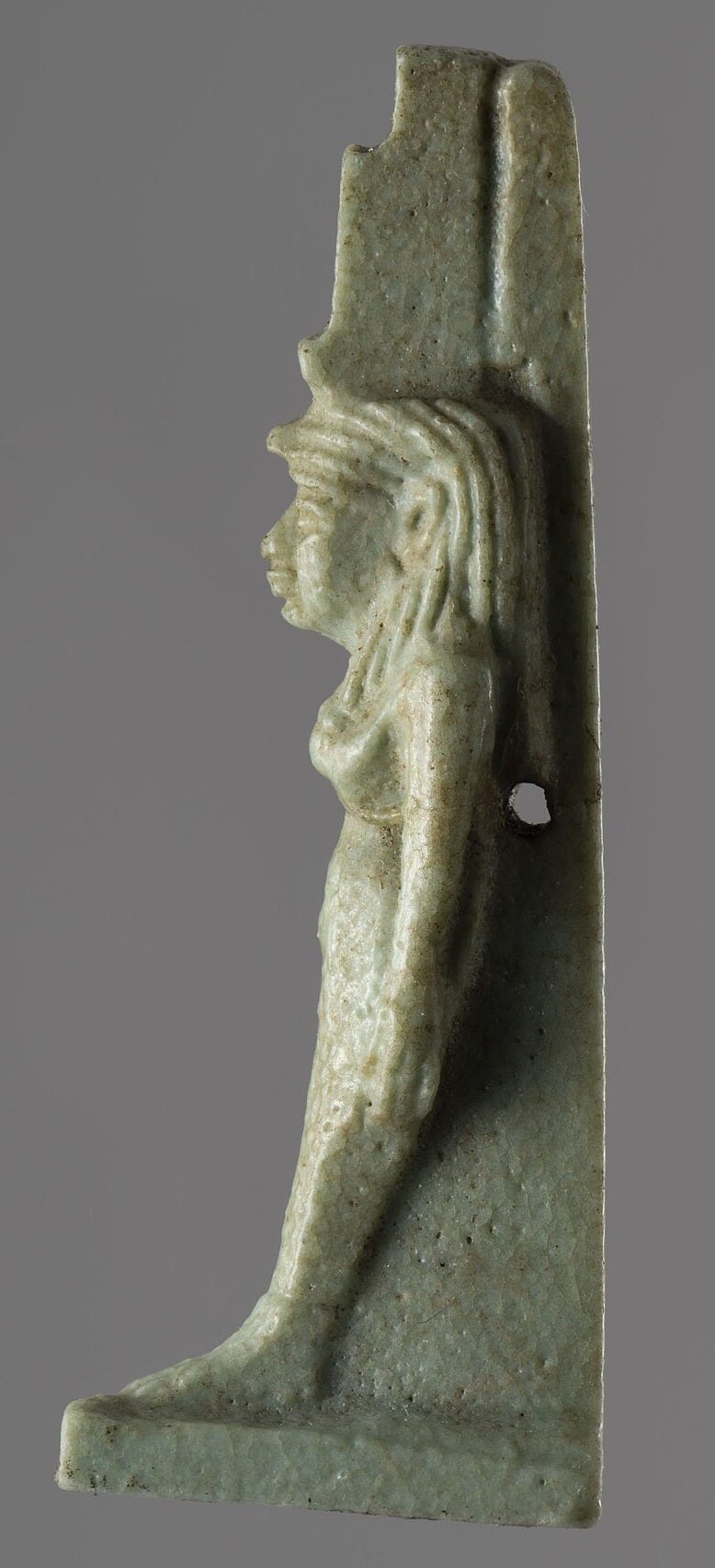
Three thousand years earlier, on the banks of the Nile, a single sign means green, fresh, young, and thriving. That sign is wadj. It is drawn as a papyrus stalk, and the same root gives the word for a new shoot and the word for a son.
The Egyptian language does not blur color and life in words alone. The tombs blur them too. Embalmers slip a wadj amulet cut from green feldspar around the dead man's neck, so he can begin the journey again. On the walls, Osiris, the god who goes i
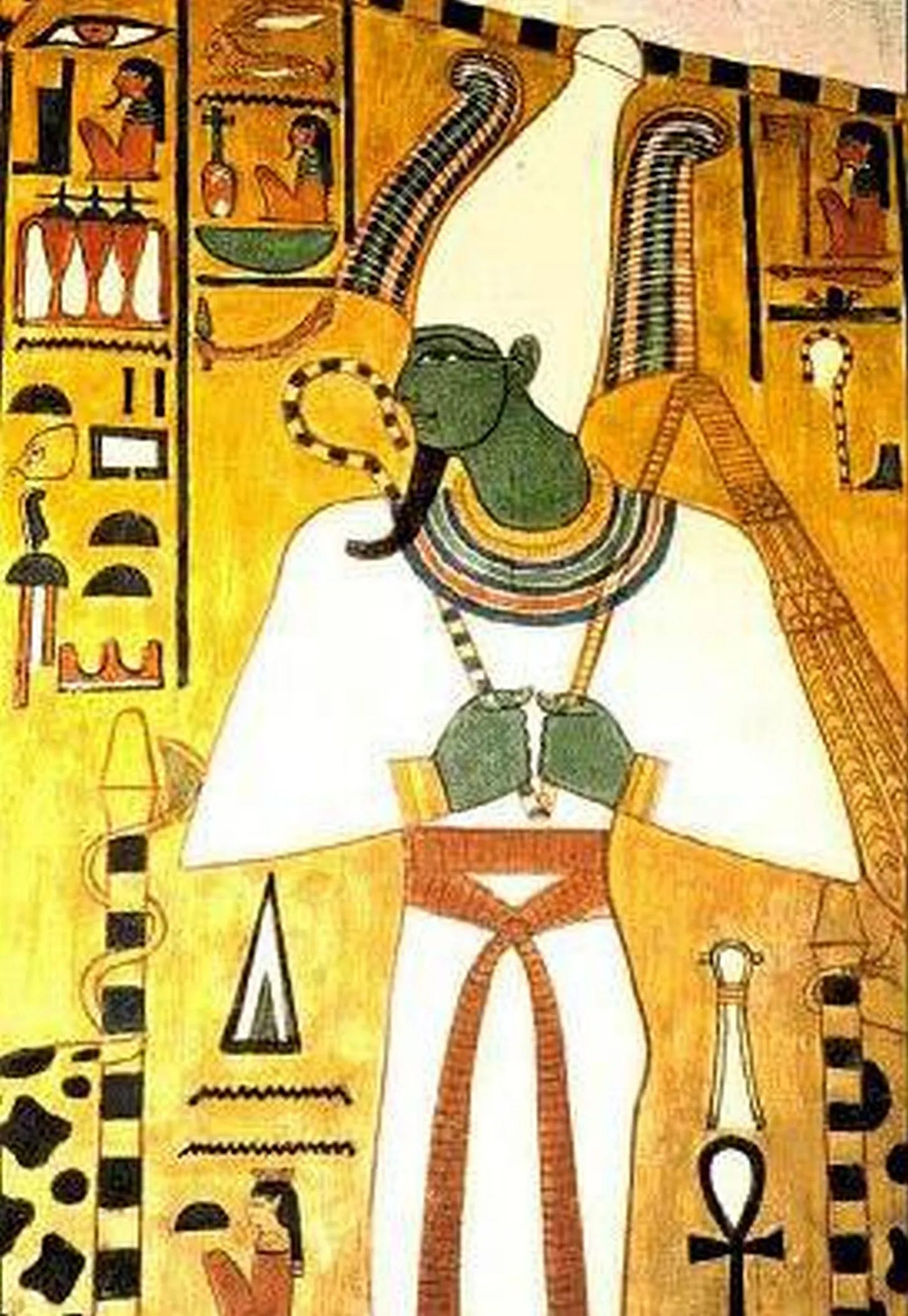
nto the tomb and comes back every spring, has green skin.
Much later, a little farther east, the Quran describes the garden waiting for the chosen ones once the world has ended, and it dresses them in green garments of fine silk and brocade.
Europe reaches the same idea through its languages. In English, green, grass, and grow all go back to one old word for growing.
Everywhere, one answer. Green is the color of what lives.
Then, starting in the 14th century, Europe turns on it.
In England, green is the color of the man whose word is worth nothing, and it is the color spread over the tables where money changes hands. In Paris, the debtor who cannot pay walks the streets in a green cap, so that everyone can see who they are dealing with.
For several centuries, the color of life becomes the one to be wary of.
The reason is neither religious nor moral.
It is material…