
Much of the art of the Holocaust exists today because someone hid it. It was made in secret, on whatever paper could be found, then buried in boxes, packed into suitcases or left with a friend. These twelve works begin in those hiding places and continue with what survivors, and later artists, made of the subject after the war.
Cool Stories About Art is a newsletter to learn art the fun way.
Join 200,000+ readers and get:
10 new art stories / month
The entire archive of content (1,000+ articles)
Comment, ask questions, and chat with other readers
Making Art Under Persecution, and After
In the ghettos and camps, drawing was dangerous and paper was scarce. Artists worked in secret and hid their sheets wherever they could, in straw mattresses or in the ground. A few prisoners were also ordered by the SS to paint, and one of the works on this list was made that way.
The art of the Holocaust does not stop with what was made in those places. Survivors went on to paint what they had lived through, some at once, others only decades later. Then artists of the following generations took it up as their own subject.
The list follows that path, so it is not a ranking. The works come in the order in which they were made, from the earliest, at number 12, to the most recent, at number 1. The first ones were made by people living through the persecution, the last ones by survivors and by the artists who came after them.
12. Gela Seksztajn, Self-Portrait (1940 to 1942)
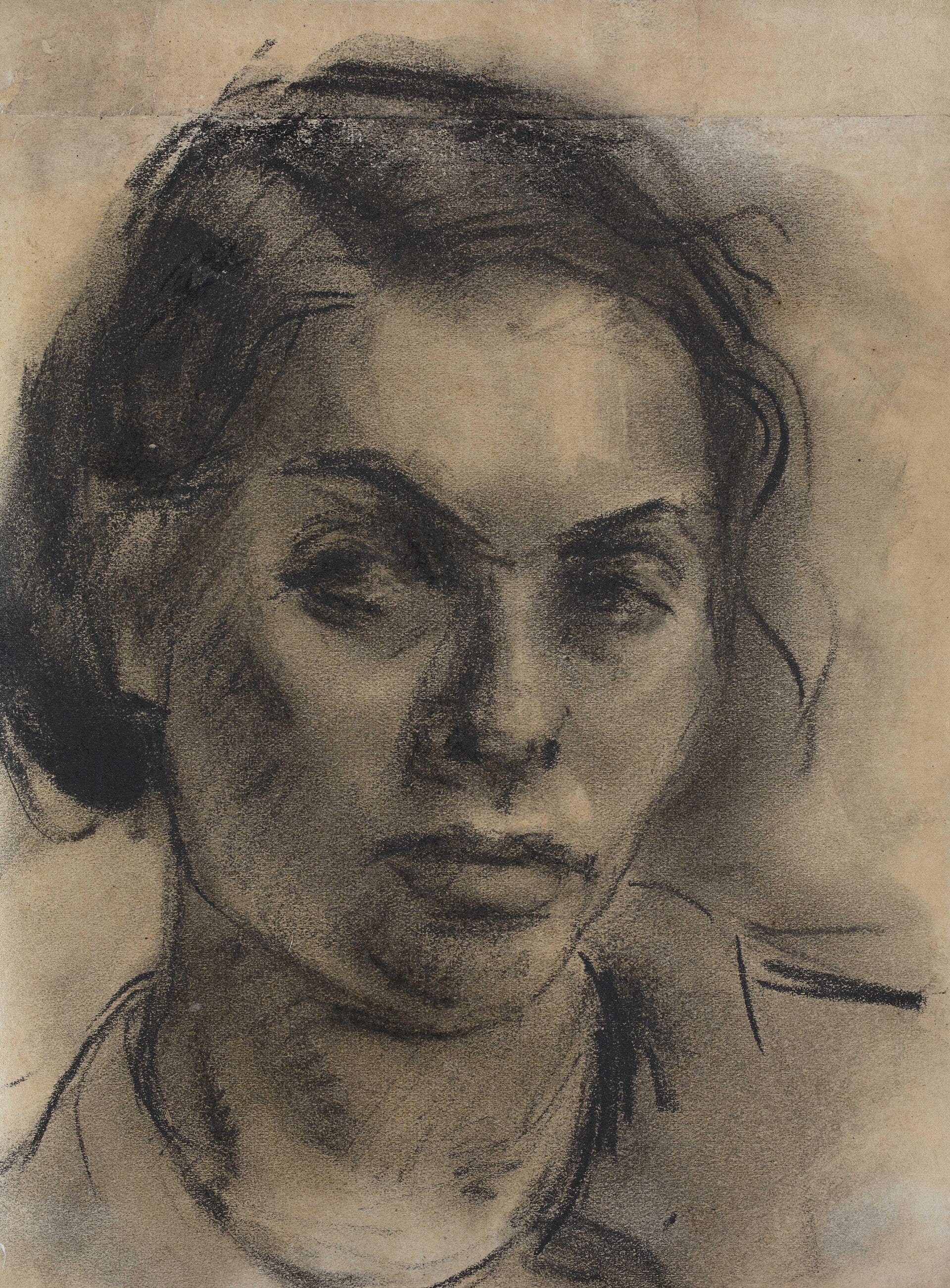
Her dark hair pulled back, a young woman looks down and slightly away, her face drawn in black on brownish paper. She is Gela Seksztajn, who drew herself in the Warsaw ghetto sometime between 1940 and 1942, and this is the only self-portrait known from that time of her life.
Her usual subject was children, before the war and inside the ghetto alike. She taught drawing at a primary school at 68 Nowolipki Street, and she drew the children who came to the soup kitchens, as well as her own daughter and her husband, Izrael Lichtensztajn.
It was her husband who found her work a hiding place. The historian Emanuel Ringelblum was secretly gathering an archive of life in the ghetto, and in the summer of 1942, as the mass deportations began, he gave Lichtensztajn the task of hiding it. The papers went into ten metal boxes, and one of them was filled with Gela's work.
That summer she also wrote a short will, dated August 1, 1942. She asked for no praise, only that the memory of her and of her daughter be kept, and she left her work to a Jewish museum to be built after the war.
The boxes were buried at the school where she had taught. They were dug out of its ruins on September 18, 1946, with the papers inside soaked through. Her part of the archive still holds 309 works, and among all those children's faces is her own.
At a Glance
Artist: Gela Seksztajn (1907 to 1943)
Made: 1940 to 1942, in the Warsaw ghetto
Medium: Drawing on paper
Size: Not published
Where to see it: Jewish Historical Institute, Warsaw
About This Work
What was the Ringelblum Archive?
The secret archive of the Warsaw ghetto, assembled by a group around the historian Emanuel Ringelblum known as Oyneg Shabes. After the ten boxes found in 1946, a second part, hidden in two milk cans, was found at the same address in December 1950.
11. Charlotte Salomon, Life? or Theatre? (1941 to 1942)
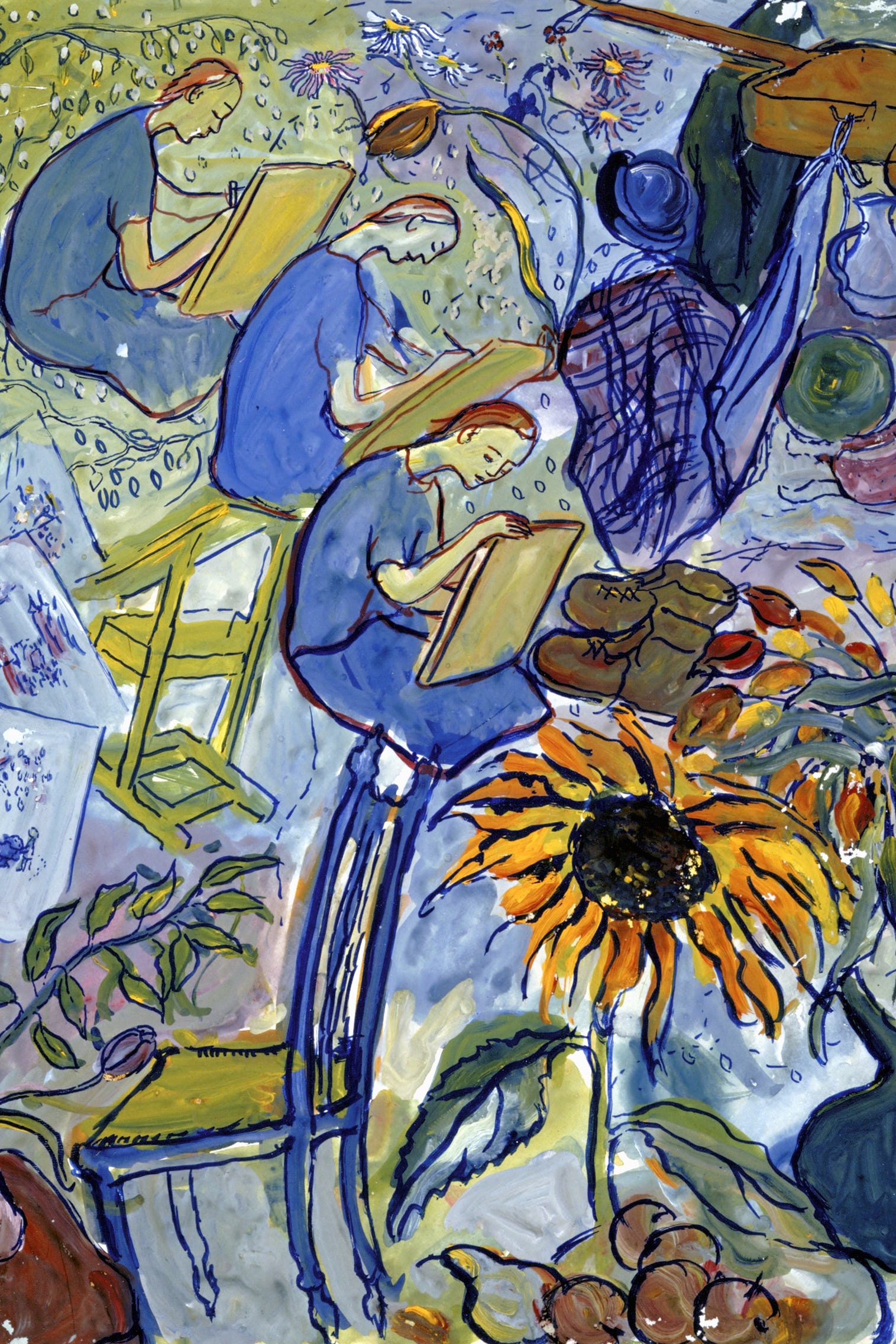
In 1943, a young German refugee living near Villefranche-sur-Mer, on the French Riviera, brought a set of packages to a doctor she knew, Georges Moridis, and asked him to keep them safe. "It is my entire life," she told him.