
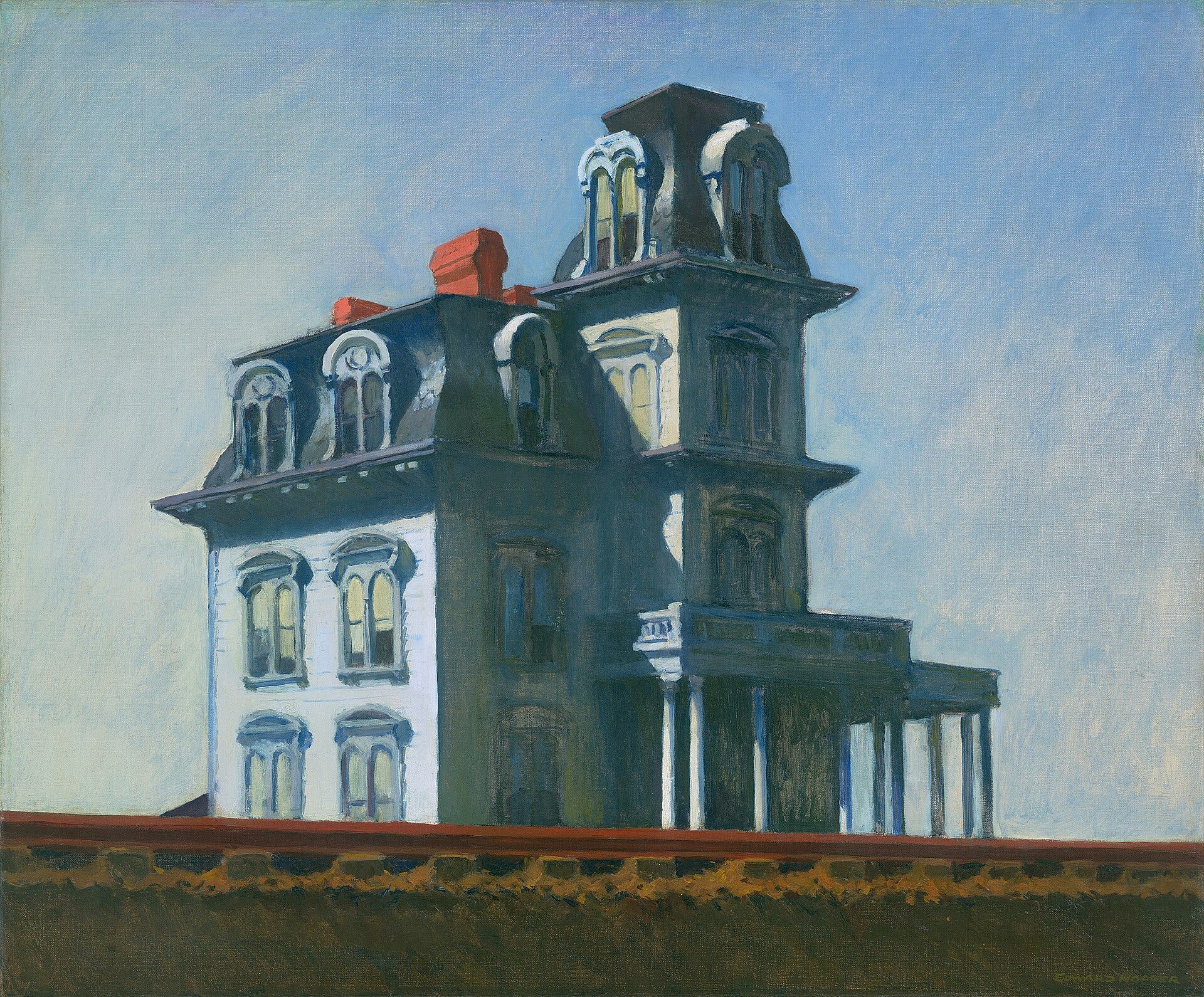
House by the Railroad is a 1925 oil painting by Edward Hopper. A tall Victorian mansion stands alone behind a raised railroad track, with no person, tree or train in sight and every window dark.
Many viewers read its meaning as isolation: an old house from another era, cut off by the tracks that carried people toward the cities. Hopper himself said he cared more about sunlight on buildings than about symbols. In 1960 Alfred Hitchcock said it had inspired the Bates house in Psycho.
Cool Stories About Art is a newsletter to learn art the fun way.
Join 200,000+ readers and get:
10 new art stories / month
The entire archive of content (140+ articles)
Comment, ask questions, and chat with other readers
What does House by the Railroad show?
According to a local story, a thirteen-year-old girl once saw a man painting down by the tracks, below a house the neighborhood children called haunted…
What You'll Discover
The year Hopper gave up his day job
Where the real house stands today
What the critic Lloyd Goodrich called the picture
What Hitchcock later told François Truffaut
Whose name the museum label leaves out
The barn built to look like the film set