How Did Claude Monet Die?

Claude Monet died on 5 December 1926 at Giverny, at 86, from lung cancer discovered by X ray, a diagnosis his family kept from him. Cataracts had clouded his sight for years and reshaped the colors in his late water lily paintings.

His friend Georges Clemenceau replaced the coffin's black cloth with a floral one.

I keep coming back to the fact that Monet never learned what was actually killing him. His family made that choice for him, and I understand the impulse even if it feels strange today, hiding a cancer diagnosis from an 86 year old painter still working every morning. What interests me more than the illness itself is the cataracts, because that is the rare case where an artist's medical history is visible in the paint itself, not just in the biography.

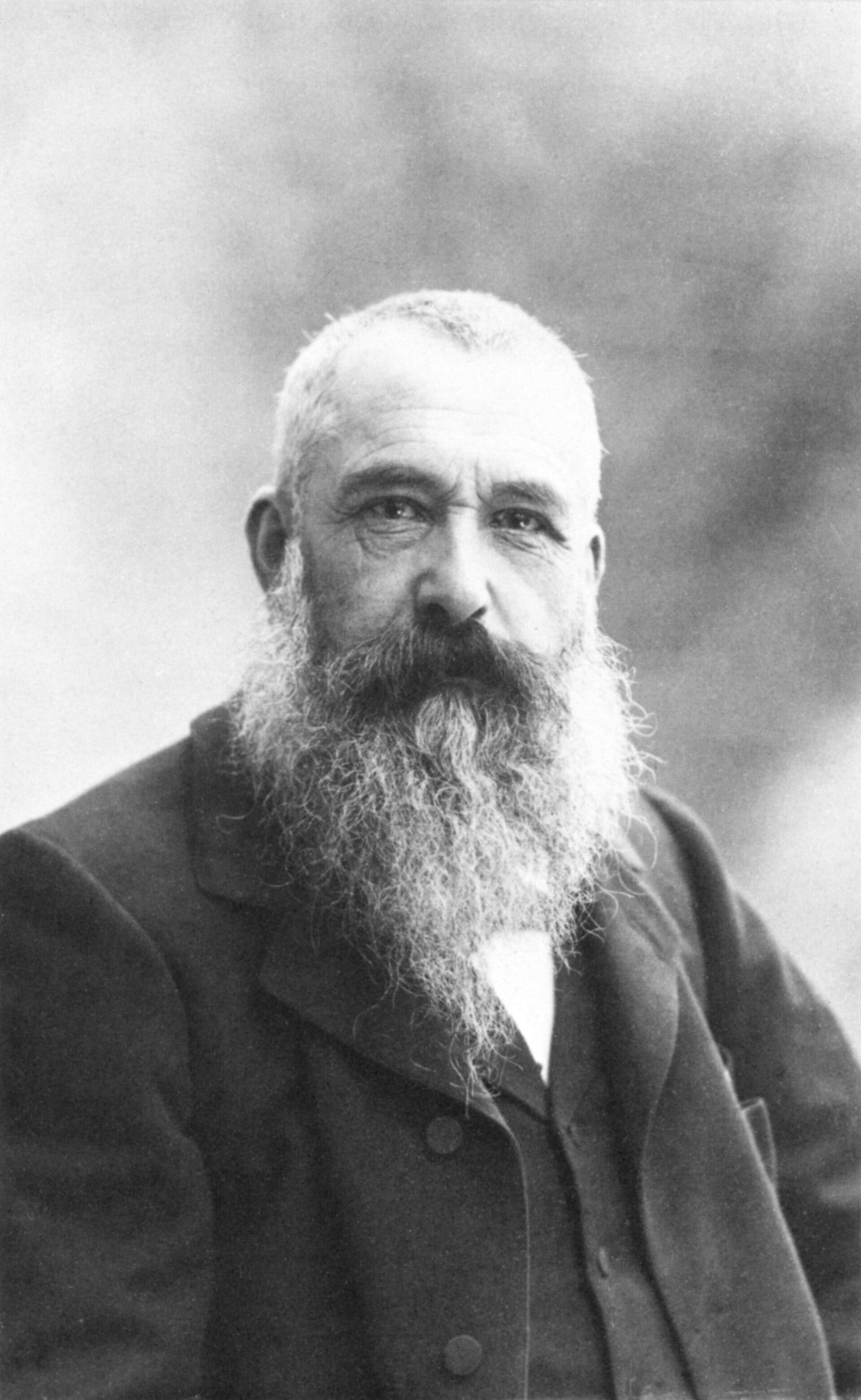
Photograph of Claude Monet
Claude Monet, who kept painting at Giverny until the final year of his life.

Learn art the fun way. Free stories every week, no boring lectures.


The Diagnosis His Family Hid From Him

In 1926, an X ray revealed a shadow on Claude Monet's lung. Doctors recognized it immediately as a tumor.

The diagnosis was lung cancer, and his son Michel and his stepdaughter Blanche Hoschede Monet decided not to tell him, worried the news would crush what strength he had left.

Monet spent his final months believing his failing health was simply old age, unaware he was the last major founder of Impressionism still alive to paint it.

Grief and Decline Before the Cancer

Monet's later years were marked by loss well before the cancer diagnosis. His second wife, Alice, died in 1911, and his eldest son, Jean, died in 1914.

Friends and letters from the period describe a man who fell into long stretches of depression and stopped painting entirely for months at a time.

World War I added to the strain, with fighting audible from Giverny at points and his younger son Michel serving at the front.

Friends who visited during those years described a garden kept meticulously even as its owner struggled to find reasons to pick up a brush.

Decades of Failing Eyesight

Long before the cancer diagnosis, Monet was already losing his sight to cataracts, a condition that had been developing gradually since around 1908.

By his seventies, he described his own vision as clouded, as if he were looking through a yellow or brown fog that never lifted. Fellow painters who visited noted how close he had to stand to a canvas to judge his own brushwork.

He resisted seeing a doctor about it for years, afraid that surgery would end his ability to paint at all, a fear common among artists of his generation.

He sometimes marked his tubes of paint by touch and memory rather than sight, since he could no longer trust his eyes to tell colors apart.

One of Monet's late water lily paintings
Conservators point to paintings like this one as evidence of how cataracts altered Monet's color perception.

More Claude Monet Stories on Cool Stories About Art


How Cataracts Changed What He Painted

The cataracts altered the colors Monet actually saw, and that shift shows up directly in his late canvases from the 1910s onward.

His water lily paintings from that period grew heavier on reds, oranges, and murky browns, colors his damaged lenses let through more easily than others.

Blues and greens, by contrast, became harder for him to perceive accurately, and some late canvases read as almost monochrome until conservators studied them under different light decades later.

The Surgery He Refused, Then Accepted

In 1923, at age 82, Monet finally agreed to cataract surgery on his right eye after years of resisting his doctors' advice.

The operation partially restored his color vision, but it also left him seeing a blue tint that had not been there before, which frustrated him for months.

He reworked several paintings after the surgery once he realized how differently he had been seeing them for years, and destroyed some canvases he judged ruined by his bad eyesight.

Dealers who handled his work during this period had to work around a painter who kept changing his mind about pieces they thought were already finished.

Monet's garden at Giverny
Monet spent his final months in this garden at Giverny, still painting despite his failing health.

His Final Months at Giverny

Monet spent his last months at his house in Giverny, the garden he had built and painted for over three decades.

He kept working near the Japanese bridge and the water lily pond, still adding to the large scale panels meant for Paris even as his strength declined.

Visitors who saw him that year described a man who was frail but still walking to the pond most days, refusing to stop entirely.

Gardeners he had employed for decades kept the grounds exactly as he liked them, even as his own visits to parts of the property grew shorter.


Cool Stories About Art is a free newsletter. The stories behind the paintings, straight to your inbox.


Death on 5 December 1926

Claude Monet died on 5 December 1926 at Giverny. He was 86.

Pulmonary complications from the lung cancer are recorded as the immediate cause, following a rapid decline in his final weeks.

He had asked for a simple funeral, with no fuss and no large public ceremony, in keeping with how he had tried to live in his final years.

Georges Clemenceau, the former French prime minister and Monet's close friend
Clemenceau, a former French prime minister, replaced the black funeral cloth on Monet's coffin with a floral one.

Clemenceau and the Funeral Without Black

About fifty people attended the burial in the Giverny church cemetery, a small gathering for a painter of his stature.

His close friend Georges Clemenceau, the former French prime minister, removed the black cloth draped over the coffin, unwilling to let Monet be buried under mourning colors.

Clemenceau replaced it with an old floral fabric in blues and pinks, reportedly saying no black for Monet, a gesture that matched a lifetime spent painting flowers.

What Was Left Unfinished

Monet had been negotiating the donation of his giant water lily panels to the French state since 1918, in the middle of the war.

The rooms built to hold them at the Orangerie opened to the public in 1927, a few months after his death, close to exactly as he had planned the installation.

He never saw the finished rooms, now considered one of the largest and most complete Impressionist works on public display anywhere in the world.

Visitors today can still walk through the two oval rooms Monet designed specifically for the panels, built to his own specifications for light and curve.


More to discover here


Claude Monet Death Questions

  • What did Claude Monet die of?
    Lung cancer, diagnosed by X ray in 1926, though his family kept the diagnosis from him until the end. He believed he was simply suffering the effects of old age.

  • How old was Monet when he died?
    He was 86, born in 1840 in Paris and dead in December 1926 at Giverny. He had outlived most of his fellow Impressionist founders by decades.

  • Did Monet go blind?
    Not completely. Cataracts badly damaged his color vision for years, and surgery in 1923 partially restored it in one eye. His left eye remained largely untreated for the rest of his life, so his vision stayed uneven even after the operation.

  • Did cataracts change Monet's painting style?
    Yes. His late water lily paintings shifted toward reds and browns because those colors passed more easily through his clouded lenses. Some canvases from this period were later reworked once his sight partially improved.

  • Where did Monet die?
    At his home in Giverny, France, the same house and garden that appear throughout his water lily paintings. He had lived there since 1883.

  • Who was at Monet's funeral?
    About fifty people, including his friend Georges Clemenceau, who replaced the coffin's black cloth with a floral one. Monet had specifically asked for a small, simple ceremony.

  • What happened to Monet's water lily paintings after he died?
    The large panels he had promised the French state went on permanent display at the Musee de l'Orangerie in 1927. They remain one of the most visited Impressionist installations in Paris, still displayed in the oval rooms he helped design.

  • Is Monet buried in Giverny?
    Yes, in the churchyard cemetery next to his house and garden, alongside other family members. The grave remains a stop for visitors touring the property today.


Join 170,000 readers learning art the fun way. Free stories every week, no boring lectures.