Diego Velazquez died on 6 August 1660 in Madrid at age 61, from a fever that struck weeks after he organized a royal wedding on the Isle of Pheasants. His wife Juana died eight days later.
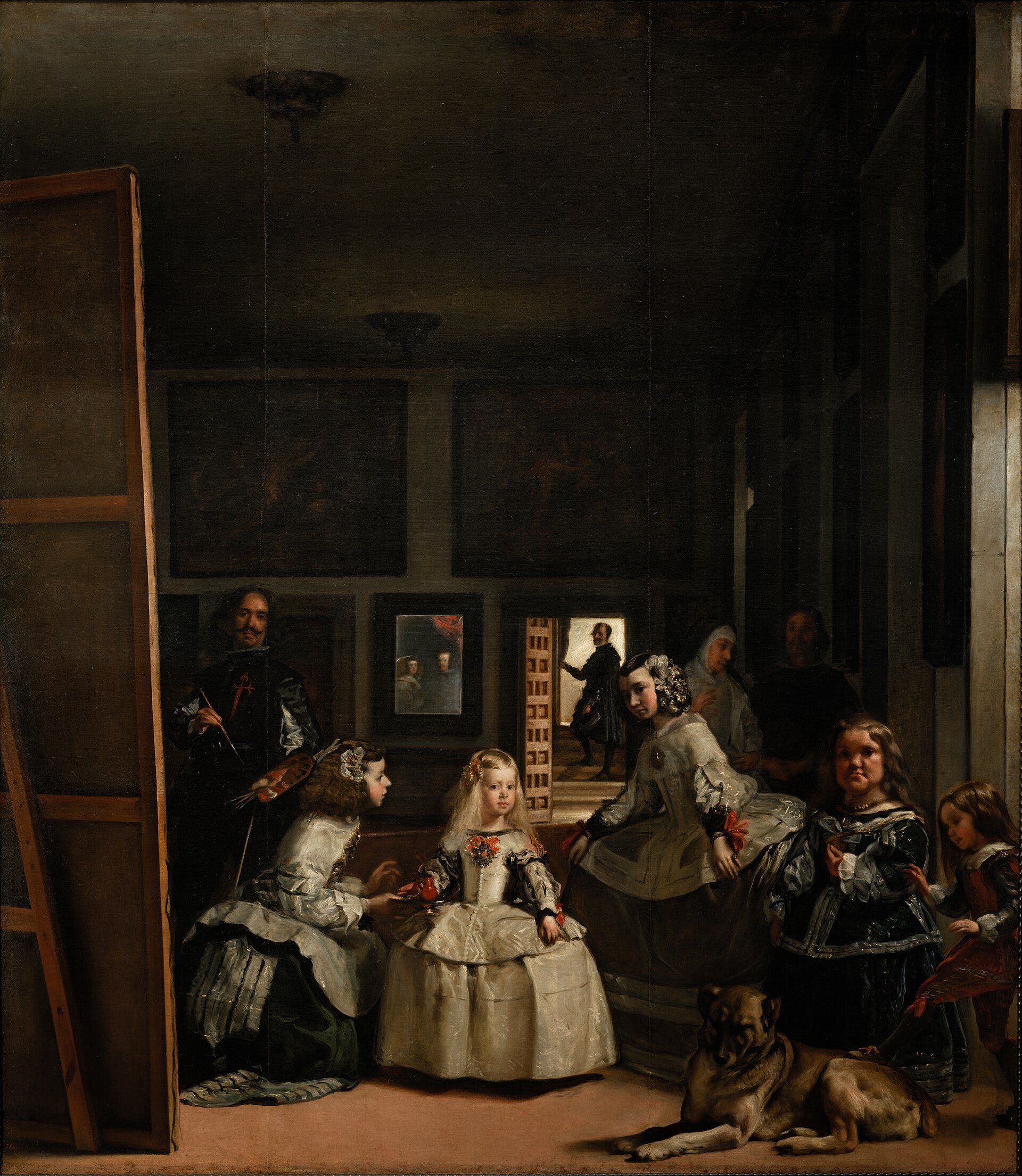
The red cross on his chest in Las Meninas was reportedly added after his death.
The detail I find hardest to shake is his wife Juana, gone within a week of him, married to Velazquez for nearly forty years and then simply following him out of the record almost immediately. It turns a story about a court painter's exhausting final assignment into something closer to a household collapsing all at once.

How Diego Velazquez actually died
Diego Velazquez died on 6 August 1660 in Madrid, at the age of 61, in the rooms he occupied at the royal palace.
He fell ill with a fever on 31 July, about five weeks after returning from an exhausting royal assignment, and did not recover despite the attention of court physicians.
He held the position of court painter to King Philip IV at the time, a role he had built over more than three decades of steady royal service.
The wedding that wore him out
In June 1660 Velazquez was sent to the Isle of Pheasants, a small island on the border between Spain and France, to organize the ceremony sealing the marriage of the Infanta Maria Theresa to Louis XIV of France.
The job was not painting. He was responsible for the decoration, housing, and staging of an event meant to project Spanish royal grandeur to a French court watching closely for any misstep.
Contemporary accounts describe months of demanding logistical work in difficult conditions, far outside the kind of labor his position as a painter usually required of him.
Returning to Madrid exhausted
Velazquez returned to Madrid on 26 June 1660, having overseen the successful conclusion of the wedding after weeks of nonstop preparation on the island.
Within weeks he was struck by a fever, and those close to him linked the illness directly to the physical toll of the assignment rather than to any prior condition.
He had little time to recover before the fever took a serious turn, moving from a manageable illness to a fatal one in a matter of days.
More Diego Velazquez stories worth your time
His wife's death eight days later
Juana Pacheco, his wife of nearly forty years and the daughter of his own teacher Francisco Pacheco, died eight days after Velazquez, on 14 August 1660.
The timing has led historians to suspect she caught the same illness while caring for him during his final days at the palace.
Losing both of them within little more than a week ended a household that had been at the center of Spanish court painting for a generation, since their marriage in 1618.
A knighthood that arrived late
In 1659, the year before he died, Velazquez was finally granted membership in the Order of Santiago, a prestigious Spanish knighthood, after a long investigation into his family background.
The honor required proof that he had no trade connections that Spanish nobility considered beneath a knight, a genealogical process that dragged on for months and reportedly required the pope's personal intervention.
He had painted himself into Las Meninas the year before that approval came through, without the order's red cross anywhere on his chest in the original composition.
The cross added after his death
The red cross of the Order of Santiago now visible on the painted Velazquez in Las Meninas is widely believed to have been added to the canvas after he died.
Tradition holds that King Philip IV himself ordered or personally painted the addition, honoring a knighthood the artist had only just received when the portrait was first finished.
Whether the king's own hand or a court painter added it, the detail turned Las Meninas into a quiet, permanent record of an honor Velazquez barely lived to enjoy.
Where he was buried
Velazquez was buried in the church of San Juan Bautista in Madrid, close to the royal palace where he had spent most of his career serving the crown.
That church was later demolished during the Napoleonic occupation of Spain in the early nineteenth century, along with many records tied to it.
As with several of his contemporaries elsewhere in Europe, no identified grave for Velazquez survives today for visitors to see.
The court title behind the workload
Since 1652 Velazquez had held the post of aposentador mayor, the palace official responsible for arranging royal lodging, travel, and ceremonial logistics wherever the king traveled.
That job, entirely separate from painting, is why a man famous for portraits ended up managing tents, furniture, and seating charts for a royal wedding on a small island.
The role came with real prestige and a royal salary attached to it, but it also meant that by his final years Velazquez spent as much time on administration as he did standing in front of a canvas.
What the exhaustion says about his final years
By 1660 Velazquez was no longer simply a painter. He held a senior court position that put logistics and ceremony on his shoulders alongside his brushes and pigments.
That workload, more than any single illness, is what historians point to when explaining why a man in his early sixties collapsed so quickly after one demanding assignment.
His last major painting, Las Meninas, was finished back in 1656, which means his final years were spent almost entirely in service of the royal court rather than quietly in his studio.
More art, more stories
Common questions about Diego Velazquez's death
How did Diego Velazquez die?
He died of a fever on 6 August 1660 in Madrid, brought on after months of exhausting work organizing a royal wedding on the Isle of Pheasants earlier that summer.How old was Velazquez when he died?
He was 61 years old, having been born in Seville in 1599 and dying in Madrid in August 1660.Is it true Velazquez's wife died right after him?
Yes. Juana Pacheco, his wife of nearly forty years and the daughter of his own teacher, died eight days after Velazquez, likely from the same illness she caught while nursing him.What was Velazquez doing right before he died?
He had just returned from the Isle of Pheasants, where he organized the decoration, housing, and logistics for the wedding of the Infanta Maria Theresa to Louis XIV of France.Was Velazquez a knight when he painted Las Meninas?
No. He finished Las Meninas in 1656 and only received the knighthood of the Order of Santiago in 1659, a year before he died, after a long genealogical investigation.Why does the painted Velazquez in Las Meninas wear a red cross?
The cross of the Order of Santiago is widely believed to have been added to the painting after his death, once his knighthood became official, possibly by the king himself.Where is Diego Velazquez buried?
He was buried in the church of San Juan Bautista in Madrid, which was later demolished during the Napoleonic occupation, so no identified grave survives today.What was Velazquez's official role at the Spanish court?
Beyond painting, he held the senior court position of aposentador mayor, handling palace logistics and ceremony, which is why he was sent to organize the 1660 royal wedding.