
Egon Schiele, the Austrian painter, died in Vienna on October 31, 1918, at 28. He was killed by the Spanish flu, the pandemic that spread around the world at the end of the First World War.
His wife, Edith, six months pregnant with their first child, had died of the same illness three days earlier.
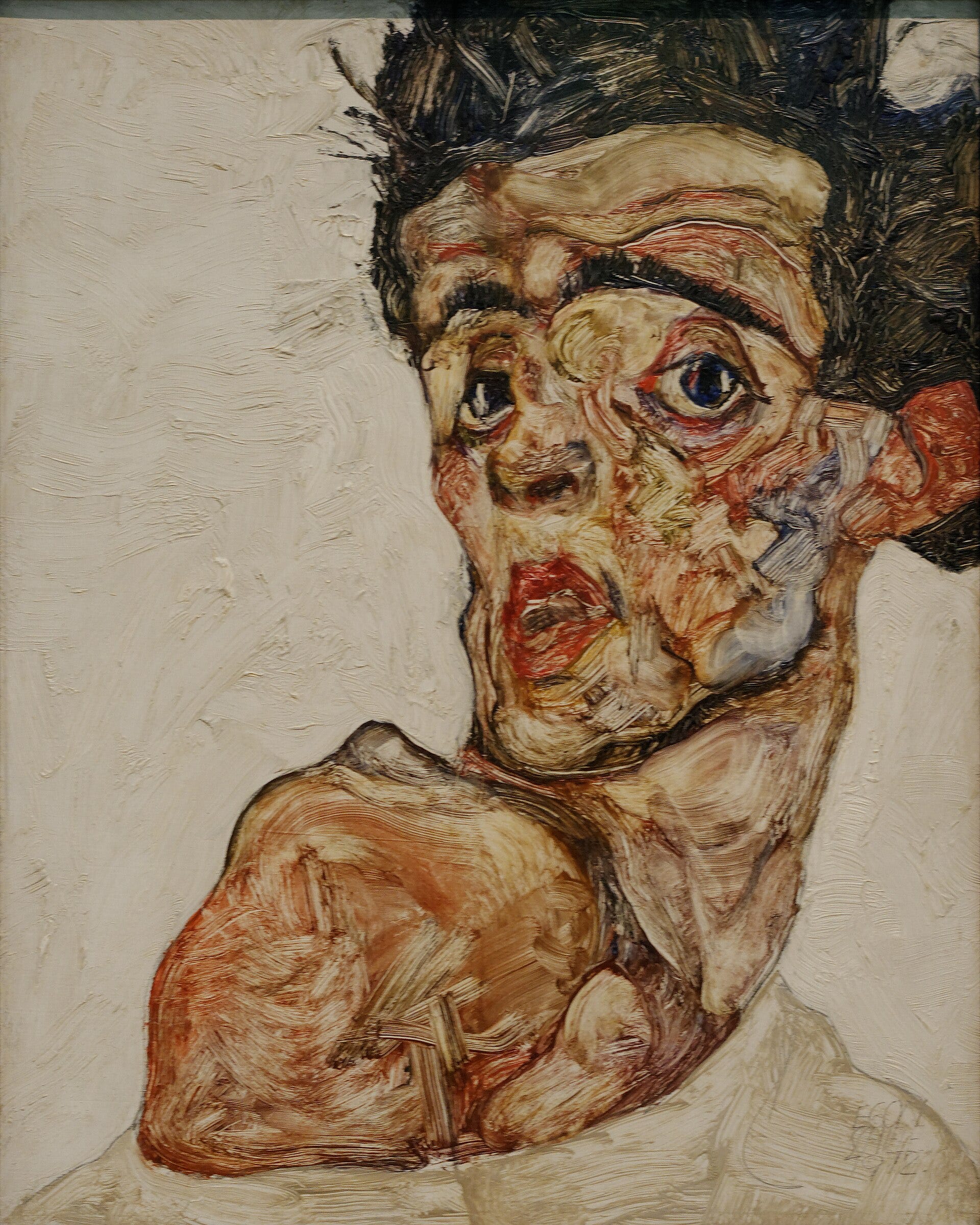
He had caught the flu only a few days before. The end came in the home of Edith's parents in Hietzing, a district of Vienna, directly across the street from the studio he had kept since 1912.
Cool Stories About Art is a newsletter to learn art the fun way.
Join 200,000+ readers and get:
10 new art stories / month
The entire archive of content (140+ articles)
Comment, ask questions, and chat with other readers
Earlier that year, in February, he had drawn another dead man: his mentor, the painter Gustav Klimt. Klimt had suffered a stroke in January, and influenza finished him on February 6, 1918, at 55. The next day, Schiele went to the morgue of Vienna's General Hospital, where the body lay, and drew the dead face three times in black chalk.
The Secession exhibition of 1918
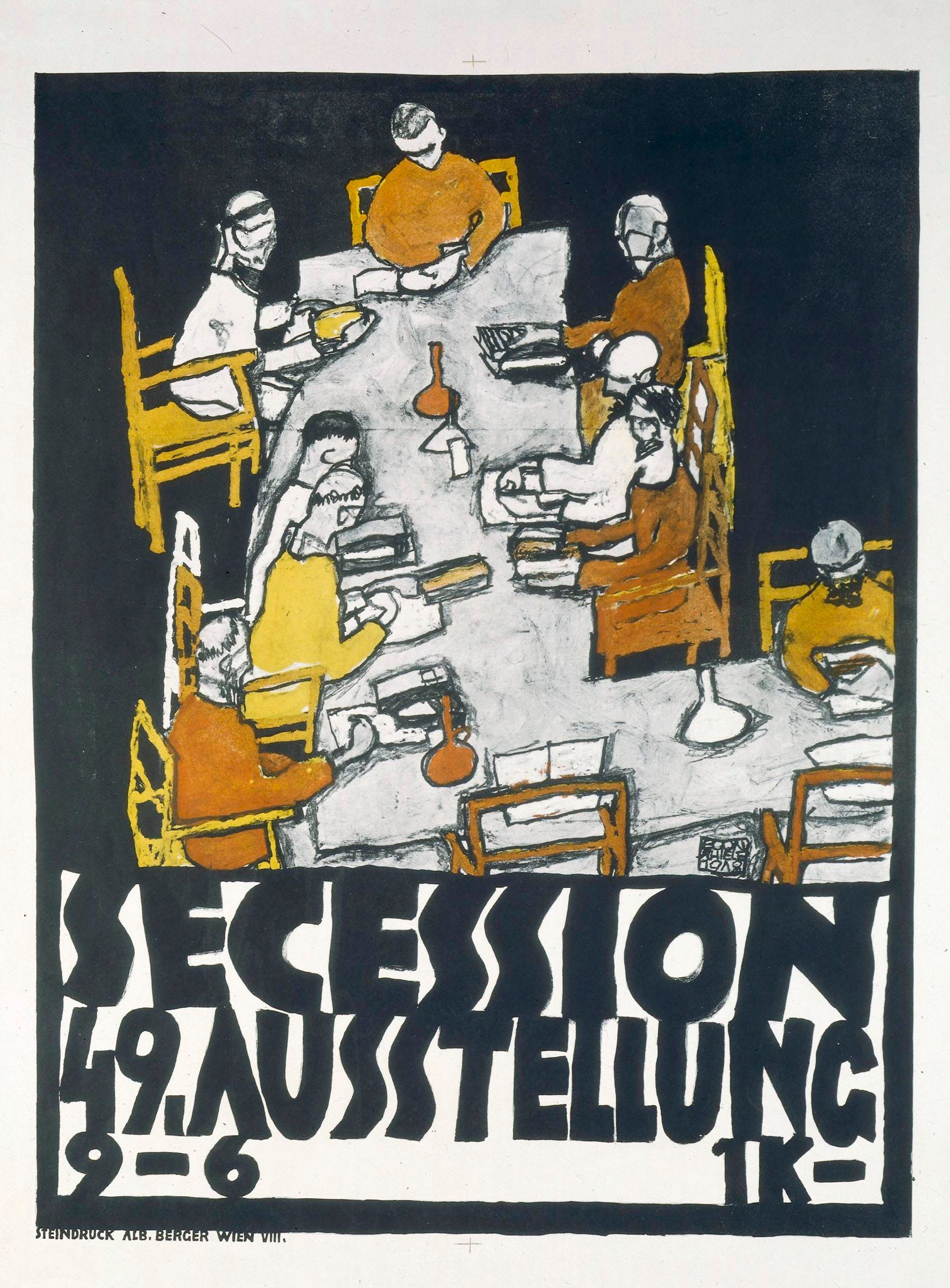
A few weeks later came his first major success. The Vienna Secession, the city's association of modern artists, opened its 49th exhibition that spring and gave Schiele its main hall, with dozens of his works.
He also designed the poster, a long table in the manner of the Last Supper with his own portrait in the place of Jesus. The show was a triumph. Collectors paid more for his drawings, and commissions for portraits came in.
Less than nine months after that visit to the morgue, he lay sick himself in Hietzing. What were reported as his last words concerned those drawings, and Edith's sister, Adele Harms, wrote them down.
What You'll Discover
What happened in that apartment.
The photograph taken after he died.
What he asked for at the end.
The painting he left unfinished.