How Did El Greco Die?

El Greco died in Toledo on 7 April 1614, around age 72, while still working on paintings for the Hospital Tavera. No document names his illness.

He was buried at Santo Domingo el Antiguo, but his remains were moved during later renovations and have never been located since.

What strikes me about El Greco is how little paperwork surrounds his death compared with Caravaggio or Rubens. He spent decades arguing with the church over payment, then died with an unfinished commission and no confirmed cause of death, and even his grave did not survive the century. For an artist this famous, that gap feels almost deliberate, though nothing in the record actually suggests it was.

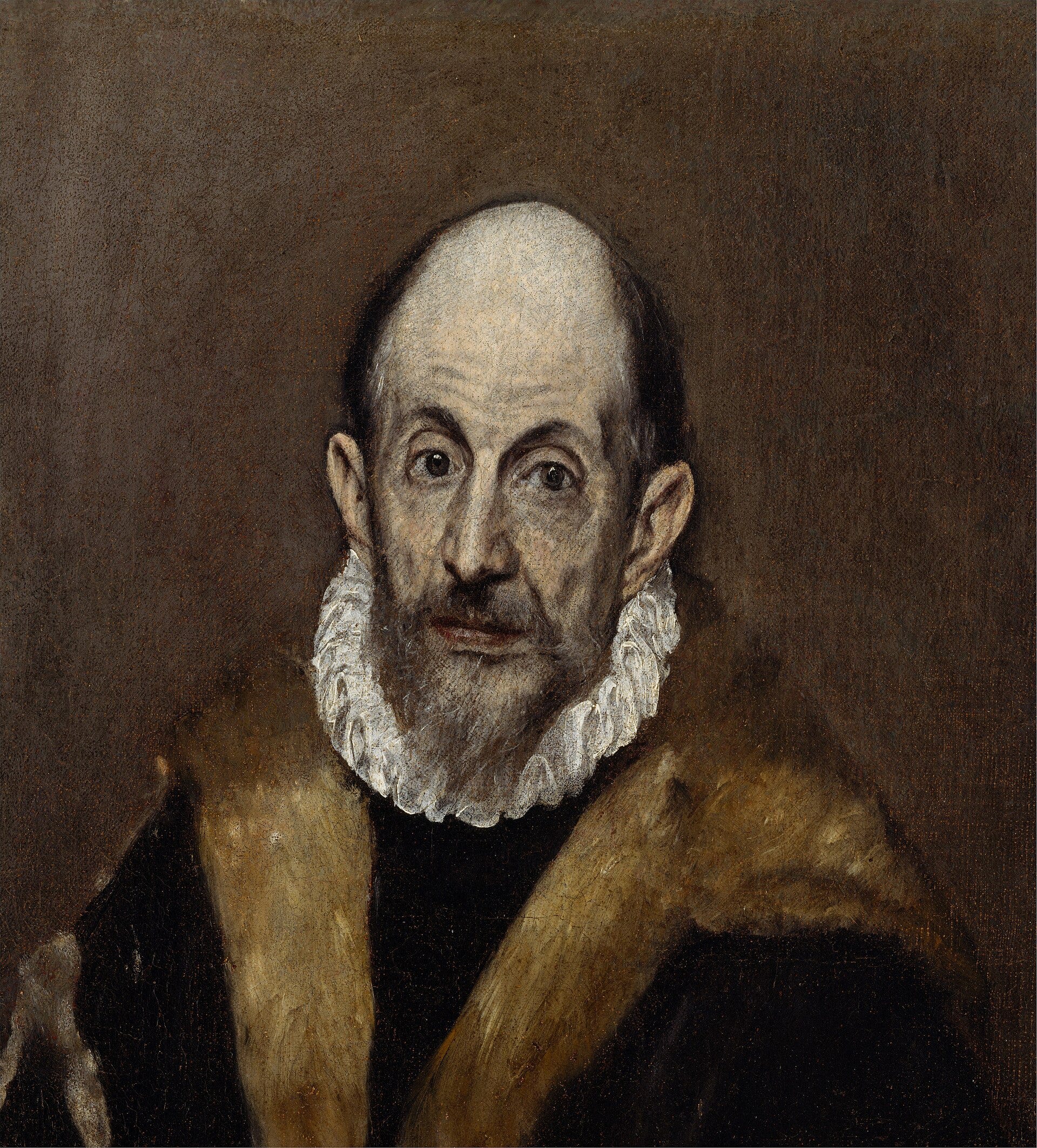
A portrait believed to be El Greco's own likeness
This portrait, held at the Metropolitan Museum, is widely believed to be a self portrait of El Greco.

Learn art the fun way. Free stories every week, no boring lectures.


Death in Toledo, April 1614

El Greco died in Toledo, Spain, on 7 April 1614. He had lived there since the 1570s.

He was 72 or 73. Sources differ slightly on his exact birth year in Crete.

By then he had lived in Toledo for nearly four decades, longer than he had spent in Crete or Italy combined, developing the elongated, unusual style that broke every convention of Spanish painting at the time.

He had trained first as an icon painter in Crete before moving through Venice and Rome, absorbing very different traditions before settling permanently in Spain, arriving in Toledo sometime around 1577.

The Annunciation, one of the paintings El Greco left unfinished at his death
El Greco was still working on paintings for the Hospital Tavera in Toledo when he fell ill.

The Commission He Never Finished

At the time of his death, El Greco was still working on paintings for the Hospital Tavera, a charitable hospital in Toledo founded by a former archbishop.

He fell seriously ill while the commission was underway, and his condition worsened quickly over the following weeks.

Roughly a month later, he was dead, the hospital paintings unfinished on his easel.

The hospital itself was still under construction at the time, and the building and its decoration would not be fully completed for decades after his death.

El Greco had been working on this commission alongside his son, who was already assisting with parts of the project before his father fell ill.

No Recorded Cause of Death

Unlike Caravaggio or Rubens, no contemporary document spells out what illness killed El Greco.

Historians have proposed heart failure, a fever, or exhaustion after decades of poor health, but none of these is confirmed by any surviving record. Even his contemporaries in Toledo left only brief mentions of his final illness, none detailed enough to settle the question.

The gap is notable given how often El Greco's stretched, unrealistic figures still get compared with realism in art history classes today.


If this caught you, read these


A Life Spent Fighting Over Money

El Greco spent much of his career in legal disputes with the patrons who commissioned his work, some of which dragged on for years.

The clergy who paid for his altarpiece The Burial of the Count of Orgaz haggled with him for years over the price before finally settling.

He died with significant debts, despite having painted for some of the wealthiest institutions in Toledo.

Court records from the dispute survive today and are one of the main sources historians use to reconstruct details of his final years.

The convent church of Santo Domingo el Antiguo in Toledo, where El Greco was first buried
El Greco was buried in this Toledo church, where he had painted the altarpiece decades earlier.

Buried at Santo Domingo el Antiguo

El Greco was buried in the convent church of Santo Domingo el Antiguo in Toledo, per his own wishes.

It was a fitting resting place. Decades earlier, he had painted the altarpiece for that same church, one of his first major commissions in Spain.

A marked spot in the crypt is still shown to visitors today, though it no longer holds his remains.

El Greco had specifically requested burial there in his will, tying his final resting place to the church that had launched his Spanish career decades earlier and shaped his early reputation.

How His Remains Were Lost

Around five years after his burial, El Greco's body was moved to another church during renovations at Santo Domingo.

Records of exactly where it went become vague after that, and by the following century all trace of the remains had disappeared.

No grave, tomb, or set of bones connected to El Greco has ever been positively identified since.

Later attempts by local historians to locate the remains in the nineteenth century turned up nothing conclusive.

El Greco's View of Toledo, the city where he lived and died
El Greco painted Toledo, the city where he spent his last four decades, in this well known landscape.

Cool Stories About Art is a free newsletter. The stories behind the paintings, straight to your inbox.


His Son Finished What He Started

El Greco's son, Jorge Manuel Theotokopoulos, was also a painter and had worked alongside his father for years in the family workshop.

After the death, Jorge Manuel took over the unfinished Hospital Tavera commission and completed it in his father's style.

Art historians still debate exactly where El Greco's hand ends and his son's begins on some of the hospital's paintings.

Jorge Manuel went on to have his own long career as a painter and architect in Toledo, though he never matched his father's reputation.

Forgotten for Nearly Three Centuries

El Greco's reputation collapsed almost immediately after his death, and his elongated, distorted figures fell out of fashion for generations.

Spanish critics in the 1700s and 1800s frequently dismissed his late work as the product of failing eyesight or outright madness, a theory modern scholars have largely rejected.

It took until the early 1900s, when modern painters recognized his stretched forms as ahead of their time, for his reputation to fully recover.

Painters connected to early modernism cited him directly as an influence, which helped pull his work back into major museum collections.

Why the Mystery Persists

Toledo in 1614 did not require the kind of detailed medical record keeping that later centuries did.

Combined with the loss of his remains, that gap means El Greco's death will likely never be pinned to a single confirmed cause.

What survives instead is the paper trail of an artist who argued over every payment and left an unfinished commission behind him.

That paper trail, ironically, is more detailed than the record of his actual death, since contracts and lawsuits were kept far more carefully than medical notes.


Carry on exploring


El Greco Death Questions

  • How did El Greco die?
    His exact cause of death was never recorded. He fell seriously ill in Toledo in 1614 and died about a month later, with historians left to guess at the illness that finally ended a long career.

  • How old was El Greco when he died?
    Around 72 or 73. Sources differ slightly on his birth year in Crete in the early 1540s, before his training in Venice and Rome.

  • Where is El Greco buried?
    He was first buried at Santo Domingo el Antiguo in Toledo, but his remains were moved and later lost. A marked spot in the crypt is still shown to visitors.

  • What was El Greco working on when he died?
    Paintings for the Hospital Tavera in Toledo, a commission his son finished after his death in his father's style. The hospital itself was still being built at the time.

  • Did El Greco die poor?
    He died in debt despite major commissions, after years of disputes with patrons over payment for his work. Court records of those disputes still survive today and shed light on his last years.

  • Who finished El Greco's last commission?
    His son, Jorge Manuel Theotokopoulos, also a painter, completed the Hospital Tavera paintings. He had trained in his father's workshop for years before taking over.

  • Are El Greco's remains still in Toledo?
    No one knows. They were moved from Santo Domingo el Antiguo around five years after his burial and never traced again, despite later searches.

  • Why is there no clear cause of death for El Greco?
    Toledo in 1614 kept no detailed medical records for artists, and no surviving letter or document names an illness. Financial and legal records from his life survive in far greater detail.


Join 170,000 readers learning art the fun way. Free stories every week, no boring lectures.