How Did Henri Matisse Die? Cause and Final Years

Henri Matisse died of a heart attack on 3 November 1954 in Nice, France, at eighty four.

He had lived his final thirteen years in fragile health after major abdominal surgery in 1941, working from a bed or wheelchair with the help of assistants who prepared his materials each morning.

I think the ending everyone remembers, the paper cutouts made from a wheelchair, hides how close Matisse came to dying more than a decade earlier. The surgery in 1941 was the real turning point, not the heart attack in 1954. Everything after that operation was time he used extremely well.

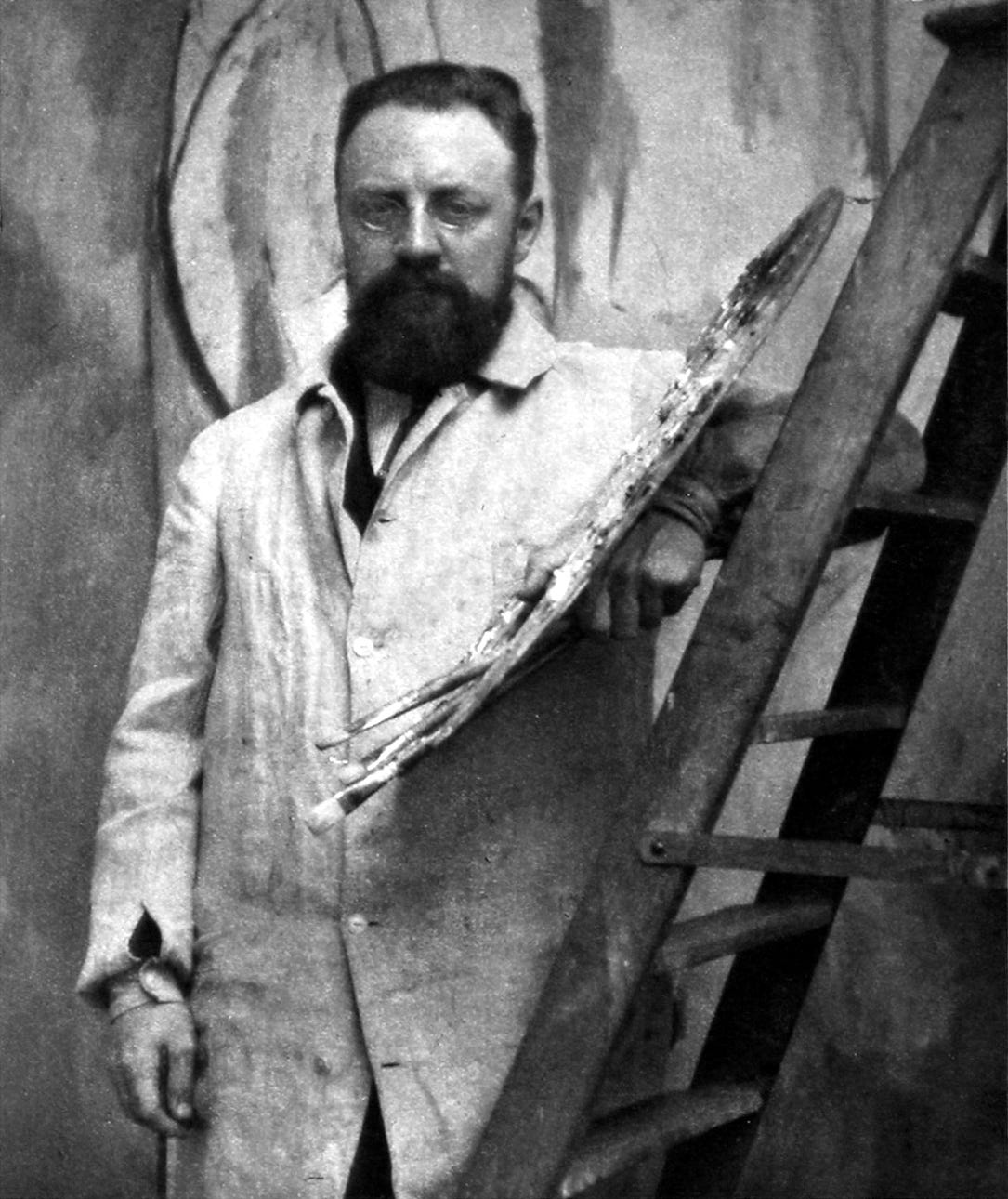
Photographic portrait of Henri Matisse
Henri Matisse photographed in 1933, more than two decades before his death.

Learn art the fun way. Free stories every week, no boring lectures.


The short answer

Henri Matisse died on 3 November 1954 in Nice, France. He was eighty four years old.

The immediate cause was a heart attack. It came after more than a decade of fragile health following major surgery.

By the time he died, Matisse had already outlived what his own doctors expected in 1941.

French papers at the time covered his death as the loss of one of the last major figures from the generation that had defined modern painting in Paris.

The Surgery That Changed Everything

In January 1941, Matisse underwent surgery for duodenal cancer in Lyon. The operation was serious enough that his surgeon reportedly did not expect him to survive it.

He did survive, but the recovery left him weakened for the rest of his life. Simple movement became difficult, and long stretches at an easel were no longer possible.

Matisse later called the years after this surgery his second life, a phrase that shows up often in accounts of this period.

He reportedly told visitors that the operation gave him a kind of clarity about how he wanted to spend whatever time remained, and that period is when the cutouts began to take real shape.

Working From a Bed

From the early 1940s onward, Matisse spent much of his time working from bed or a wheelchair in his apartment in Nice, and later in Vence.

He directed assistants to prepare paints, canvases and later large sheets of colored paper, since standing for long periods had become too hard on his body.

This is the period that produced his paper cutouts, made with scissors while seated, a method that let him keep working when painting no longer was.

He worked at times with a long stick tipped in charcoal, directing an assistant to mark a canvas or wall from a distance when his own reach was limited.

Exterior view of the Chapelle du Rosaire in Vence designed by Henri Matisse
The Chapelle du Rosaire in Vence, completed in 1951, one of the last major projects Matisse directed from a wheelchair.

More that pairs with this


The Chapel He Finished While Ill

One of Matisse's last major projects was the design of the Chapelle du Rosaire in Vence, completed in 1951.

He designed the windows, walls and even the priest's vestments from a wheelchair, directing every detail despite his limited mobility.

He considered it one of the most important works of his career, even though it was finished only three years before his death.

The chapel included stained glass windows in blue, green and yellow, along with black line drawings on white tile walls, all planned from paper mockups pinned near his bed.

Facade of the Hotel Regina building in Nice
The Hotel Regina in Nice, where Matisse lived and worked during his final years.

His Final Years in Nice

Matisse spent his last years at the Hotel Regina in Nice, a building he had converted into a large studio apartment.

Visitors from those years describe a man who worked most days despite constant physical limits, rarely leaving the building.

His assistant Lydia Delectorskaya managed much of his daily life and helped him continue working when his body would not fully cooperate.

Even confined largely to one building, Matisse kept receiving visitors, including younger artists who came specifically to see how he was still working.

The Heart Attack

On 3 November 1954, Matisse died of a heart attack at his home in Nice.

There is no detailed public record of his final hours, unlike some of his contemporaries whose deaths were documented in letters and diaries.

He was eighty four, and had spent nearly a third of his life managing the aftermath of the 1941 surgery.

Unlike some artists of earlier centuries, the medical facts around his heart attack were straightforward and not hidden from the public record.


Cool Stories About Art is a free newsletter. The stories behind the paintings, straight to your inbox.


How Paris and the Art World Reacted

Matisse's death was reported as major news across France and internationally, reflecting his status as one of the defining French painters of the century.

Pablo Picasso, who had spent decades as both rival and friend, reportedly kept a Matisse painting close for the rest of his own life afterward.

Newspapers in France ran extended tributes covering both his early Fauvist canvases and the cutouts, treating the two very different bodies of work as part of one continuous career.

Matisse belongs on any list of the 10 artists you need to know simply for how completely he reinvented his own method twice in one lifetime.

Fauvist portrait painting by Henri Matisse
An early Fauvist work by Matisse, from the period that first made his name decades before his death.

Where He Is Buried

Matisse is buried in the cemetery of the Monastere Notre Dame de Cimiez, in the hills above Nice.

The site sits close to the Matisse Museum, which holds one of the largest collections of his work anywhere.

His son Pierre Matisse, who ran a gallery in New York, played a major role afterward in managing how his father's late work was shown and understood abroad.

For the full arc of his career, from the Fauve years to the final cutouts, the complete story of Henri Matisse is covered in another piece on this site.

Why the Late Work Divided Critics

When Matisse first showed the cutouts publicly, some critics treated them as a lesser substitute for painting, something forced on him by illness rather than a deliberate direction.

That view shifted within a few years, and by the time of his death in 1954 the cutouts were already being discussed as a distinct achievement rather than a compromise.

Museums now treat this final period as one of the most studied parts of his entire career, which says something about how quickly critical opinion can catch up to an artist who kept working through serious limits.


A few more stories for you


Common Questions About Henri Matisse's Death

  • How old was Henri Matisse when he died
    He was eighty four. He was born on 31 December 1869 and died on 3 November 1954.

  • What surgery did Matisse have in 1941
    He had surgery for duodenal cancer in Lyon, an operation serious enough that he was not expected to fully recover.

  • Did Matisse keep working after his surgery
    Yes. He worked for another thirteen years from a bed or wheelchair, eventually turning to paper cutouts when painting became too physically demanding.

  • Why did Matisse start making paper cutouts
    Standing at an easel for long periods became too difficult after his 1941 surgery, so he turned to cutting colored paper with scissors while seated.

  • What was Matisse's last major project
    The Chapelle du Rosaire in Vence, which he designed in full, including the windows and vestments, and which was completed in 1951.

  • Where did Matisse live at the end of his life
    He lived at the Hotel Regina in Nice, a converted building where he kept his studio.

  • Where is Matisse buried
    He is buried in the cemetery of the Monastere Notre Dame de Cimiez, above Nice, close to the Matisse Museum.

  • Did Matisse have any health problems before 1941
    Public records focus mainly on the 1941 surgery as the turning point, though he was already in his early seventies and had dealt with the physical demands of a long painting career.


Join 170,000 readers learning art the fun way. Free stories every week, no boring lectures.