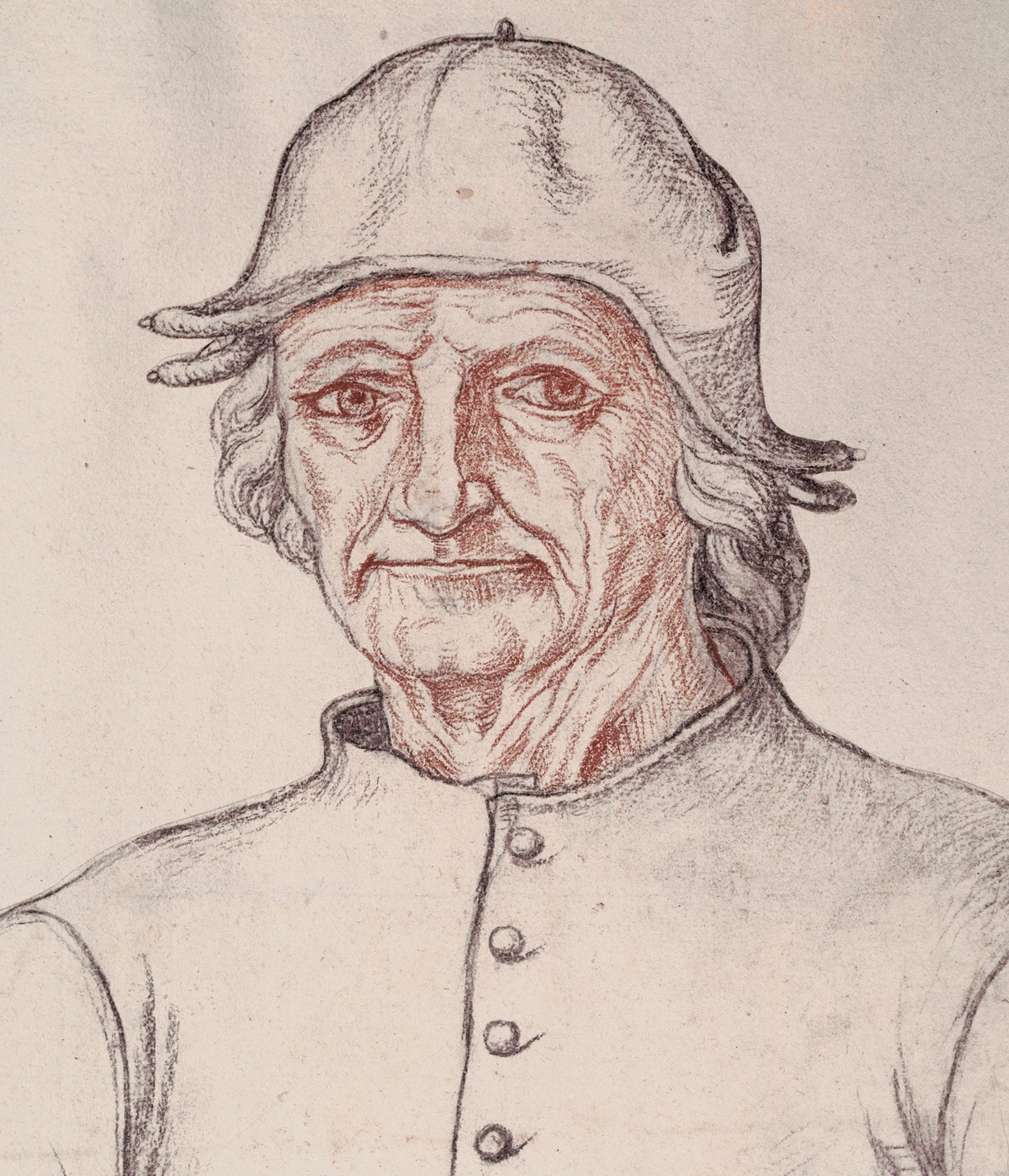
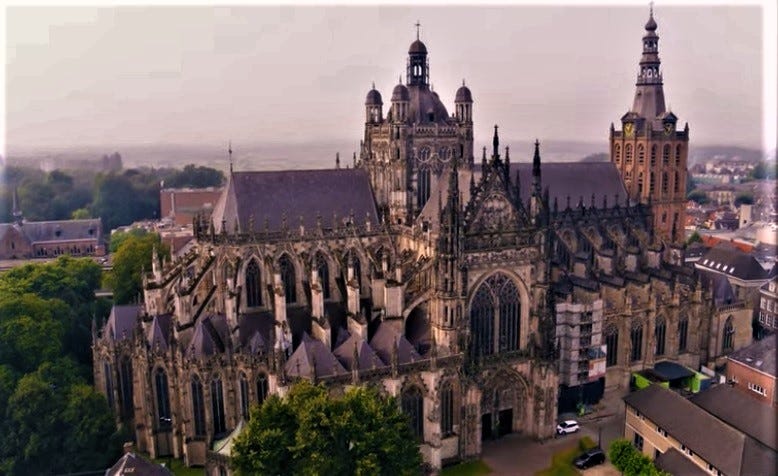
Hieronymus Bosch died in 's-Hertogenbosch in the summer of 1516, most likely in early August. No document states the exact cause.
The Brotherhood of Our Lady recorded his funeral mass on 9 August 1516, and historians generally point to an epidemic moving through the city that year as the likely cause.
What stands out to me about researching Bosch's death is how little there is to find. A painter this famous today left almost no personal trace of his final days, which tells you how differently the sixteenth century recorded the people it later decided to remember.
In one paragraph
Hieronymus Bosch died in 's-Hertogenbosch, in what is now the Netherlands, in the summer of 1516.
No surviving document names an exact cause of death. The only firm record is a funeral mass held for him on 9 August 1516.
Most historians place his actual death in late July or early August of that year, based on how quickly funerals were typically arranged at the time.
Because so little is documented, even reputable sources sometimes state his death date with more confidence than the surviving records actually support.
The Only Record That Survives
The main source for Bosch's death is the Brotherhood of Our Lady, a religious confraternity in 's-Hertogenbosch that Bosch had belonged to for decades.
Their account books note a funeral mass held for him on 9 August 1516. That single entry is essentially the only administrative trace of his death.
No will, no death notice and no personal letters describing his final illness have ever surfaced.
The Brotherhood kept records for administrative reasons, tracking membership and religious obligations, not to preserve details for later historians, which is part of why the entry is so brief.

The Epidemic Theory
's-Hertogenbosch was hit by a serious outbreak of disease in 1516 and into the following year, one that killed a number of residents.
Because Bosch's death falls right in the middle of that outbreak, many historians treat the epidemic as the most likely explanation.
This remains a reasonable conclusion based on timing rather than a documented diagnosis, since no medical account of his symptoms exists.
Cities of this size in the sixteenth century had no formal system for tracking cause of death the way later centuries would, so an epidemic often had to be inferred from timing rather than confirmed case by case.
More in the same vein
The Other Theory Pleurisy
A smaller number of accounts point to pleurisy, a painful lung condition, as an alternative cause.
The same outbreak thought to have caused epidemic deaths in the city is also linked in some sources to pleurisy cases among Bosch's own neighbors and relatives.
Either theory fits the same general picture. Bosch caught something going around the city and did not recover from it.
Neither theory can be fully confirmed or ruled out with the surviving evidence, a common problem when working this far back with only one provincial town's records.
How Old Was Bosch When He Died
Bosch's birth year is not recorded either, so his age at death is an estimate rather than a fact.
Most historians place his birth around 1450, which would make him roughly sixty five or sixty six when he died.
That estimate comes from tax records and guild documents from 's-Hertogenbosch, not from a birth certificate, since none exists.
Guild membership records, which Bosch kept up for most of his adult life, are one of the few places his activities were tracked year by year.
What He Left Behind
Bosch left no will that has been found, and no inventory of his workshop survives from the time of his death.
His wife, Aleyt van de Meerveen, who came from a wealthier family than Bosch's own, outlived him by several years.
The couple had no children, which means his workshop and its methods were not passed down through direct descendants.
Some later writers speculated about students or followers carrying on his workshop, but no solid documentation supports a direct line back to Bosch himself.
Anyone curious about how much of what we assume about famous paintings turns out to be guesswork should look at 7 secrets in 7 famous paintings, since Bosch's own work is full of exactly that kind of gap.
Why So Little Was Recorded
's-Hertogenbosch in 1516 was a provincial city, not an artistic capital like Antwerp or Florence, and local record keeping reflected that.
Bosch was respected in his own city and worked for patrons as far away as Spain, but that reputation did not translate into the kind of biographical documentation later artists received.
Most of what is known about his life comes from guild records, tax rolls and the Brotherhood of Our Lady, not from anyone writing about him directly.
Compare that to painters working in larger courts during the same period, whose movements and commissions were often recorded by patrons or secretaries as a matter of course.
His Legacy After Death
Bosch's paintings kept circulating and being copied for decades after 1516, especially in Spain, where King Philip the Second later collected several of his major works.
That later fame is part of why the gaps in his death record feel so strange today. The art survived in detail. The man barely did.
Copies and imitations of his style multiplied so quickly after his death that separating genuine Bosch paintings from workshop copies and later imitators remains a serious challenge for museums today.
For the fuller account of his life and work, the complete story of Hieronymus Bosch on this site pulls together what is actually known, separate from the many myths that have grown around him.
Was He Still Working Right Before He Died
For a long time, historians assumed The Garden of Earthly Delights was one of Bosch's very last major works, painted close to 1516.
Tree ring dating done on the wood panels later pushed that estimate earlier, closer to the 1490s, which means the painting most associated with Bosch may have been finished decades before his death, not during his final years.
That kind of gap between assumption and evidence shows up throughout Bosch's biography, not just around this one painting.
More paintings, more stories
Common Questions About Hieronymus Bosch's Death
When exactly did Hieronymus Bosch die
The exact date is unknown. A funeral mass for him was recorded on 9 August 1516, and historians place his actual death in late July or early August that year.What did Hieronymus Bosch die of
No document states a cause. Most historians point to an epidemic moving through 's-Hertogenbosch that year, with a smaller number of sources suggesting pleurisy instead.How old was Bosch when he died
Likely around sixty five or sixty six, based on a commonly accepted birth year of around 1450, since no birth record survives.Where did Hieronymus Bosch die
In 's-Hertogenbosch, in what is now the southern Netherlands, the city where he was born, lived and worked his entire life.Did Bosch have children
No. He married Aleyt van de Meerveen and the couple had no children, so his workshop was not passed down to direct descendants.How do we know when Bosch died at all
Through a single administrative record, a funeral mass entry in the account books of the Brotherhood of Our Lady, the religious confraternity Bosch belonged to.Was Bosch famous when he died
He was respected in 's-Hertogenbosch and had patrons as far away as Spain, though nothing close to the fame his paintings gained after his death.What happened to his paintings after he died
They kept circulating and being copied for decades, and King Philip the Second of Spain later collected several of his major works for the royal collection.