How Did Hokusai Die? Cause, Date, and Last Words

Katsushika Hokusai died on May 10, 1849, in Edo, at around 88 years old. No specific illness is recorded, only gradual decline.

According to accounts written after his death, his last words asked heaven for ten more years, then settled for five, enough, he said, to finally become a true painter.

What stays with me about Hokusai is that even at the very end, at an age most people would call finished, he still talked about needing more time to get good. That is either the most humble thing an artist ever said, or the most demanding.

Portrait of an elderly Katsushika Hokusai
A self portrait Hokusai drew late in life, around the years he was still calling his best work unfinished.

Learn art the fun way. Free stories every week, no boring lectures.


The quick version

Katsushika Hokusai died on May 10, 1849, in Edo, the city now called Tokyo, in a small rented home near a temple in the Asakusa district.

He was around 88 by the way age is counted today, though Japanese records from the period list him as 90, using an older counting method.

No dramatic illness or accident is recorded. He appears to have died of gradual, age related decline in the home he shared with his daughter.

That gap between 88 and 90 is not a factual dispute, just two different systems for counting a person's age, and it shows up often in translated Japanese biographies.

A Man Who Never Stopped Working

Hokusai kept drawing and painting into his final year, decades after most of his peers had slowed down or stopped entirely.

He changed his artist name more than thirty times over the course of his career, treating each shift as a kind of fresh start and a new phase of skill.

By the time he died, he had produced somewhere near 30,000 individual works, prints, paintings, and book illustrations combined, an output almost no other artist of his era matched.

He reportedly moved residence more than ninety times during his life, sometimes because of poverty, sometimes simply because he grew restless in one place. That restlessness carried into his final months as well, when he kept sketching even from a home far smaller than the fame of his prints might suggest.

His Final Home in Asakusa

In his last years, Hokusai lived in a small rented dwelling near Henjoin temple, in the Asakusa district on the edge of Edo.

By most accounts the home was humble, cluttered with brushes, paper, and unfinished sketches rather than any of the comfort his fame might have afforded him.

The Asakusa lodging was where he spent his final months, working when his strength allowed and resting when it did not.

Neighbors reportedly knew him as an old man who worked constantly, still sketching visitors and passersby well into his final year.

Portrait associated with the painter Katsushika Oi, daughter of Hokusai
Katsushika Oi, Hokusai's daughter and a trained painter in her own right, who cared for him in his final years.

More on Hokusai and the Artists Who Reshaped How We See


His Daughter Oi

Hokusai's daughter, Katsushika Oi, also a trained painter, lived with him and supported him through his final years.

She managed the household, and by some accounts contributed brushwork to pieces credited to her father, working closely enough with him that scholars still debate where his hand ends and hers begins.

She was reportedly with him when he died, one of the few people present for his final hours.

The Deathbed Words

According to accounts recorded after his death, Hokusai spoke twice as he was dying, each time about wanting more time.

First he said, if heaven will extend my life by ten more years, according to the record kept by those present.

Then, after a pause, he added, if heaven will afford me five more years of life, then I will manage to become a true artist.

The words were recorded by people close to him and passed down through later biographies, rather than written by Hokusai himself in his final moments.

Why Five Years Mattered So Much to Him

Hokusai had written years earlier that he considered his work before age 70 not really worth counting toward his real development as an artist.

He believed his drawing kept improving with every passing decade, and that real mastery was still somewhere ahead of him even in his late eighties.

The deathbed request for five more years fits a lifelong pattern of never considering his own work finished, no matter how many decades he had already spent at it.

Contemporary writers who knew him described someone genuinely restless about his own limitations, not simply being modest for effect.


Cool Stories About Art is a free newsletter. The stories behind the paintings, straight to your inbox.


May 10, 1849

Hokusai died in the early morning of May 10, 1849, in the Asakusa home he had shared with his daughter.

No detailed medical account of his final illness survives beyond the basic facts of his age and gradual physical decline.

He had been working, by most accounts, right up until close to the very end, sketching even when he could no longer manage a full painting.

The Asakusa district in Edo
The Asakusa district of Edo, where Hokusai spent his final years and where he is buried.

Buried in Asakusa

Hokusai was buried at Seikyoji temple in Asakusa, the same district where he had spent his final years.

His grave remains there today, a modest marker for a man whose images are now among the most reproduced in the history of art.

Katsushika Oi is buried nearby, a fitting arrangement given how closely she worked alongside him at the end of his life.

Visitors to the temple today can see his grave alongside a small collection of memorial markers connected to his family and students.

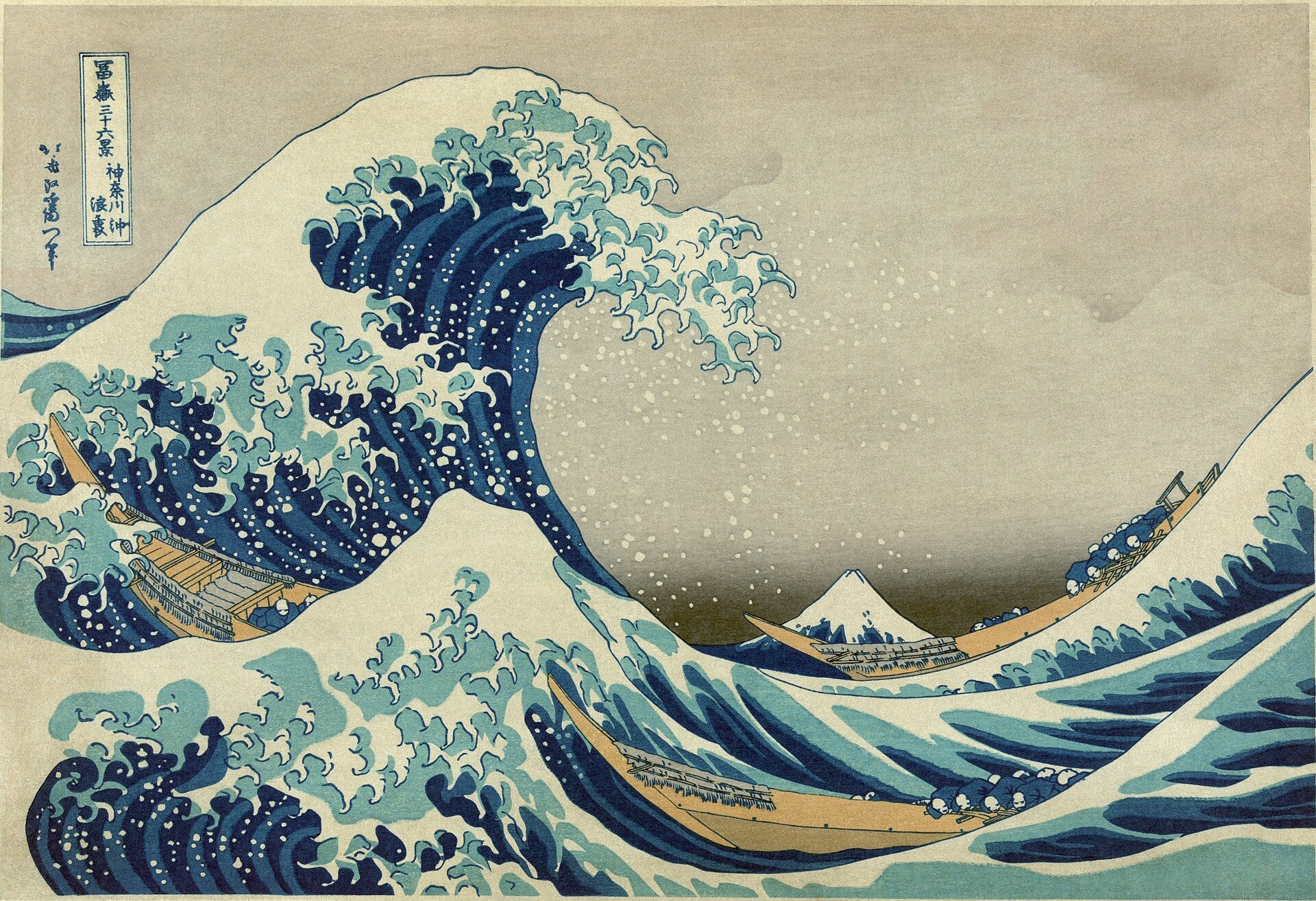
Woodblock print of a great wave by Katsushika Hokusai
The Great Wave off Kanagawa, printed when Hokusai was in his early seventies, around fifteen years before his death.

A Life Measured in 30,000 Works

Hokusai's most famous print, The Great Wave off Kanagawa, was made in his early seventies, part of the Thirty Six Views of Mount Fuji series.

He kept producing new work for nearly two more decades after that print made him famous well beyond Japan.

By any measure, his final wish for just a little more time came after a career most artists could not have fit into several lifetimes.

That contrast, a man already regarded as a master, still asking for more years to get better, is part of why the quote has outlived nearly everything else written about him.


More worth your time


Frequently Asked Questions About Katsushika Hokusai's Death

  • How old was Hokusai when he died?
    Around 88 by modern counting, listed as 90 in Japanese records from the time, which counted age differently than the method used today, a common source of confusion in Hokusai biographies translated from Japanese.

  • What were Hokusai's last words?
    He asked heaven for ten more years, then, after a pause, said five more years would be enough to finally become a true painter.

  • What did Hokusai die of?
    No specific illness is recorded. Surviving accounts describe age related decline rather than pointing to any single documented cause.

  • Where did Hokusai die?
    In a rented home near Henjoin temple in the Asakusa district of Edo, the city now known as Tokyo.

  • Who took care of Hokusai in his final years?
    His daughter, the painter Katsushika Oi, lived with him, managed his household, and was reportedly present when he died, one of only a few people confirmed to have been with him in his final hours.

  • Where is Hokusai buried?
    At Seikyoji temple in Asakusa, Tokyo, in the same district where he spent his final years and his daughter is also buried.

  • How many works did Hokusai make in his lifetime?
    Estimates put the total near 30,000, across woodblock prints, paintings, and book illustrations produced over roughly seven decades of work, an output that still makes him one of the most prolific artists in Japanese history.

  • Did Hokusai make The Great Wave near the end of his life?
    No. It came in his early seventies, part of the Thirty Six Views of Mount Fuji series, roughly fifteen years before he died.


Join 170,000 readers learning art the fun way. Free stories every week, no boring lectures.