How Did Peter Paul Rubens Die?

Peter Paul Rubens died on 30 May 1640 in Antwerp at 62, from heart failure brought on by chronic gout. A severe attack in 1639 had already left his hands too damaged to paint.

He is buried in the Church of Saint James under an altarpiece he designed himself, after years working as both painter and diplomat.

The detail I find most telling is that gout took Rubens' hands before it took the rest of him. He spent the final months of his career unable to do the one thing that had made him famous, running his workshop through assistants instead. It is a quieter ending than Caravaggio's or Pollock's, but losing the ability to paint before actually dying is its own kind of hard stop.

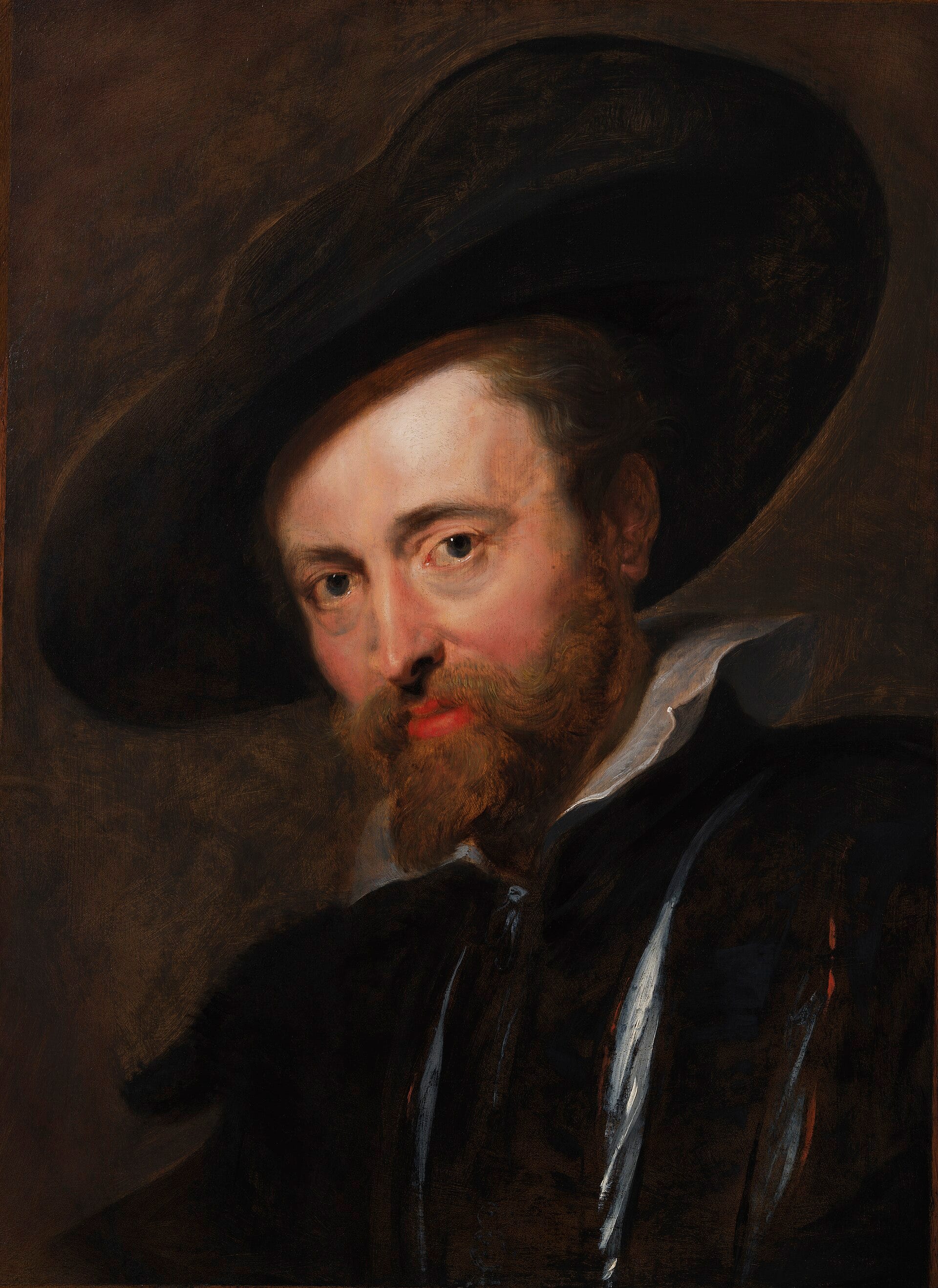
A self portrait of Peter Paul Rubens
Rubens painted several self portraits over his career, including this one from later in his life.

Learn art the fun way. Free stories every week, no boring lectures.


Death in Antwerp, 30 May 1640

Peter Paul Rubens died at his house in Antwerp on 30 May 1640. He had lived there since returning from Italy decades earlier.

He was 62, just short of his 63rd birthday, having outlived several of the patrons who had once competed for his work.

By then he was the most celebrated painter in northern Europe, running a large workshop and fielding commissions from royal courts across the continent.

His house in Antwerp doubled as a studio, a gallery for his own art collection, and a stop for visiting dignitaries who wanted to meet him in person. He had built much of it himself, modeled partly on the Italian villas he admired during his years in Rome and Mantua.

Gout: The Illness Behind the Illness

Rubens suffered from chronic gout for years before his death, a condition that flared unpredictably and left him bedridden for stretches at a time.

Gout is a form of arthritis caused by a buildup of uric acid crystals in the joints, and in Rubens' case it grew progressively worse through his fifties and sixties.

Doctors at the time had few real treatments for it beyond rest and diet, neither of which stopped its progress.

Some period remedies involved diets that modern doctors now know actually worsen gout, meaning the treatments of the day may have done more harm than good.

Warning Signs That Started Decades Earlier

Rubens' gout did not appear suddenly in his final years. Letters mention joint pain as early as his fifties, well before the fatal decline.

He continued accepting major commissions through the 1630s, but colleagues noted he worked more slowly and relied more heavily on his workshop as the decade went on.

The 1639 attack was severe, but it was the culmination of a chronic illness that had shadowed him for at least ten years.

By his own letters, he described days when the pain kept him from leaving his bedroom, let alone his studio, sometimes for a full week at a stretch.


A few more worth a look


The Attack That Ended His Painting Career

In 1639, a severe gout attack left Rubens unable to hold a brush for weeks at a stretch.

The pain settled in his hands, the one part of his body his entire career depended on.

He never fully recovered his ability to paint before he died the following spring, despite brief periods when the swelling in his hands eased enough to hold a brush again.

Peace and War, the allegorical painting Rubens gave to Charles I of England
Rubens painted this allegory as a diplomatic gift to Charles I of England during his years as a court diplomat.

A Life That Was Not Just Painting

Rubens spent much of his later career as a diplomat as well as an artist, carrying messages between the courts of Spain, England, and the Spanish Netherlands.

He was knighted by both Charles I of England and Philip IV of Spain for that diplomatic work.

The travel and stress of that second career likely did nothing to help a body already fighting chronic gout.

Long journeys by carriage and ship across variable European weather were common complaints among diplomats of the era already prone to joint disease.

His Final Works

Even with his hands failing, Rubens kept his workshop running through assistants in his final year, directing compositions he could no longer fully execute himself.

Paintings from this period were often finished by pupils working from his sketches and instructions.

Distinguishing Rubens' own hand from his workshop's in these last pieces is still a subject of debate among art historians.

Among his closest assistants were painters who went on to notable careers of their own once the workshop eventually closed, carrying forward techniques and compositions they had learned directly under him.

The Church of Saint James in Antwerp, where Rubens is buried
Rubens is buried in this Antwerp church, beneath an altarpiece he designed for his family chapel.

Cool Stories About Art is a free newsletter. The stories behind the paintings, straight to your inbox.


Buried in the Church He Helped Design

Rubens was buried in the Church of Saint James in Antwerp, in a chapel his own family had funded.

He had designed the altarpiece for that chapel himself, a painting that still hangs above his tomb.

The church remains open to visitors today, a short walk from the house where he lived and worked for most of his career.

That house, now a museum, still displays some of the tools and furnishings from the years he actually worked there.

What Gout Actually Does to the Body

Left untreated for years, gout does more than damage joints.

The same uric acid buildup can affect the kidneys and cardiovascular system, and modern doctors consider chronic gout a real risk factor for heart failure.

That is consistent with the historical record of Rubens' death, which lists heart failure as the immediate cause, brought on by his gout.

Modern cardiologists reviewing cases like his note that the connection between chronic gout and heart disease was not properly understood or treated until centuries later, long after Rubens himself had died.

Helena Fourment, Rubens' second wife, painted by Rubens
Helena Fourment, Rubens' widow, inherited an estate that took years for the family to fully settle.

The Estate He Left Behind

Rubens died a wealthy man, with a large house, an art collection, and a workshop full of unfinished commissions.

His widow, Helena Fourment, and his children inherited an estate that took years to fully settle.

The paintings still in his studio at his death were sold off gradually, some finished by his students, some left exactly as he had left them.

An inventory of the studio taken after his death is still used by historians today to help authenticate disputed Rubens paintings.


More from the collection


Peter Paul Rubens Death Questions

  • How did Rubens die?
    Heart failure caused by chronic gout, on 30 May 1640 in Antwerp, following a severe attack the year before that had already ended his ability to paint. He had lived with the disease for at least a decade.

  • How old was Rubens when he died?
    62, just short of his 63rd birthday, born in 1577 in Siegen, in what is now Germany.

  • What is gout, and how did it kill Rubens?
    Gout is a buildup of uric acid crystals in the joints. Left untreated for years, it can damage the heart, which the historical record blames for his death. Modern doctors still recognize this same link between chronic gout and heart failure.

  • Could Rubens still paint at the end of his life?
    Barely. A severe 1639 gout attack in his hands ended his ability to paint before he died the next year. His workshop kept producing new work through assistants in the meantime.

  • Where is Rubens buried?
    In the Church of Saint James in Antwerp, under an altarpiece he designed himself for his family chapel. The church remains open to visitors today.

  • Was Rubens only a painter?
    No. He also worked as a diplomat for the courts of Spain and England and was knighted by both, on top of running one of the largest workshops in Europe and speaking several languages fluently.

  • Did Rubens finish his last paintings himself?
    Many were completed by assistants working from his sketches once his hands failed in his final year. Historians still debate how much of each late piece is truly his own hand.

  • How wealthy was Rubens when he died?
    Very. He left a large house, an art collection, and an estate that took his family years to settle, alongside a workshop full of unfinished commissions still to be resolved.


Join 170,000 readers learning art the fun way. Free stories every week, no boring lectures.