By October 1669, Rembrandt van Rijn had already buried almost everything.
His money went first. Declared bankrupt in 1656, he watched his house and his art collection sold off in 1657 and 1658 to pay his debts.
The people went next. His wife Saskia had died back in 1642. His companion Hendrickje Stoffels died in 1663. His only surviving son, Titus, died in 1668, likely of plague, at age 26.
Then, just months after Titus, it was his turn.
Rembrandt van Rijn died on October 4, 1669, in Amsterdam, at age 63. The medical cause of his death was never recorded and remains unknown. His death appears to have been sudden, and he was buried in a rented grave in the Westerkerk.
What he had already lost
The bankruptcy of 1656 stripped Rembrandt of the life he had built as the most famous painter in Amsterdam.
The grand house on the Breestraat, where he had lived and worked for nearly two decades, was sold. So was the collection inside it: paintings, prints, weapons, costumes, curiosities he had bought for years.
The sales of 1657 and 1658 raised money for his creditors. They also erased the physical world Rembrandt had assembled around himself.
The deaths around him
Saskia van Uylenburgh, his wife, died in 1642, the same period he was working on The Night Watch.
Hendrickje Stoffels, the woman who shared his later life and helped run his affairs after the bankruptcy, died in 1663.
The hardest blow came last. Titus, his only surviving child from his marriage to Saskia, died in 1668, likely of plague. He was 26, recently married, and he died just months before his father.
When Rembrandt died in October 1669, there was almost no one from his old life left to bury him.
What we know about the death itself
Here the record goes quiet.
No document names an illness. No account describes a long decline. The specific cause of Rembrandt's death was simply never written down, and it remains unknown today.
What the evidence suggests is that the end came suddenly. He was 63 years old.
Anyone who tells you Rembrandt died of a specific disease is guessing. The honest answer is that we do not know.
He painted until the end

Rembrandt kept working through all of it.
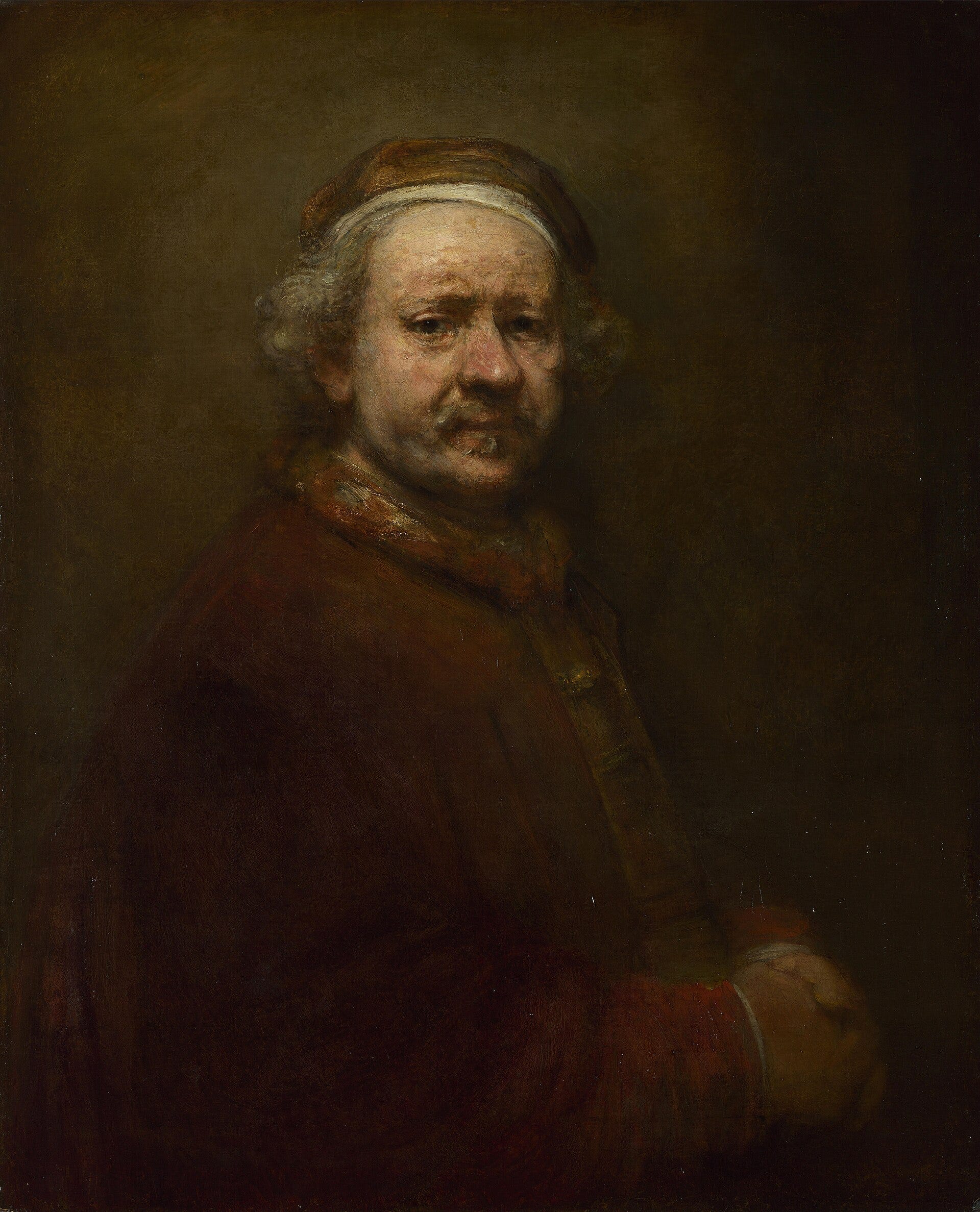
In his final years he produced some of the most personal self portraits in Western art history, studying his own aging face with the same attention he had once given to Amsterdam's richest merchants.
Through the bankruptcy, the deaths, and old age, the painting continued. It stopped only when he did.
The burial in the Westerkerk
Rembrandt was buried in the Westerkerk, the West Church of Amsterdam, in a rented grave.
The rented grave has fed a legend that he was buried as a pauper. Historians push back on that. His funeral had sixteen pallbearers, which points to a proper ceremony rather than a pauper's burial.
But the grave carried no headstone. And that detail would matter more than anyone at the funeral could have known.
FAQ
When did Rembrandt die? Rembrandt van Rijn died on October 4, 1669, in Amsterdam. He was 63 years old.
What was the cause of Rembrandt's death? Unknown. The medical cause was never recorded, and no reliable document describes an illness. His death appears to have been sudden.
Did Rembrandt die poor? He had been declared bankrupt in 1656, and his house and collection were sold in 1657 and 1658. But his funeral had sixteen pallbearers, which historians cite as evidence it was not the pauper's burial sometimes claimed.
Who died before Rembrandt? His wife Saskia van Uylenburgh in 1642, his companion Hendrickje Stoffels in 1663, and his only surviving son Titus in 1668, likely of plague, at age 26, just months before Rembrandt himself.
Where is Rembrandt buried? In the Westerkerk in Amsterdam, in a rented grave with no headstone. The exact spot within the church is unknown today.
The exact location of Rembrandt's grave inside the Westerkerk has never been identified. The church floor has been remodeled since 1669, so the original site cannot be found. The artist who painted more self portraits than anyone before him lies in an unmarked, unrecoverable spot beneath the church.