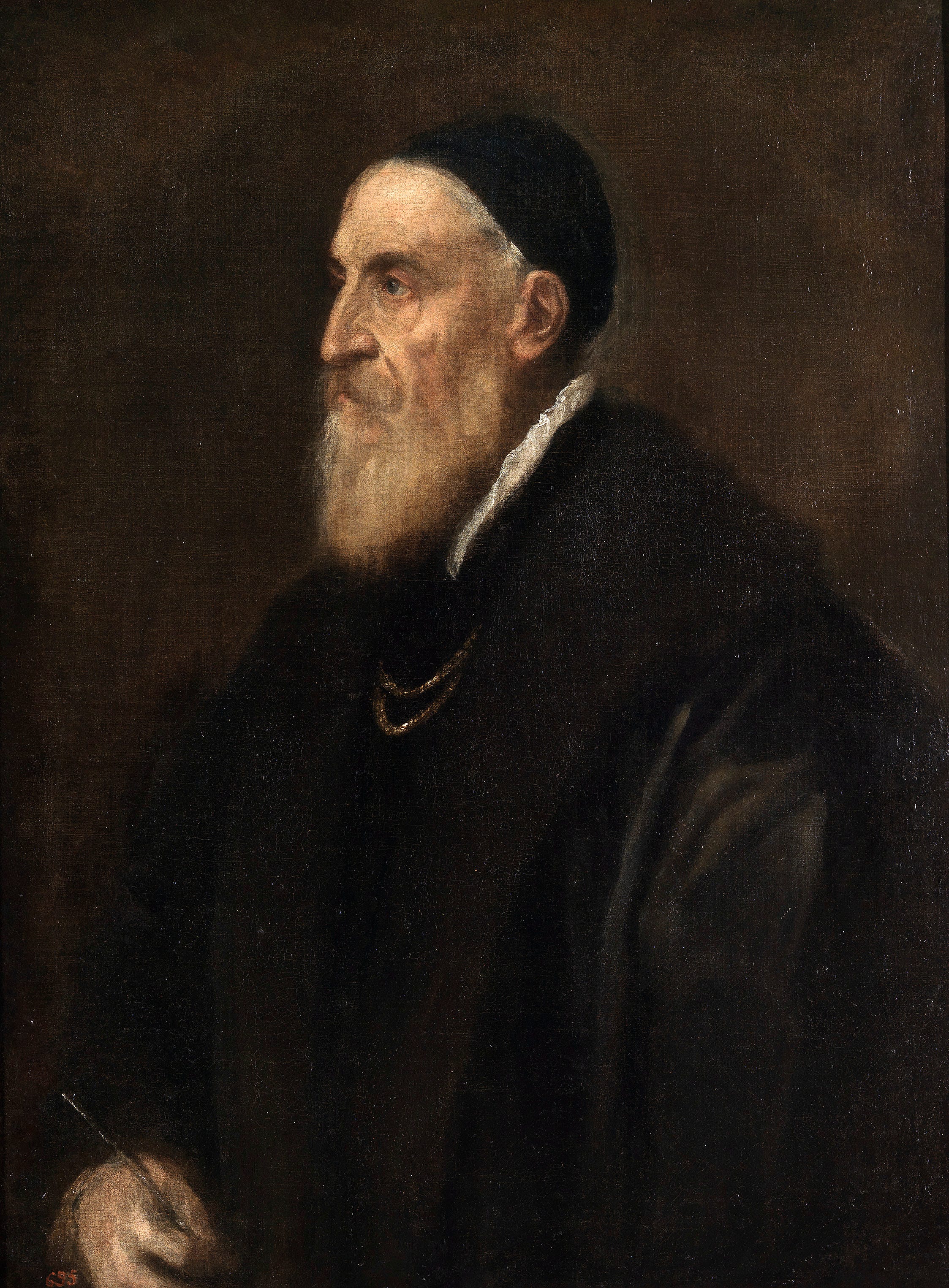
Titian died in Venice on 27 August 1576 during a plague epidemic that killed tens of thousands of people that year. His exact age is unknown because his birth year is disputed, but he was likely in his late eighties or nineties.
Venice broke its own plague protocol to give him a church burial, an honor denied to almost everyone else who died that year.
What strikes me about Titian's death is not the plague itself, common enough in Venice that summer, but the exception Venice made for him. Bodies were supposed to be burned or dumped outside the city to stop the spread, yet officials let his be buried inside a church. That single decision tells you more about his standing at the end of his life than any biography could.
Venice During the Plague of 1576
By the summer of 1576, plague was tearing through Venice, eventually killing an estimated 50000 people, close to a third of the city.
Titian, one of the most celebrated painters in Europe, was living in his house in the Biri Grande district when the disease reached him.
He died there on 27 August 1576, with his son Orazio following him to the same disease only weeks later.
How Old Was Titian When He Died
Titian's exact age at death is one of the more debated details in his biography, because no birth record survives.
Traditional accounts place his birth around 1488 or 1490, which would make him roughly 86 to 88 when he died.
Some art historians argue for a later birth date in the 1490s based on other evidence, which would still put him easily in his eighties.
His Final Months Still at Work
Titian was not idle in his final years. He was still accepting commissions and working on major paintings into his eighties.
Among the works left unfinished at his death was a Pieta he had intended for his own tomb in the Frari church.
That painting was completed after his death by another artist, Palma il Giovane, who added an inscription noting the fact.
More on Titian and Renaissance Venice
The Rules for Plague Victims
Venice had strict procedures for handling plague deaths in 1576, designed to stop the disease from spreading further through the city.
Bodies were typically removed quickly, often burned or buried in mass pits outside the city rather than in parish churches.
Public burial ceremonies for plague victims were generally forbidden, and most families had no chance to bury their dead with any ceremony at all.
Why Titian Was the Exception
Titian was given an exception to nearly all of that. City authorities allowed a funeral and a burial inside a church, something almost no one else received that year.
His reputation as the leading painter in Venice, with decades of work for the church, the state and European royalty, gave him standing that ordinary plague victims did not have.
It is one of the clearest signs of how highly Venice regarded him, granted at the exact moment the city was trying hardest to control contagion.
Burial in the Frari
Titian was buried in the Basilica di Santa Maria Gloriosa dei Frari, the church that already held his unfinished Pieta.
He had a long connection to the Frari, having painted major altarpieces there decades earlier, including the Assumption of the Virgin.
A monument to Titian was later added inside the church, though it was built long after his death rather than at the time of the burial.
What Happened to His House and His Sons
Titian's death set off chaos at his house. Accounts describe looting in the immediate aftermath, with people taking valuables from his home.
His estate passed to his son Pomponio, a priest with a reputation for mismanaging money, who sold off property relatively quickly.
Much of what Titian had accumulated over a long and successful career did not stay in the family for long after he died.
His Legacy After the Plague
Titian's death marked the end of the dominant figure in Venetian painting for most of the sixteenth century.
His influence carried on through painters who studied his handling of color and paint, an approach later artists across Europe kept returning to.
The unfinished Pieta in the Frari remains one of the more direct physical links to how he was working right up to the end.
Keep the stories coming
Questions About Titian's Death
How did Titian die?
He died of the plague during the major outbreak that hit Venice in 1576.How old was Titian when he died?
His exact age is uncertain because his birth year is disputed, but he was likely in his late eighties or nineties.Where did Titian die?
He died in his house in the Biri Grande district of Venice.Was Titian the only plague victim buried in a church?
Sources describe him as the only plague victim given a church burial in Venice that year, an exception to standard practice.Where is Titian buried?
He is buried in the Basilica di Santa Maria Gloriosa dei Frari in Venice.Did Titian's family survive the plague?
His son Orazio died of the same plague only weeks after him, though another son, Pomponio, survived.Was Titian still painting when he died?
Yes. He left an unfinished Pieta intended for his own tomb, later completed by the painter Palma il Giovane.How many people died in the 1576 Venice plague?
Estimates put the death toll at roughly 50000 people, close to a third of the city's population.