

170 000+ readers. Learn art the fun way.
This is a preview. Paid subscribers get the full story.
You’ll also get:
10 new stories every month
The full archive (130+ Art stories)
Your personal art guide. Comment, ask questions, DM me anytime
iPhone user? Subscribe at coolstoriesabout.art, not via the app. Apple adds 30% to the price.
Paris, rue des Grands Augustins, a day in May 1937.
On the fourth floor of an old private mansion, a man of 55 is painting standing up, alone, on a canvas 3.5 meters high and 7.8 meters long.
He started three weeks earlier. He has ten days left before delivery to the Spanish Pavilion at the World’s Fair.
The painting will be called Guernica.
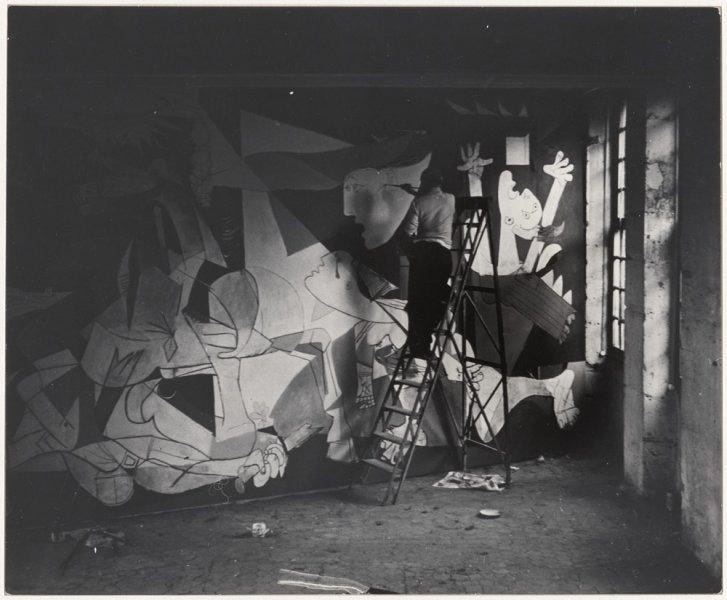
Two women walk into the studio unannounced.
One is 27. Blonde. Her name is Marie Thérèse Walter. She has been living in hiding for ten years in an apartment he pays for.
She just found out he has another mistress.
The other is 29. Brunette. Her name is Dora Maar. A surrealist photographer.
She has been sleeping with him for a year.
Marie Thérèse demands that he choose. Dora refuses to leave.
Picasso does not answer. He keeps painting.
The two women end up grabbing each other. They fight on the floor, in front of the unfinished canvas, while Picasso paints a fallen horse screaming.
He does not step in. He says nothing.
Years later, to one of his biographers, he would say it was one of his finest memories.
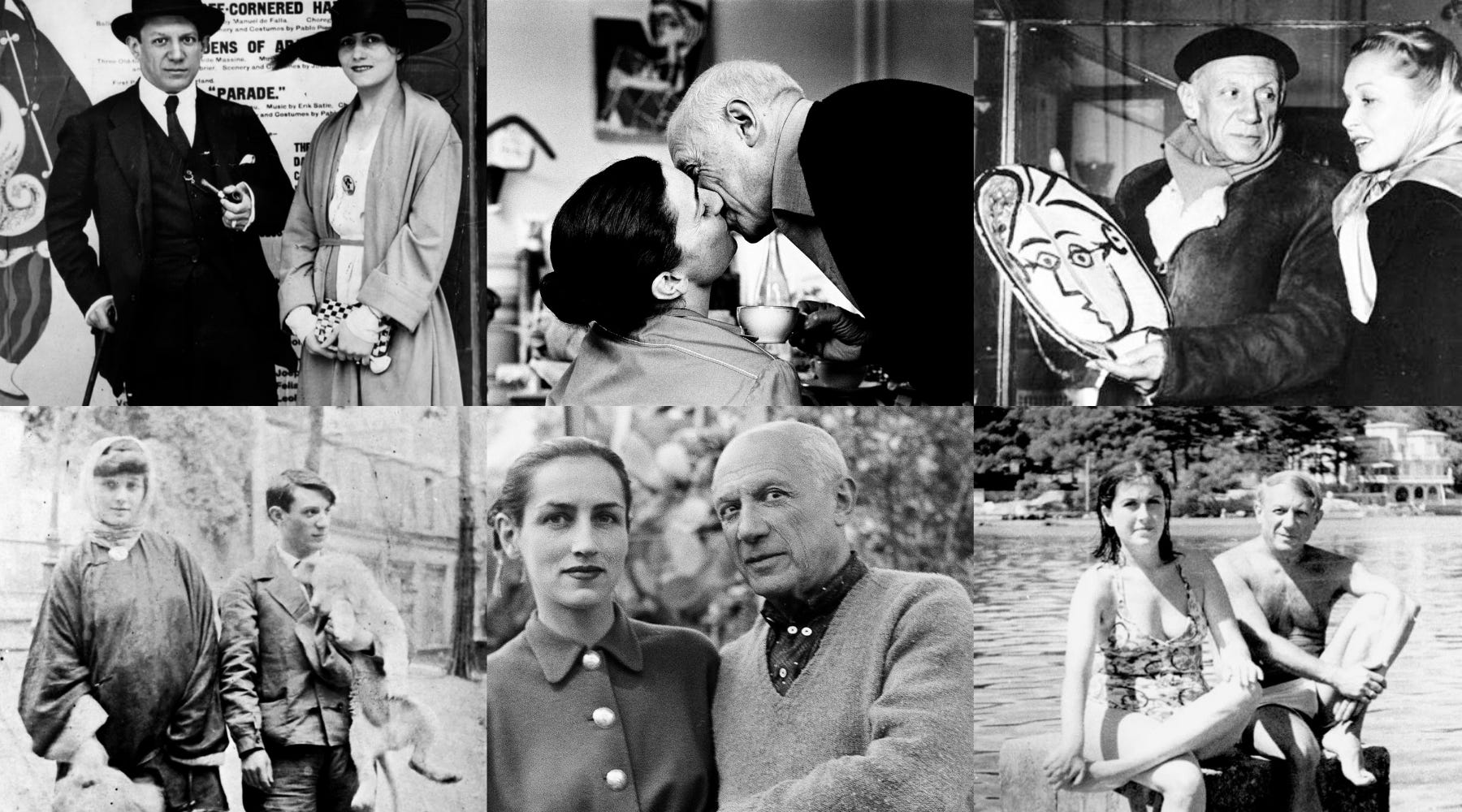
Pablo Picasso loved six women in his life.
One hanged herself. One shot herself. One ended up in a psychiatric clinic under electroshock.
One died alone in a suburban Paris apartment, paid every month to keep quiet.
One shot herself in the temple ten days before opening a retrospective she had organized herself.
Only one managed to leave in time, to write, to live 101 years.
Picasso used to say, in front of his friends: For me, there are only two kinds of women. Goddesses and doormats.
Here are their stories.
1. Fernande, Montmartre, summer 1904
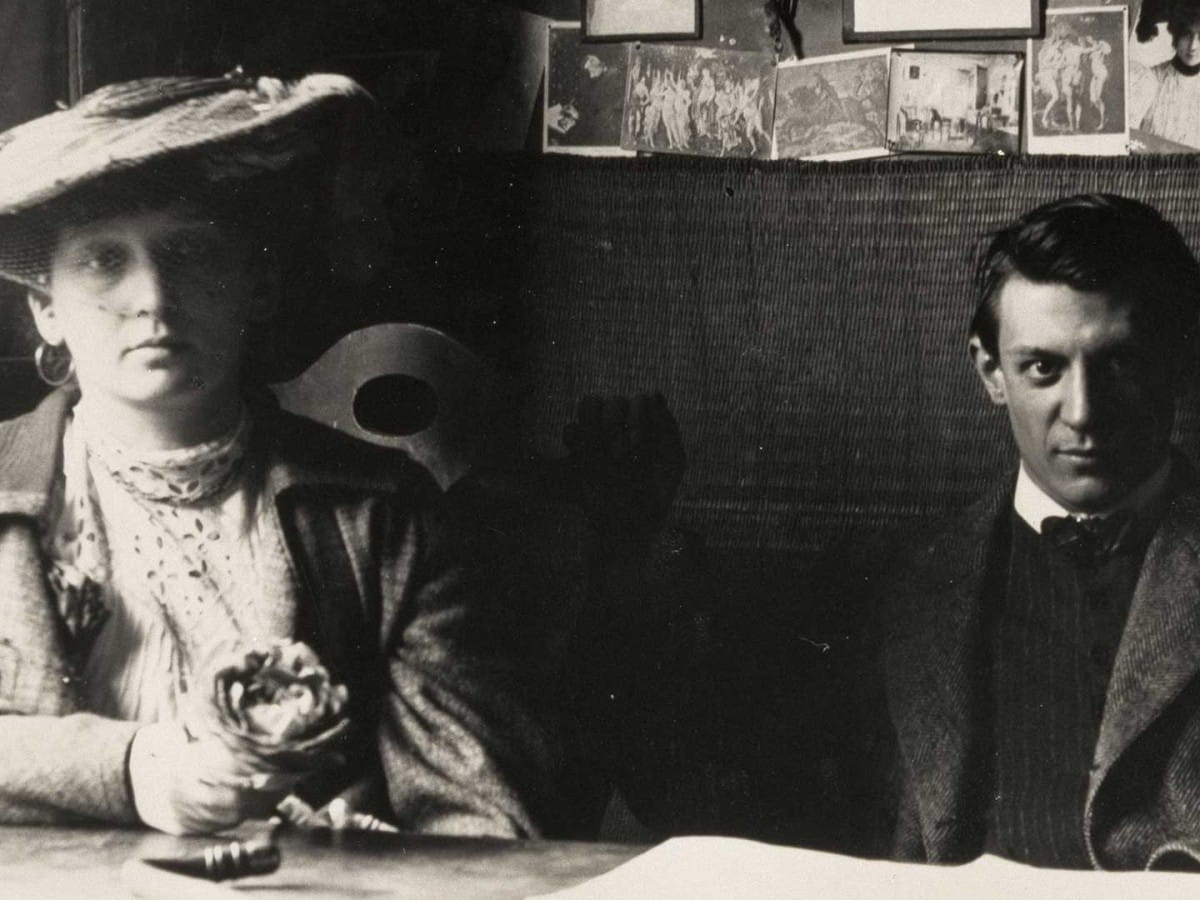
A storm breaks over the hill.
On the staircase of the Bateau Lavoir, Fernande Olivier comes home soaked to her studio. She is 23.
A man blocks her way. He is holding a small cat. He says nothing.
He hands it to her, he smiles.
His name is Pablo Picasso. He is 22, he arrived from Spain three years earlier, he barely speaks French.
He lives in the room next door, a studio without heat lit by kerosene, where he sleeps on a mattress laid on the floor.
She takes the cat.
Fernande has been at the Bateau Lavoir for a year, on the run from a marriage to an office clerk who used to beat her.
She poses nude for three francs a session for painters in Montmartre.
No training, no family, no dowry. She is beautiful, and that is her only currency.
They spend seven years together.
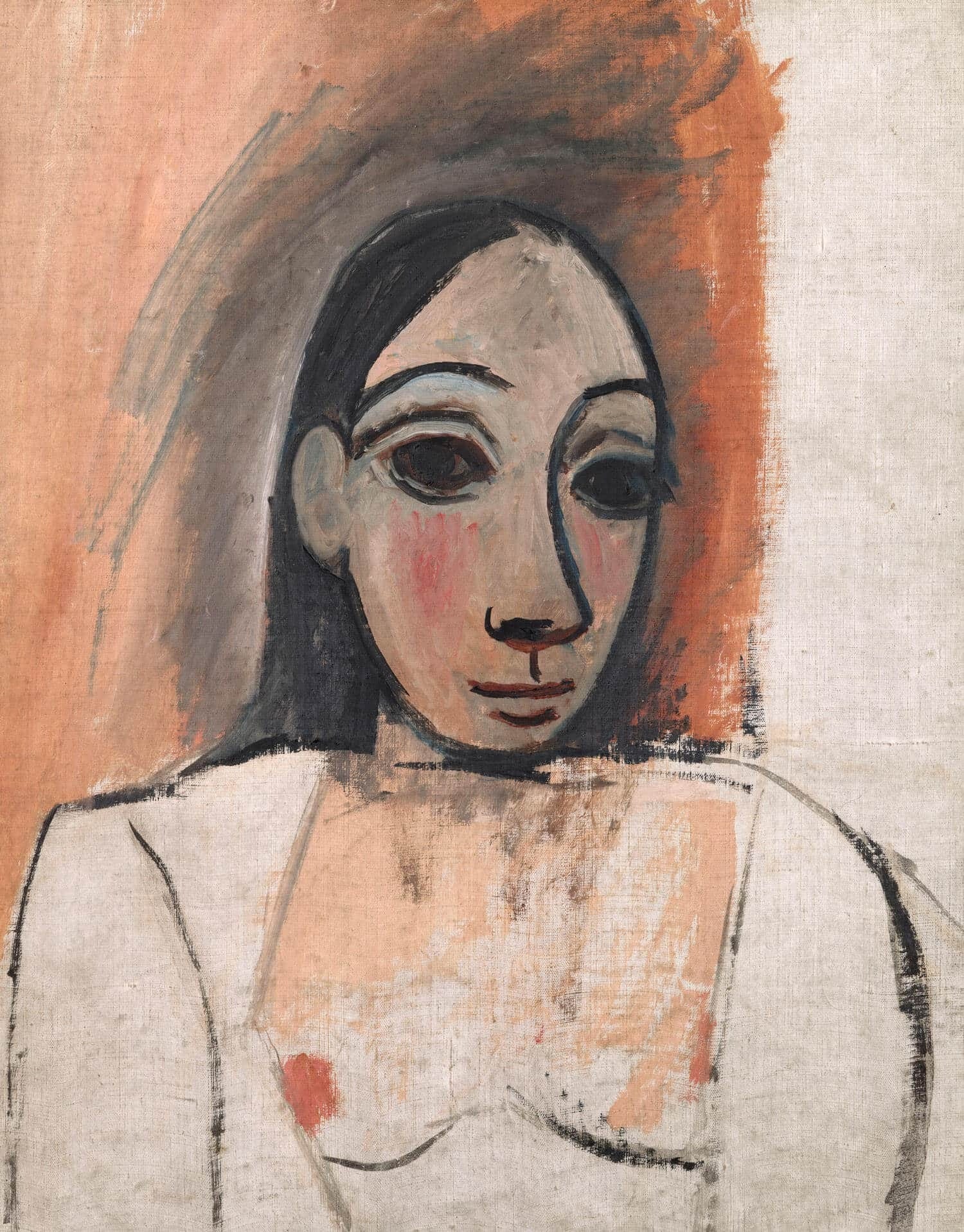
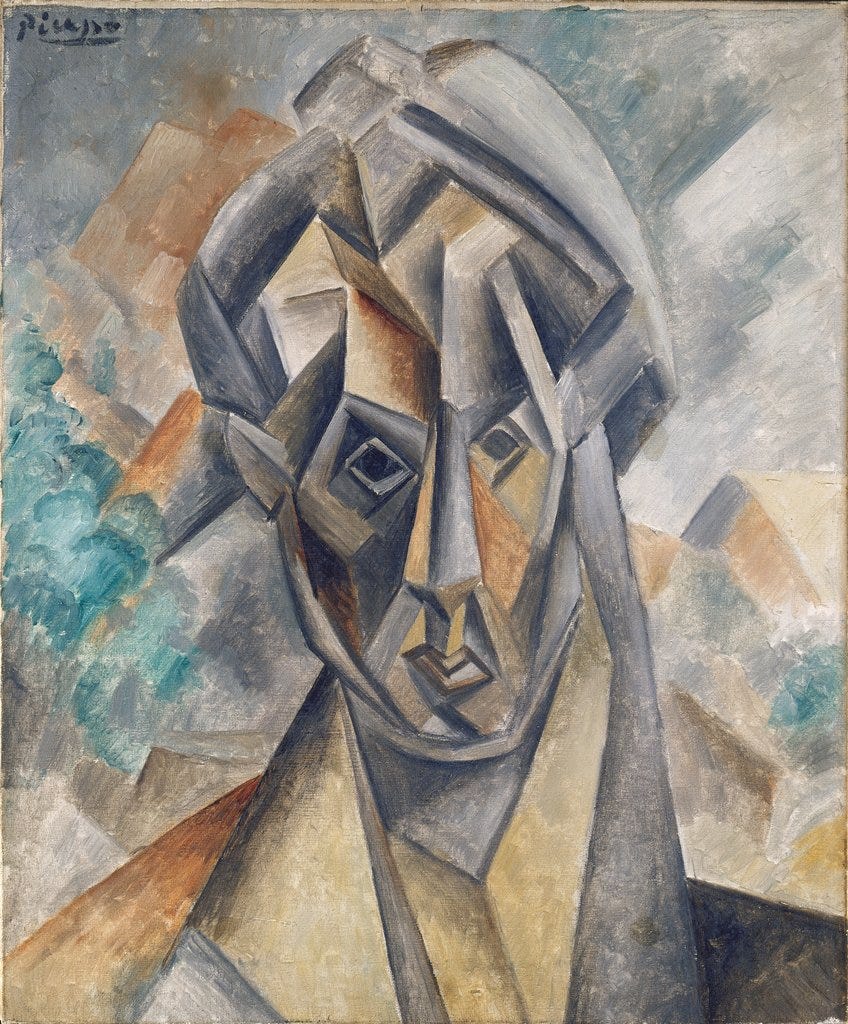
Fernande poses for every painting of the Rose Period, for Les Demoiselles d’Avignon in 1907, for the first cubist works.
She is the first face of modern Picasso.
She is also his first witness.
In August 1911, the Mona Lisa is stolen from the Louvre. The whole country panics.
Police start digging into the art world, looking at every past theft.
Four years earlier, a friend of Apollinaire had stolen two Iberian statuettes from the same Louvre, and had resold them to Picasso.
Apollinaire is arrested on September 7, 1911, thrown into La Santé prison. To try to save himself, he names Picasso.
Picasso is summoned in turn.
Facing Apollinaire in handcuffs, in front of the judge, he is asked whether he knows this man.
He answers that he has never seen him.
Apollinaire understands. That evening, he cries in Fernande’s arms.
Fernande will have seen Picasso at his worst. He will never forgive her for it.
In 1912, Picasso leaves for Céret with Eva Gouel, the partner of a fellow painter.
Fernande is away for three days. When she comes back to the Bateau Lavoir, the studio is empty.
There is no letter.
She never gets over it.
For decades she lives on odd jobs. Cashier, antiques dealer, French teacher for foreigners.
No child, no husband, smaller and smaller apartments in west Paris.
She writes, because that is all she has left.
In spring 1933, she is preparing the release of a memoir.
Picasso hears about it. He has someone offer her one hundred thousand francs to give up publishing.
She refuses.
A few weeks later, Picasso et ses amis comes out.
The book contains everything: the perjury in front of the judge, Apollinaire weeping in their kitchen, the early years at the Bateau Lavoir.
All Paris grabs for the book.
Picasso sends his lawyers. He has the sequel blocked.
In 1957, the same lawyers come knocking again. She is 76, with almost nothing left.
They offer her a deal. Picasso will pay her one million francs a year, for life, on one condition.
That she never writes another word about him.
She signs. She collects the pension every month for nine years.
On January 29, 1966, Fernande dies alone in a small apartment in Neuilly sur Seine, at 84.
No newspaper is notified. Four people follow the coffin.
Her Souvenirs intimes, the full, uncensored version, would come out in 1988.
Twenty two years after her death, forty years after he had paid her to be silent, she would have the last word.
Discover my new newsletter !

Keep learning art the fun way


2. Olga, Rome, spring 1917
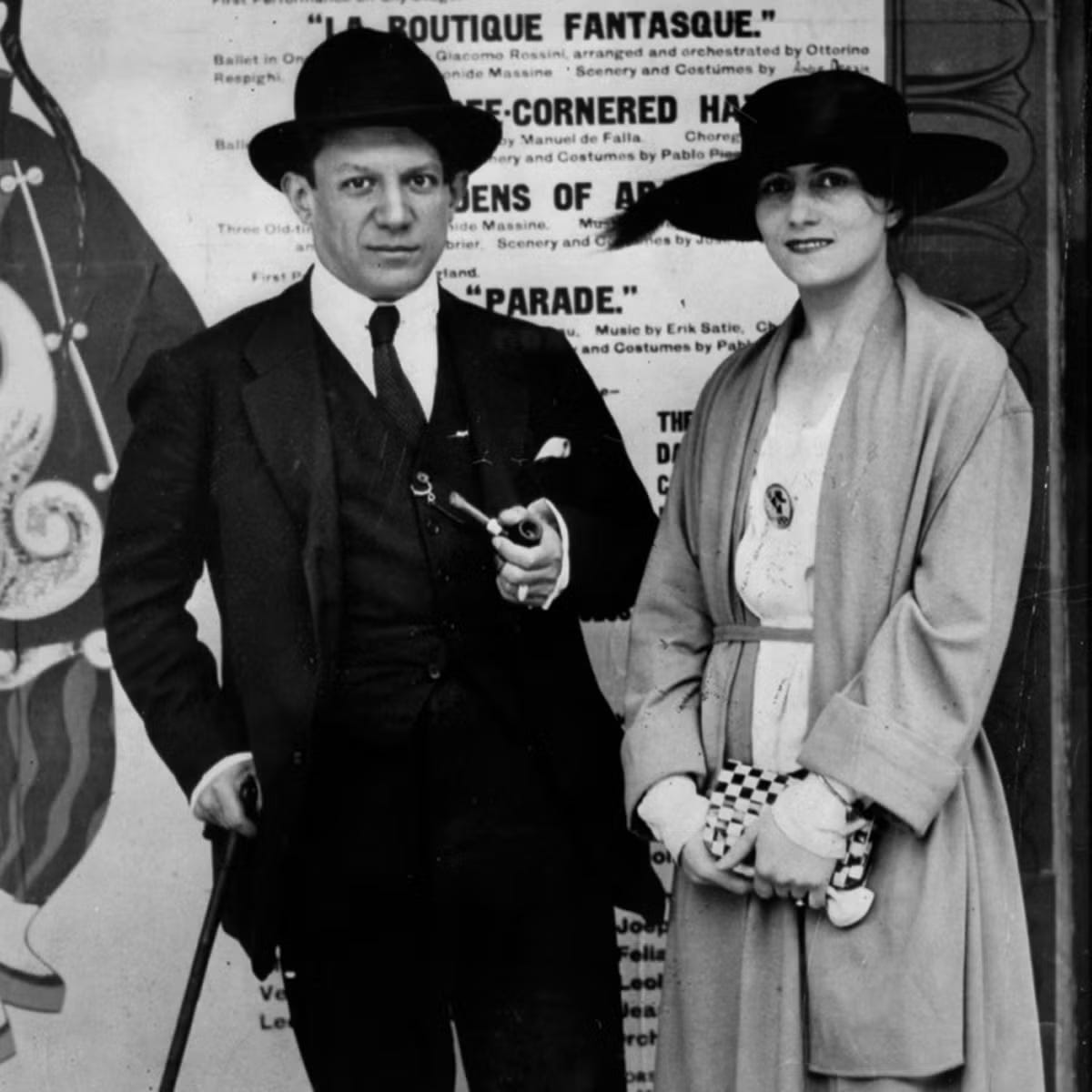
Picasso is in Rome to design the sets and costumes for Parade, Jean Cocteau’s new production set to music by Erik Satie.
He attends the Ballets Russes de Diaghilev rehearsals every day at the Teatro Costanzi.
He is 35. He has just lost Eva Gouel, taken by tuberculosis two years earlier at 30.
He is looking for something else.
One of the dancers watches him work.
Her name is Olga Khokhlova, 26, daughter of a colonel of Tsar Nicholas II whose family has been wiped out by the Revolution a few months earlier.


She speaks French and English. She trained in Saint Petersburg. She joined Diaghilev in 1912.
When Picasso asks her to marry him, Diaghilev flies into a rage.
Olga is one of his principal dancers, the Madrid season begins in three months. He orders her to choose.
She chooses Picasso. She will never set foot on a stage again.
They marry on July 12, 1918, at the Orthodox church on rue Daru, in Paris.
The witnesses are Jean Cocteau, Max Jacob, and Guillaume Apollinaire, who will die three months later of the Spanish flu at 38.
Olga wears a white dress sewn by Jeanne Paquin.
Olga wants a gentleman. Picasso plays along for three years.
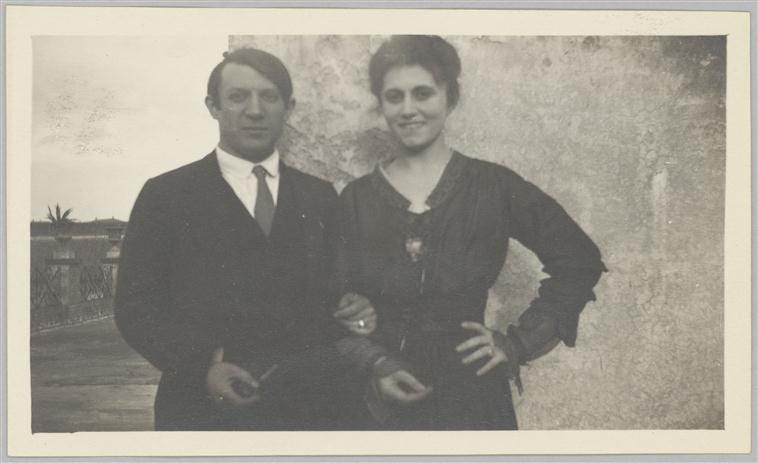
Three piece suits from Camps, a private mansion on rue La Boétie, a Hispano Suiza with a chauffeur, three servants, receptions for all Paris, conversations in careful French.
On February 4, 1921, she gives him a son, Paulo.
Then he starts painting broken shapes again.
Women with monster faces, mouths eating their own chins, breasts where the eyes should be.
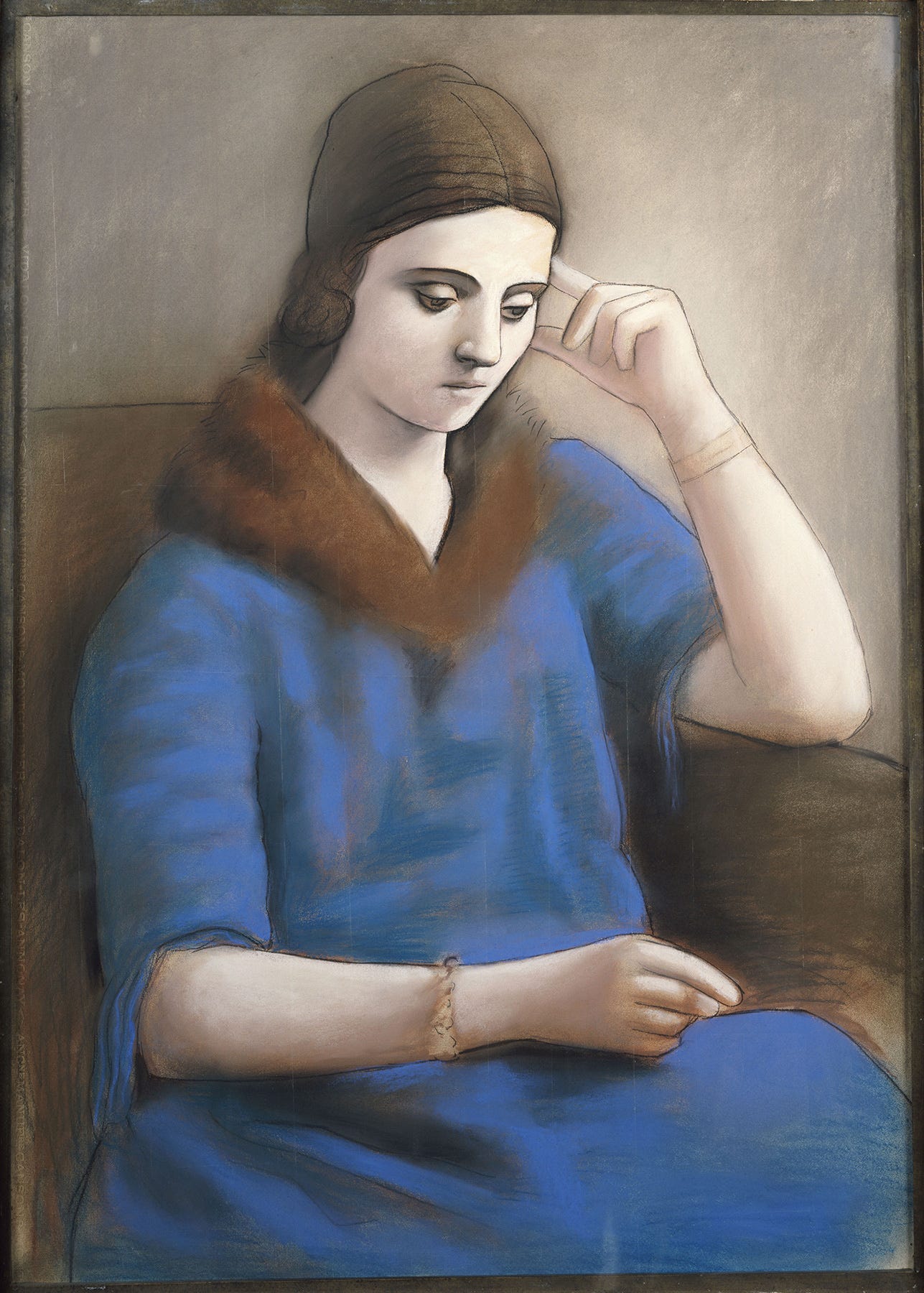
Olga, Catholic, aristocratic, trained in classical ballet, does not understand.
She cries in front of the paintings. He paints her crying.
In 1935, she learns he has a mistress of 26 who has just given birth to a baby girl.
She takes Paulo, 14, and leaves rue La Boétie.
She files for legal separation. She refuses to divorce.
She knows what she is doing.
In 1935, a separated wife keeps half of everything painted during the marriage. Divorcing means losing the paintings.
Staying the wife, even far from him, means owning half of the biggest studio in the world.
Olga, daughter of a Russian officer ruined by the Revolution, has figured it out before anyone else.
She will hold on for twenty years. At a distance, silent, impossible to push out.
For those twenty years, she follows him everywhere.
She rents an apartment every time he moves, in Antibes, in Cannes, in Paris, never more than a few streets away.
She writes him almost every week, letters that he stores in a trunk and never reads.
Toward the end, the letters change.
They are no longer letters, they are postcards written in French and Russian, covered in obscene insults and threats.
The postman brings them to the villa. Picasso burns them without opening them.
Olga dies of cancer on February 11, 1955, in Cannes, alone in a clinic room.
Picasso does not attend the funeral. Paulo, 34, goes alone.
Fernande and Olga held on. One through writing, the other through the law.
Two old women who died alone, but on their feet.
The next four will break. Early. And badly.
Their names are Marie Thérèse, Dora, Françoise, and Jacqueline.