
Howard Pyle (1853 to 1911) was an American illustrator and writer from Wilmington, Delaware. His pictures filled the great New York magazines, and children still read his books of Robin Hood and King Arthur.
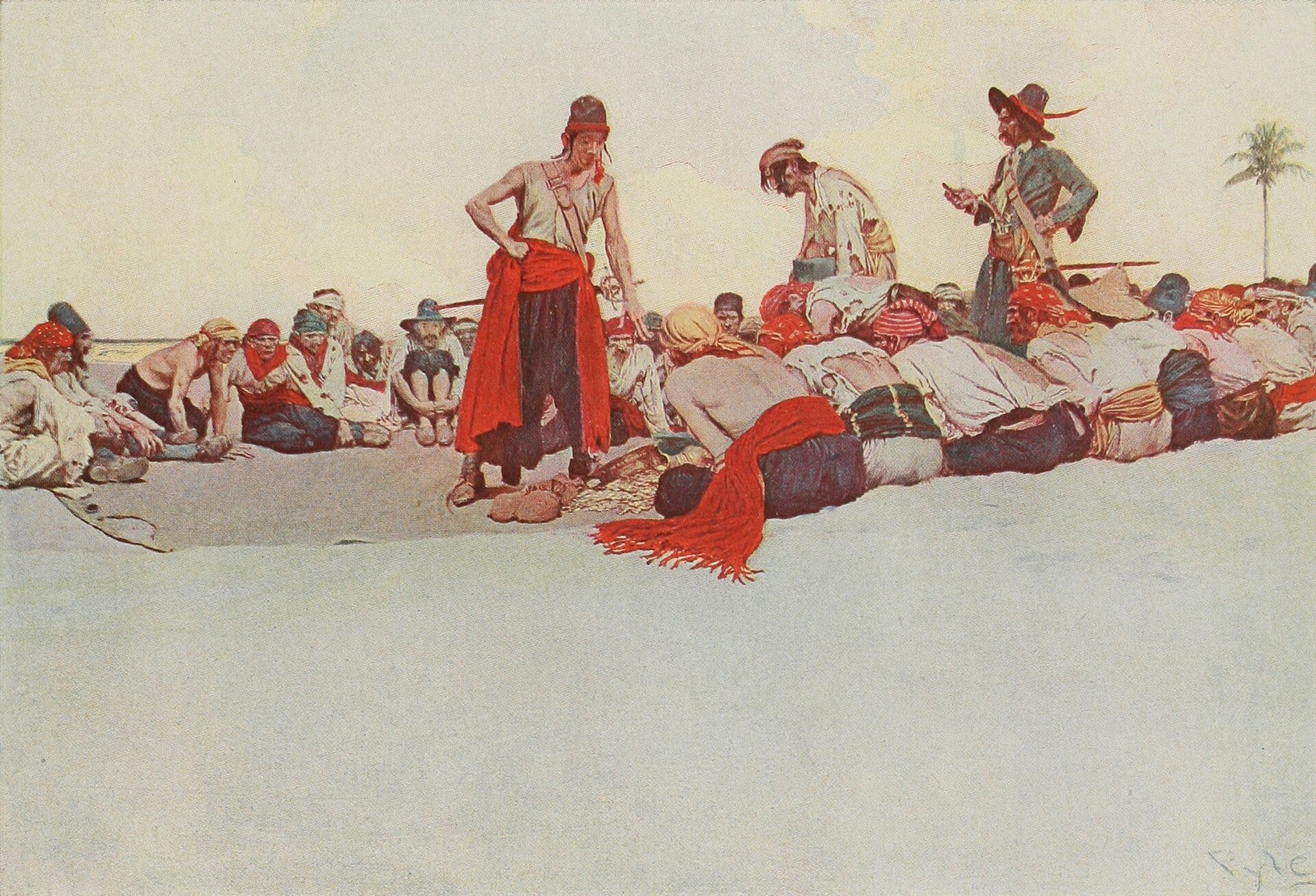
Pyle decided what pirates look like. No picture of real pirate dress had survived, so he built a costume from old books, and Hollywood borrowed it.
Pyle lived by selling his pictures, yet he gave his teaching away. In 1900, he opened an art school beside his studio, took no money for his lessons and turned away almost every young artist who applied.
Cool Stories About Art is a newsletter to learn art the fun way.
Join 200,000+ readers and get:
10 new art stories / month
The entire archive of content (140+ articles)
Comment, ask questions, and chat with other readers
In 1887, Howard Pyle was thirty-four and known across the country for The Merry Adventures of Robin Hood, a book he had written and illustrated four years earlier.
That year, Harper's Monthly, one of the most widely read magazines in America, printed his article on the buccaneers, the pirates who raided the Caribbean in the 1600s. Pyle had to draw them, and no reliable picture of what a buccaneer wore had survived.
So Pyle dressed the buccaneers himself, from his library of books on old costumes. He gave them a scarf knotted on the head, a gold ring in one ear and a long cloth sash at the waist.
On a real ship, a sash that long would have caught in the ropes. On a printed page, the costume could be recognized at a glance, and it has stayed with pirates in books and films ever since.
In 1894, at forty-one, Pyle began to teach illustration at a college in Philadelphia. Six years later, he opened a school of his own beside his studio in Wilmington.
About five hundred young artists applied the first year. Pyle chose twelve of them, and he took no money for teaching them.
Why did a man whose pictures filled the biggest magazines in America take no money from the few students he accepted?
In the rest of the story
Why Pyle walked out of the college where he first taught.
The one thing Pyle demanded of a student before anything else.
What a Native American student told Pyle about painting like a white man.
What two of Pyle's students did for him after he died.