
Realism painted ordinary people at life-size, in thick, visible paint. Impressionism, about twenty years later, kept the everyday subjects but chased light and the passing moment in short strokes of bright color. One movement cleared the ground and the other built on it.
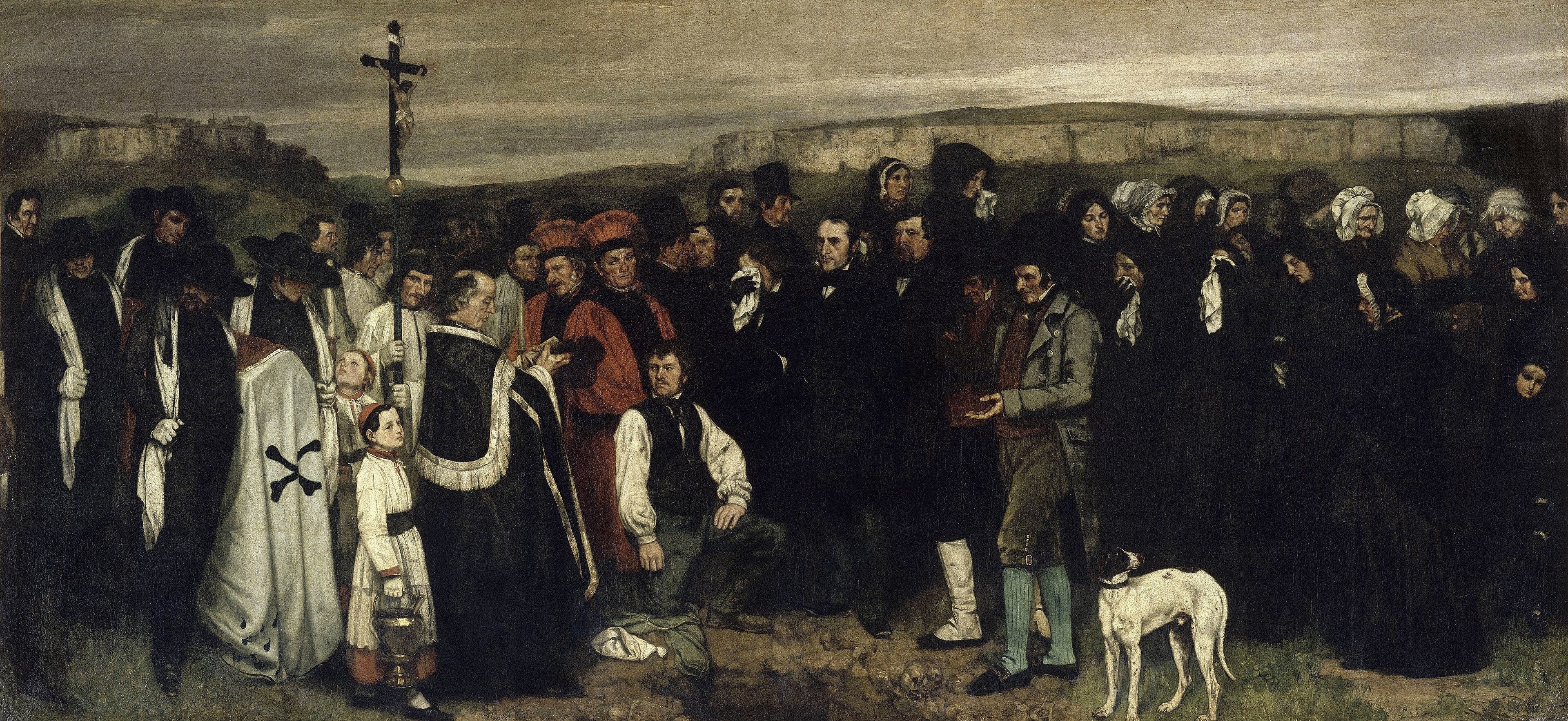
Gustave Courbet started it. He painted villagers at the scale painters kept for saints and kings, and the critics laughed. Monet and his friends later took the same nerve outdoors.
Cool Stories About Art is a newsletter to learn art the fun way.
Join 200,000+ readers and get:
10 new art stories / month
The entire archive of content (1,000+ articles)
Comment, ask questions, and chat with other readers
That tidy split has a flaw. The man who did the most to organize the first Impressionist exhibition never accepted the word. Edgar Degas wanted to be called a Realist.
He was no bystander. The Metropolitan Museum calls him one of the group's founders, an organizer of its exhibitions and one of its most important core members. Yet the same museum writes that he seems never to have reconciled himself to the label, and that he preferred Realist or Independent.
So where does one movement stop and the other start? I don't think a clean line ever existed. There were painters, and there were labels that stuck, often thrown by someone who disliked them.
What You'll Discover
Who really named the Impressionists.
What Courbet's paint looked like up close.
What Courbet built when the jury refused him.
Why Manet never joined them.
Why Degas kept to the indoors.