
Inca art belonged to an empire that stretched from what is now southern Colombia to central Chile, and very little of it outlived the Spanish conquest of 1532. Most of what the Inca made was melted, burned or pulled down. What came through is still enough to show how the Inca built, wove, carved and kept count.
Cool Stories About Art is a newsletter to learn art the fun way.
Join 200,000+ readers and get:
10 new art stories / month
The entire archive of content (140+ articles)
Comment, ask questions, and chat with other readers
What Outlasted the Conquest
For the Inca, cloth counted for as much as precious metal. No political, military, social or religious occasion was complete without textiles, which were given, exchanged, burned or sacrificed.
So precious metal has a single place among the twelve. The others run through what Inca makers worked in: fitted masonry, carved rock, clay, wood, cotton and wool, and grass. Eleven were made between about 1400 and the 1530s, and the twelfth is rebuilt every year by an Inca technique.
What came through did so for plain reasons. Several small pieces had been buried as offerings before the melting began, and the fitted masonry still stands where the Inca built it.
12. Checkerboard Tunic (1400 to 1535)
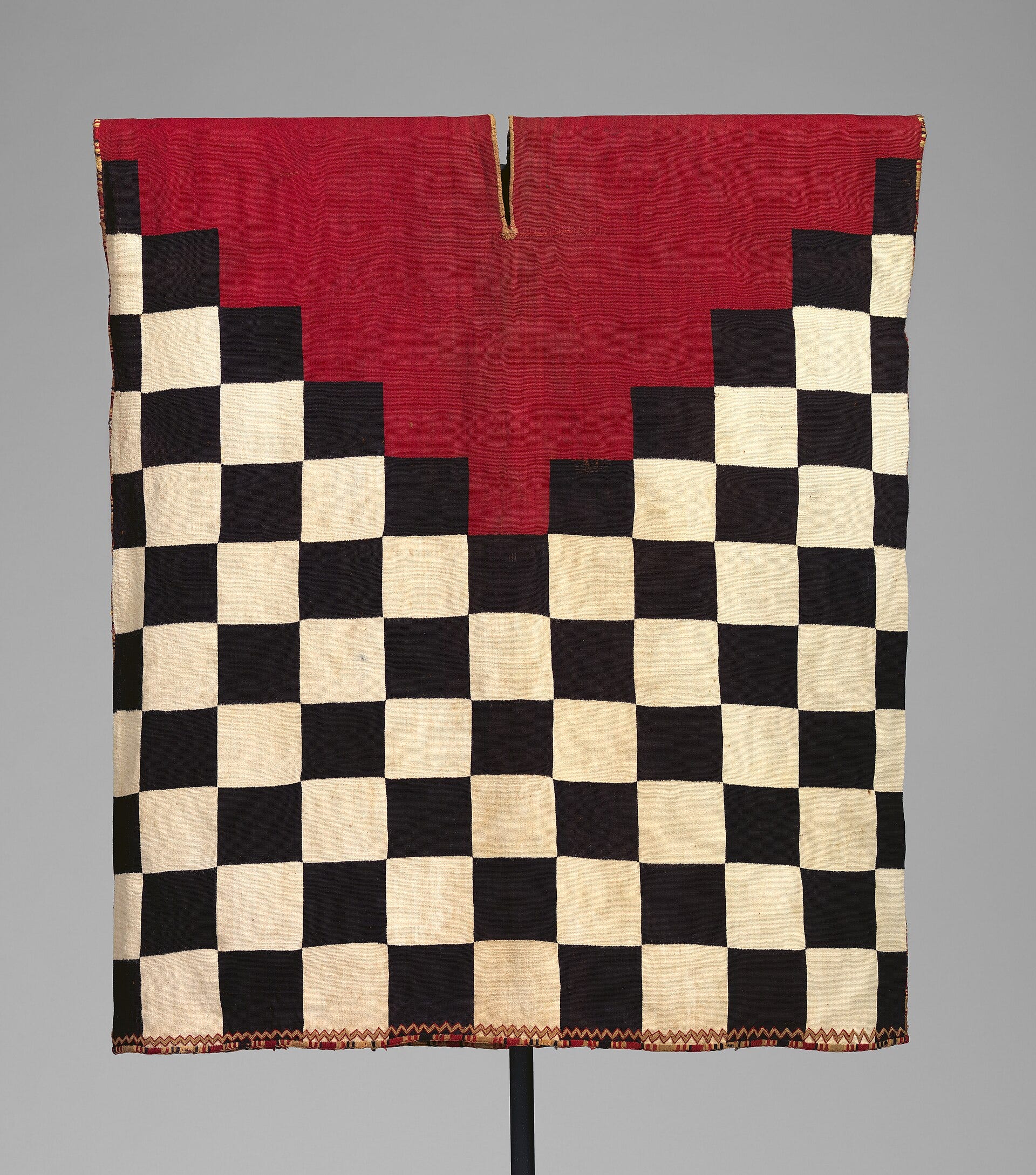
Black and white squares cover this checkerboard tunic from the shoulders to the hem, broken only by a red V at the neck. The tunic was woven in one piece and worn over a loincloth, and its pattern is the same on the front, on the back and on the inside.
The Spanish saw a checkered pattern like this one on the first soldiers who came toward them. In November 1532, the conqueror Francisco Pizarro and his men reached the town of Cajamarca to meet the Inca emperor Atahualpa, and the meeting ended with the emperor their prisoner.
Pizarro's secretary, Francisco de Jerez, wrote an account of that encounter. The first regiment of the Inca army, he noted, wore a livery of checkered squares.
Those soldiers had not chosen their clothes. The Inca state handed these tunics out, to warriors who had distinguished themselves or to other rulers as diplomatic gifts, and only a man who had received one had the right to wear it. A whole regiment in checkerboard was a regiment the state had honored.
The tunics that survive are nearly all the same size, as if they had been woven to a single standard.
At a Glance
Artist: Unknown Inca weavers
Made: 1400 to 1535
Medium: Camelid fiber, woven
Size: 87 × 76.5 cm (34 1/4 × 30 1/8 in)
Where to see it: The Metropolitan Museum of Art, New York
11. Wall of the Six Monoliths, Ollantaytambo (15th century)
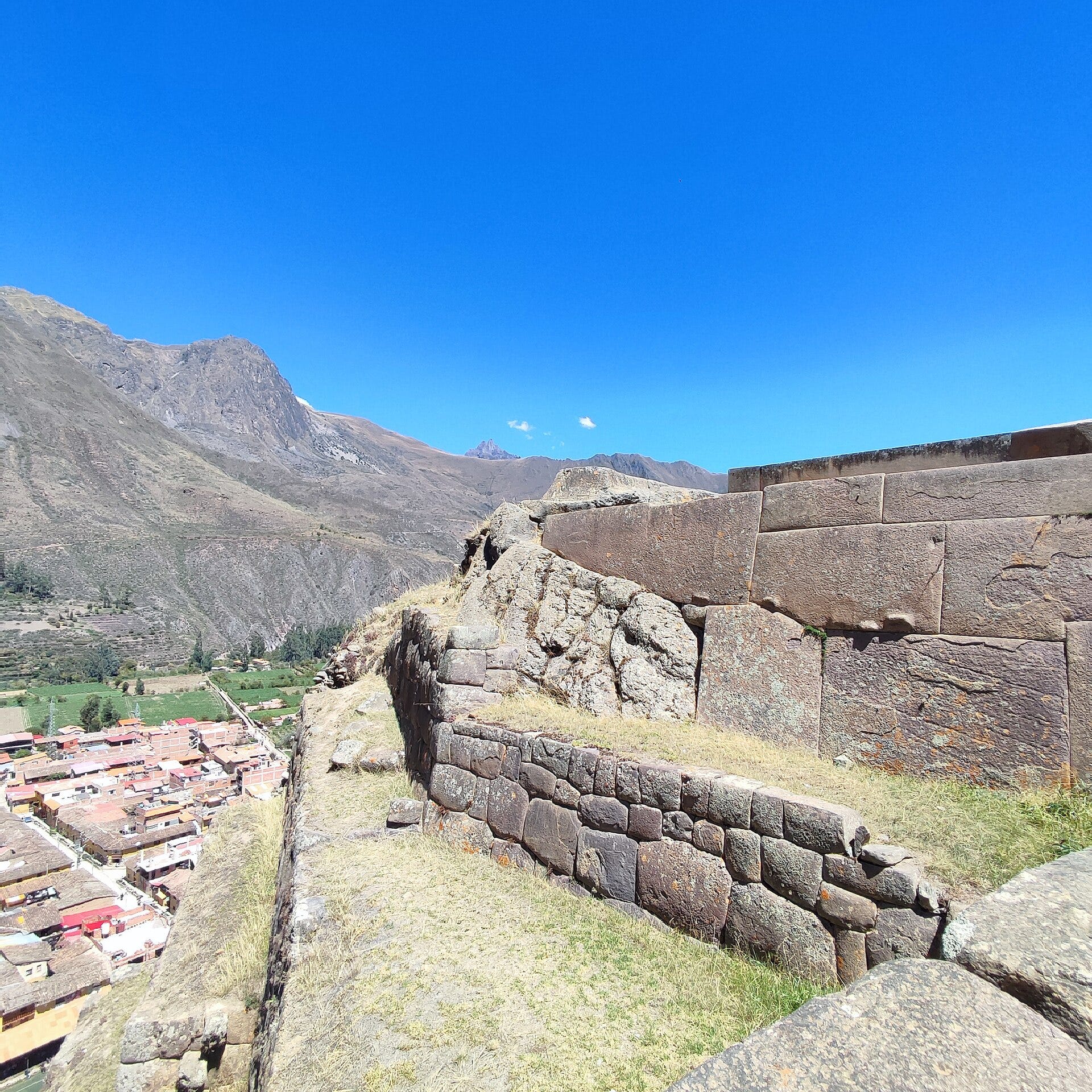
On a hill above a village in the Sacred Valley of Peru, six tall slabs of pink stone stand side by side. All over the slope around them, more blocks of the same pink stone lie on the ground, some fully shaped, others barely begun. That stone does not come from the hill. It was quarried across the river, hundreds of meters up a gorge.