

170 000+ readers. Learn art the fun way.
This is a preview. Paid subscribers get the full story.
You’ll also get:
10 new stories every month
The full archive (130+ Art stories)
Your personal art guide. Comment, ask questions, DM me anytime
iPhone user? Subscribe at coolstoriesabout.art, not via the app. Apple adds 30% to the price.
Coyoacán, Calle Londres, corner of Allende.
A line of people runs along a cobalt blue wall all the way to the corner. Thirty of them. Tickets are booked online three months ahead. No photos inside unless you pay for a permit.
The gate opens. You walk in.
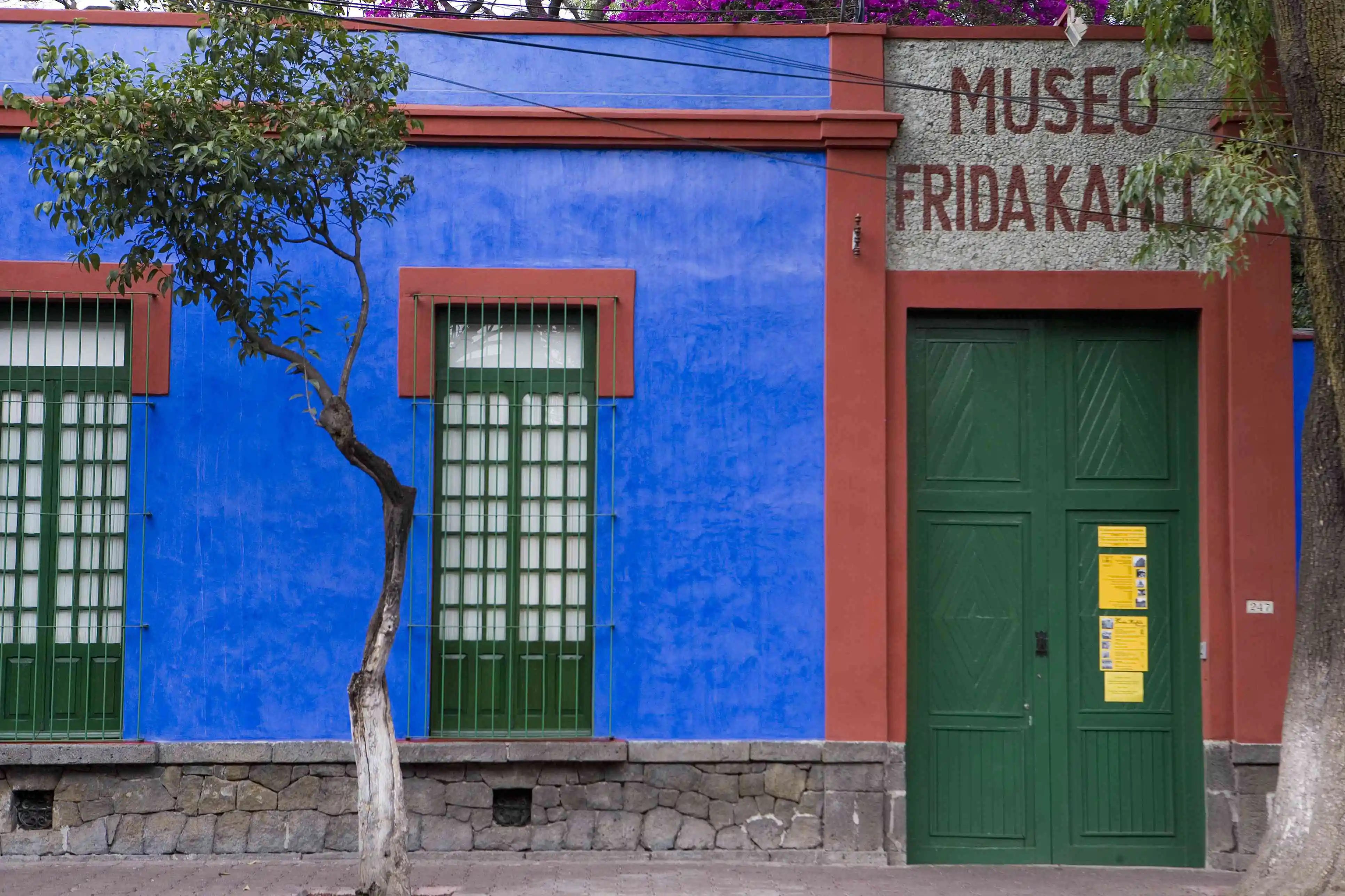
Frida Kahlo was born in this house on July 6, 1907. She died here on July 13, 1954, in the upstairs bedroom.
Forty seven years between the two dates. And a house rebuilt three times over.
The Facade on Londres
The house sits on a corner. Two nearly windowless blocks, cobalt blue stucco, red brick base, wrought iron grilles.
It was built in 1904 by Frida’s father, Guillermo Kahlo, official photographer of national monuments under Porfirio Díaz, the dictator who ruled Mexico through the end of the nineteenth century.


A German from Pforzheim, a small town in the south of Baden. Naturalized Mexican, epileptic, quiet. Frida always said he taught her everything. The original walls were pale stucco with French moldings.
Everything falls apart in 1911. Díaz is overthrown. Guillermo loses his government commissions. The house is mortgaged. The family sinks.
In 1913, Frida is six. Polio. Nine months in bed. Her right leg comes out shorter and thinner than the left. Guillermo makes her play football, wrestle, swim to build the muscle back. The kids at school call her Frida Pata de Palo. Peg leg.


In August 1929, Frida marries Diego Rivera, the most famous muralist in Mexico. He is twenty years older, weighs nearly three hundred pounds, and has had several women before her.
He puts the money on the table at the bank and pays off the mortgage. The deed goes into Frida’s name.
In the early 1940s, when the couple moves back in for good, Diego has the outer walls painted over in that blue. Nobody knows exactly why. He used to say it was to keep the spirits away.


Discover my new newsletter !

Keep learning art the fun way


The Patio
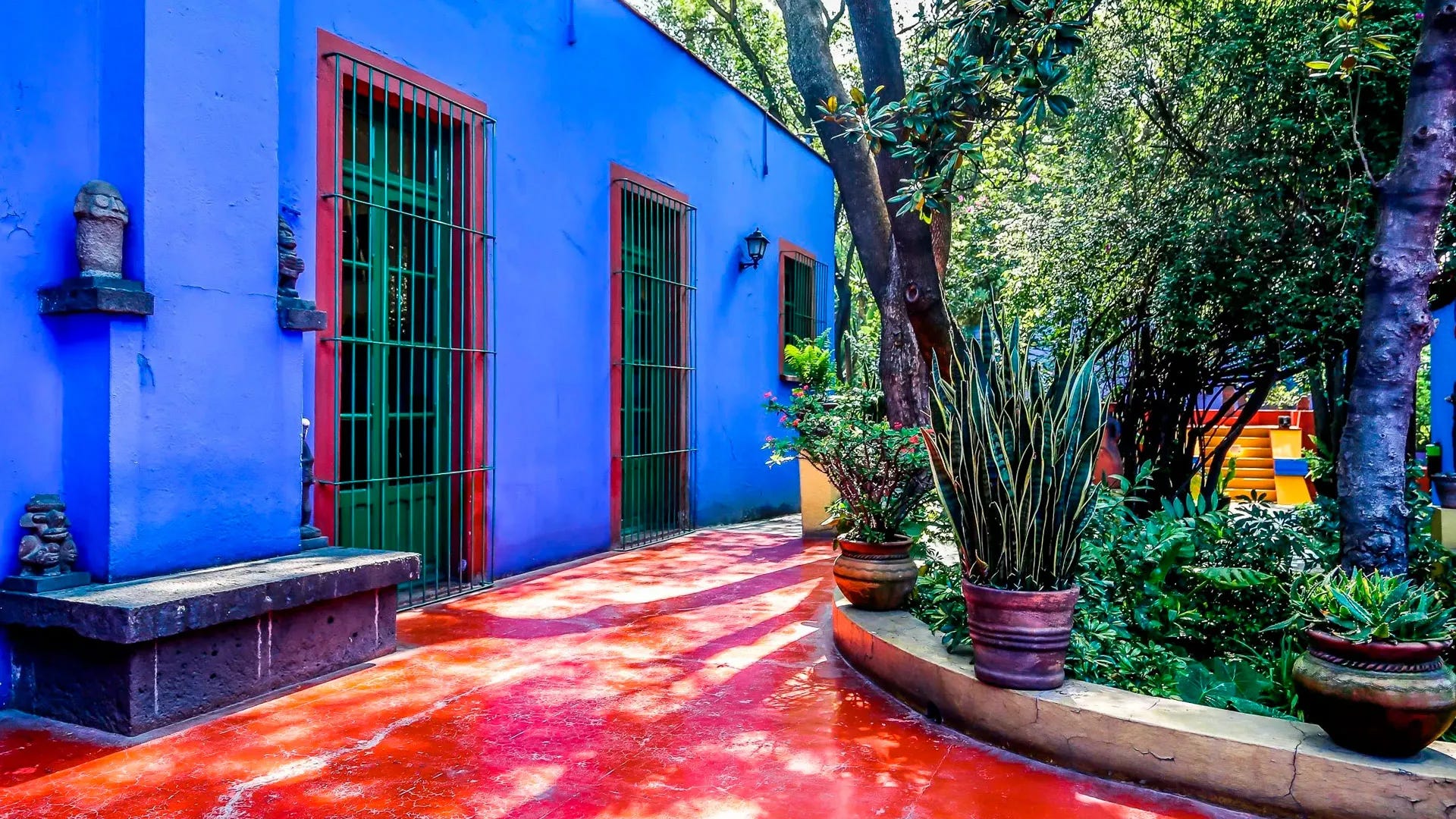
You cross a small vestibule. Then the courtyard opens up all at once.
Four hundred square meters of open sky in the middle of a house with eight hundred built around it.
In the center, a small stepped pyramid, four tiers of black volcanic rock. Diego had it built in the 1940s to display his collection. He collected pre Columbian art with no plan, no budget, no limit. Fifty thousand pieces by the time he died.
Most of them are now in a museum he had built five kilometers away. Here, a handful, arranged like an altar.
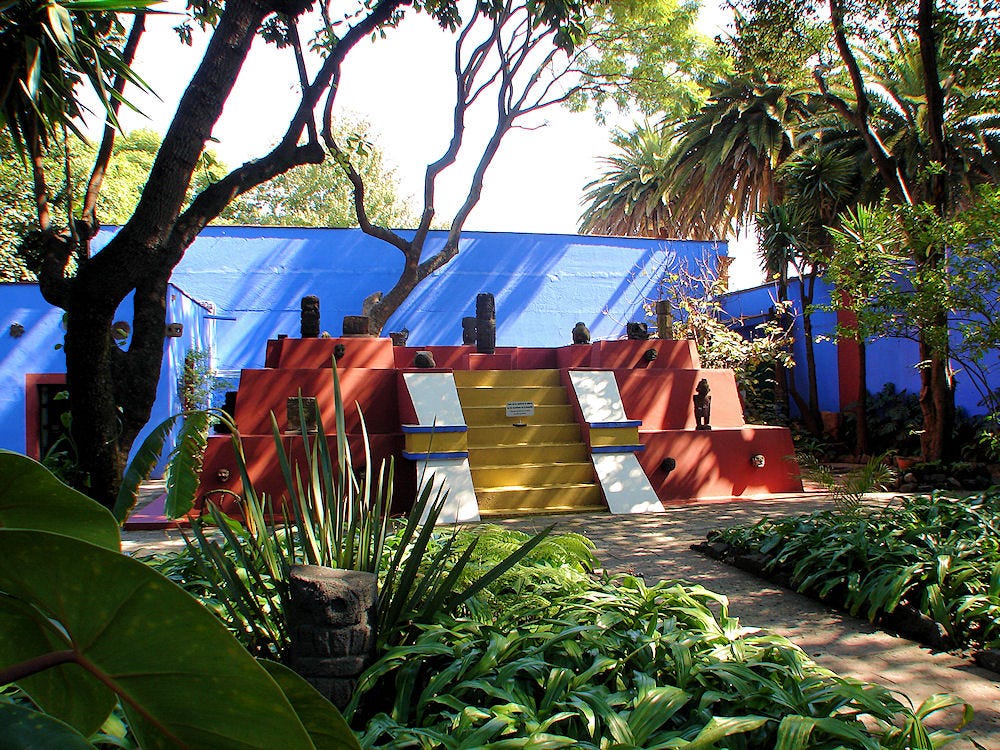
Around the pyramid: agaves, yuccas, cactus columns, bougainvillea. Frida and Diego ripped out the European plants the father had brought in. They kept only what grows wild in Mexico.
And the animals. In the 1940s the courtyard was a zoo.
Fulang Chang and Caimito were two spider monkeys, gifts from Diego. Frida carried them in a sling, let them climb through her hair. She painted them into six self portraits. When she was too weak to go outside, Caimito slept at the foot of her bed.
Granizo the little deer. She bought him from a merchant in Coyoacán in 1939. A fawn that followed her around the patio. In 1946 she painted The Wounded Deer: nine arrows stuck in a deer’s body with Frida’s head. Granizo died not long after. Nobody knows what from.


Bonito the Amazon parrot joined every dinner at the table. He did tricks for a pat of butter. When he missed his trick, he pecked the guests’ ankles. Diego laughed. In 1941, Frida painted him in Me and My Parrots: her at the center, four birds perched on her, red background.
There were also hairless xoloitzcuintle dogs said to descend from Aztec gods, two turkeys, a female eagle named Gertrudis Caca Blanca, and doves in cages around the patio.
When a visitor bored her, Frida would release a monkey on them.


The Kitchen
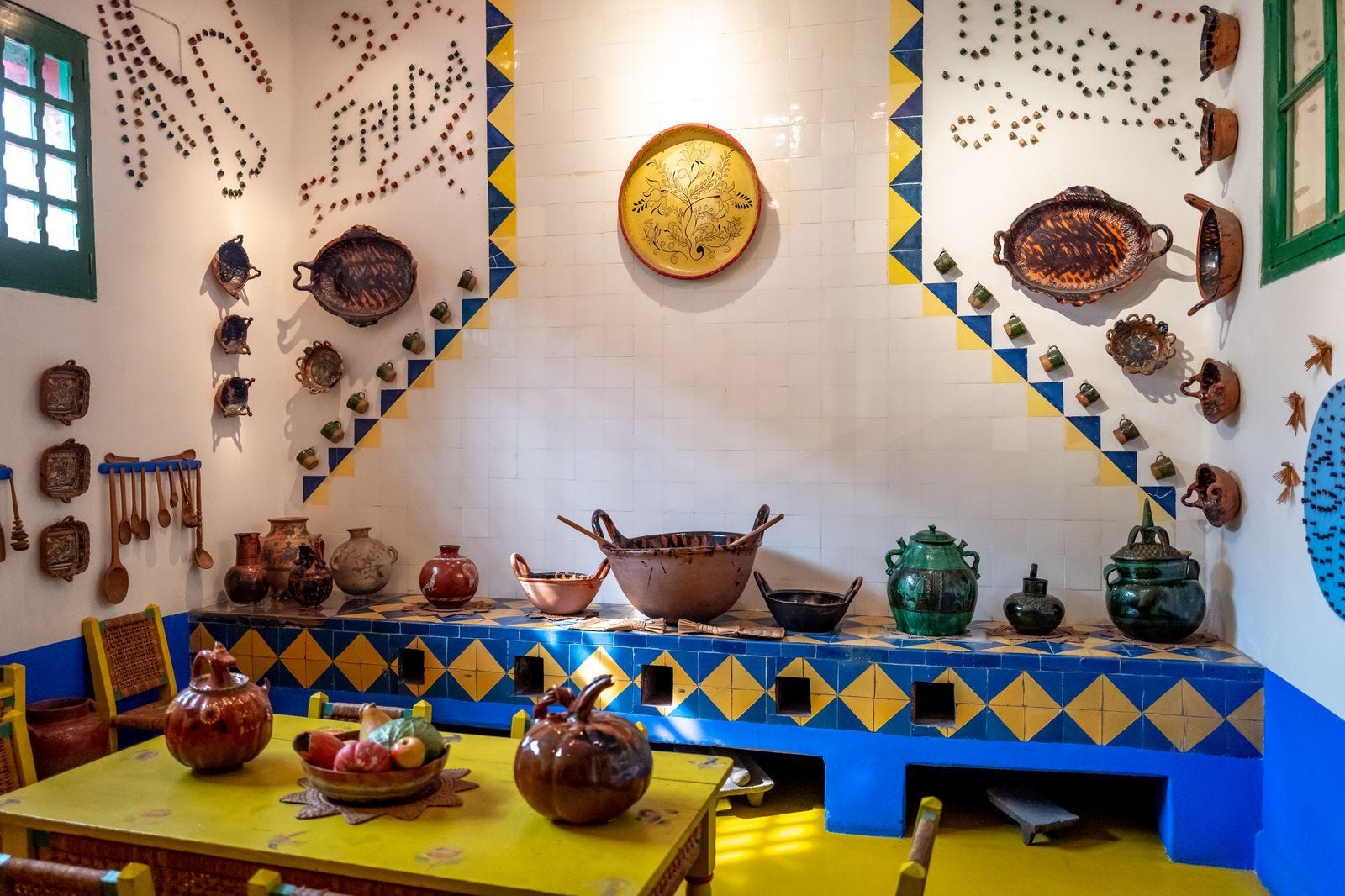
Yellow floor, yellow walls, blue and yellow tiles around the stove. A charcoal and wood stove, built into the masonry, never replaced.
Diego banned gas from the kitchen. He said gas kills the taste.
This is where the couple’s private rivalries played out.
When Frida married Diego in 1929, she did not know how to cook. Diego loved the food of his first wife, Lupe Marín, whom he had left noisily a few years earlier.
Frida invited Lupe to teach her. Lupe agreed.
She came to Coyoacán. She showed Frida how to make the mole poblano, the thick chocolate and chili sauce that Diego preferred. The huazontles, wild greens fried in batter, on Sundays. The enchiladas de flor de calabaza, squash blossom.
The mole recipe is still pinned to the wall, in Lupe’s handwriting. Between the two women, a strange friendship made of laughter and low blows. Lupe would hang around the house for another twenty years. She always complained that Frida kept her paintbrushes in the kitchen pots.
The cook came from a village in Michoacán and stayed until Frida’s death. She was the one who bought live chickens at the Coyoacán markets and plucked them in the courtyard.
On a wall above the braziers, small clay cups spell out two words: Frida, Diego. Clay doves hold a knot in their beaks.
Touching. Except Frida didn’t make it.
The arrangement dates from 1957, three years after her death. The poet in charge of the museography installed it for the public opening.
The Dining Room
Right next door. Yellow walls, open shelves overflowing with green and blue glazed ceramics.
From the ceiling hang life sized Judas figures made of papier mâché, the kind people used to stuff with firecrackers and burn on Holy Saturday. Diego collected hundreds. He bought them from an illiterate craftswoman at a Mexico City market whom he called his Judera de cámara, his personal supplier.
In one corner, a hand cranked phonograph. Frida played corridos, traditional Mexican ballads, and guests often ended the evening singing rancheras, the great sentimental songs of the country.
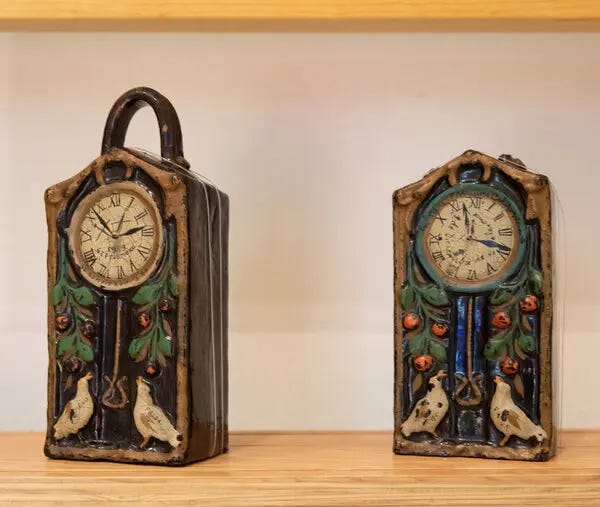
On a shelf, two ceramic clocks. Hands frozen.
One marks the hour Frida and Diego decided to divorce, in November 1939. The other, the hour they remarried in San Francisco, December 8, 1940.
Between the two, one year. And a sister.
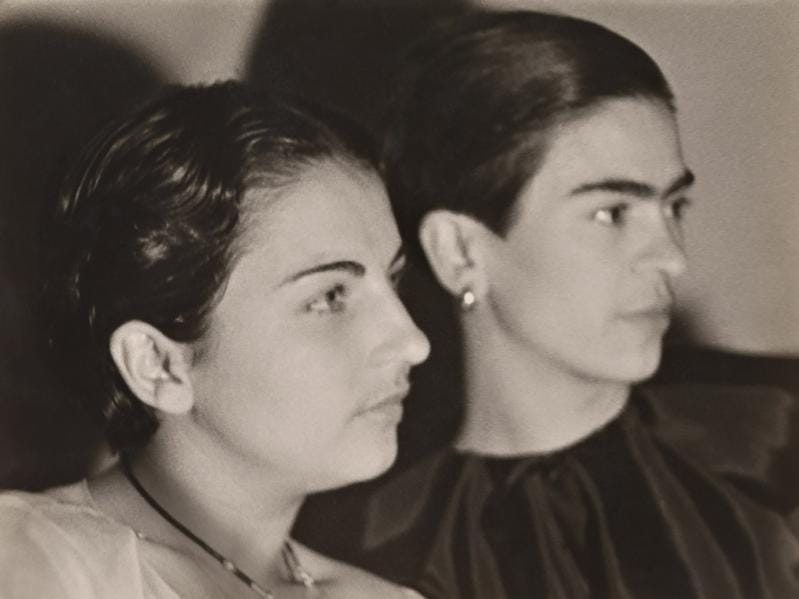
Cristina Kahlo was Frida’s younger sister, eleven months apart, born June 1908. Dark haired, gentle, less brilliant, mother of two small children.
In 1934, Diego started painting Cristina. First clothed, then nude. Then he slept with her for months.
Frida found out through a friend.
She left the house in San Ángel, a neighborhood on the other side of Mexico City where she lived with Diego. She moved alone into an apartment downtown. She cut her hair off with a razor.
In the months that followed, Frida painted A Memory, herself with her heart torn out at her feet, and My Dress Hangs There, her Tehuana dress, the embroidered costume worn by women in southern Mexico, hanging empty above New York.
She came back in 1935. The forgiveness took years.
Cristina stayed in the family until the end. In July 1954, she was the one who washed Frida’s body and held the wake in this dining room before the transfer to the Palacio de Bellas Artes, Mexico’s national theater.
The Living Room
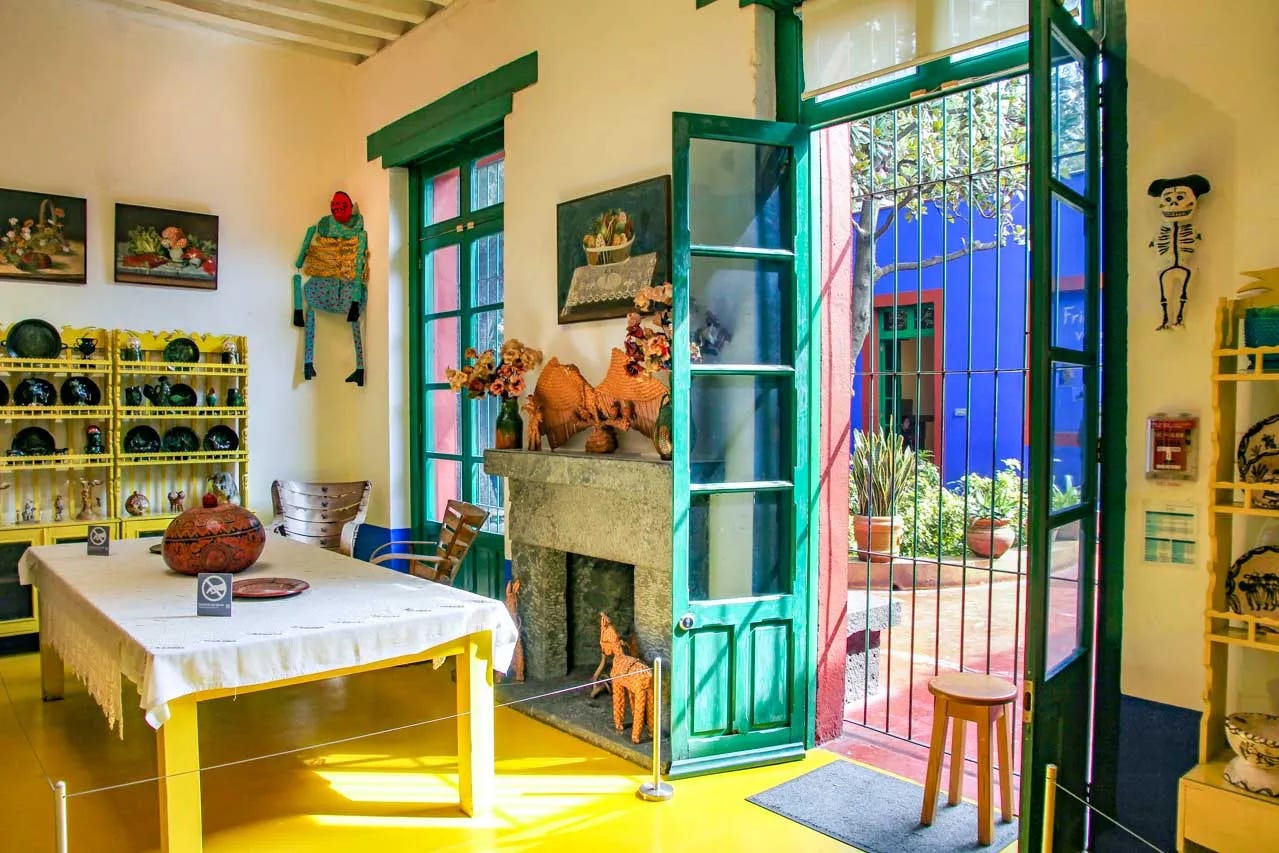
Former reception room, opening onto the patio. Today it is the museum’s first gallery. But this is where the house received its guests.
Frida greeted them in Tehuana robes, which she had adopted as a uniform after her marriage.
Starting in the late 1930s, the living room saw everyone who mattered in Mexico’s world of exiles, artists, and photographers pass through.
André Breton spent four months in Mexico in the spring of 1938 and stayed several weeks here. His wife Jacqueline Lamba wandered the patio and became Frida’s lover.
The Hungarian photographer Nickolas Muray, one of Frida’s most enduring lovers, photographed her against blue walls.
The actress Dolores del Río came for tequilas. Isamu Noguchi, Siqueiros, Miguel Covarrubias, American painters who came to see Diego. All of bohemian Coyoacán passed through this room.
In 1938, the actor Edward G. Robinson sat here with a coffee and left with four of Frida’s paintings, paid in cash at two hundred dollars each.
On the walls today, three canvases.
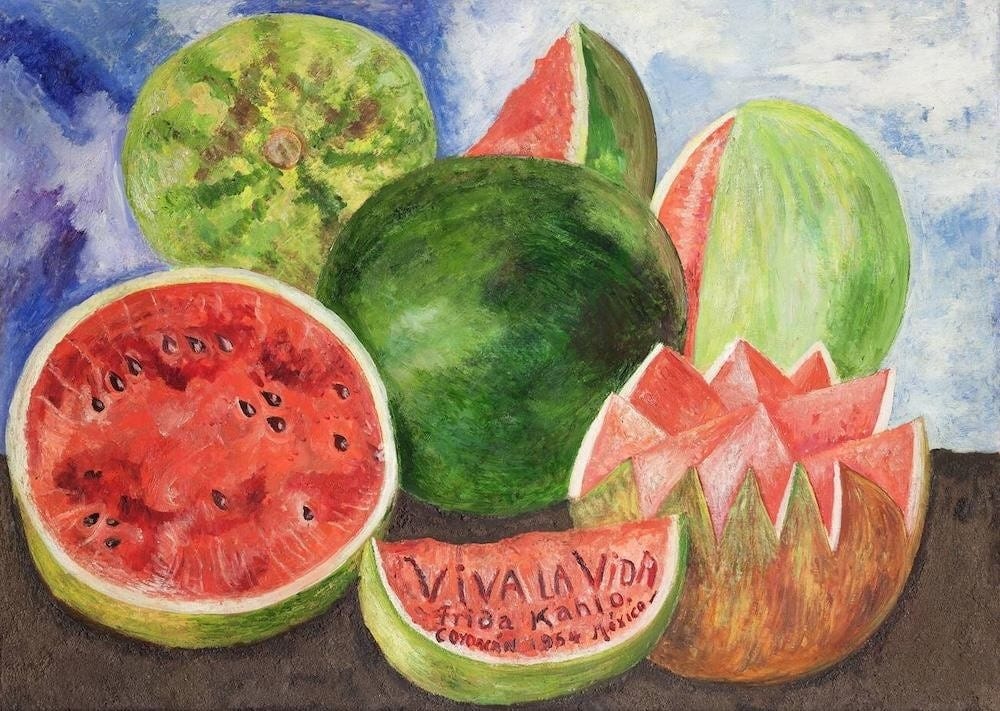
Viva la Vida, long live life, painted eight days before her death. Open watermelons and black letters.
The portrait of her father, which Frida finished in 1952, eleven years after old Guillermo’s death. The dedication reads: “To my father, courageous because he suffered sixty years of epilepsy without ever stopping work, and because he fought Hitler.”
And El marxismo dará salud a los enfermos, Marxism will heal the sick, unfinished. Frida holds a red book. Giant hands support her in place of her crutches. She has just lost her right leg, amputated below the knee in August 1953.
She has eleven months to live and refuses to admit it.
Diego’s Bedroom
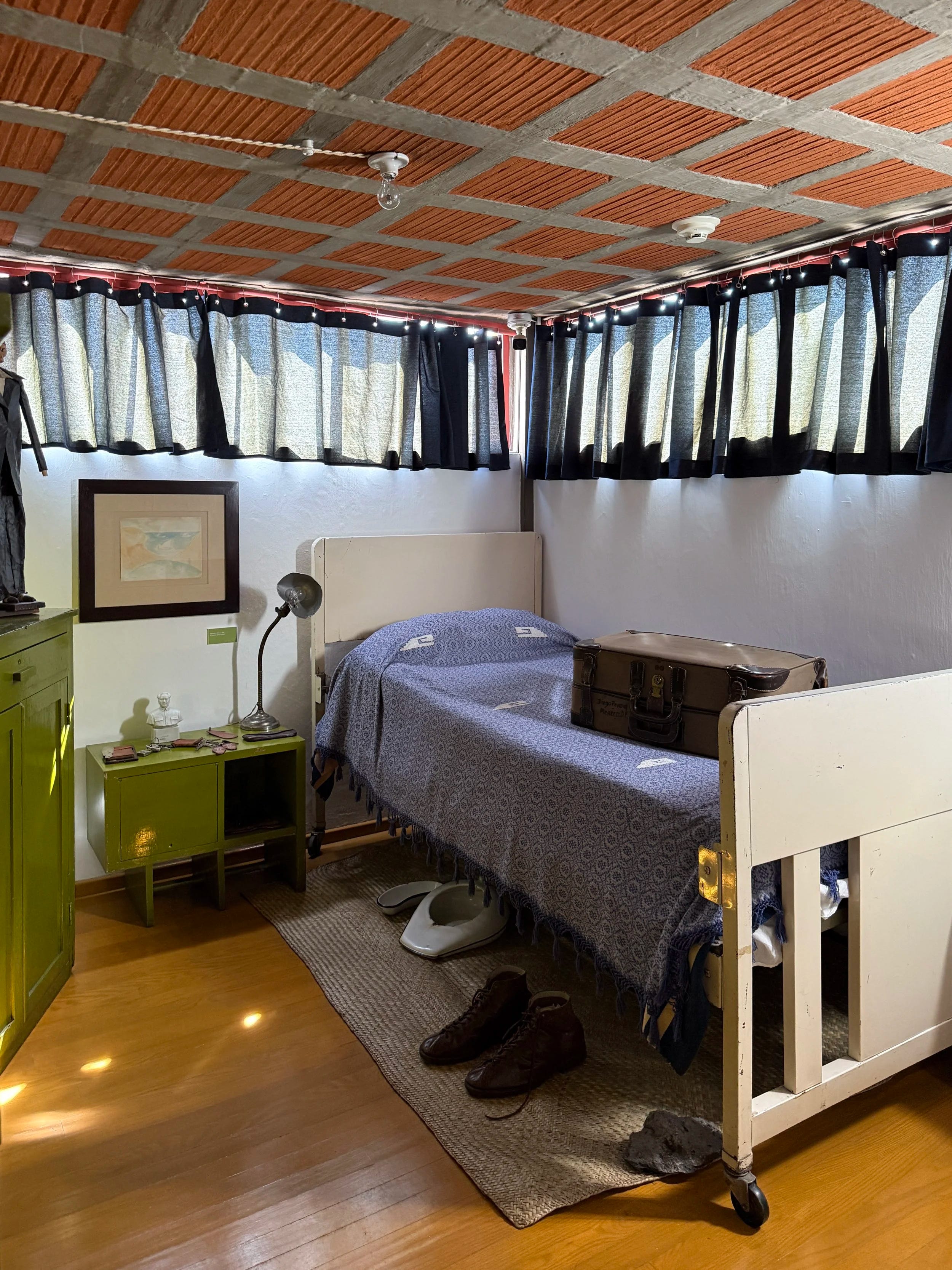
Small room on the ground floor. An enormous denim jumpsuit on a rack, wide brimmed hats, a work jacket. Diego rarely sleeps here.
He spends most nights in his studio in San Ángel.
The room served another man…