

170 000+ readers. Learn art the fun way.
This is a preview. Paid subscribers get the full story.
You’ll also get:
10 new stories every month
The full archive (130+ Art stories)
Your personal art guide. Comment, ask questions, DM me anytime
iPhone user? Subscribe at coolstoriesabout.art, not via the app. Apple adds 30% to the price.
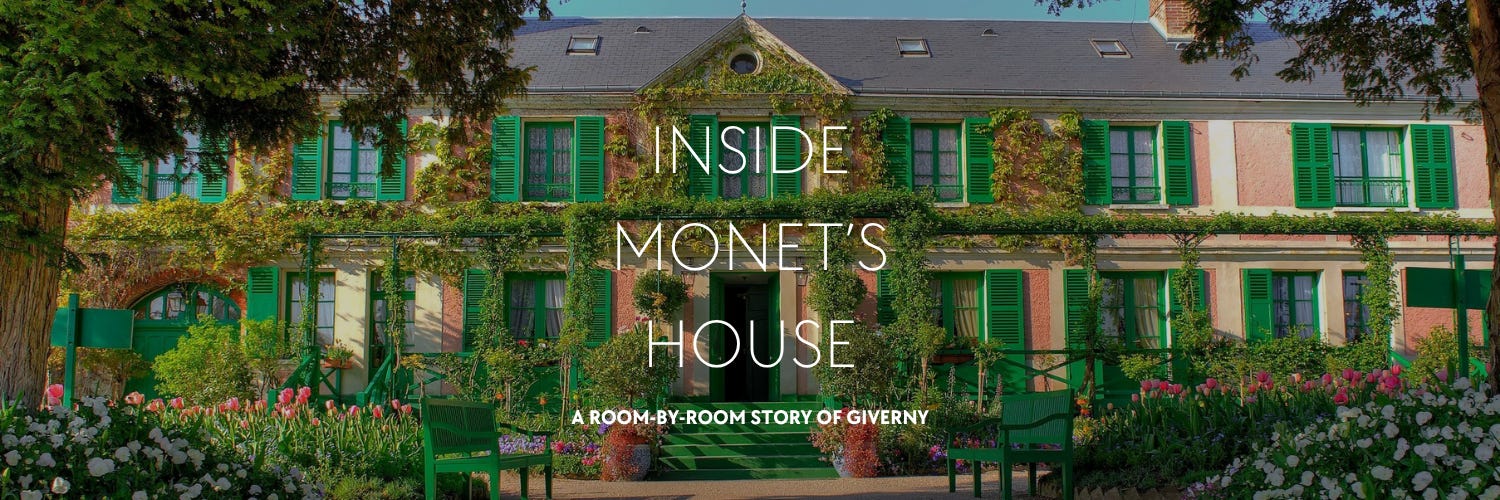
Spring 1883, the train slows between Vernon and Gisors.
Claude Monet watches through the window. Orchards in bloom scroll past, yellow irises carpet the wet meadows, poplars line the banks of the river Epte. The carriage stops at every station.
At 42, Monet is fleeing Poissy, where his landlord is chasing him for 18 months of unpaid rent.
He needs a place to house ten people: himself, his two sons, Alice Hoschedé and her six children. Alice is still married to Ernest Hoschedé, who refuses to grant a divorce. In Paris, the newspapers already refer to her as Monet’s “charming wife.”
The scandal clings to this blended family.
The train moves on. Monet catches sight of a village perched on the hillside. Giverny. He gets off at the next stop and walks back.
Three days later, he signs a lease with Louis Joseph Singeot, a local winemaker who owns a long farmhouse with pink walls, nicknamed Le Pressoir because cider was once pressed there. The rent is modest: a walled hectare of land, four rooms on the ground floor, four upstairs, and several farm outbuildings.
Monet borrows 5,000 francs from his dealer Paul Durand-Ruel to cover the deposit.

On April 29, 1883, the whole tribe arrives.
The villagers watch from behind their windows. An unknown painter, a woman married to someone else, eight children, eccentric hats, clothes in vivid colors. In Giverny, population 279, all farmers or winemakers, people whisper.
Nobody says hello. Monet shrugs.
He hates the garden. The box hedges suffocate him, the cypress trees steal the light. He tears everything out, keeping only the linden trees and two yews.
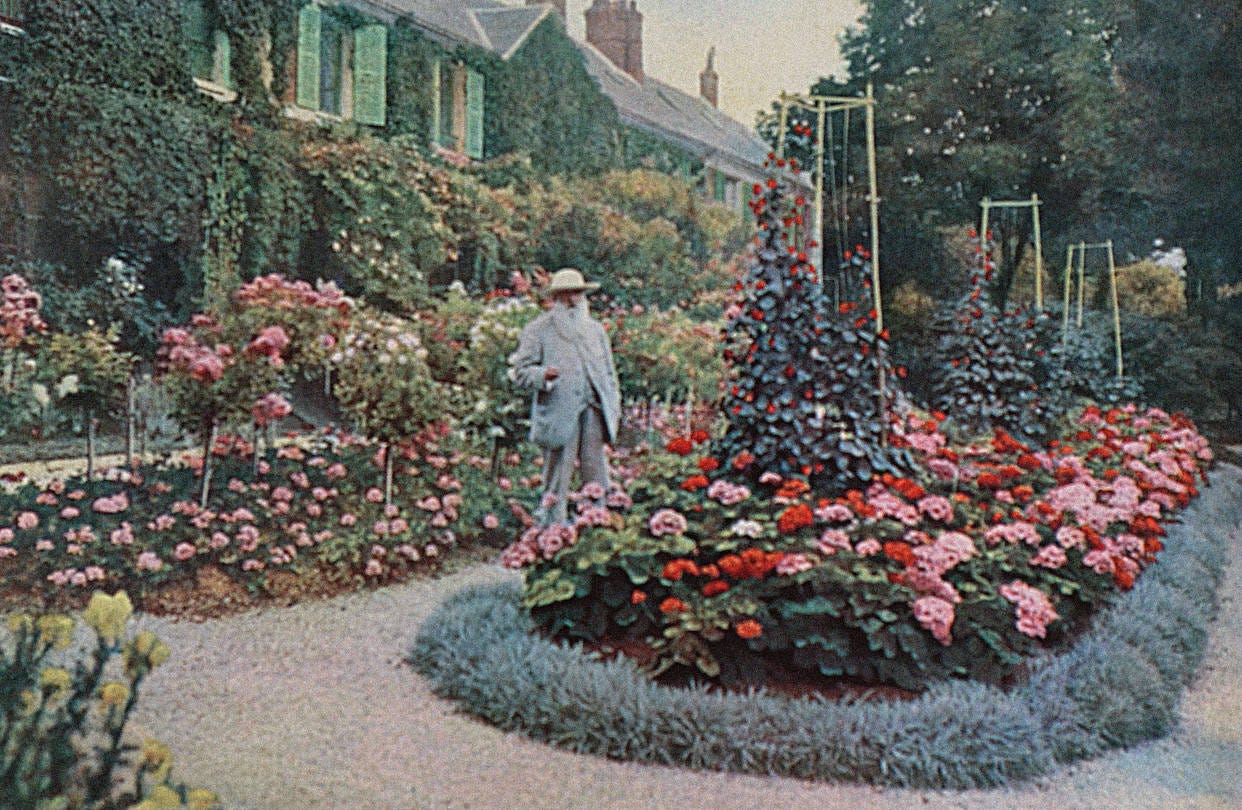
He plants in chromatic bands: yellow irises here, pink peonies there, orange nasturtiums further along. The neighbors nickname him “the painter-gardener.”
He has the shutters repainted from grey to bright green.
Scandal. In Normandy, shutters are grey or black. Never green.
In 1890, Singeot decides to sell. Monet writes to Durand-Ruel that he will “never find such a perfect setup or such beautiful countryside again.” He buys the property for 22,000 francs, payable over four years.
The price of three paintings.
At 50, he becomes a homeowner. The real work can finally begin.
The small blue sitting room
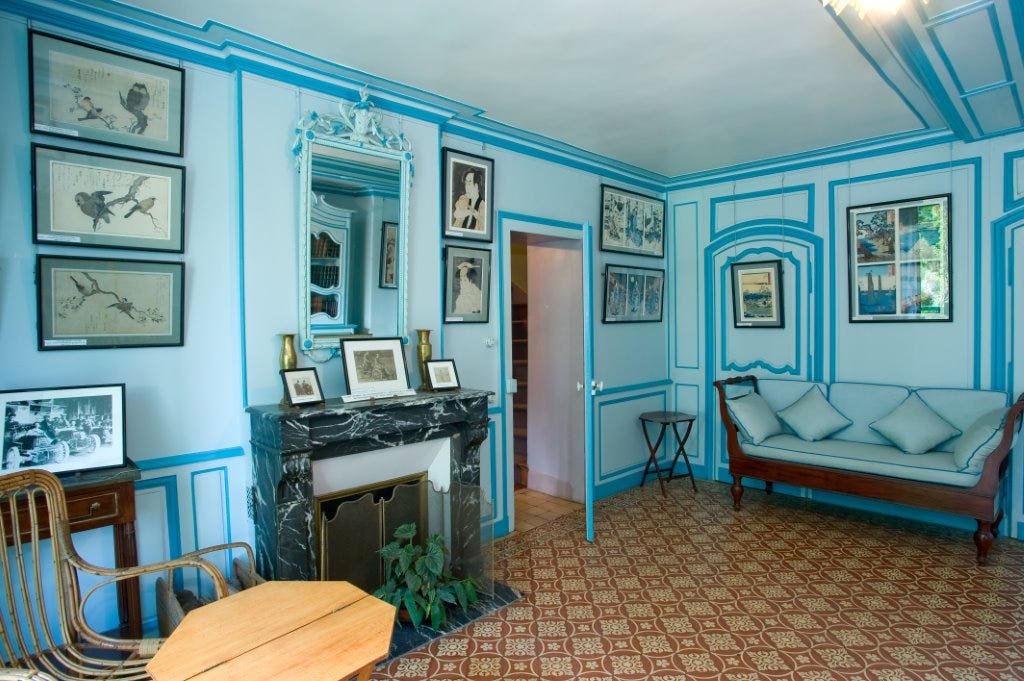
You enter through the central door.
First room: the blue sitting room. Everything in it is painted that color, from the woodwork to the furniture. The white walls are accented with pale blue moldings. In stark contrast, the floor is covered in brick-red cement tiles.
Alice Hoschedé rules here.
She reads with the children, embroiders, oversees the education of the whole household. Eight children to raise in a narrow house: the four girls occupy the bedrooms on the first floor, the four boys sleep in the attic rooms.
On the shelves, rattan and bamboo furniture. Japanese prints on the walls. Monet owns 231 of them, collected over fifty years. Hokusai, Hiroshige, Utamaro. He hangs them everywhere.
Alice keeps the keys to every room. Food is expensive, the servants might steal, everything must be watched.
She is the one holding the household together.
Without Alice, Monet does not paint. When he leaves to paint his series in Rouen or Brittany, he writes to her every single day. Apart from her, he has nightmares, sleeps badly, puts away his brushes.
She manages the household, the correspondence, the servants, and keeps unwanted visitors at bay.
In return, Monet destroys every photograph of Camille, his first wife who died in 1879. Alice is jealous. She erases the past.
Discover my new newsletter !

Keep learning art the fun way


The pantry
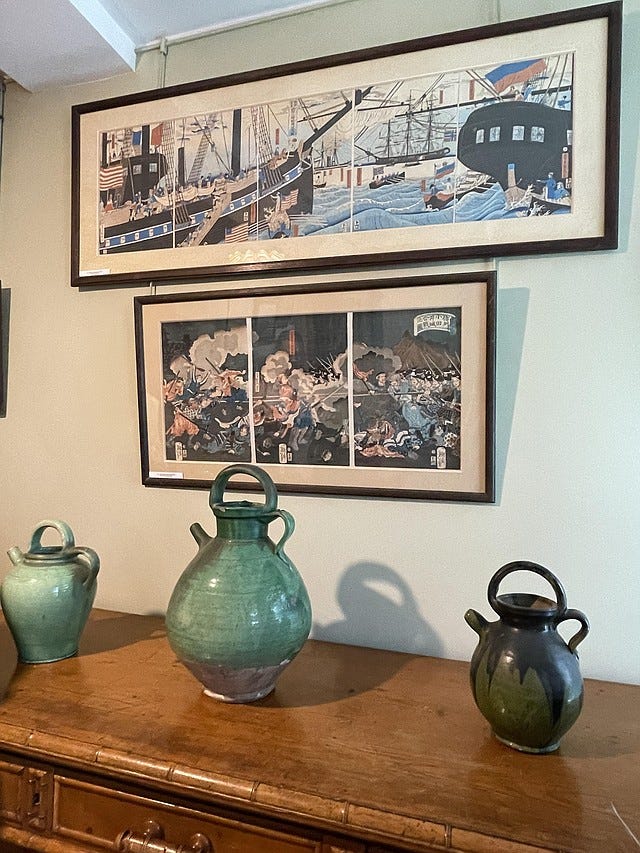
You walk through the blue sitting room.
The pantry is unheated: provisions keep better in the cold. Locked sideboards protect the tea, spices and olive oil. On the wall, two wooden racks can hold 116 eggs.
With ten people to feed, they go quickly. The hens on the property supply them. Alice counts every egg and writes everything down.
Through this room pass all the luxury goods Monet insists on: Dutch cheeses, English orange marmalade, Norman sausages. Marguerite, the cook, comes to collect what she needs. Alice checks.
Nothing goes to waste.
The schedule is strict.
Five in the morning: wake up, cold bath, glass of white wine. A hearty breakfast. At 11:30 sharp, lunch. Never late.
If the meal is not ready, Monet grows irritable and bangs his fist on the table. The children thunder down the stairs, Alice rushes between the kitchen and the dining room, Marguerite panics.
At seven in the evening, dinner. At half past nine, bed. Monet never receives guests in the evening; artificial light exhausts him.
The yellow dining room
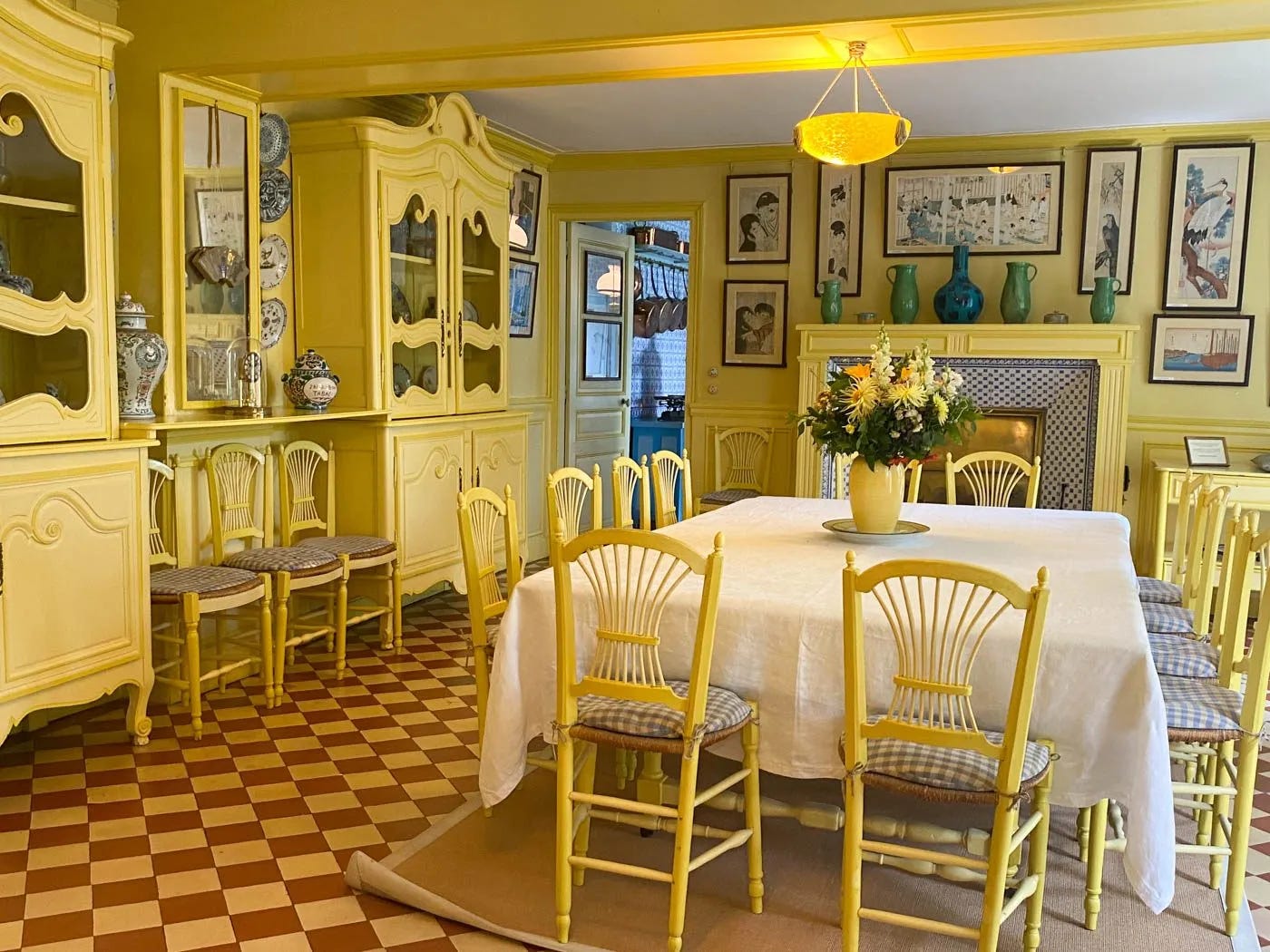
Then comes the shock.