
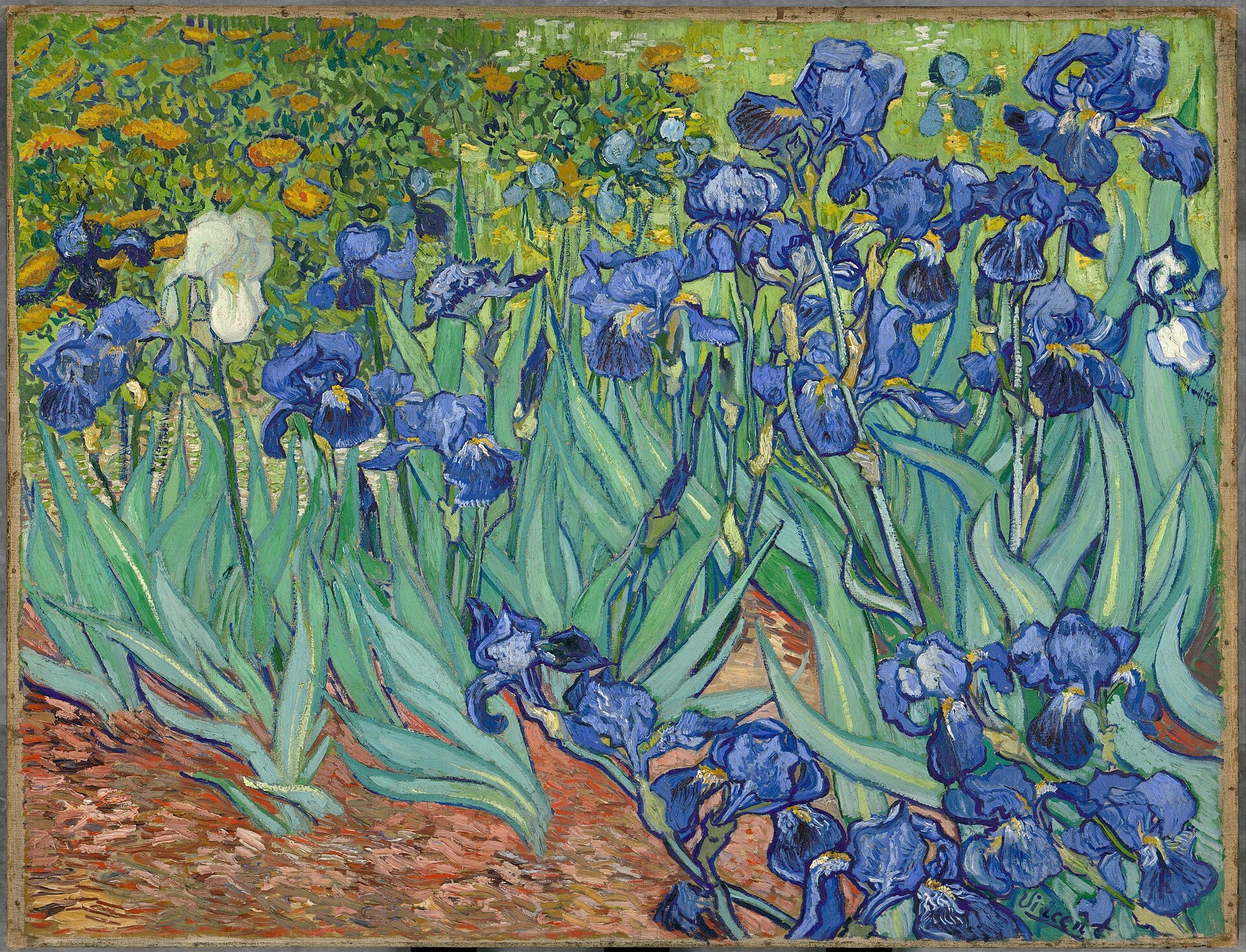
Irises is an oil painting by Vincent van Gogh, a Dutch artist working in France. He made it in May 1889 in Provence, among the flower beds of the Saint-Rémy asylum. Clumps of irises fill the canvas, their long green leaves rising from bare earth, with one white bloom among the blue.
Van Gogh began it the morning after he admitted himself to the asylum, and he thought of it as a simple study. His brother Theo chose it for an exhibition in Paris that September. In 1987 it set a world record at auction, and since 1990 it has been owned by the Getty, a museum in Los Angeles.
The flowers look blue today, yet Van Gogh painted them violet, and part of the red in his paint has faded. Claude Monet painted irises too, at Giverny, but the famous Irises is Van Gogh's.
Cool Stories About Art is a newsletter to learn art the fun way.
Join 200,000+ readers and get:
10 new art stories / month
The entire archive of content (140+ articles)
Comment, ask questions, and chat with other readers
What is the Irises painting about?
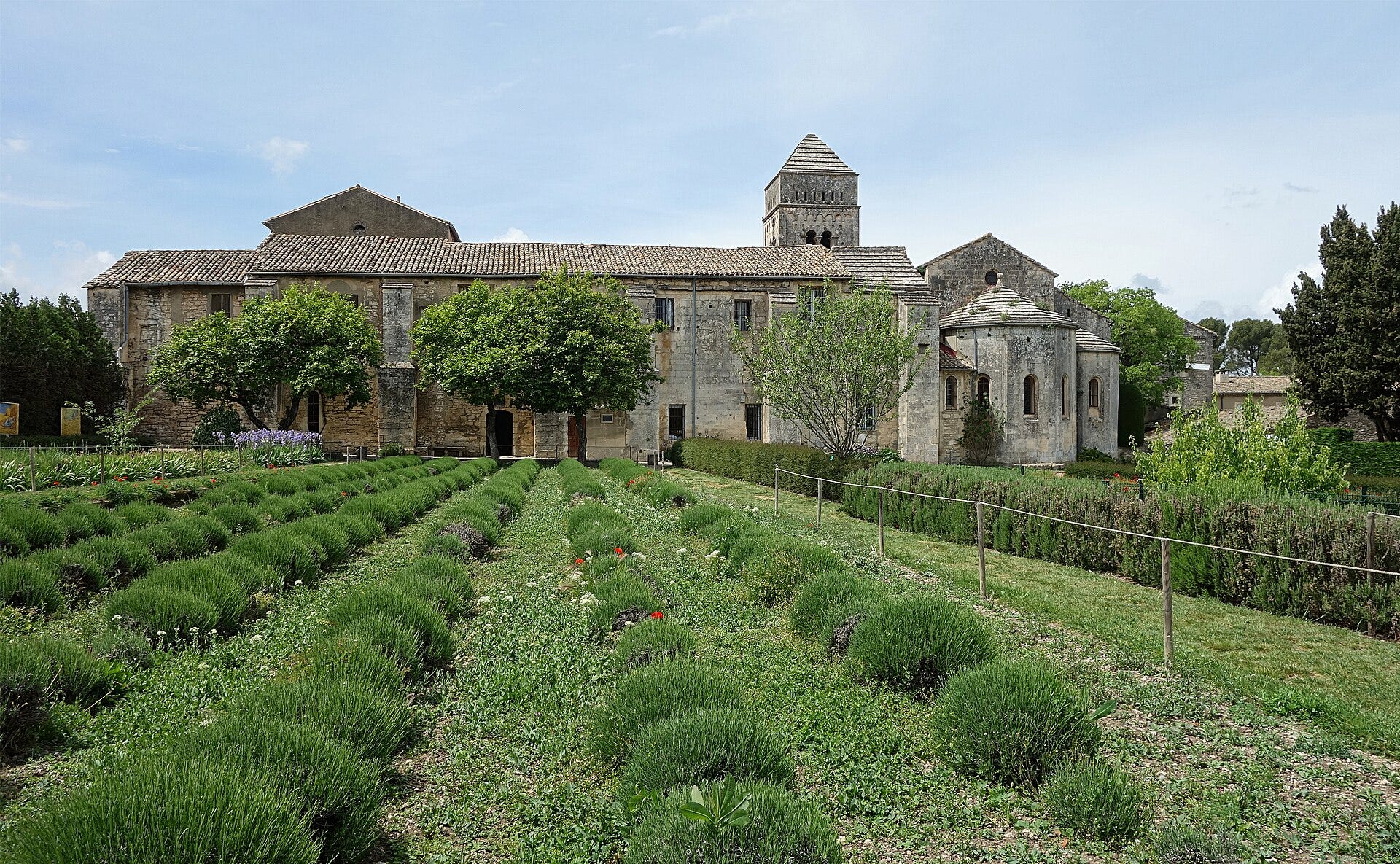
On the morning after he arrived at the asylum, Van Gogh took his easel out into its walled garden, where the irises were in bloom, and before long the other patients came over to watch him work…
What You'll Discover
What Van Gogh wrote home the day after he arrived
Why he called the canvas a simple study
The color a Paris critic saw in 1889
What the flowers owe to Japanese prints
How many times he painted irises
How the canvas traveled from Paris to Los Angeles