

170 000+ readers. Learn art the fun way.
This is a preview. Paid subscribers get the full story.
You'll also get:
10 new stories every month
The full archive (130+ Art stories)
Your personal art guide. Comment, ask questions, DM me anytime
iPhone user? Subscribe at coolstoriesabout.art, not via the app. Apple adds 30% to the price.
You know those football shows where blokes in suits spend hours debating whether Messi's better than Ronaldo? Or those endless arguments about Federer versus Nadal, Jordan versus LeBron?
Today, we're doing the same thing. But with painting.
The question: is Paul Cézanne the greatest painter of all time? The absolute GOAT?
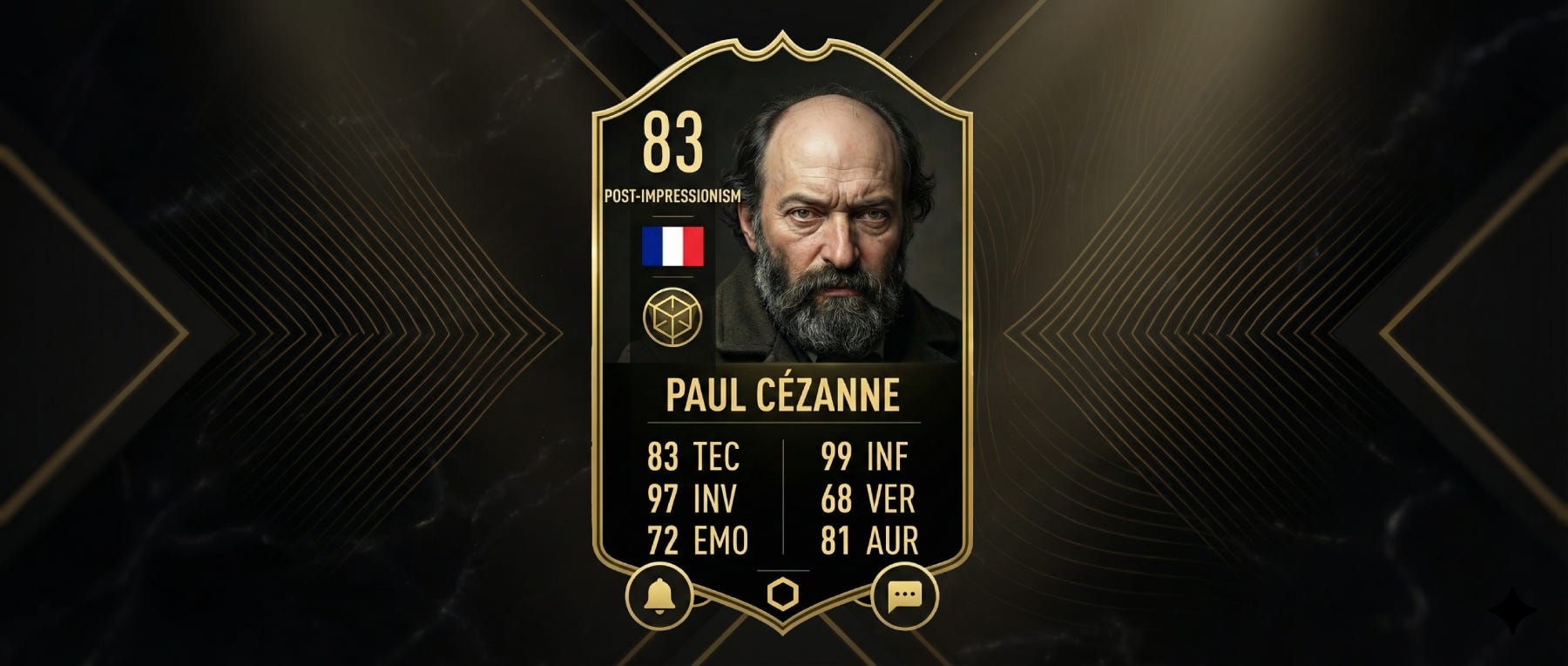
To answer, we're going to rate him like a FIFA card. Six criteria. Numbers. Facts. And at the end, you decide.
WHO IS CÉZANNE?
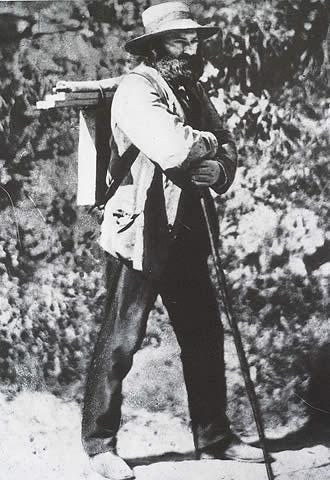
Paul Cézanne was born in 1839 in Aix-en-Provence into a well-off family. His father was a banker. He wanted Paul to take over the business. Didn't happen.
After two years studying law, Cézanne ditched everything for Paris in 1861. He attended the Académie Suisse, copied the masters at the Louvre, met Pissarro. He hung around with the Impressionists, exhibited in 1874, then disappeared. Back to Provence. Radio silence for 20 years.
The art world rediscovered him around 1895. He collapsed while painting during a storm in 1906 and died a week later. A year later, retrospective in Paris. Picasso and Braque saw the paintings. Cubism was born.
That's why this debate makes sense: between 19th-century Impressionism and the chaos of the 20th, there's Cézanne. He changed the rules without making a fuss. Some say he's the father of modern art. Others that he's an obsessive bungler who got lucky.
We're going to settle it. With scores.
THE CARD
TEC (Technique/Mastery): 83/99
What it judges: Drawing ability, perspective management, anatomy, texture rendering, sfumato, compositional complexity. Does the painter master their tool or are they struggling?
Cézanne doesn't draw like Ingres. His nudes are awkward, his perspectives wonky, his faces sometimes blurred. Émile Bernard, who visited him in 1904, writes that he "knows nothing of anatomy" and leaves "inexplicable white patches everywhere". The Academy rejected him from the Salon for 20 years.
But this chap constructs paintings like cathedrals are built. Through colour. Not through drawing. Each brushstroke is placed slowly, thought through, calculated. He spends hours on an apple to find the right red next to the right green.
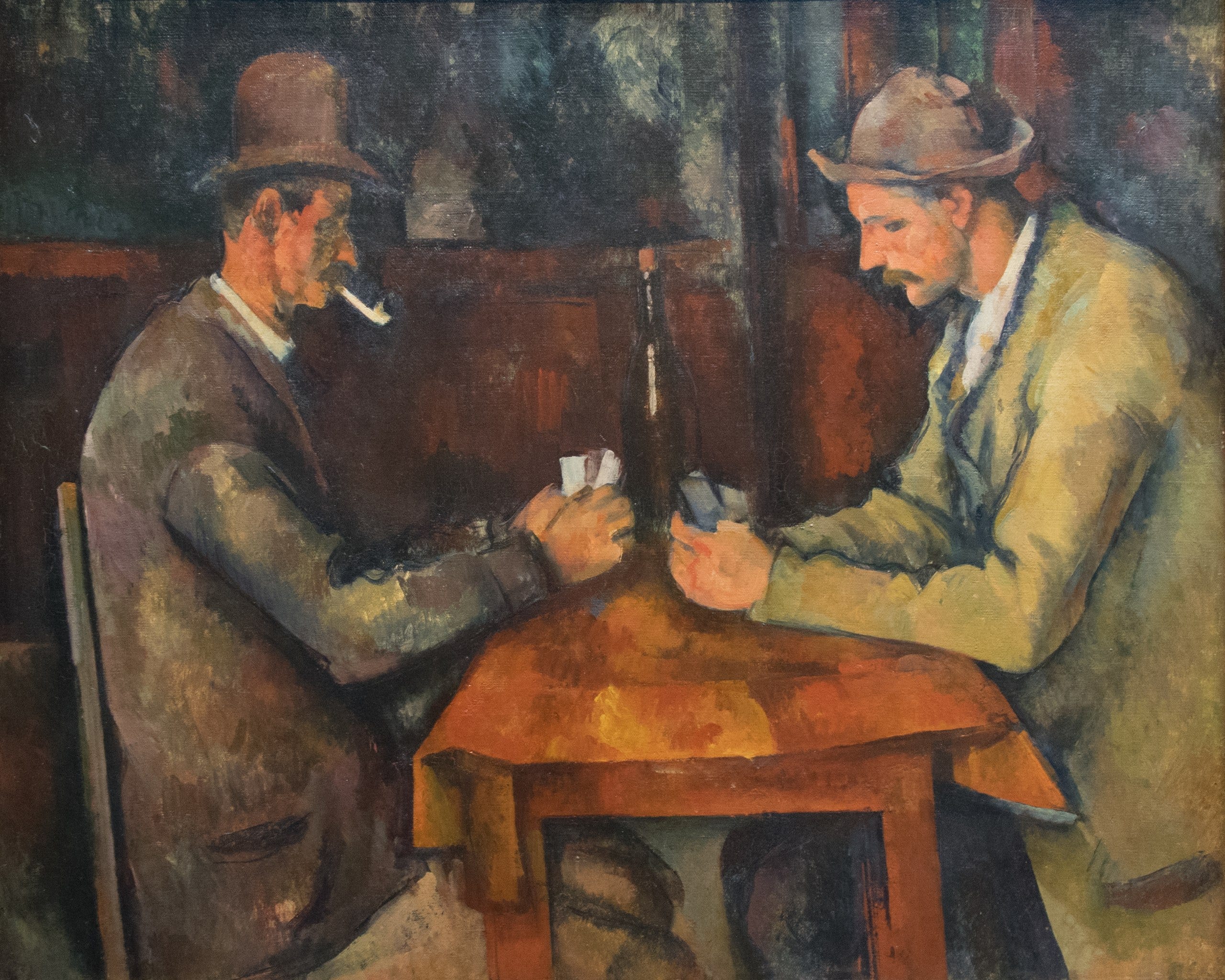
The Card Players: two peasants around a table. Nothing moves. But the volumes are there, massive, sculpted purely through gradations of browns and blues. Not a single cast shadow. Just colour creating volume. The Basket of Apples: the table tilts, the basket's askew, and yet everything holds together.
Ingres surpasses him in academic precision. Monet beats him in atmospheric fluidity. But for building a painting through pure colour, Cézanne has no equal in the 19th century. Pissarro compares one of his still lifes to "an Ingres", so perfect is the harmony.
Discover my new newsletter !

Start reading with me


INV (Innovation/Revolution): 97/99
This is the "Avant-garde" rating. Did this painter change the rules of the game? Did he invent a new way of seeing the world? Or did he "just" copy his predecessors very well?
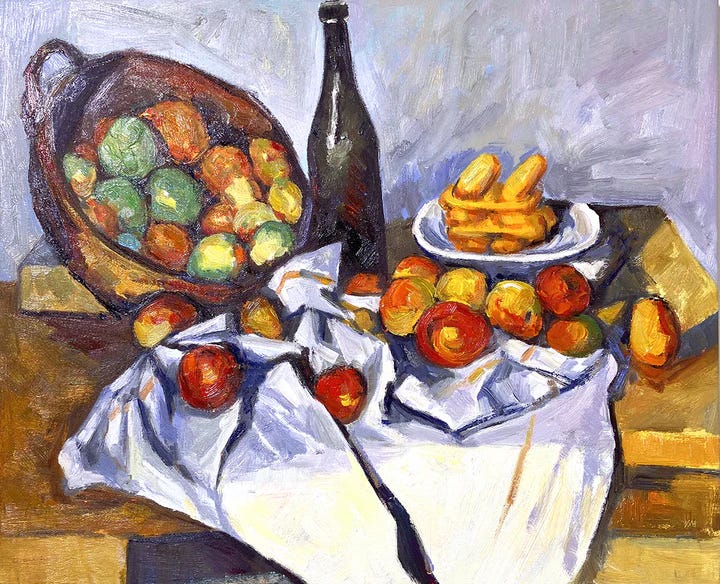
Cézanne invents something no one had seen before. He paints each object in the picture from a slightly different angle. The table seen from above, the bottle seen from the front, the apple seen from the side. All in the same painting. It should be chaos. It's a symphony.
He abandons the single vanishing point perspective inherited from the Renaissance. He replaces it with layered coloured planes. Look at Mont Sainte-Victoire: no vanishing lines, just horizontal layers. Ochre, green, blue, sky. Each band builds depth.
His formula: "Treat nature by means of the cylinder, the sphere, the cone." He reduces the world to simple geometric shapes. It's exactly what Picasso and Braque will do 10 years later when inventing Cubism. Except they go all the way. Cézanne stays on the edge.
He wants to "make of Impressionism something solid and lasting". He succeeds. Monet captures changing light. Cézanne captures enduring structure. Without him, no Cubism, no Mondrian, no Kandinsky.
Picasso would say: "Cézanne is the father of us all."
EMO (Emotion/Visceral Impact): 72/99
This is the "Hard-hitting" rating. What it judges: What we feel when looking at the paintings. Do we cry? Are we afraid? Are we at peace? It's the artist's ability to transcend the intellect and touch the heart.
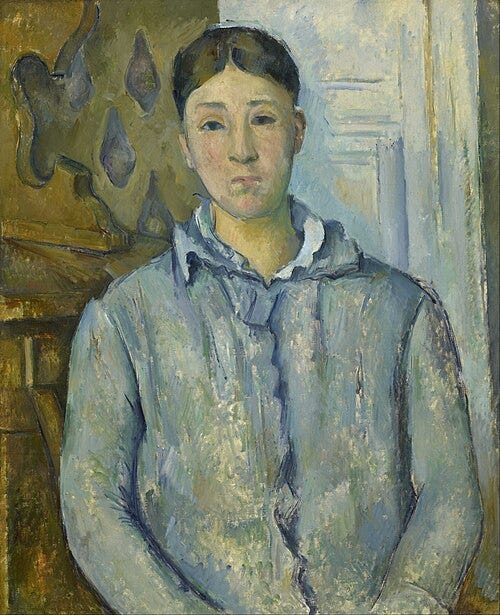
You don't cry in front of a Cézanne. You don't tremble. You're not afraid. His paintings tell no story. No drama, no scream, no tears.
His Provençal landscapes exude a mineral serenity. His apples are mute. His portraits of Hortense, his wife, are icy. She sits for him 27 times. Result: impassive faces, almost empty.