170 000+ readers. Learn art the fun way.
This is a preview. Paid subscribers get the full story.
You’ll also get:
10 new stories every month
The full archive (130+ Art stories)
Your personal art guide. Comment, ask questions, DM me anytime
iPhone user? Subscribe at coolstoriesabout.art, not via the app. Apple adds 30% to the price.
WHO IS GOYA?
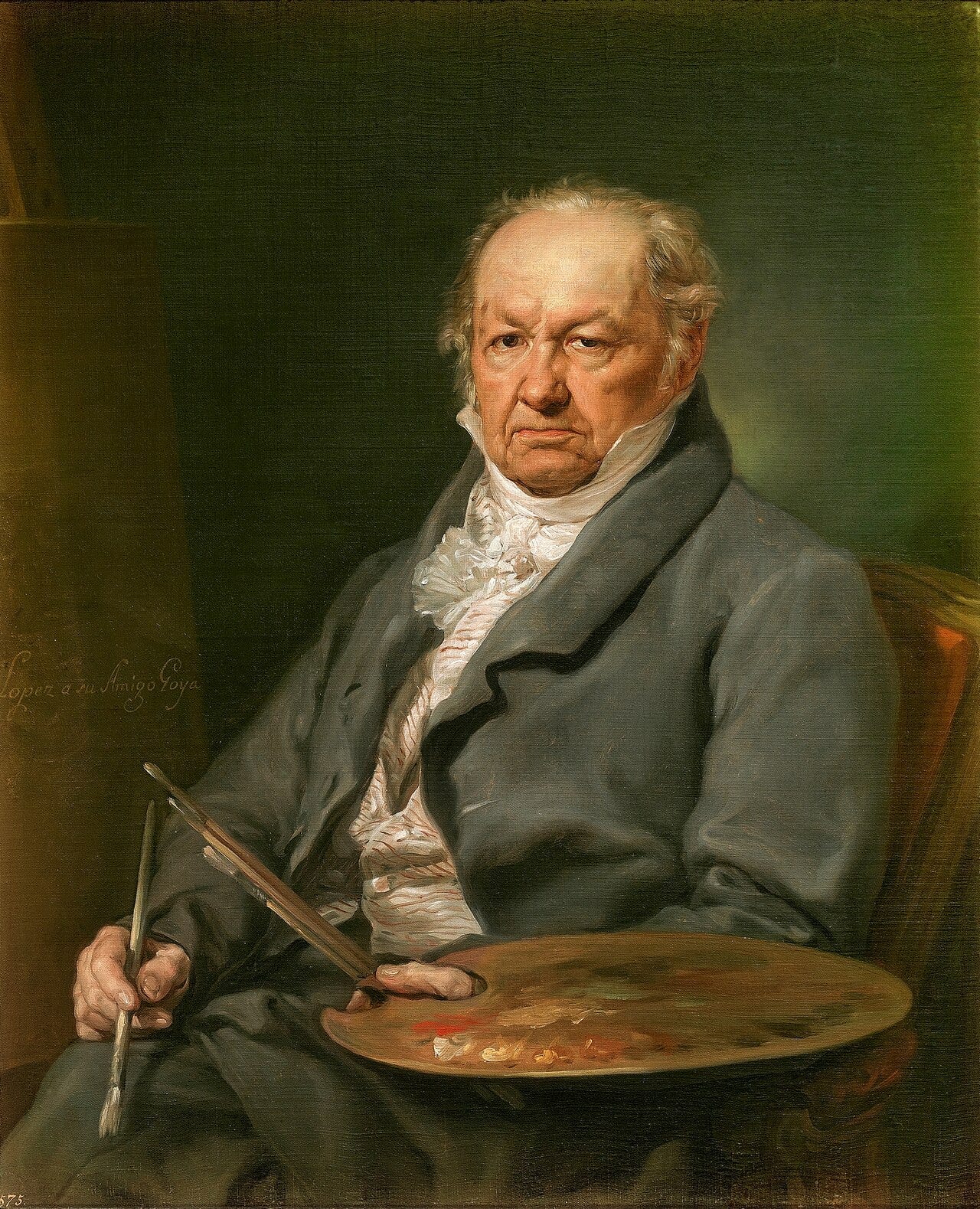
Francisco José de Goya y Lucientes is born on March 30, 1746, in Fuendetodos, a remote village in Aragon. Son of a frame gilder and a mother from minor nobility, nothing destines him for glory.
At 14, he enters apprenticeship with a painter in Zaragoza and spends 4 years copying prints.
He attempts the Royal Academy competition in Madrid twice. Two failures. The jury finds his style too personal, not academic enough.
He then travels to Italy at his own expense to study the masters. Upon his return, he marries the sister of a court painter. The door finally opens.
He becomes painter to the king in 1786, at age 40. Late for the era.
In 1792, catastrophe. A mysterious illness strikes him down. Vertigo, hallucinations, partial paralysis. In 1793, he returns to Madrid. Deaf for life. He is 46 years old.
This deafness cuts the thread. The cheerful painter who decorated royal tapestries disappears. The dark Goya is born.
He then paints what no one had dared paint before: war seen through the eyes of victims, unfiltered human madness, the monsters of the unconscious.
In 1808, Madrid rises up against Napoleon. Goya witnesses the massacres and documents them. In 1814, Ferdinand VII returns to power. Repression.
Goya, suspected of liberal sympathies, goes into exile in Bordeaux in 1824. He dies there in 1828, at 82.
That’s why the debate makes sense: Goya is the bridge. Between the Old Regime and modernity. Between Velázquez and Picasso.
Some say he invented modern art. Others that he was an academically mediocre painter who got lucky living through a terrible era.
We’re going to settle this. With numbers.
Discover my new newsletter !

Join the free letter


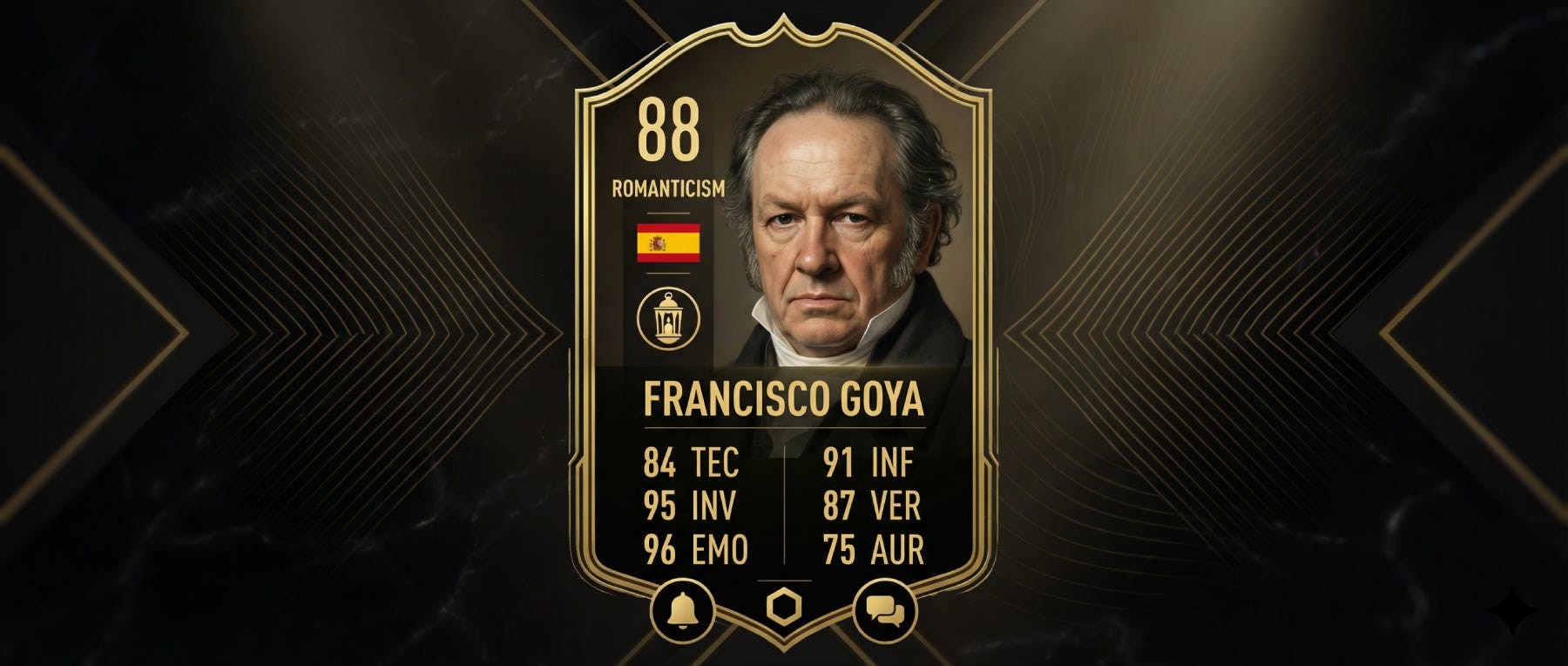
THE CARD
TEC (Technique/Mastery): 84/99
What it judges: Drawing ability, perspective management, anatomy, texture rendering, sfumato, compositional complexity. Does the painter master their tool or are they struggling?
Goya fails the Academy competition twice. The jury prefers safer, smoother candidates. His personal style disturbs them.
When he lands his first fresco commission for the Basilica del Pilar, they force him to redo everything. Too sloppy, say the academics. His brother-in-law has to retouch his work. Public humiliation.
Yet Goya builds his paintings like Velázquez built his. Through color, through light, through broad brushstrokes that create the illusion from a distance but dissolve up close.
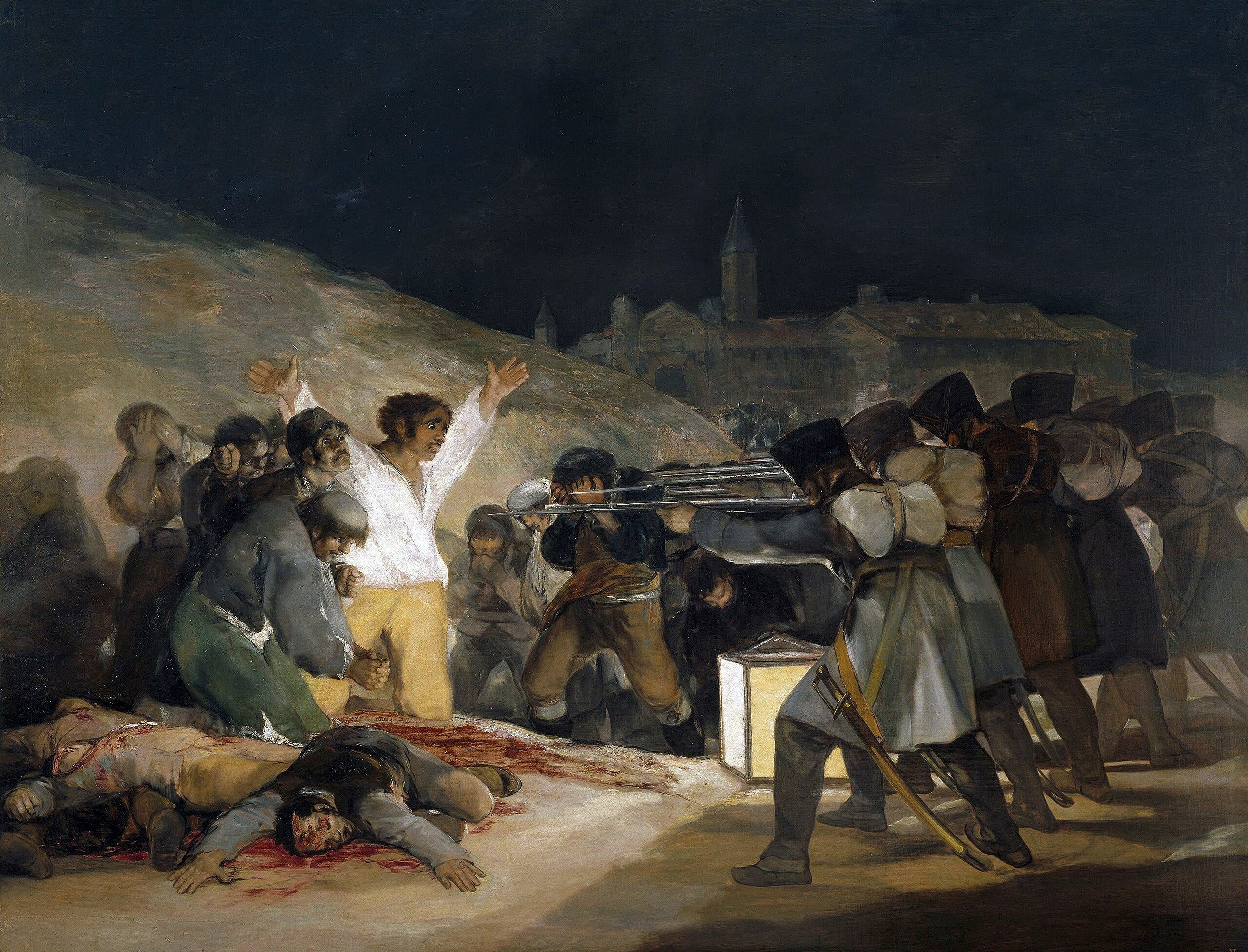
In The Third of May 1808, the martyr’s white shirt is applied with a palette knife. Impasto, brutal. From afar, it shines like a host. Up close, it’s crushed matter.
This brutal technique reinforces the urgency of the message.
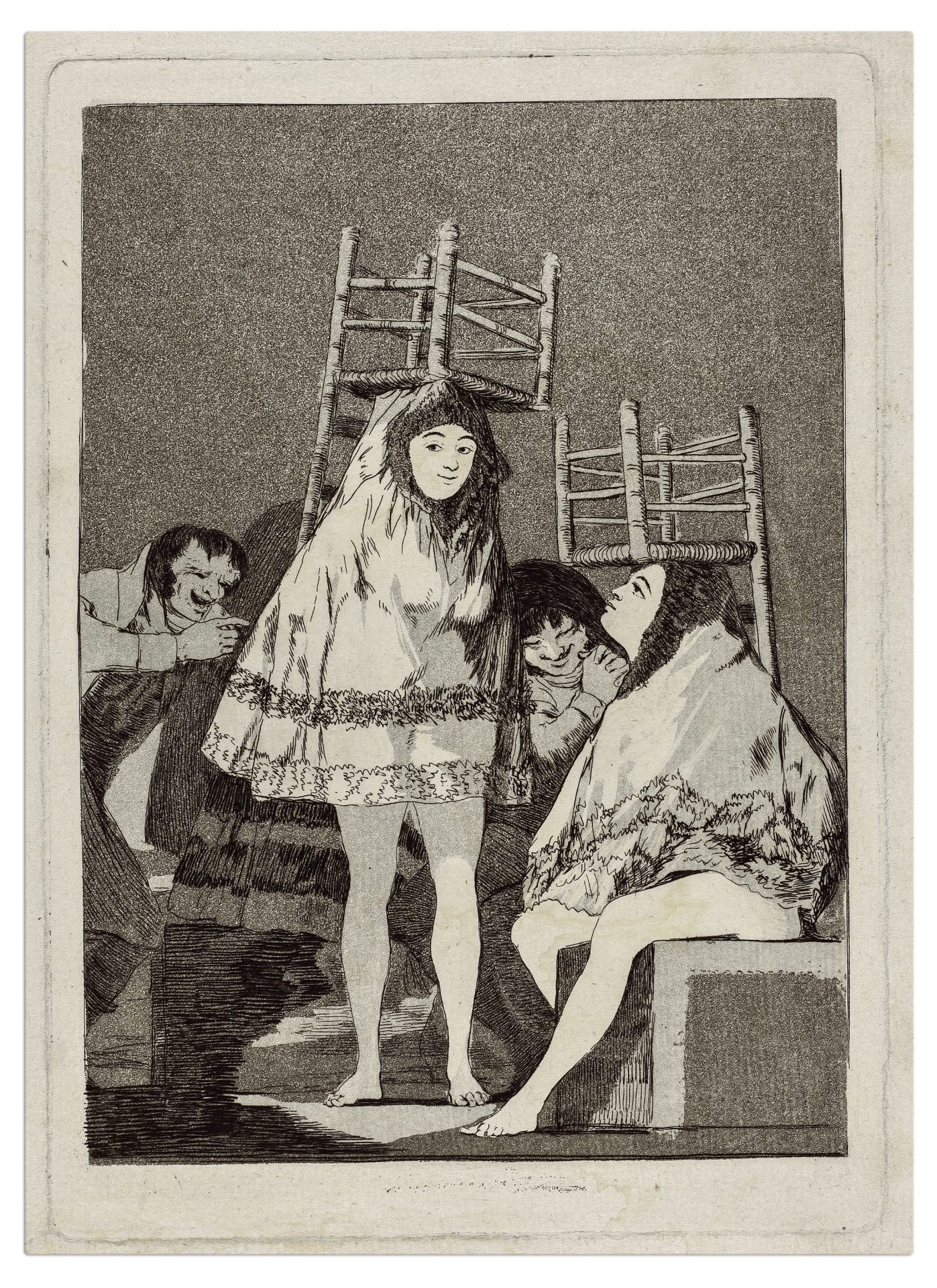
His true mastery explodes in printmaking. He is, alongside Rembrandt, the absolute summit of this art. He creates deep, velvety, unsettling blacks. His print series rival the greatest masters of the medium.
But compared to Ingres, who draws like a Swiss watchmaker, Goya looks sloppy. Compared to Raphael, where each figure occupies exactly the right place, Goya looks unbalanced.
The academics were right about one thing: Goya wasn’t seeking formal perfection. He was seeking expressive truth.
INV (Innovation/Revolution): 92/99
This is the “Avant-garde” rating. Did this painter change the rules of the game? Did he invent a new way of seeing the world? Or did he “just” copy his predecessors very well?
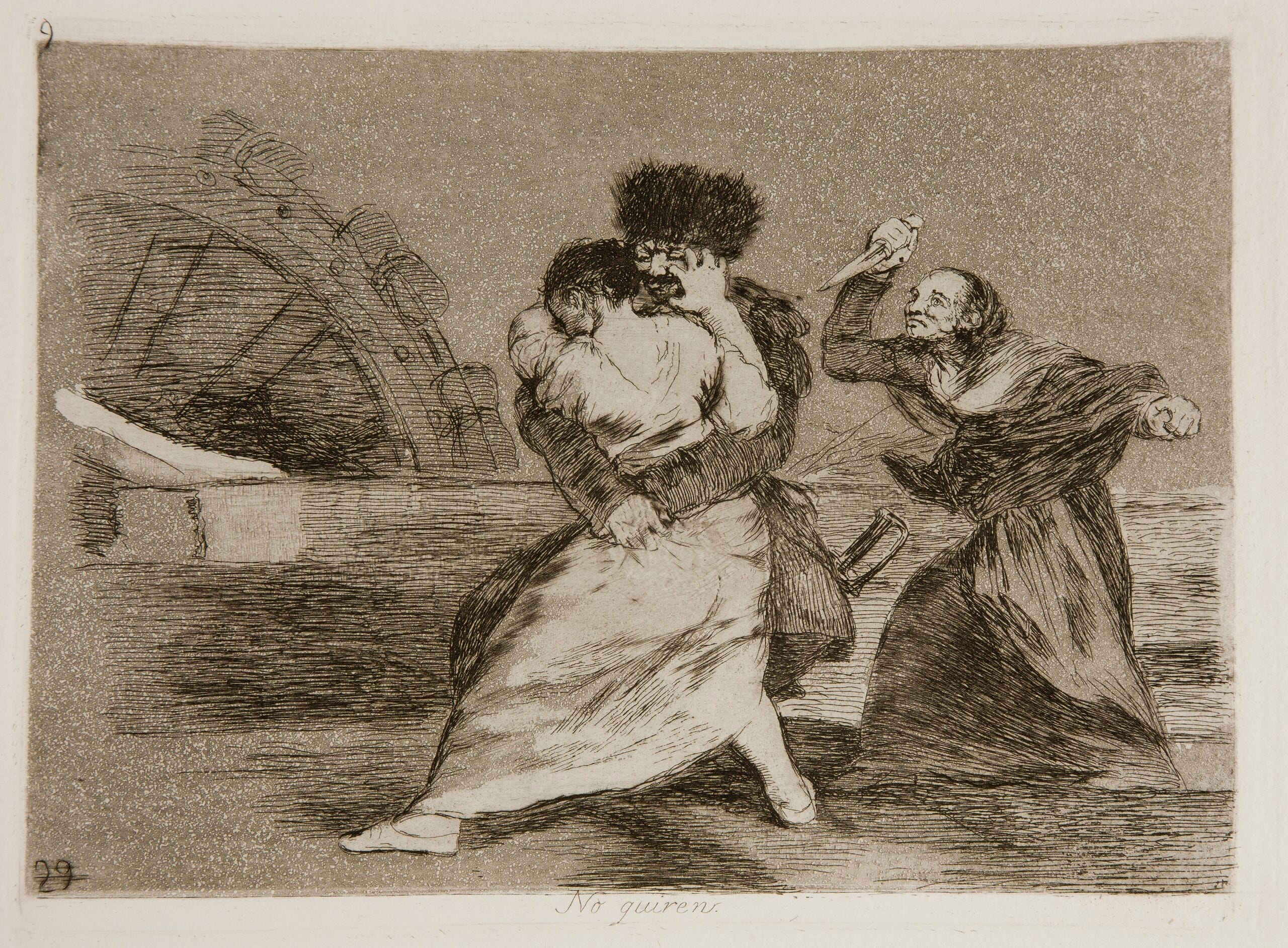
Before Goya, war was painted as grand spectacle. Muscular heroes dying nobly on orderly battlefields.
After Goya, lying becomes impossible.
The Third of May 1808 shows an anonymous firing squad facing terrified civilians. No glory. No meaning. Just the killing machine grinding flesh.
Goya invents modern war reporting. In the 82 plates of The Disasters of War, he engraves what he saw. Hanged bodies. Raped women. Starving children.
Some plates bear the inscription Yo lo vi. I saw it.
No heroes. No God. No morality. Just documented horror.
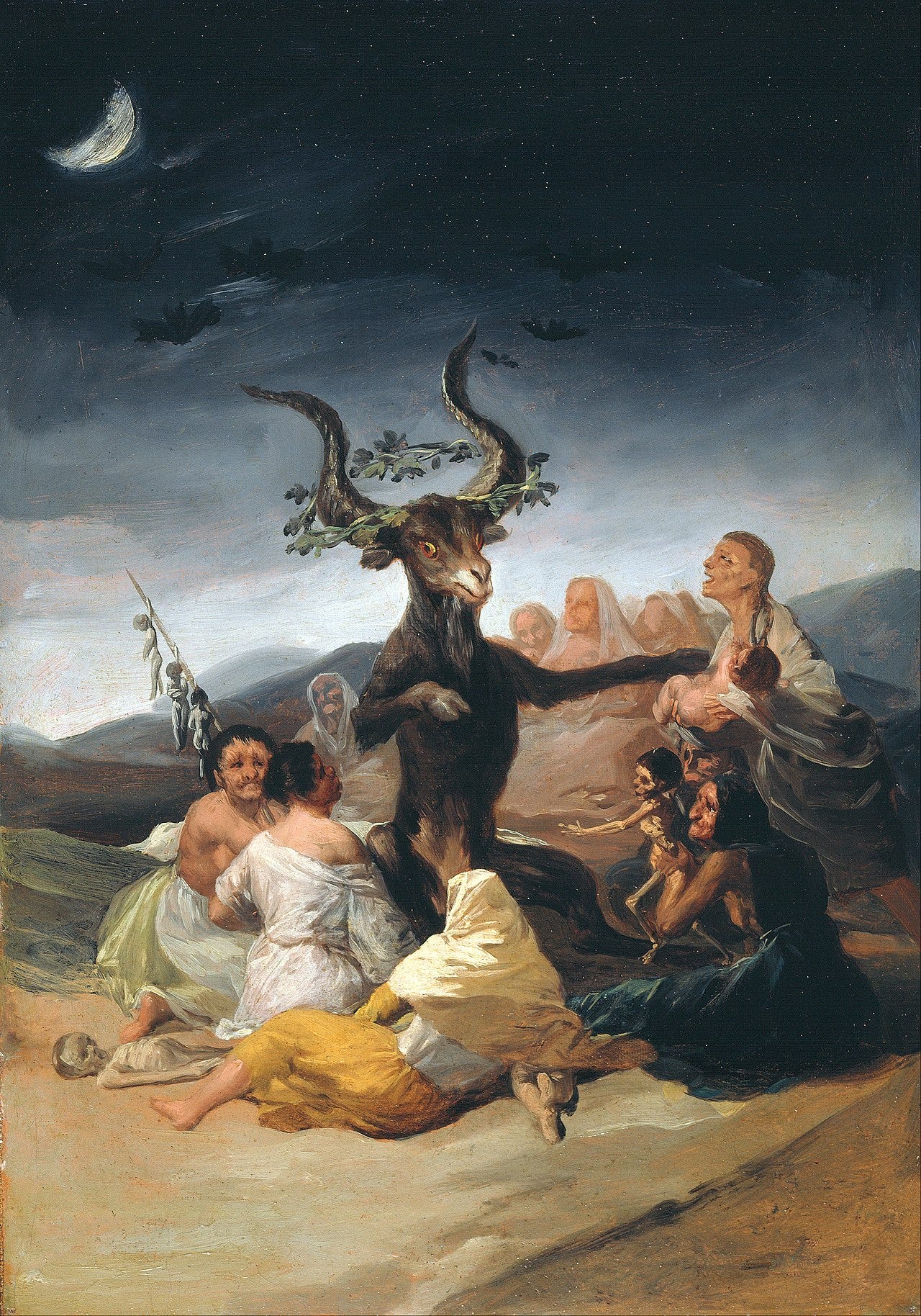
He also invents the pictorial exploration of madness and the unconscious.
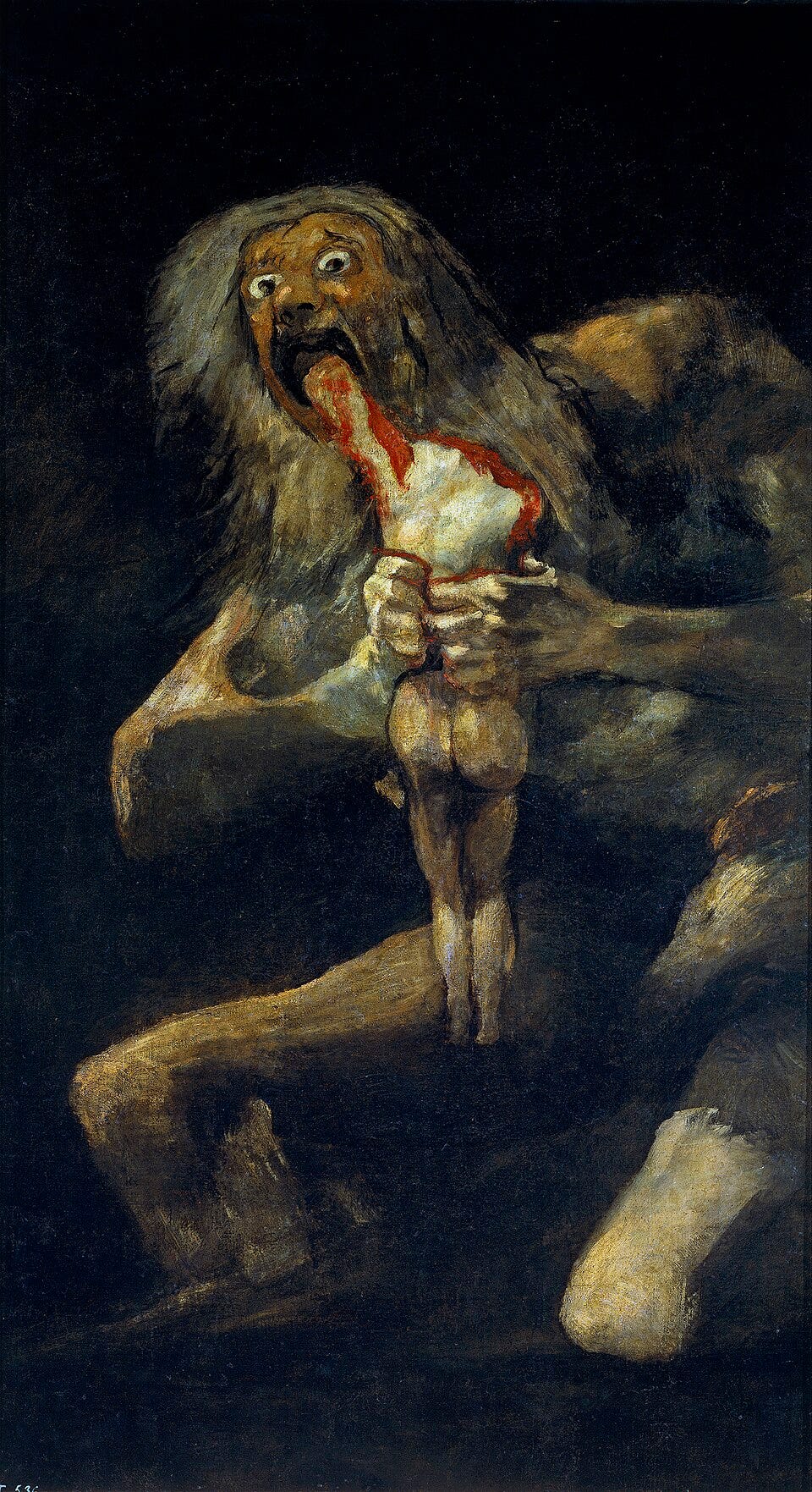
With the Black Paintings, painted directly on the walls of his house between 1819 and 1823, he plunges into nightmare. The Witches’ Sabbath shows emaciated old women worshiping a giant goat. Duel with Cudgels shows two men sinking into sand while beating each other to death.
These paintings weren’t meant to be seen. Goya painted them for himself alone, deaf, isolated, old.
He opens the door to Surrealism 100 years early.
David, his exact contemporary, revolutionizes style by imposing Neoclassicism. Goya revolutionizes content. He says: you can paint ugliness, madness, absurd death. And it’s art.
Picasso will say that Guernica doesn’t exist without him.
EMO (Emotion/Visceral Impact): 94/99
This is the “Hard-hitting” rating. What it judges: What we feel when looking at the paintings. Do we cry? Are we afraid? Are we at peace? It’s the artist’s ability to transcend the intellect and touch the heart.