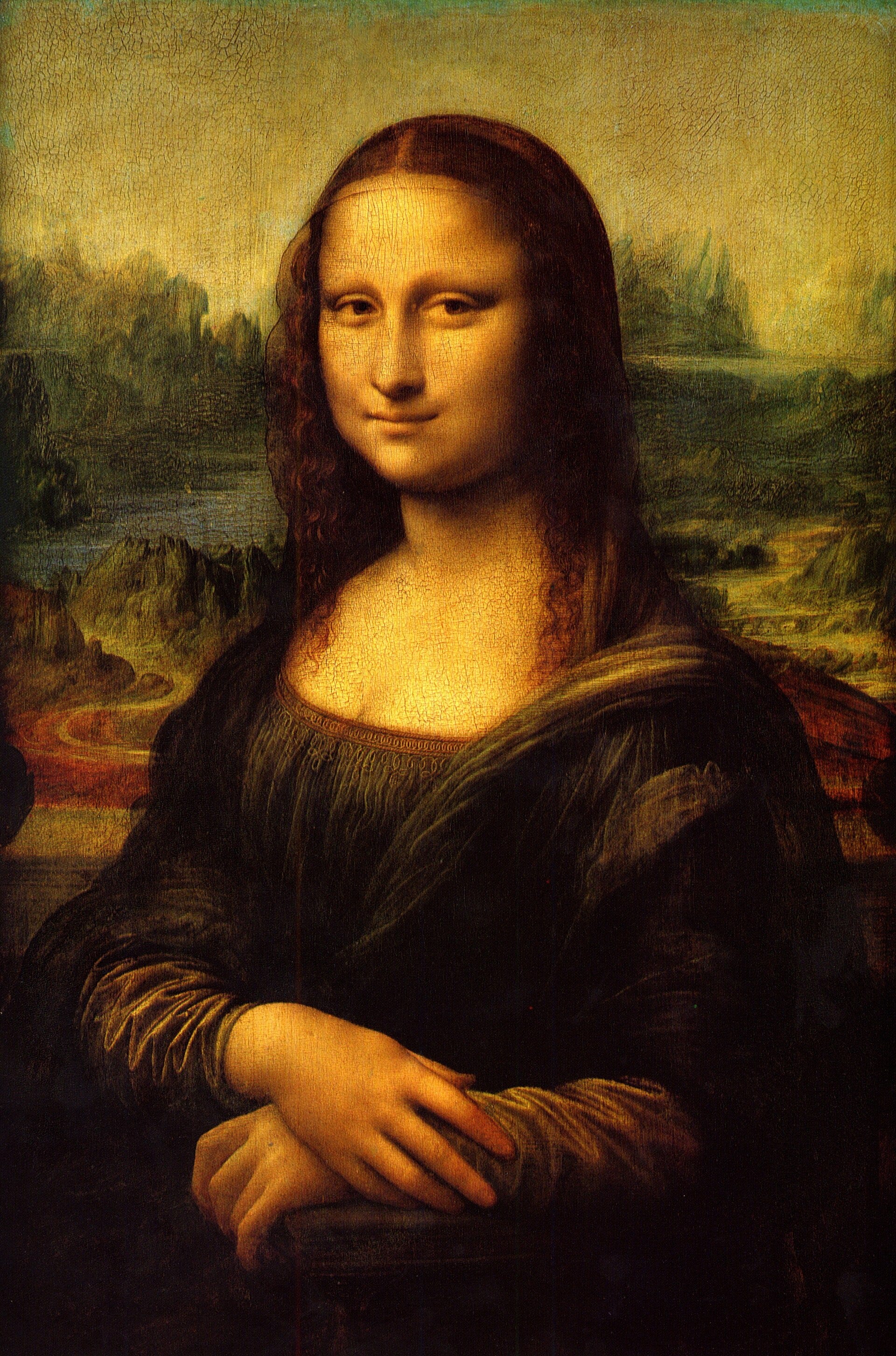
Is the Mona Lisa a Self Portrait? What Evidence Says

The Mona Lisa is not considered a self portrait by most scholars. In 1987, artist Lillian Schwartz overlaid a Leonardo self portrait sketch onto the painting and found matching features, but most Leonardo experts reject the theory.

The accepted view holds she is Lisa Gherardini, wife of a Florentine silk merchant, identified through a 2005 archival discovery.

My honest read on the self portrait theory is that it survives less on evidence and more on how satisfying it feels. A computer overlay from the 1980s matching two faces is not proof, it is pattern matching on a face that was already ambiguous by design, and Leonardo scholars have said so for decades.

Close detail of the Mona Lisa's face
The face at the center of a decades old debate over whether Leonardo painted himself in disguise.

Learn art the fun way. Free stories every week, no boring lectures.


Before the details

No, most art historians do not consider the Mona Lisa a self portrait of Leonardo da Vinci. The mainstream, well supported view is that it depicts Lisa Gherardini, the wife of a Florentine silk merchant named Francesco del Giocondo.

The self portrait idea is a real theory with real supporters, but it sits far outside the consensus among Leonardo specialists, and it is a separate question from the medical theories that study her hands and smile for signs of illness.

The Self Portrait Theory

The theory holds that Leonardo painted his own features onto a female body, possibly as a private joke or a deeper statement about identity. Supporters point to similarities between the Mona Lisa's face and drawings believed to be Leonardo self portraits.

Some versions of the theory go further, suggesting Leonardo used a male model, possibly his apprentice and companion Salai, rather than his own face at all.

The red chalk drawing traditionally identified as a Leonardo da Vinci self portrait
This red chalk drawing in Turin is the sketch Lillian Schwartz compared against the Mona Lisa's face.

How Lillian Schwartz Built the Case

In 1986, computer artist Lillian Schwartz digitally overlaid a red chalk drawing thought to be a Leonardo self portrait onto the Mona Lisa. When she reversed and aligned the two images, the facial features lined up closely, down to the eyes and cheekbones.

Schwartz later expanded the idea in her book Leonardo's Hidden Face, arguing the match was too precise to be coincidence. Her methodology never went through the kind of peer review that would settle the question either way.


More Leonardo and Mona Lisa Stories


Why Most Scholars Reject It

Leonardo specialists have called the theory unconvincing for a few concrete reasons. The red chalk drawing Schwartz used may not even be a genuine Leonardo self portrait, which undercuts the entire comparison before it starts.

Digital overlays can also be made to match almost any two faces with enough adjustment, especially when both faces are already somewhat androgynous in style, as many Renaissance portraits are.

Museum directors and Leonardo historians have dismissed the self portrait claim outright rather than treating it as an open question.

Renaissance era Florence, home of the silk merchant Francesco del Giocondo
Lisa Gherardini's husband, silk merchant Francesco del Giocondo, is believed to have commissioned the portrait.

So Who Is She

The name most historians accept is Lisa Gherardini, a Florentine woman married to silk merchant Francesco del Giocondo. That is why the painting is also called La Gioconda in Italian and La Joconde in French.

Giorgio Vasari, who wrote biographies of Renaissance artists just decades after Leonardo's death, named her as the subject, and later archival research backed him up.

Heidelberg University, where the 2005 marginal note was found
A margin note found in a Heidelberg University library book in 2005 named Lisa del Giocondo as the sitter.

Cool Stories About Art is a free newsletter. The stories behind the paintings, straight to your inbox.


The 2005 Discovery That Settled It (Mostly)

In 2005, a researcher at Germany's Heidelberg University found a note scribbled in the margin of a book owned by a Florentine official in 1503. The note names Leonardo and confirms he was working on a portrait of Lisa del Giocondo at that time.

That discovery is the closest thing to a paper trail the painting has, and it is a major reason the self portrait theory carries so little weight among historians today.

Other Male Mona Lisa Theories

The self portrait idea is only one of several theories claiming the sitter was a man. Other candidates that have been floated include Leonardo's mother, an idealized composite face, and various court figures with no documented connection to the painting.

None of these alternate theories have the archival support the Lisa Gherardini identification has, which is why they remain fringe reading rather than accepted history.

Why the Question Will Not Go Away

Part of the appeal is Leonardo himself. He was known for riddles, mirror writing, and hidden meaning in his notebooks, so a hidden self portrait fits the myth people already want to believe about him.

The honest answer is less exciting than the theory. The face in the Mona Lisa most likely belongs to a real Florentine woman whose husband commissioned a portrait, not a puzzle Leonardo left for future centuries to solve.


Discover more art stories


Mona Lisa Self Portrait Theory: Quick Answers

  • Is the Mona Lisa a self portrait of Leonardo da Vinci?
    No, most scholars reject that idea. The accepted view is that it depicts a Florentine woman named Lisa Gherardini.

  • Who started the self portrait theory?
    Computer artist Lillian Schwartz proposed it in 1986 after digitally overlaying a Leonardo self portrait drawing onto the Mona Lisa's face.

  • Why do some people think the Mona Lisa is a man?
    Several theories claim a male sitter, from Leonardo himself to his apprentice Salai, based on facial comparisons rather than documents. None of them have archival support.

  • Who is the real Mona Lisa?
    Most historians identify her as Lisa Gherardini, wife of Florentine silk merchant Francesco del Giocondo, which is why the painting is also called La Gioconda.

  • What evidence identifies Lisa Gherardini as the sitter?
    A 2005 discovery at Heidelberg University found a 1503 margin note naming Leonardo as the painter of a portrait of Lisa del Giocondo. It is the strongest documentary evidence connecting the painting to a real person.

  • Did Leonardo ever say who the painting was of?
    No surviving writing from Leonardo names the sitter directly. The identification relies on later biographers, especially Giorgio Vasari, and the 2005 archival note.

  • Is the self portrait theory taken seriously by art historians?
    Not by most. Leonardo specialists have called it unconvincing, partly because the drawing used for comparison may not even be a genuine self portrait.

  • Could the Mona Lisa be based on more than one person?
    Some researchers have suggested Leonardo blended features from more than one face, including his own sense of ideal proportion, but this remains speculative rather than established fact.


Join 170,000 readers learning art the fun way. Free stories every week, no boring lectures.