
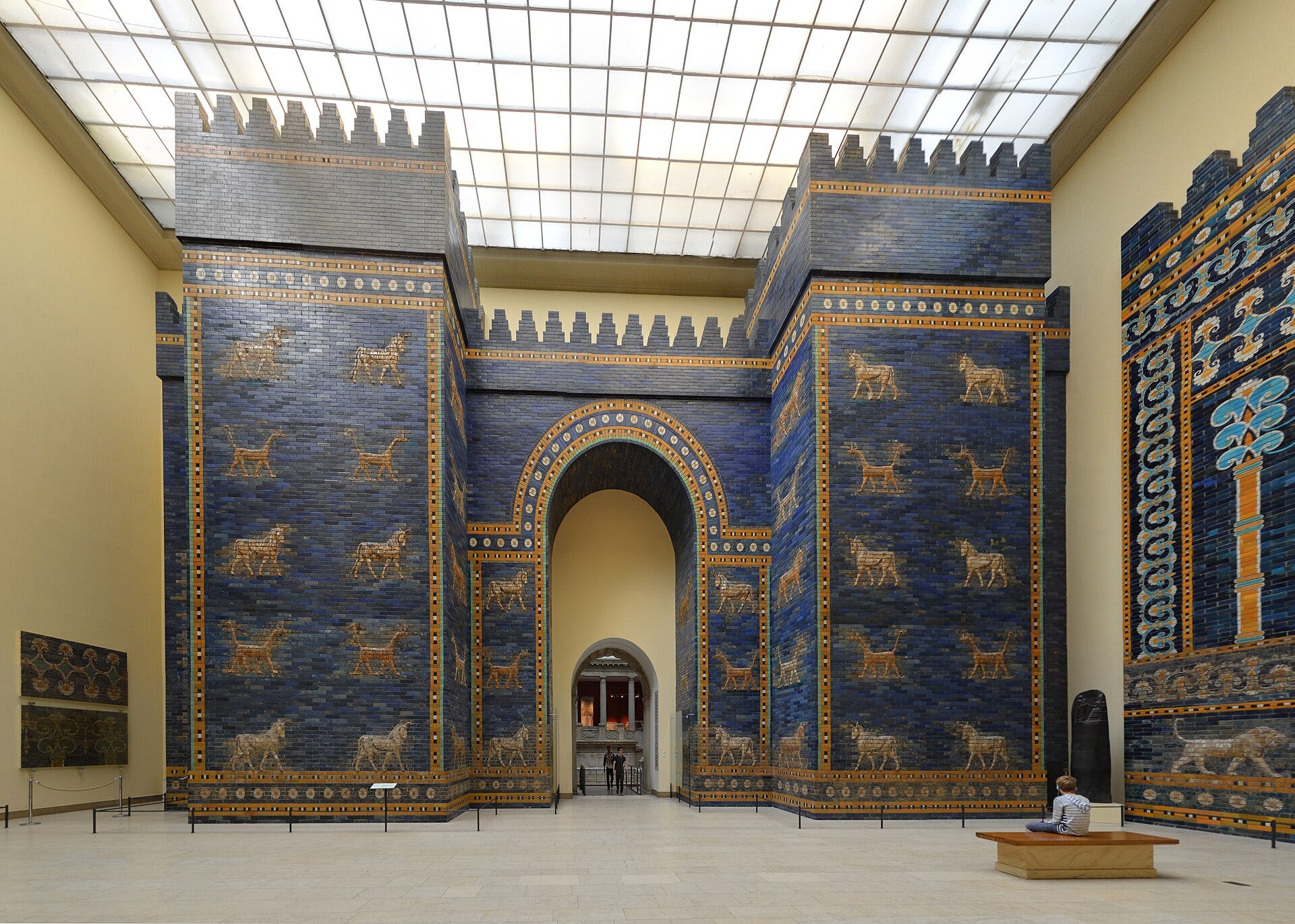
The Ishtar Gate is a monumental city gate of blue glazed brick, built at Babylon, in what is now Iraq, around 575 BC for King Nebuchadnezzar II. Rows of wild bulls and dragons in raised relief cover its walls, and the king dedicated it to Ishtar, the Babylonian goddess of love and war.
German archaeologists recovered its broken pieces between 1899 and 1917. The smaller front gate was rebuilt in Berlin and unveiled when the Pergamon Museum opened in 1930, though fewer than one brick in five is ancient.
Visitors know it for its deep blue walls and for the corridor of striding lions that leads up to it. The museum wing that holds it has been closed since October 23, 2023, and is due to reopen around 2037.
Cool Stories About Art is a newsletter to learn art the fun way.
Join 200,000+ readers and get:
10 new art stories / month
The entire archive of content (140+ articles)
Comment, ask questions, and chat with other readers
What does the Ishtar Gate look like?
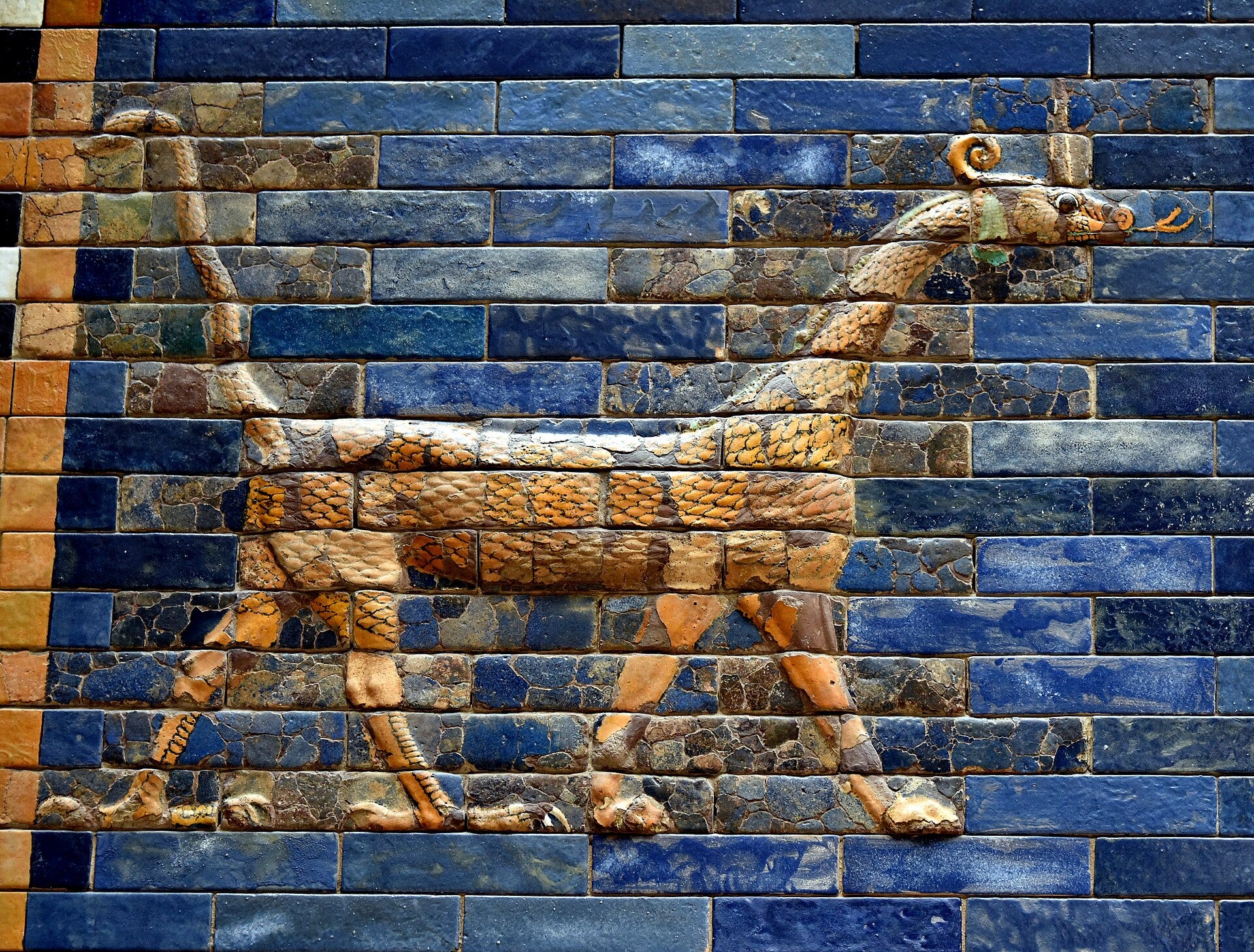
The bulls and dragons climb the blue towers in tidy rows, yet no one in Babylon ever saw all of those rows at the same time…
What You'll Discover
The three gods behind the bulls, dragons and lions
What the king wrote about his own gate
Why archaeologists never found a blue gate standing
Why 230 wine barrels filled a Berlin museum
Which museums from Paris to Detroit keep its animals
What still rises from the ground at Babylon