
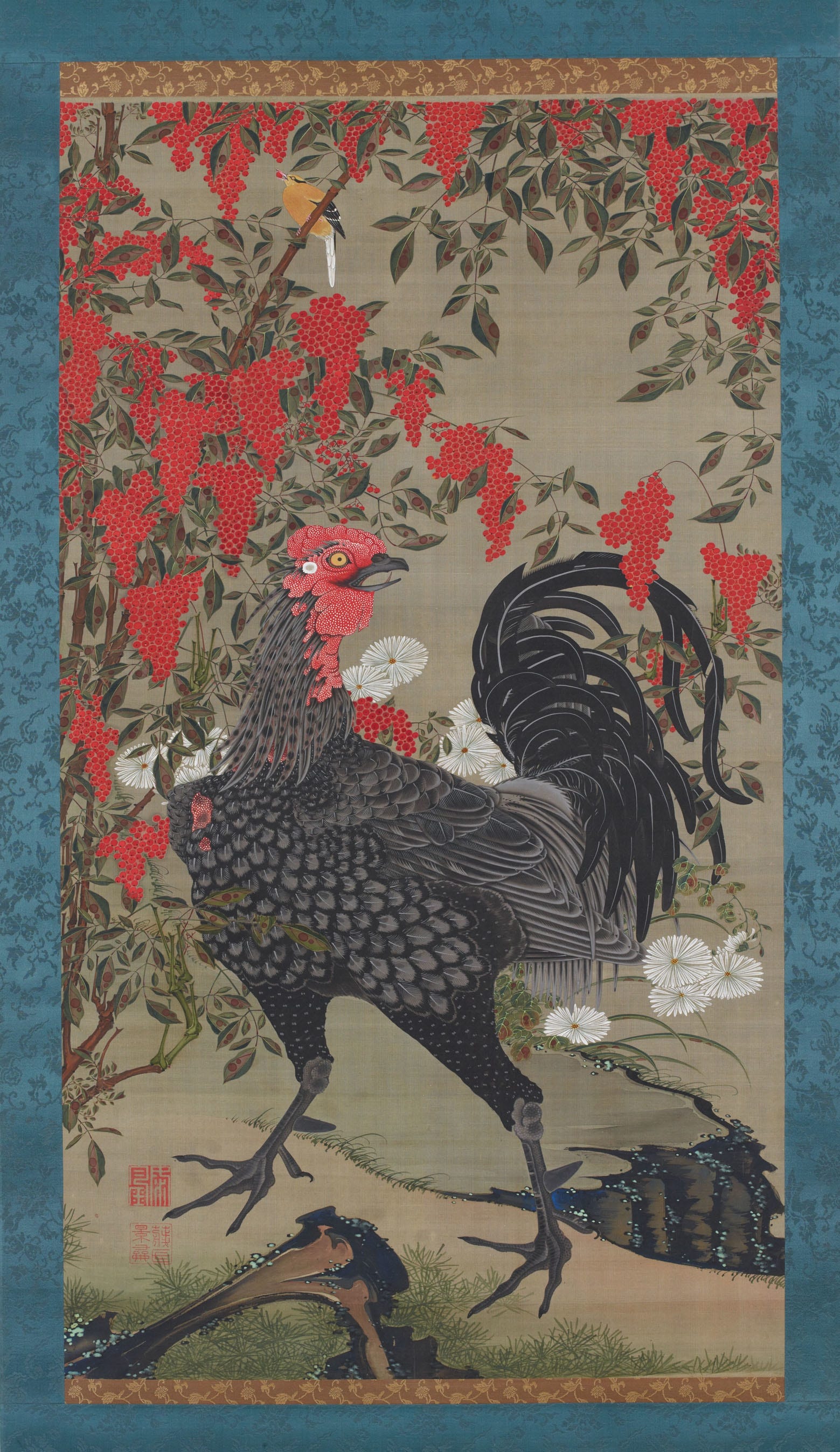
Itō Jakuchū (1716 to 1800) was a Japanese painter from Kyoto, famous for his roosters, fish and flowers. His best-known work is Colorful Realm of Living Beings, a set of thirty scrolls painted on silk, now kept in Tokyo.
Cool Stories About Art is a newsletter to learn art the fun way.
Join 200,000+ readers and get:
10 new art stories / month
The entire archive of content (140+ articles)
Comment, ask questions, and chat with other readers
The painter came to painting late. Until the age of about forty, he was a merchant, the head of a prosperous family business in the food market of Kyoto. He then spent ten years on the thirty scrolls, tall paintings on silk made to hang on a wall, and did not sell a single one.
Itō Jakuchū was born in Kyoto in 1716, when the city was the home of the emperor of Japan. Itō is the family name, which comes first in Japanese, and Jakuchū is the name the painter later used to sign his pictures.
His father was a wholesaler at the Nishiki market, the street where Kyoto still buys its fish and vegetables today. The family earned its living from other sellers: farmers paid the Itō family for a place to sell their crops, and the family took a fee on the trade.
Jakuchū was the eldest son. He was twenty-three when his father died, and he became the fourth head of the family business, which he ran until he was about forty.
Trade interested him little. The young merchant never married, took a few painting lessons, then learned mostly alone, by copying old Chinese pictures. He also kept chickens at home in order to watch them closely.
In 1755, Jakuchū handed the business over to a younger brother and gave his days to painting. By 1766, he had finished the thirty scrolls of Colorful Realm of Living Beings, and he kept none of them.
In 1791, the painter was seventy-five. He lived in a small house at the entrance of a temple south of Kyoto, where he made simple paintings for the people of the town. For each painting, he asked one measure of rice.
The merchant to whom farmers had once paid a fee for a place at the market now signed his pictures with a new name: Beito-ō, Old Man of One Measure of Rice.
How did the heir of a rich market family end up, at seventy-five, painting for rice?
In the rest of the story
What Jakuchū asked for in return for his thirty scrolls.
What Jakuchū lost in two days, at the age of seventy-two.
Where all the rice from Jakuchū's paintings went.
What a young American gave up in 1953 to buy a Jakuchū scroll.