
Jacek Malczewski (1854 to 1929) was a Polish painter, the leading figure of Symbolism in Poland, an art that showed ideas as human figures. He is best known for Melancholia, in Poznań, and Christmas Eve in Siberia, a supper of Polish exiles, in Kraków.
Cool Stories About Art is a newsletter to learn art the fun way.
Join 200,000+ readers and get:
10 new art stories / month
The entire archive of content (140+ articles)
Comment, ask questions, and chat with other readers
When Jacek Malczewski was born, there was no Poland on the map of Europe. He spent his life painting that missing country, its rebels and its exiles.
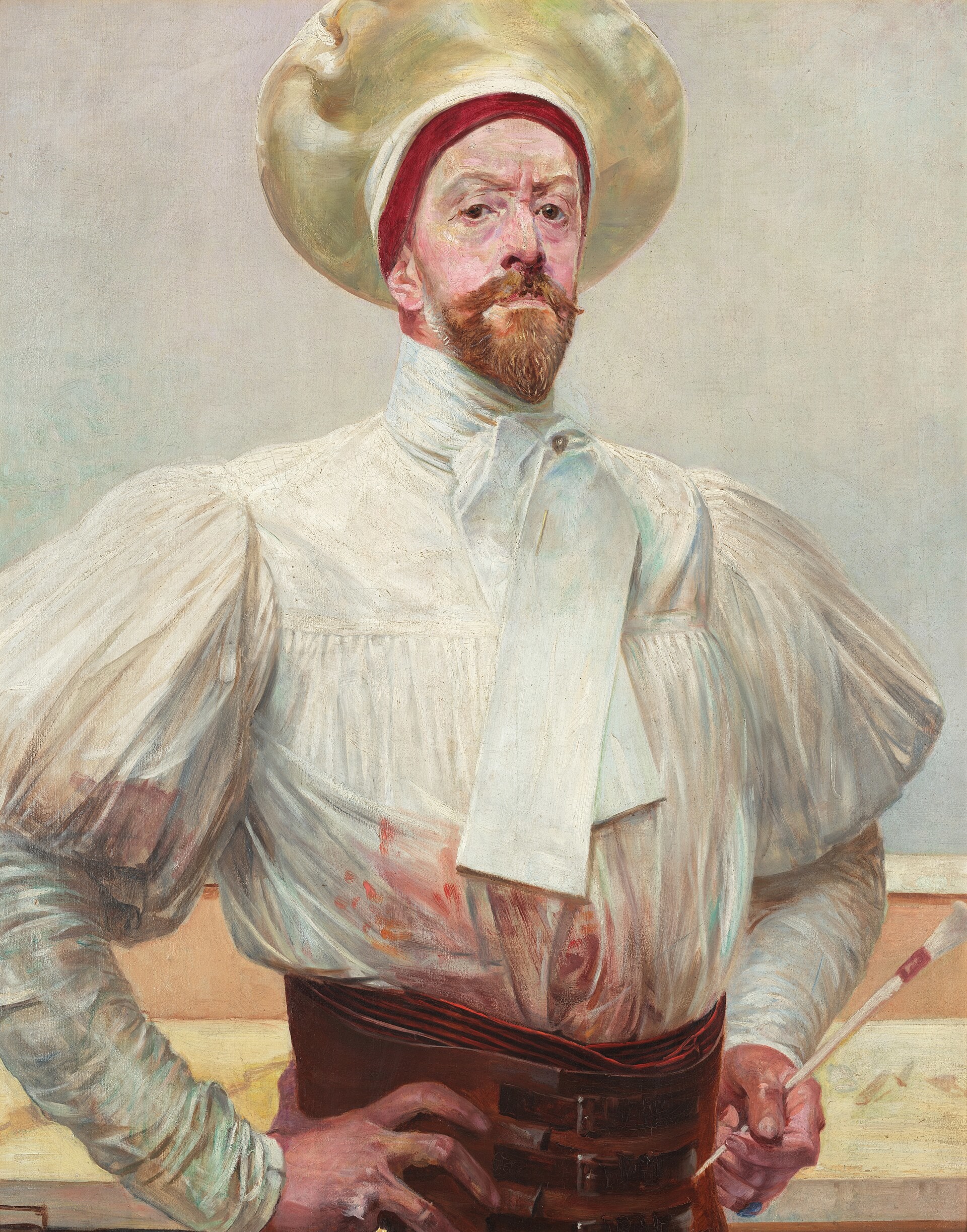
Yet the face that comes back most often in Malczewski's paintings is his own. He painted himself again and again, as a knight in armor and even as Christ. In his lifetime, critics accused him of vanity and of a mania for costumes.
Jacek Malczewski was born on July 15, 1854, in Radom, a town south of Warsaw, into a noble family that had lost its money. Since 1795, Poland had been divided among three empires: Russia, Austria and Prussia, a German kingdom. Radom belonged to the Russian part, ruled by the tsar.
Jacek's father, Julian Malczewski, was a patriot. At home, he had his son read the great Polish poets, above all Juliusz Słowacki, who had written his most famous works in exile, far from Poland.
In January 1863, when Jacek was nine, the Poles under the tsar rose up in arms. The tsar's army crushed the revolt, known as the January Uprising. By official Russian count, more than 18,000 people were then sent into exile in Siberia, the immense and freezing east of the Russian Empire.
The boy saw the uprising and its punishment. Afterward, Polish children had to study in Russian at school.
The exiles of Siberia would fill Jacek Malczewski's first great paintings. Later, the painter would put his own face among those exiles, and among many other figures.
Why would a painter who gave his life to a lost country keep painting his own face?
In the rest of the story
What the painter wrote on the back of his most famous canvas.
Whose eyes Death closes in his painting of 1902.
Whose faces he gave to a dead woman and her mourner in 1907.
In which empire's capital the patriot painter rented a secret studio.