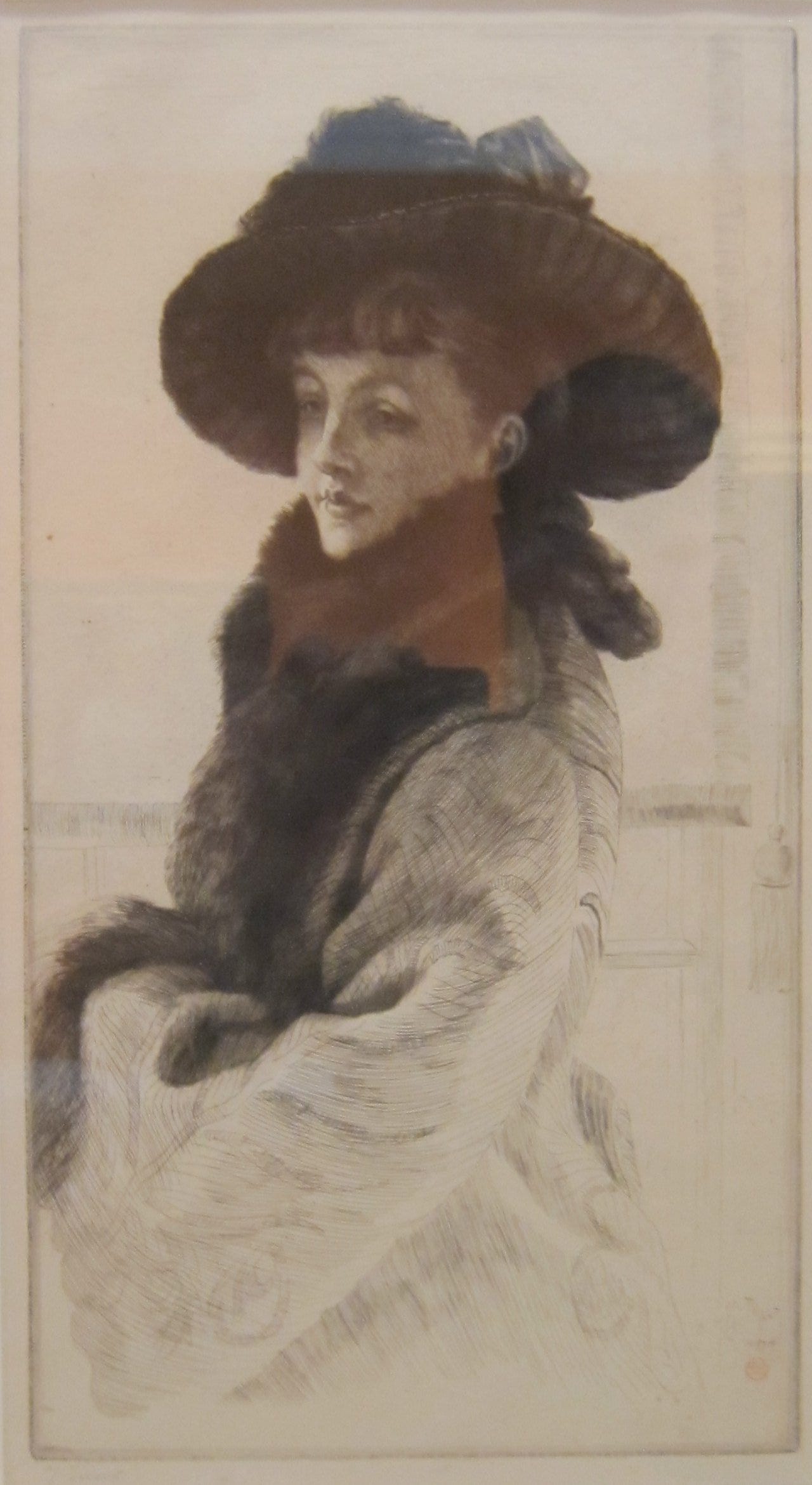
James Tissot: The Complete Story
James Tissot lived two completely different artistic lives. First he was the painter of fashionable Victorian society, elegant women in rustling gowns on terraces, ships and ballrooms, captured with the precision of a couturier. Then grief and faith turned him into a religious painter who spent his last years illustrating the Bible.
The hinge between those two lives was the death of the woman he loved.
Born: Nantes, France, 1836
Known for: elegant Victorian society scenes, fashion, later Bible illustration
Died: Chenecey Buillon, France, 1902
The painter of fashionable life
After the upheavals in France, Tissot settled in London and became a hit. He painted the wealthy at leisure, on garden terraces, aboard yachts, at the theatre, with dazzling attention to silk, lace and the latest fashions. See what is genre painting.
His women are so stylish the pictures double as fashion records. Critics sometimes sniffed at the glamour, but the public loved the elegance and the storytelling. See what is portrait painting.
Kathleen Newton, the muse
At the height of his London success Tissot met Kathleen Newton, a young divorcee who became his companion and obsessive model. She appears throughout his work of these years, radiant in his garden and home.
Their happiness was brief. Newton fell ill with tuberculosis and died at only 28. Devastated, Tissot abandoned London within days and returned to Paris, and his old world of fashionable pictures fell away.
The turn to the Bible
Back in France Tissot had a religious experience and changed course entirely. He devoted himself to illustrating the life of Christ, travelling to the Middle East to study the land, costumes and light first hand.
The result was a vast series of watercolours, hundreds of scenes from the Gospels, that toured to huge crowds and were reproduced in Bibles for decades. The fashion painter had become a pilgrim. See what is watercolor.
Why he crossed the Channel
Tissot's English career began with an escape. After the fall of Paris in 1871 he was suspected of links to the radical Commune, and he left for London, where his polished scenes of high society quickly made him rich.
He arrived a near refugee and within a few years owned a grand house with a garden he painted again and again. The disruption that uprooted him handed him the very world, fashionable Victorian London, that became his subject.
Common questions about James Tissot
What is James Tissot famous for?
Elegant Victorian society scenes, and later a huge series of watercolours illustrating the Bible.
Who was Kathleen Newton?
His companion and favourite model, whose early death changed the whole course of his art.
Why did his work change so much?
After Newton's death and a religious conversion, he turned from society scenes to biblical illustration.
When did he die?
In 1902, in eastern France.
Why both Tissots last
For years Tissot was filed as a clever painter of frocks. The reassessment has been kind. His glittering society scenes are prized as vivid records of their world, and his Bible watercolours shaped how millions pictured the Gospels, two careers in one remarkable life.
One last detail. Late in life Tissot became fascinated by spiritualism and seances, hoping to reach the dead Kathleen Newton again. He even produced a print of a ghostly apparition, the fashion painter still chasing the woman he had lost.