

170 000+ readers. Learn art the fun way.
This is a preview. Paid subscribers get the full story.
You’ll also get:
10 new stories every month
The full archive (120+ Art stories)
Your personal art guide. Comment, ask questions, DM me anytime
iPhone user? Subscribe at coolstoriesabout.art, not via the app. Apple adds 30% to the price.
Uraga Bay, July 8, 1853. Four American warships drop anchor at the mouth of Edo Bay, old Tokyo.
Two of them move without sails, against the wind, in a roar of machinery and a trail of black smoke over the water.
On the shore, thousands of men watch a ship move without wind for the first time. That same evening, they give it a name. Kurofune. The black ships.
On board, Commodore Matthew Perry carries a letter from the American president. Japan, closed to the world since 1639, must open its ports to trade. Otherwise the fleet returns.
On the sand, Japanese officials crouch, take out their brushes, and record the details of the hulls, a cannon aimed at them.
Perry keeps his word. He comes back in February 1854 with eight ships, a third of the American navy. On March 31, Japan signs and grants access to two ports.
A country sealed off for more than two centuries swings open in a single year.
To pay for its own cannons, Japan has to sell. Its tea, its silk, its porcelain leave for Europe by the crateful.
To keep the china from breaking, packers wedge it with the cheapest paper in the country. Prints pulled from woodblocks, run off by the thousands for the common people of Edo, worth about the price of a bowl of noodles back home. They crumple them up and shut the lid.
The Red Notebook
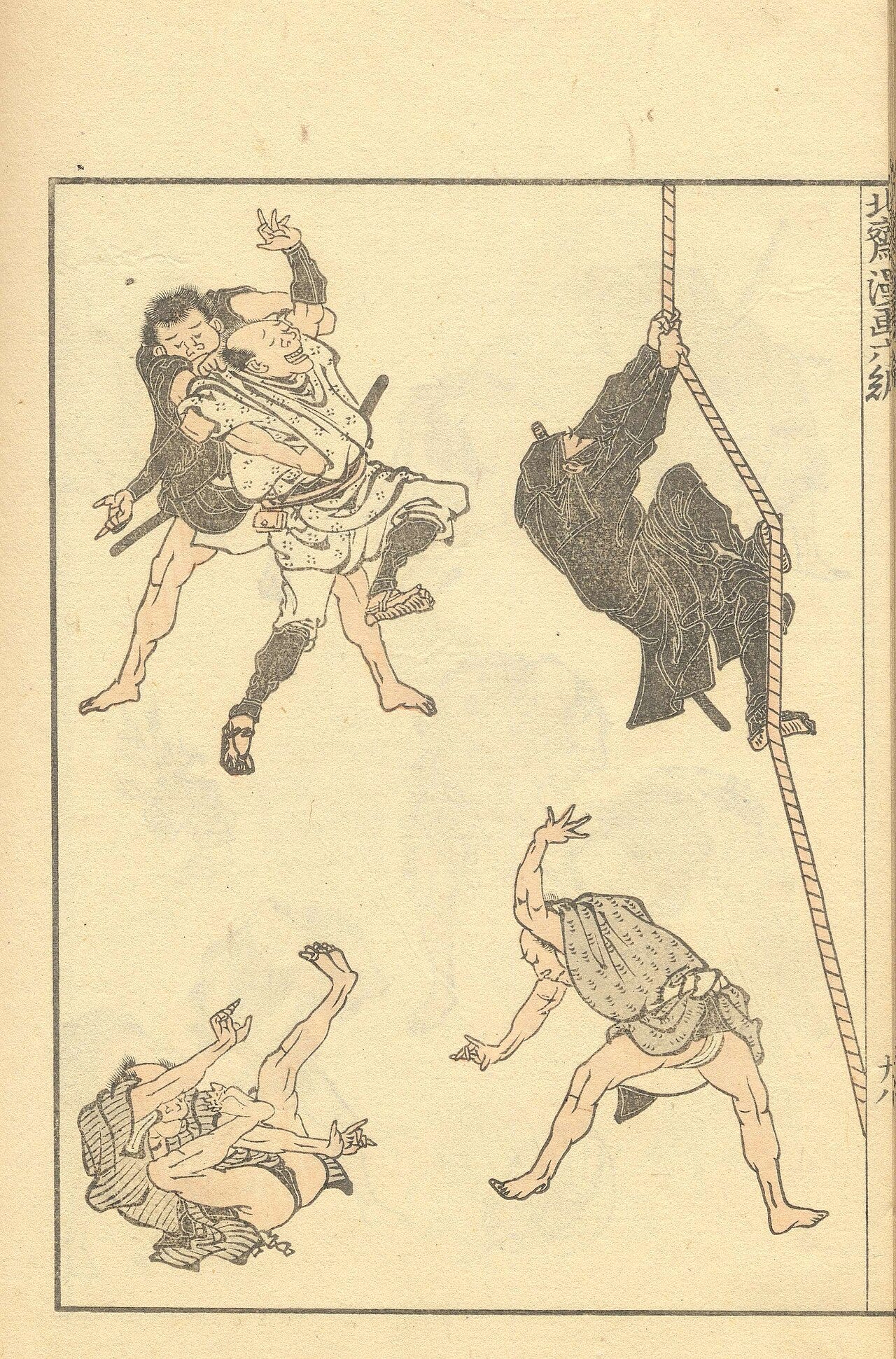
Paris, 1856. In the workshop of the printer Auguste Delâtre, the engraver Félix Bracquemond opens a crate of porcelain shipped from Japan. Between the cups, wedged in to cushion the load, a small book bound in red paper.
He leafs through it. Hundreds of ink sketches. Wrestlers, dancers, a horse kicking out, a man sneezing, rain falling on a slant.
It is a volume of Hokusai’s Manga, quick sketches drawn from life, long before the word ever meant comic books.
Delâtre will not part with it. Bracquemond comes back, presses him, waits months, and finally walks off with it.
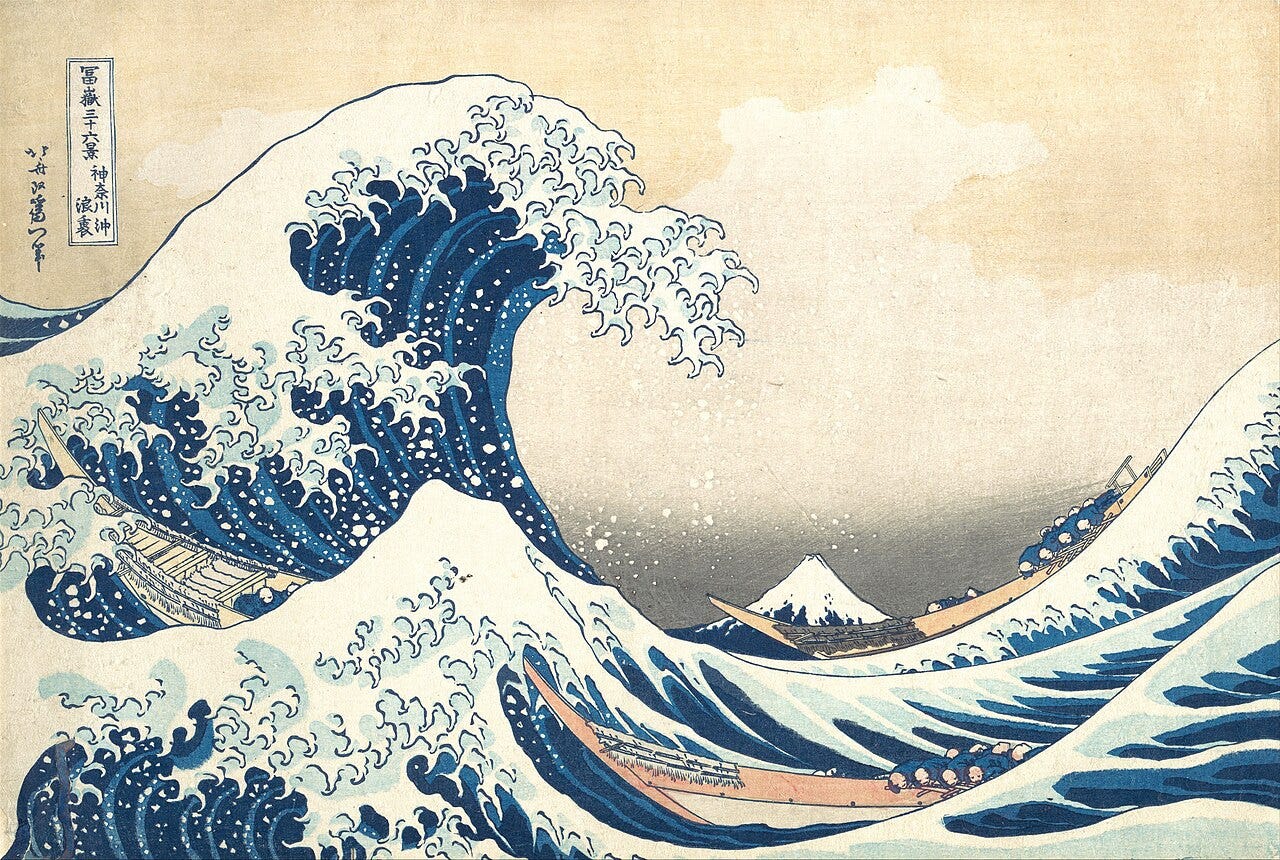
He sets it on Manet’s table, hands it to Degas, who never gives it back. At one studio, then another, after dinner, they pull the lamp closer and turn the sheets over until an ungodly hour. The Goncourt brothers, writers, start buying prints, Zola joins in, Baudelaire too.
The Fever
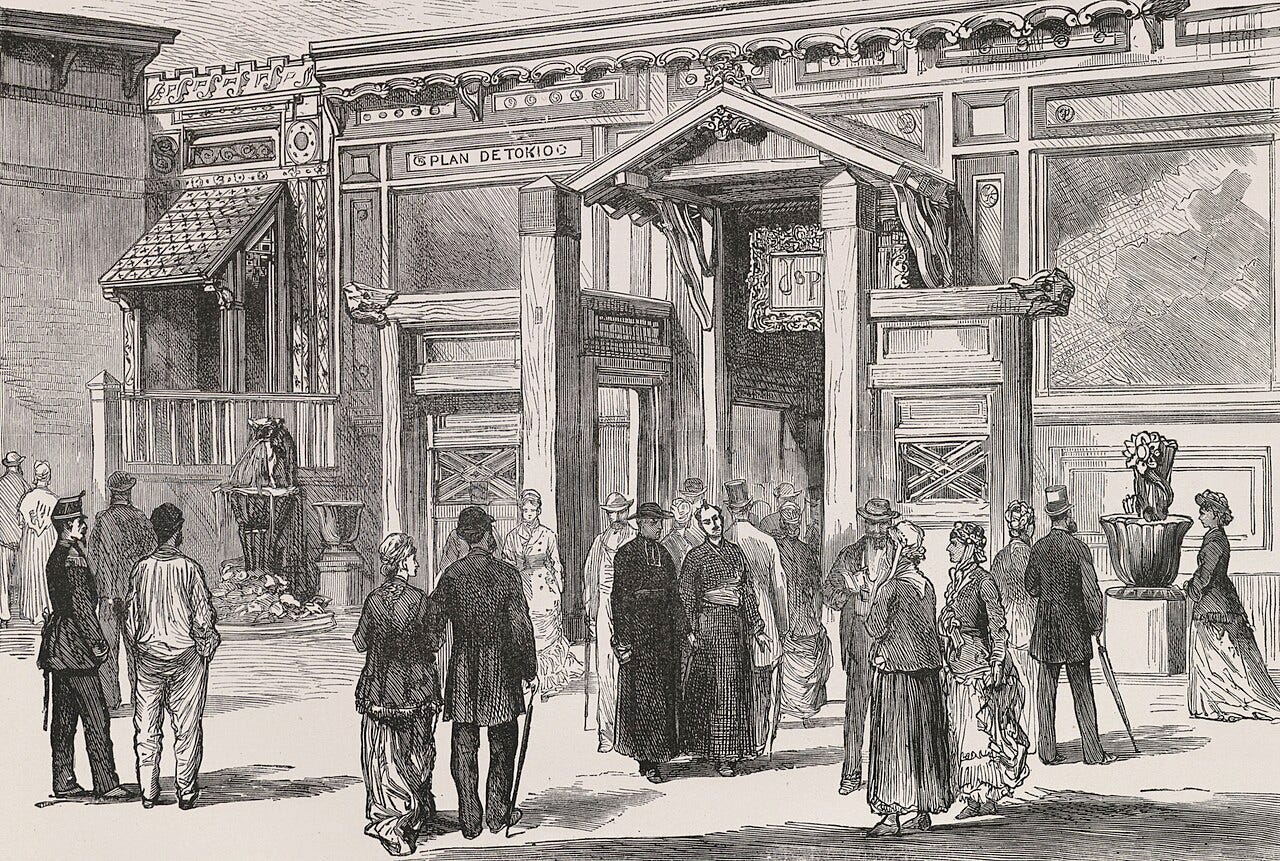
The shops follow. First a stall of tea and trinkets, then another, on rue Vivienne. In 1862, Louise Desoye, who has lived for years in Japan, sets up a store at 220 rue de Rivoli that people nickname La Porte Chinoise, the Chinese Gate.
Fans, blue and white jars, lacquered screens, and in the back room, crates of prints.
People fight over a single sheet as if it were a painting. Tissot runs into Whistler there, Degas into the actress Sarah Bernhardt.
At the Salon, the official Paris exhibition, they still crown grand marble nudes and scenes from antiquity. In the studios, painters tack courtesans to the wall, printed on paper worth nothing.
In 1872, the critic Philippe Burty puts a word to the craze. Japonisme.
At the World’s Fairs of 1867 and then 1878, Japan raises its pavilions, and Paris waits in line for hours to get in.
Bing’s Attic
On rue de Provence, another dealer, the German Siegfried Bing, runs a store bigger than the rest. Up under the eaves, a cramped loft where thousands of prints are piled.
A young Dutchman, barely off the train in Paris, climbs up there almost every week. He digs for hours in the dust, comes down with his arms full, covers his bedroom walls to the ceiling.
In the spring of 1887, he hangs hundreds of them on the walls of a Montmartre cafe to sell them. Nobody wants them. His name is Vincent van Gogh.
170 000+ readers. Unlock the full experience. Cancel anytime.
Discover my new newsletter !

Keep learning art the fun way


The Studios
Each one seizes Japan in his own way. And each one starts by imitating it.
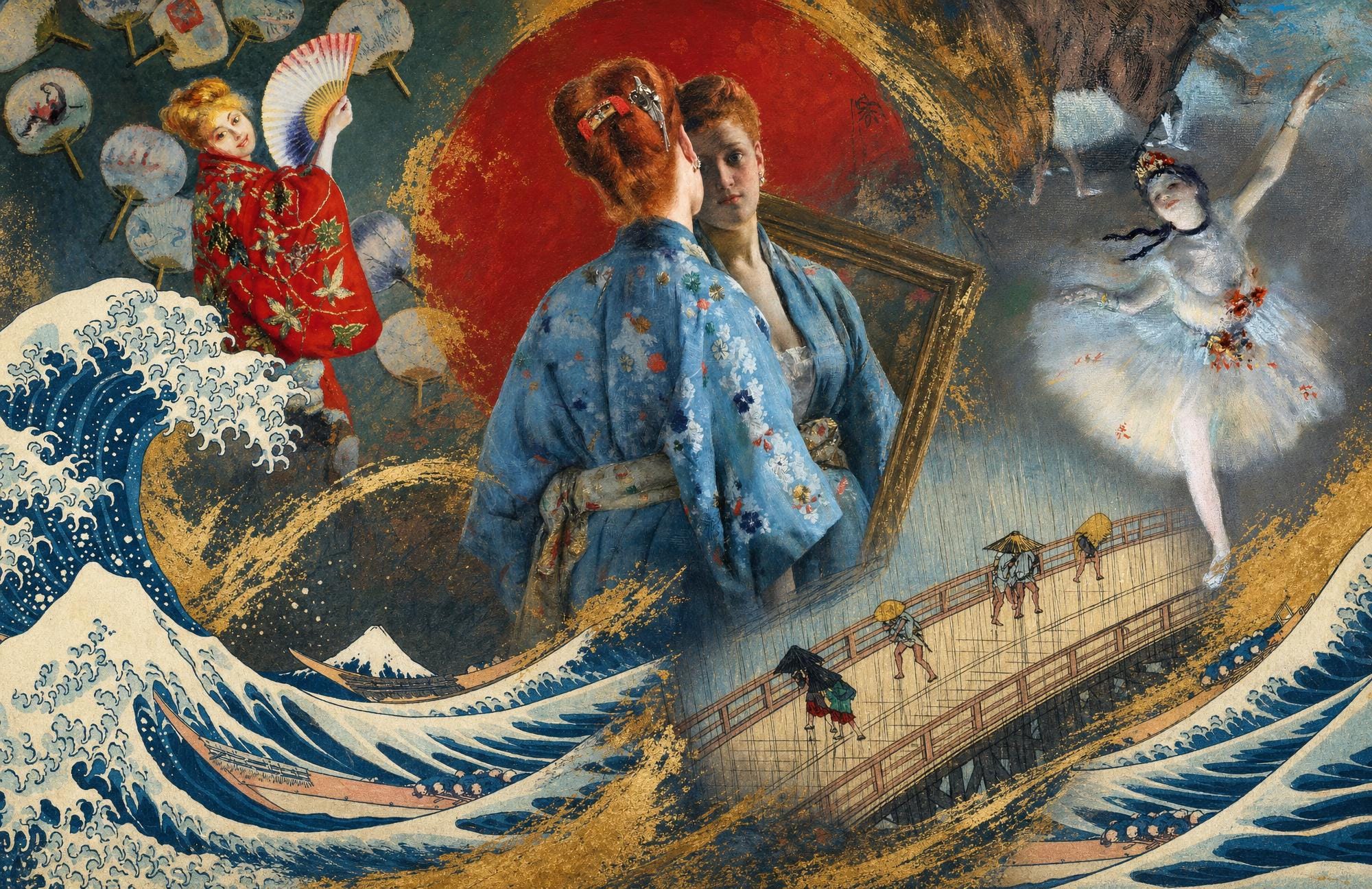
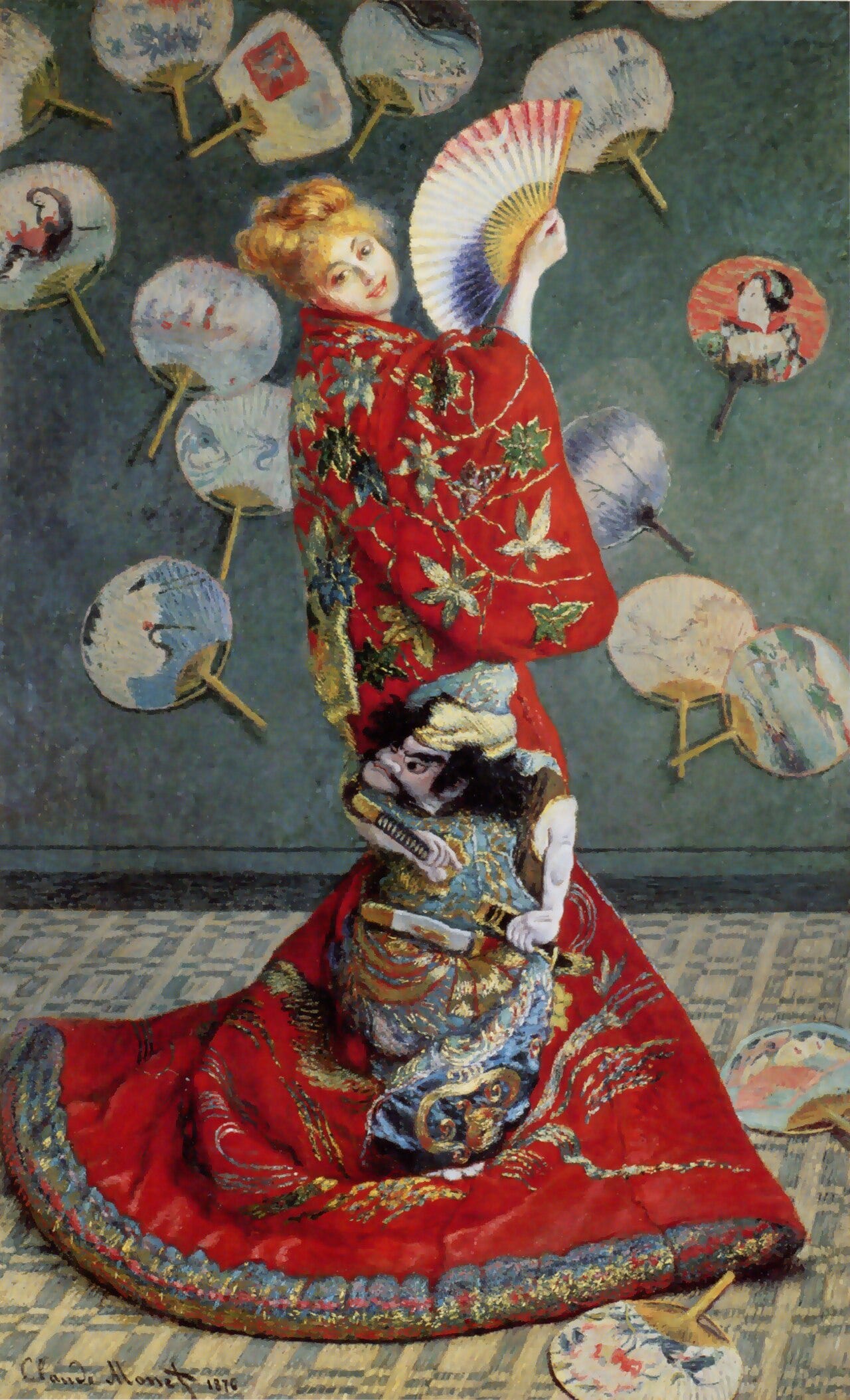
Monet wraps his wife Camille in a scarlet kimono embroidered with a warrior, puts a fan in her hand, and sets her in front of a wall of fans.
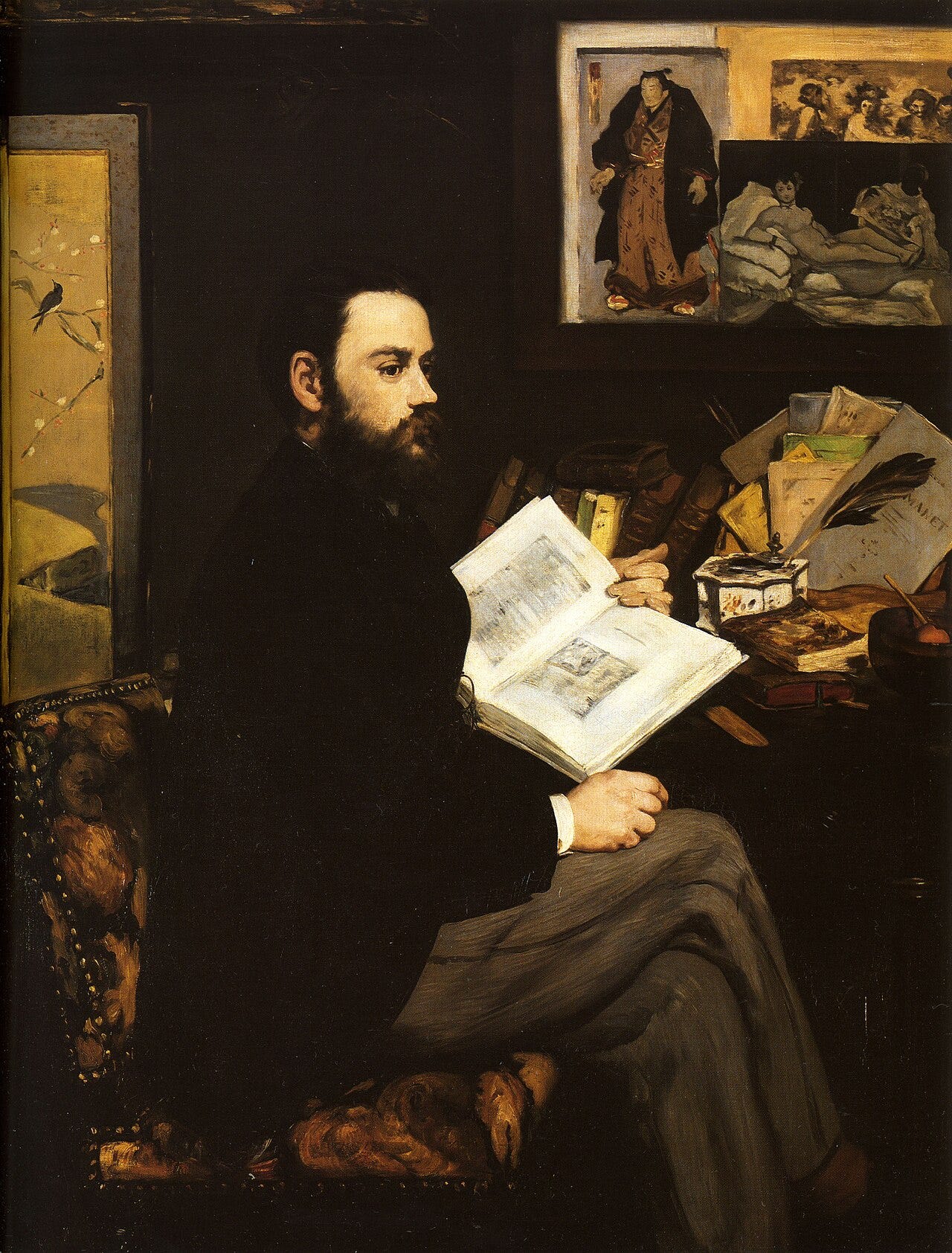
Manet paints Émile Zola at his writing table and hangs behind him a Japanese screen and a print of a wrestler, for the one man who defended him in the press the day all of Paris was laughing at his Olympia.
Van Gogh goes further than any of them. He sets a Hiroshige downpour in front of him and redoes it in oil, stroke for stroke, until the gray of the rain turns blue and the sky turns vermilion.


He does it again with a flowering plum tree, then with a courtesan he frames in characters he cannot read.
Vincent van Gogh, Bridge in the Rain, after Hiroshige, 1887. Utagawa Hiroshige, Sudden Shower over Shin Ohashi Bridge and Atake, 1857.
Many of them play this game. They copy, they cut out, they pin the sheets to the wall, they slip them into the backgrounds of their canvases.
Soon the whole generation is at it. Alfred Stevens, Camille Pissarro, Édouard Vuillard, Maurice Denis, Félix Vallotton, William Merritt Chase, Aubrey Beardsley, Alphonse Mucha, Gustav Klimt. A kimono, a screen, a fan, a print pinned to the wall.
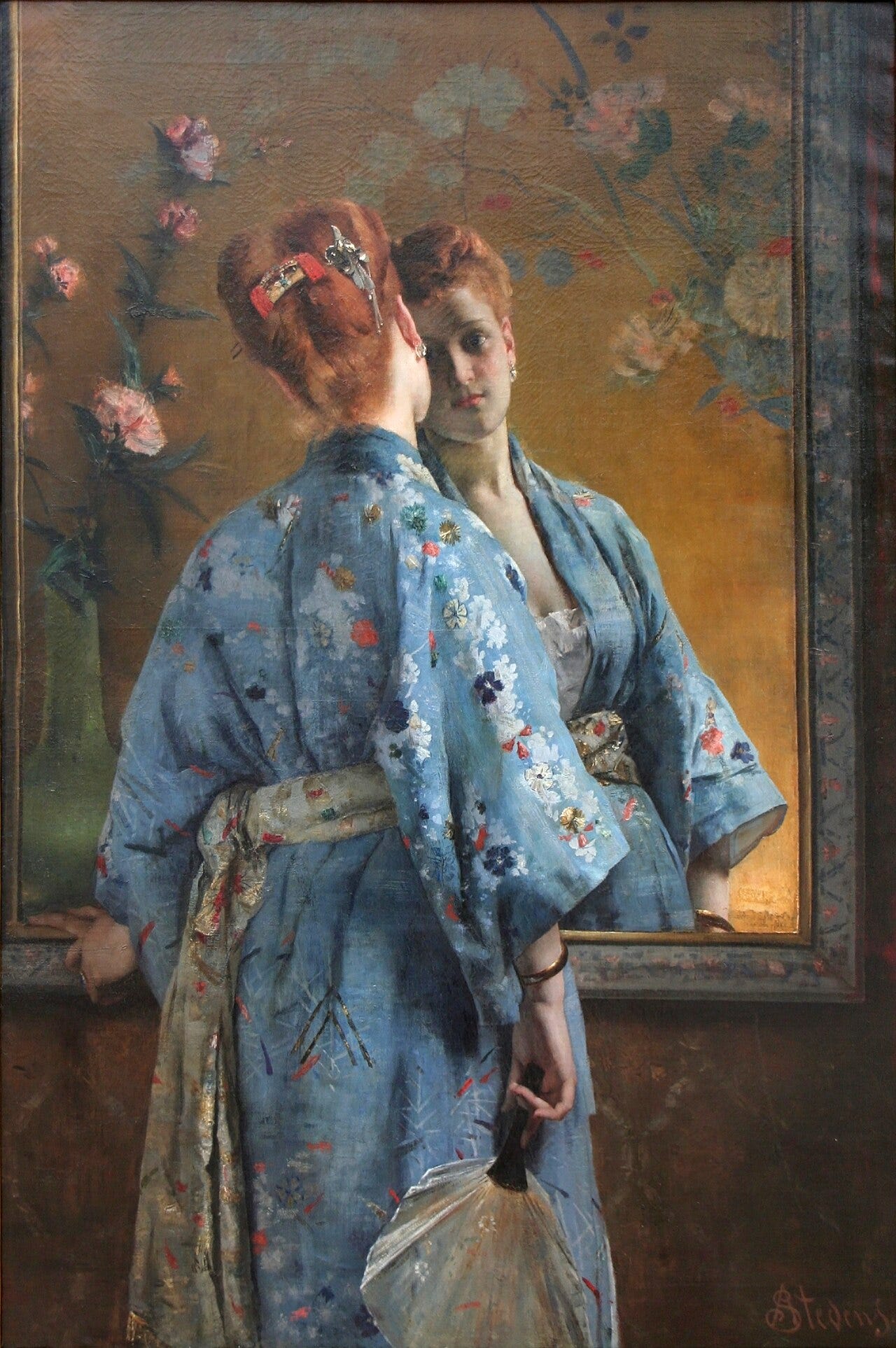
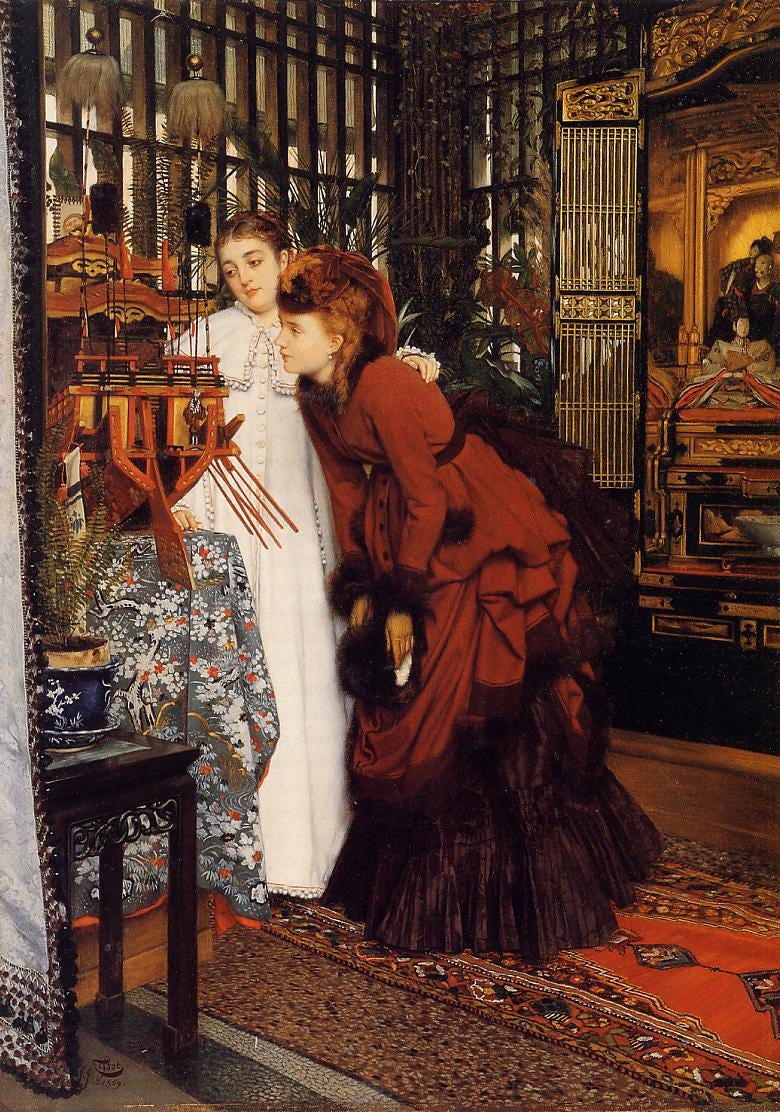
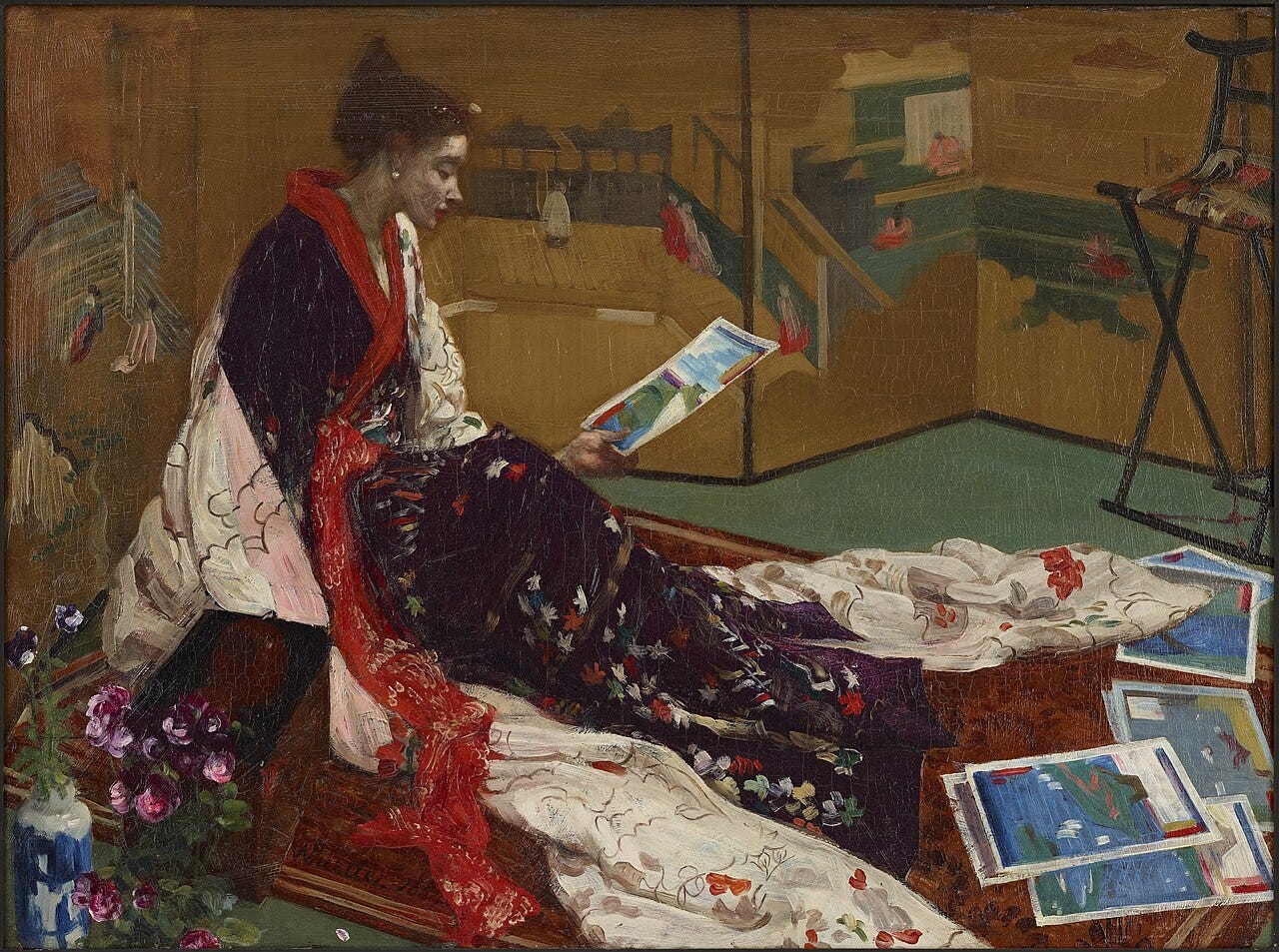
Alfred Stevens, La Parisienne japonaise, around 1872. James Tissot, Young Ladies Looking at Japanese Objects, 1869. James McNeill Whistler, Caprice in Purple and Gold: The Golden Screen, 1864. Vincent van Gogh, Portrait of Père Tanguy, 1887.Then, without noticing, they stop copying Japan.
They start to see the way it sees. And when they pick the brush back up, something has shifted in their hand. They hold a way of seeing that took them years to wrest loose, and they melt it into a painting of their own, until Japan disappears inside it.
And that painting is about to overturn Western art.
Here is how…