
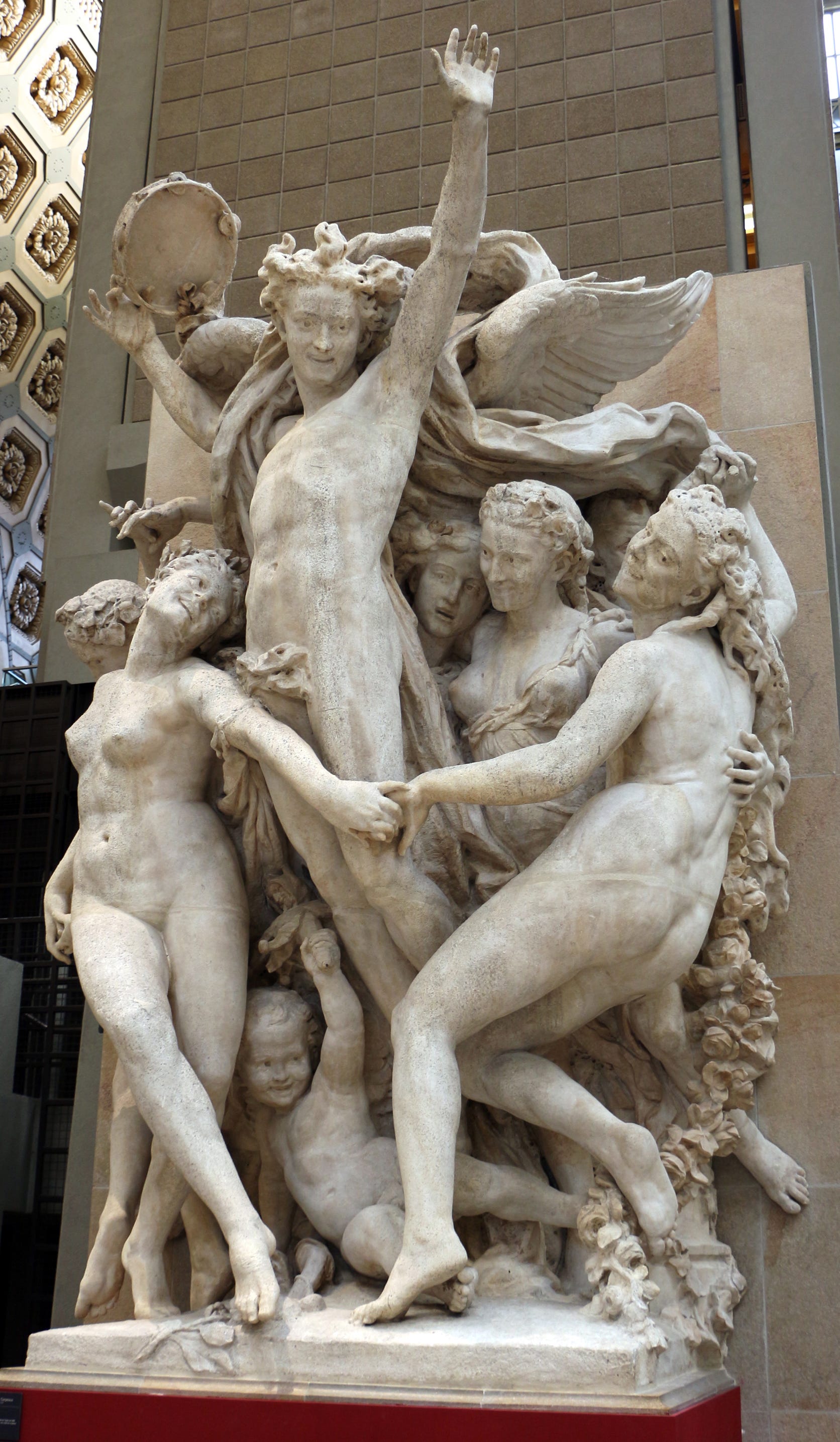
Jean-Baptiste Carpeaux (1827 to 1875) was a French sculptor in the Paris of Emperor Napoleon III. He made statues that seem to move, like The Dance, a ring of dancing women carved for the front of the Paris opera house.
Cool Stories About Art is a newsletter to learn art the fun way.
Join 200,000+ readers and get:
10 new art stories / month
The entire archive of content (140+ articles)
Comment, ask questions, and chat with other readers
In the 1860s, Carpeaux worked for Napoleon III, the emperor of the French, and taught drawing to the emperor's only son. In December 1869, the government of Napoleon III decided to take The Dance down from the new opera house of Paris. Another sculptor, Charles Gumery, was asked to make a new one.
Jean-Baptiste Carpeaux was born on May 11, 1827, in Valenciennes, a town in the north of France, close to the border with Belgium. His father was a mason, a worker who builds walls of brick and stone, and his mother made lace.
At ten, the boy was sent to work for a plasterer, a craftsman who coats walls and molds ornaments in plaster. The next year, the family moved to Paris, where his father had found work on the new railroads.
In Paris, Carpeaux learned to draw at a free school for craftsmen, and in 1844 he entered the state school of fine arts. Its students competed every year for the Prix de Rome, the Rome Prize. The winner went to live and study in Rome for several years, at the expense of the state.
Carpeaux needed seven tries. At the first, in 1846, the judges found tracings on him, drawings copied through thin paper that no candidate was allowed to bring in, and they disqualified him. He won the prize in 1854, at twenty-seven.
Fifteen years later, Carpeaux finished a group of figures for the opera house that Napoleon III was building in Paris, a great theater for operas and ballets. He carved a ring of nude women who laugh and dance around a winged young man.
When The Dance was uncovered, in the summer of 1869, many Parisians found it indecent, and petitions demanded its removal.
Yet The Dance stayed where it was. What stopped an emperor's government from taking down a statue?
In the rest of the story
Why the Rome Prize director tried to stop one of Carpeaux's statues.
Which event of 1870 ended the plan to remove The Dance.
What someone threw at The Dance one night in August 1869.
Who signed a petition against a plan to move The Dance indoors.