
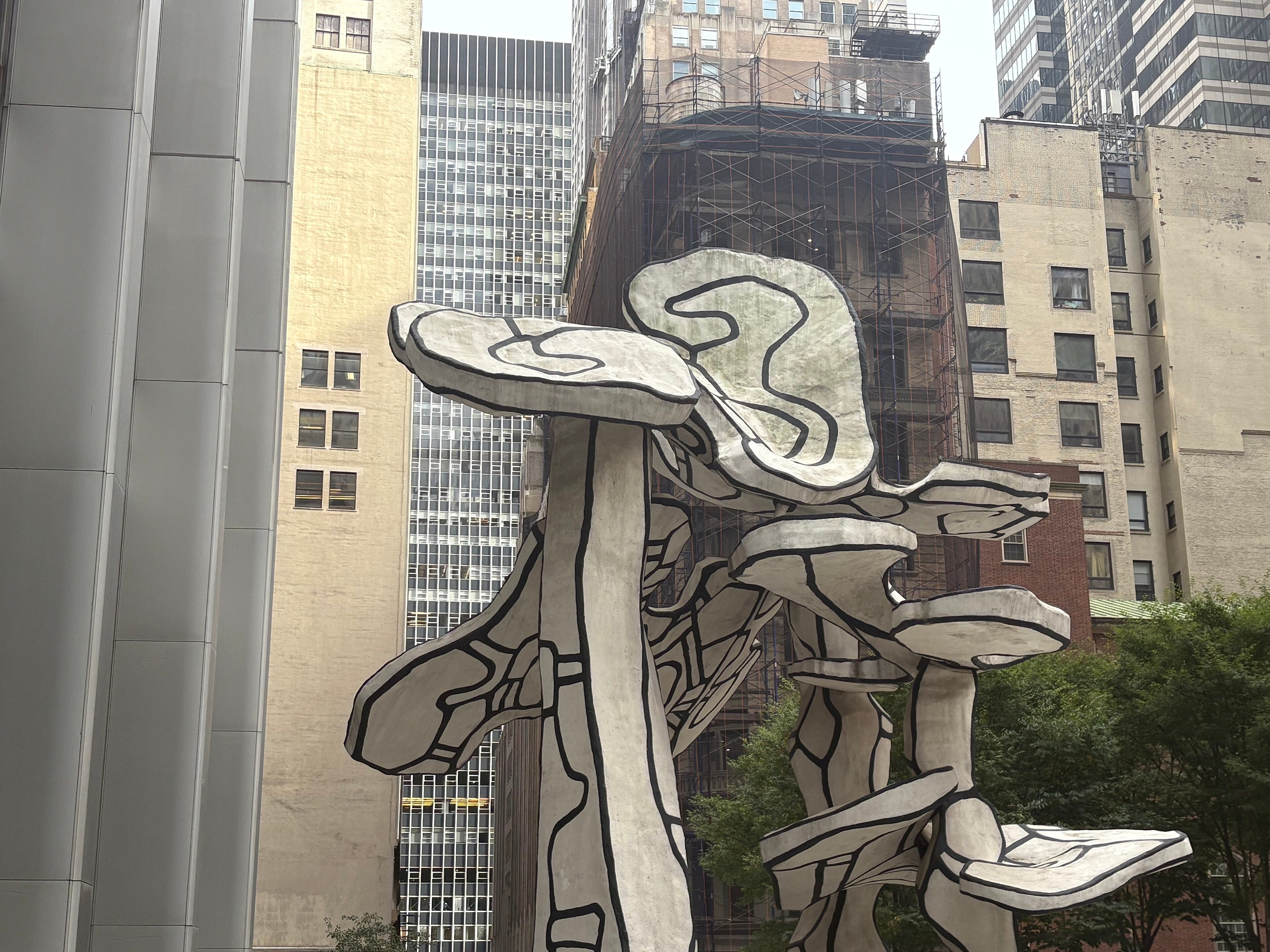
Jean Dubuffet was a French painter and sculptor, born in Le Havre in 1901, who died in Paris on 12 May 1985. He sold wine for much of his adult life, committed to art for good in 1942, and in 1945 began collecting the work of people with no artistic training, which he named Art Brut. He is remembered for that idea and for the Hourloupe, the red, white and blue labyrinths of his last decades.
When his first big show of thick, gritty paintings opened in Paris in 1946, students slashed two of the canvases. Dubuffet was 44. Four years earlier he had still been a wine merchant.
Cool Stories About Art is a newsletter to learn art the fun way.
Join 200,000+ readers and get:
10 new art stories / month
The entire archive of content (140+ articles)
Comment, ask questions, and chat with other readers
The show was called Mirobolus, Macadam et Cie. It ran at the Galerie René Drouin from 3 May to 1 June 1946, and its paintings were made of bitumen, gravel, tar, sand and broken glass, worked with knives and spatulas. One critic called him a painter of excrement. In the guest book, visitors drew swastikas and wrote that his art was decadent.
Dubuffet took the insults as proof that he was right. For the rest of his life he argued that culture, meaning the museums, the schools and the proper way to paint, was killing art instead of feeding it, and in 1968 he published a whole book on the subject, Asphyxiating Culture. He wanted art made by people whom no teacher had ever touched.
Then he did something odd. The man who despised museums spent decades collecting that untaught art, and he gave thousands of works to the city of Lausanne, which opened a museum for them in 1976. The enemy of culture had handed a city a museum.
What You'll Discover
Why a wine merchant became a painter.
What the critics could not forgive.
What he found in Swiss hospitals.
What a doodle turned into.
Why a car company went to court.
Where to walk inside his paintings.