
Jean Fouquet was a French painter, born around 1420 in Tours, in the Loire Valley, who died between 1478 and 1481. One of the leading painters of the 1400s, he painted portraits on wooden panels and tiny pictures for books copied by hand.
Jean Fouquet is best known for his portrait of King Charles VII, in the Louvre, and for the prayer book he painted for the king's treasurer, Étienne Chevalier. Forty of its pages are kept at the Château de Chantilly, north of Paris.
Fouquet painted a pope in Rome, then worked for two kings of France. Yet in the 1800s, his portrait of Charles VII was listed as the work of an unknown Greek painter, and another of his portraits passed for a work by Albrecht Dürer, the great German painter.
Cool Stories About Art is a newsletter to learn art the fun way.
Join 200,000+ readers and get:
10 new art stories / month
The entire archive of content (140+ articles)
Comment, ask questions, and chat with other readers
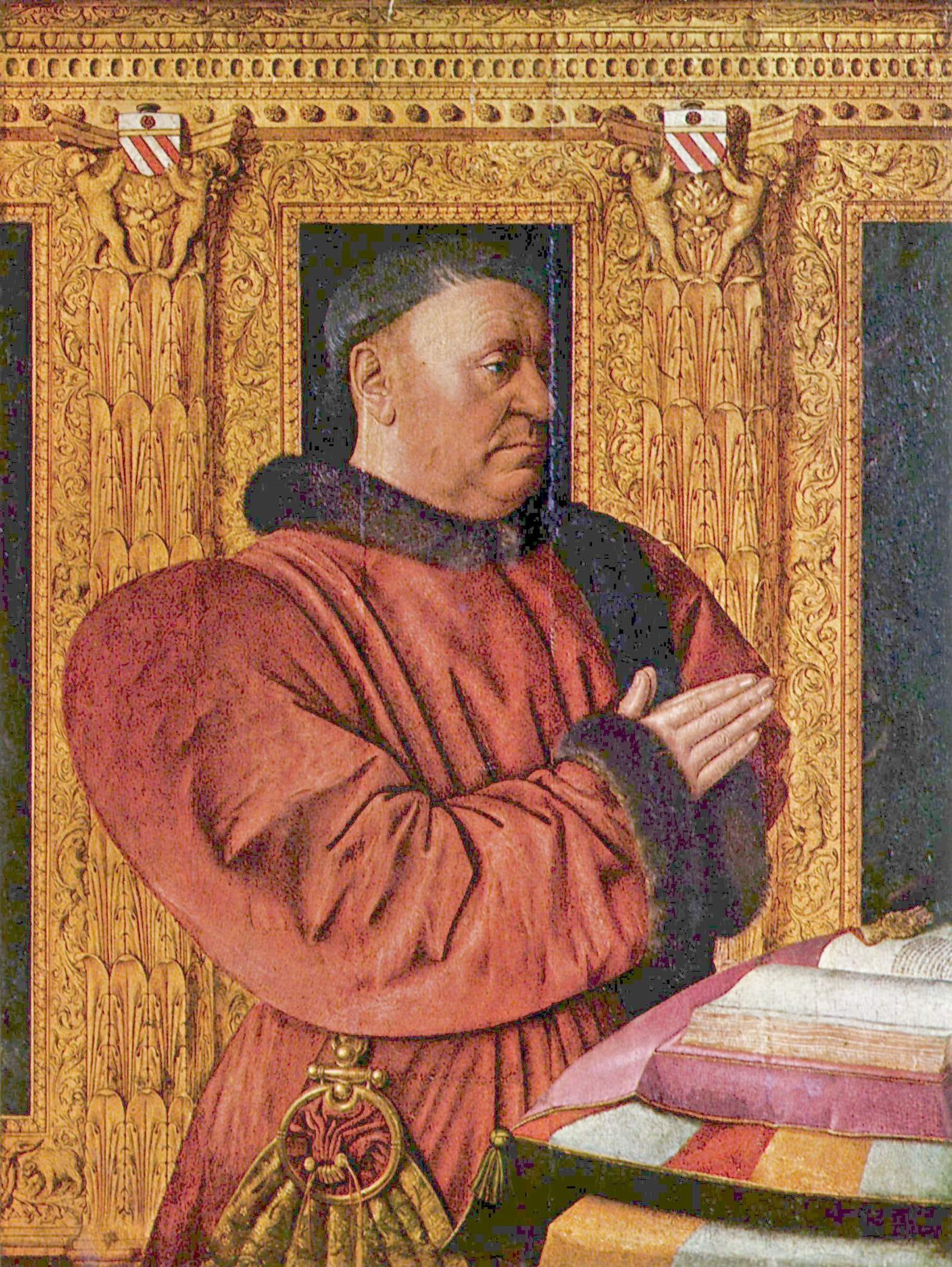
Jean Fouquet grew up in a country at war. For almost a hundred years, the kings of France and England had fought over the French crown, in what is now called the Hundred Years' War, and the English held Paris.
Fouquet was still a boy when the war turned. In 1429, a peasant girl from Lorraine, Joan of Arc, rallied the French troops, and the heir to the French throne, Prince Charles, was crowned King Charles VII in the cathedral of Reims. Seven years later, the king's men took Paris back from the English.
Almost nothing is known about Fouquet's youth. He probably trained as an illuminator, a painter of miniatures, the small pictures that decorated books copied by hand.
In the mid-1440s, Fouquet, then in his twenties, traveled to Rome, the capital of the Catholic Church. There he painted the head of the Church himself, Pope Eugene IV.
The portrait of the pope is lost. It survives only through later copies and an engraving of the 1500s. Yet in Italy, the young Frenchman was remembered. Around 1465, an Italian architect named Filarete praised the French painter Fouquet in a book as a master at painting people from life.
In Italy, Fouquet saw painters using perspective, the rules that make buildings and bodies look deep on a flat surface. He carried that lesson home to France, where the king, his treasurer and great lords would soon want his work.
How did a painter of a pope and two kings of France end up with his finest portraits filed under other men's names?
In the rest of the story
The prayer book a king's treasurer ordered, and what happened to its pages.
A royal trial painted with about 150 people.
The Duke of Nemours, who owned a book Fouquet painted, and his fate in 1477.
The tiny portrait where Fouquet wrote his own name, and where it turned up again.