
Jewellery in portraits is rarely decoration. It is a contract, a bill of sale or an alibi. The most famous pearl in painting is probably not a pearl, one necklace helped bring down a monarchy, and Tudor sitters are still identified by their pendants rather than their faces. Twelve of the faces behind those objects are gathered in a wider list of famous portrait paintings.
Before you look at the faces
The most famous earring in art is too large and too bright to be a real pearl.
A diamond necklace the queen never ordered helped destroy her reputation.
One Tudor pendant identifies its wearer more reliably than her face does.
Pearls meant purity, which is why brides and virgin queens are covered in them.
One empress wore diamonds sewn through her hair for an image she spent her life escaping.
Learn art the fun way
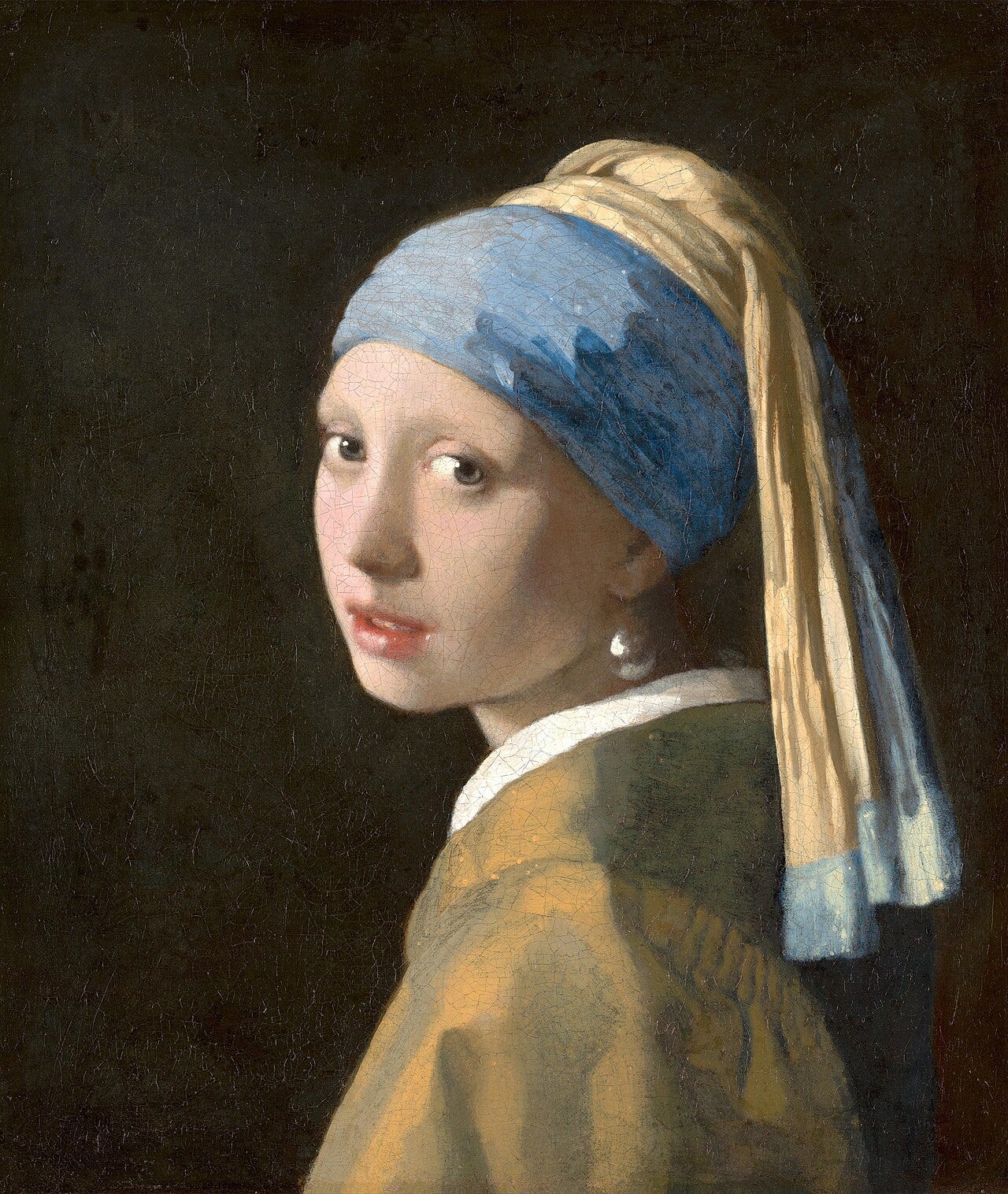
1 | Girl with a Pearl Earring, Johannes Vermeer (about 1665)
Two brushstrokes of white lead make the whole earring: one for the highlight, one for the reflection of her collar. There is no hook and no outline.
A pearl that size would have been among the largest in Europe. Most scholars now think Vermeer painted glass or polished tin. She is not a portrait but a tronie: what is a tronie.
2 | The Armada Portrait of Elizabeth I (about 1588)
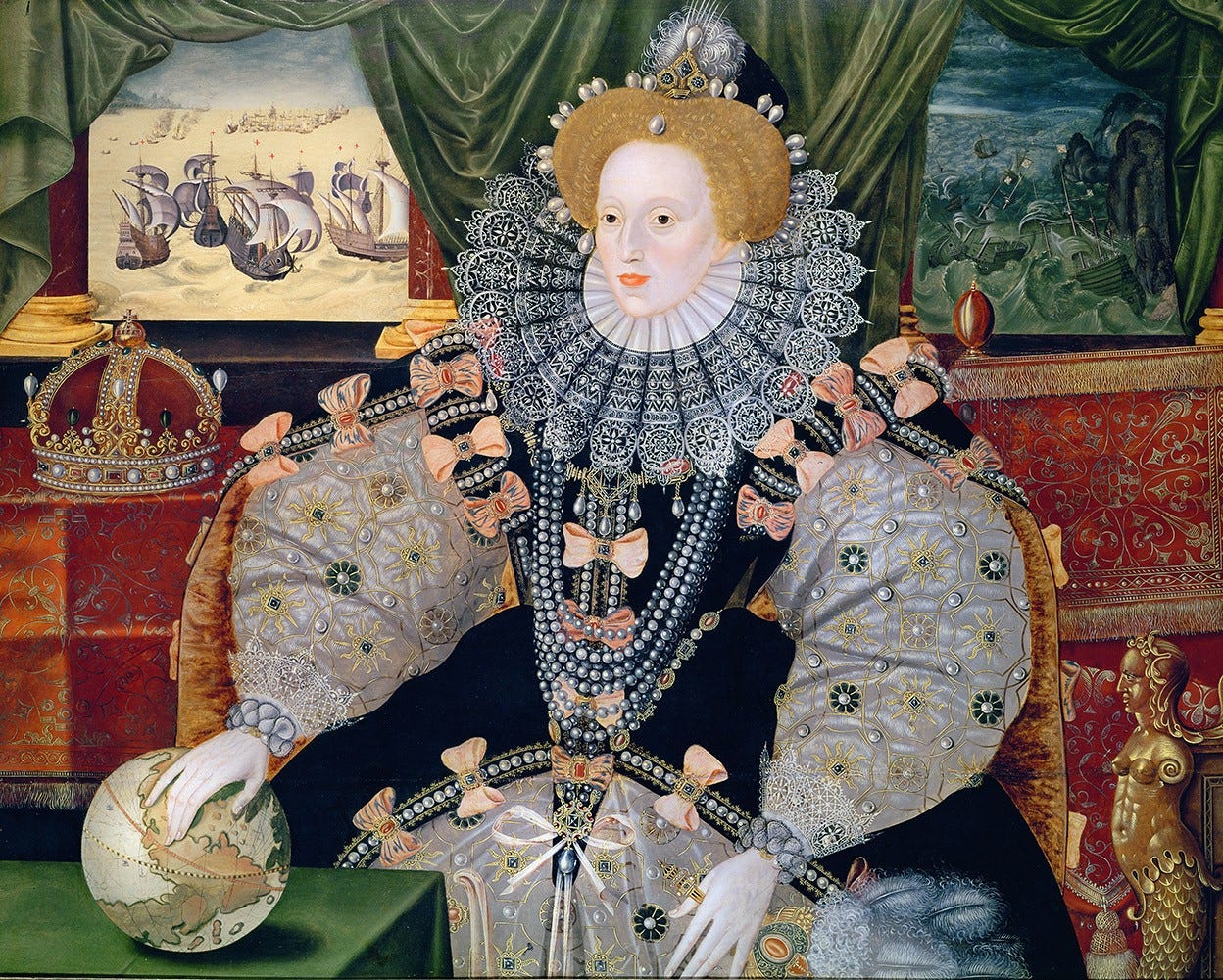
Ropes of pearls across the bodice, in the hair, hanging to the waist. Pearls meant chastity, and the queen who called herself the Virgin Queen wore them by the hundred.
The jewellery does the same job as the globe under her hand. More royal staging in famous paintings of kings and queens.
3 | Marie Antoinette and the necklace she never bought (1785)
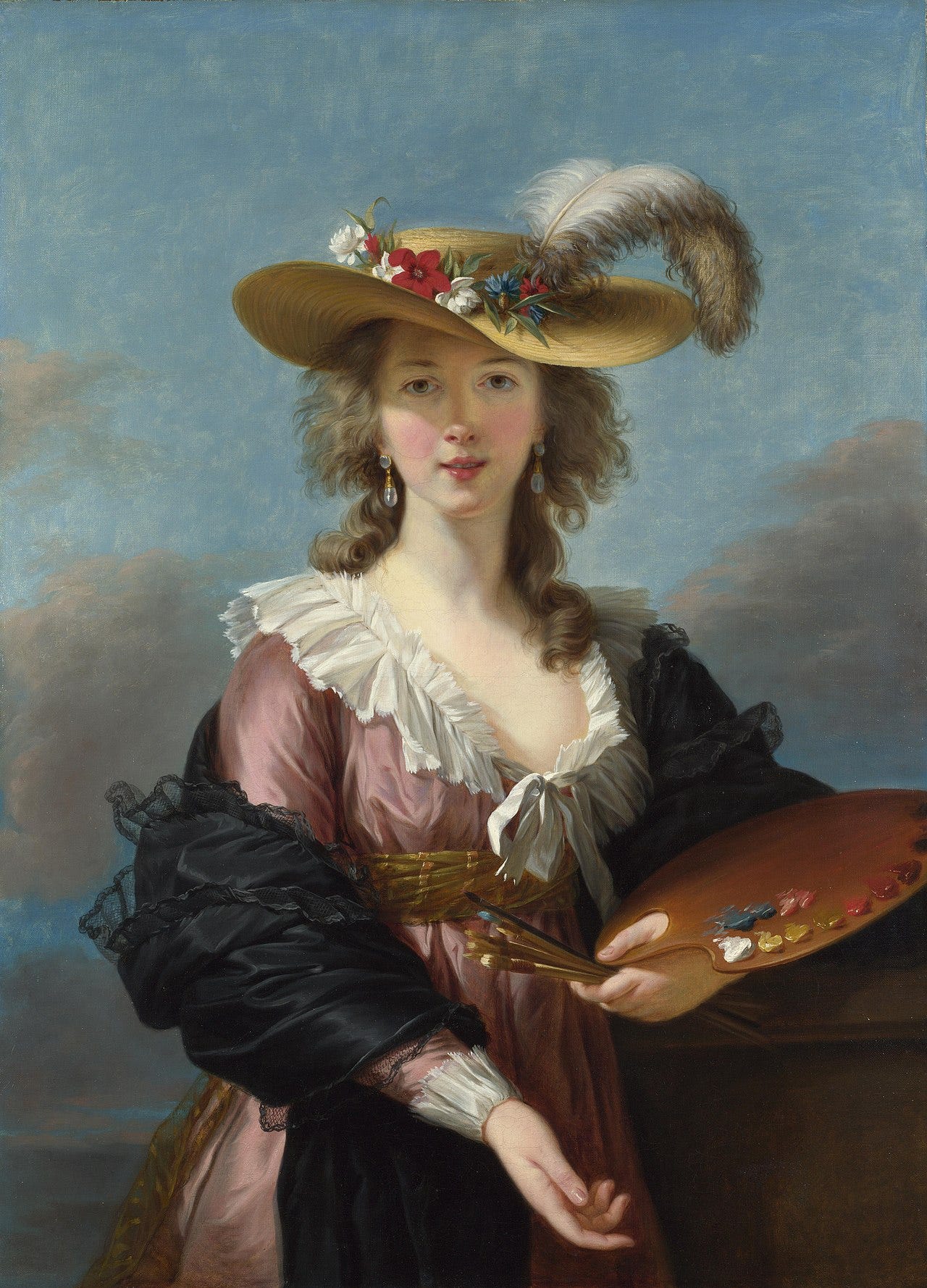
A diamond necklace of 647 stones, commissioned for a previous king, was obtained by a con artist using a forged signature. The queen had refused it and was blamed anyway.
Napoleon later said the affair helped bring down the monarchy. Her portraitist spent years trying to repair the image: Vigee Le Brun.
4 | The Arnolfini Portrait, Jan van Eyck (1434)
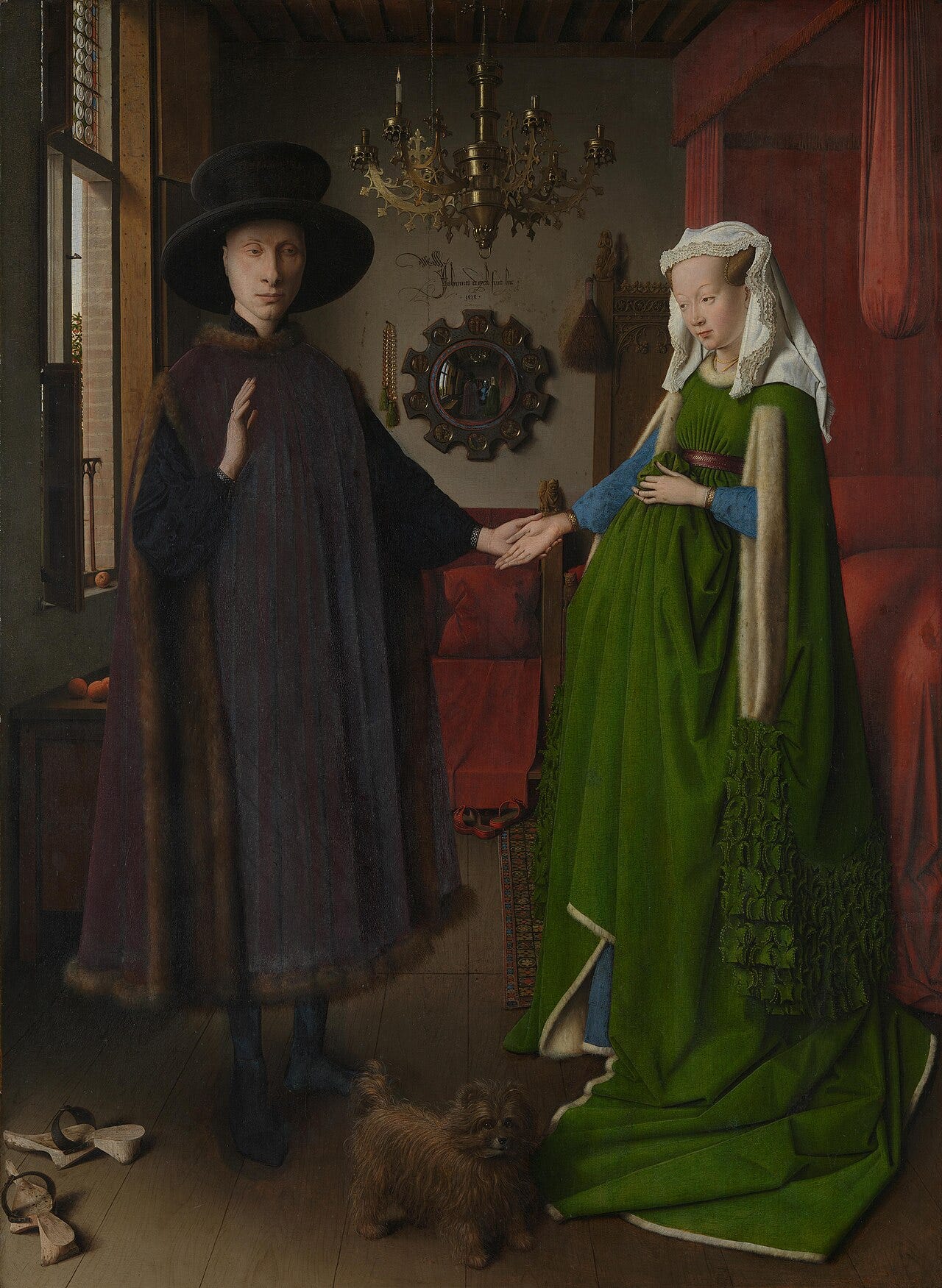
Almost no jewels on the hands beyond a plain ring, but a brass chandelier, a mirror in a gilded frame and a rosary of clear beads hanging on the wall.
Van Eyck painted the wealth into the objects instead of the person, which was the Flemish habit. I go into it in the Arnolfini Portrait.
5 | Woman in Gold, Gustav Klimt (1907)
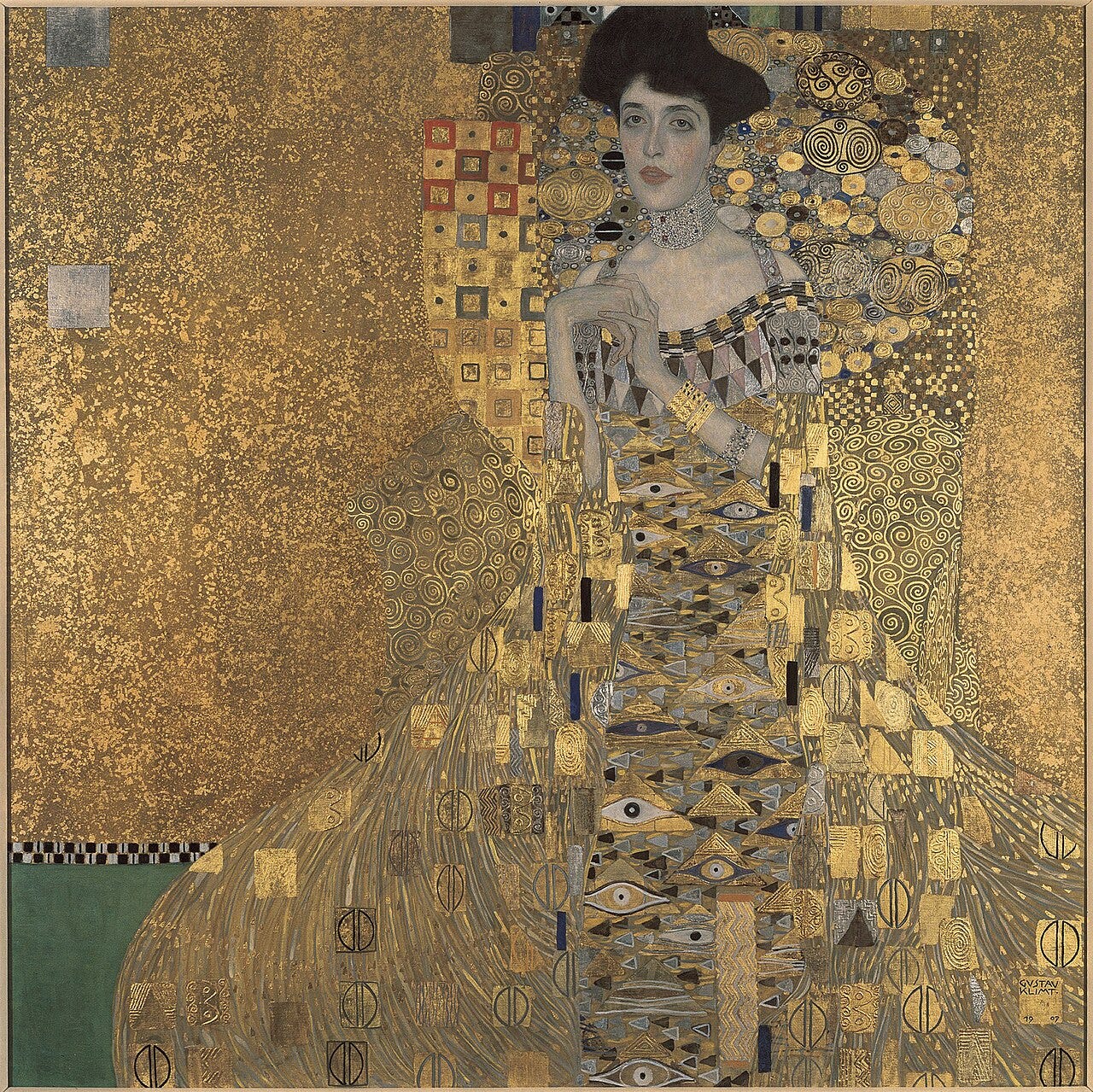
Adele Bloch Bauer wears a diamond choker given by her husband, painted inside a field of gold leaf so dense the body nearly disappears.
The Nazis seized the portrait and the real choker. The legal war that followed is in Klimt’s Woman in Gold.
6 | The Tudor court, identified by its pendants
Tudor portraits were painted to a formula, so faces repeat. Jewels did not, and curators still attribute sitters by the pendant at the throat.
Holbein drew several court jewels as designs before painting them worn. I cover him properly in Hans Holbein.
7 | Empress Elisabeth with Diamond Stars, Winterhalter (1865)
Twenty seven diamond stars pinned through floor length hair. The picture made Sisi the most admired beauty in Europe, a role she spent her life avoiding.
The stars were made by the Viennese jeweller Kochert and several survive today.
8 | Madame X and the fallen strap, Sargent (1884)
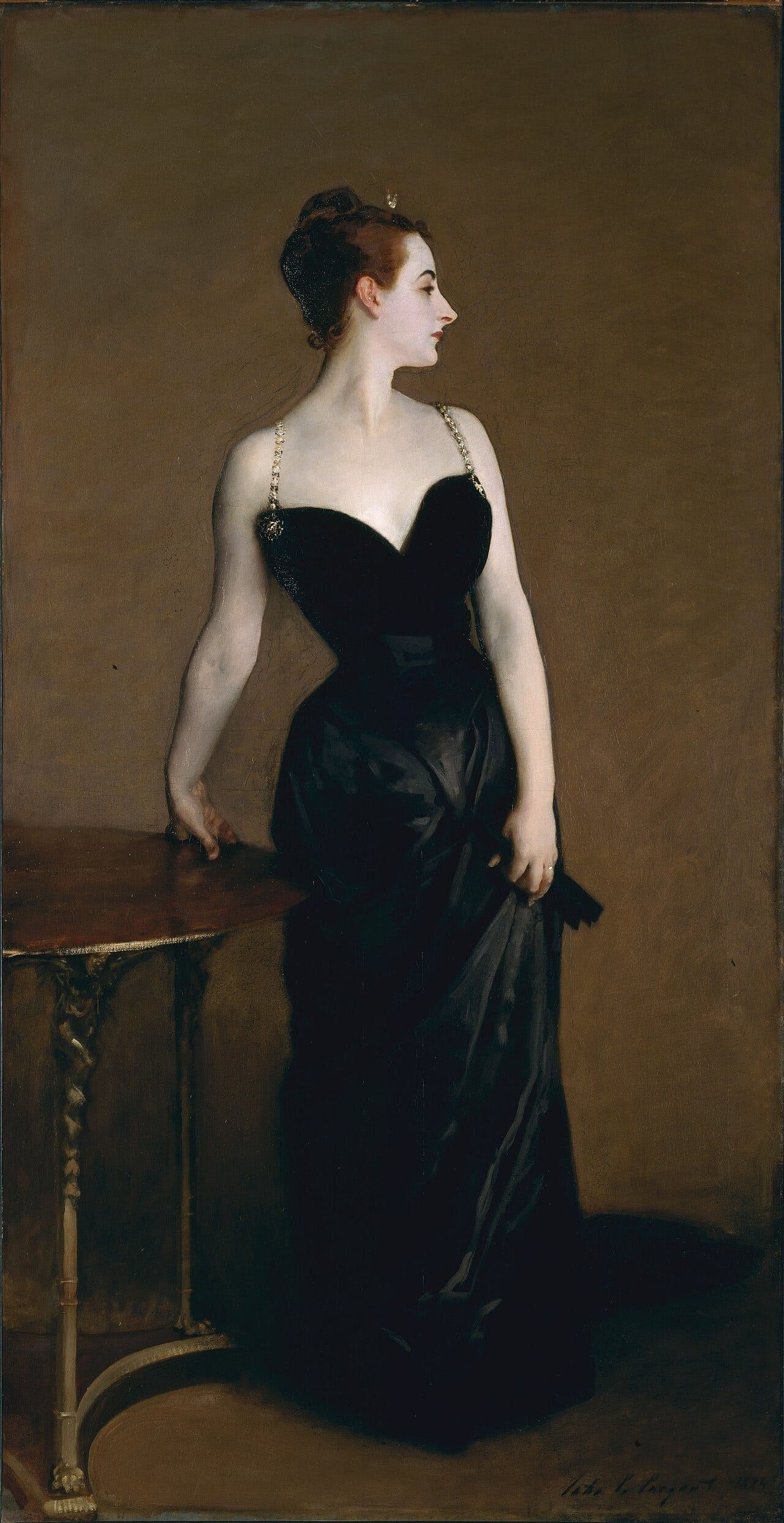
One jewelled shoulder strap, painted off the shoulder. Paris decided it was indecent, and Sargent repainted it upright after the Salon closed.
A single strap ended a woman’s standing in society. The whole affair is in Madame X, the scandal.
9 | The Jewish Bride, Rembrandt (about 1667)
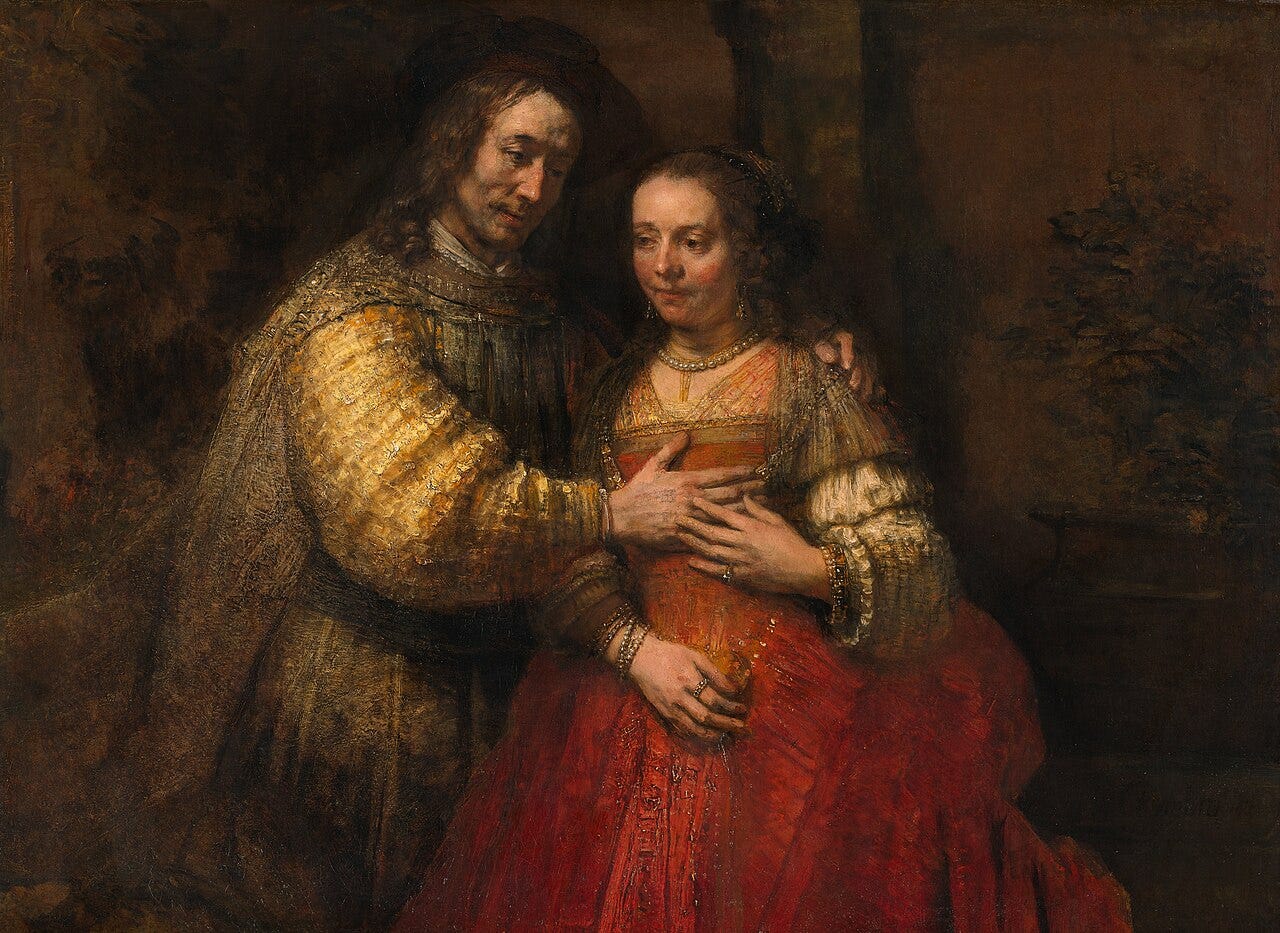
The bracelets and the gold sleeve are built in ridges of paint you could feel with a fingertip. Van Gogh said he would give ten years of his life to sit in front of it for a fortnight.
Rembrandt painted jewellery as matter rather than sparkle. More on him in Rembrandt.
10 | Frida Kahlo and pre Columbian stone
Kahlo wore heavy jade and obsidian pieces from ancient Mexico in almost every self portrait, and in one they become thorns cutting into her neck.
The jewellery is a statement about which heritage she claimed. Her story is in Frida Kahlo.
11 | The Ambassadors and the badge of rank (1533)
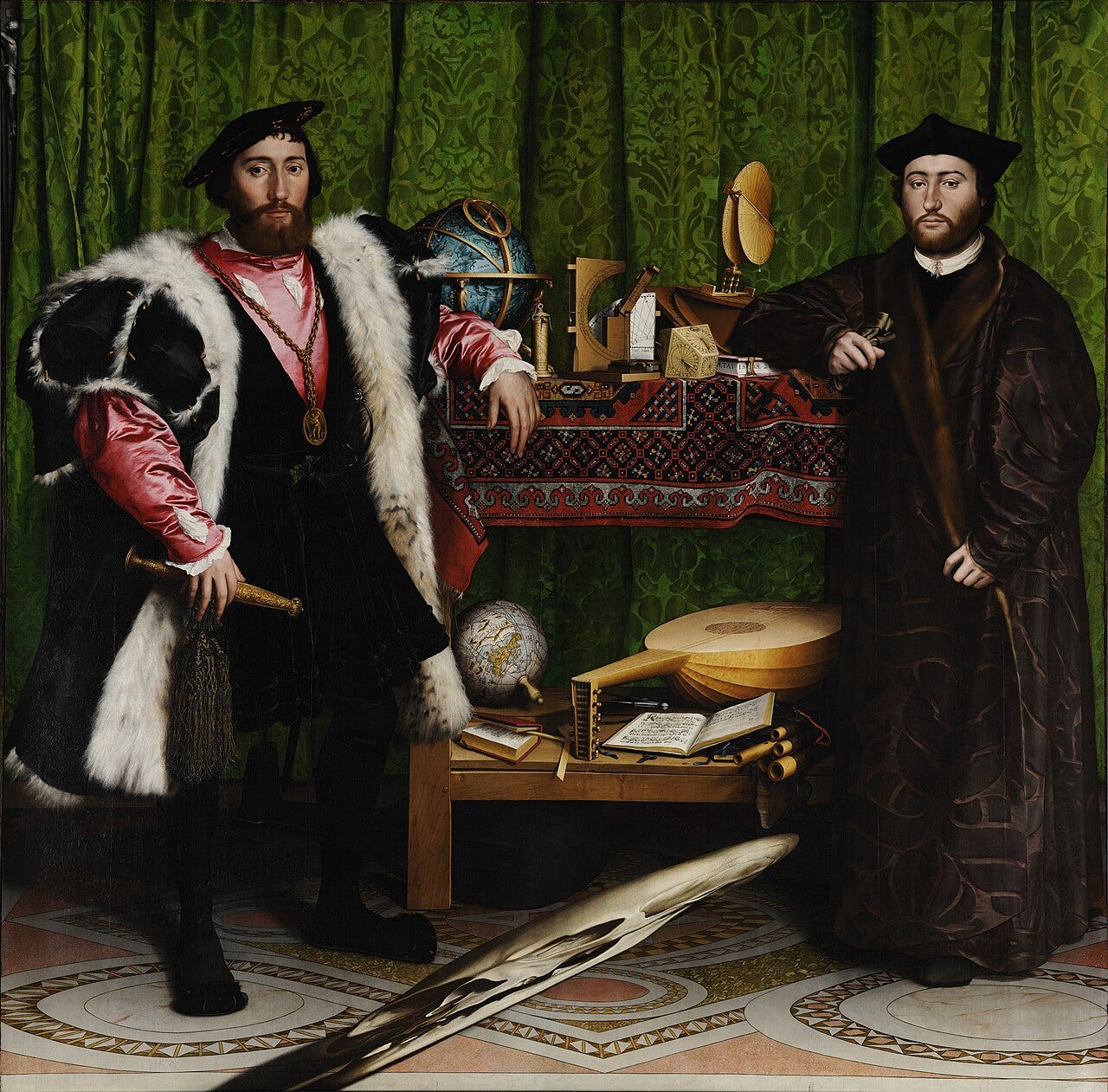
Jean de Dinteville wears the badge of the Order of Saint Michael on a gold chain, which told any contemporary viewer his exact standing in a glance.
Every object on that shelf is coded, including the skull on the floor. I go into it in The Ambassadors.
12 | Mourning jewellery and the hair of the dead
Victorians wore rings and brooches containing the woven hair of a dead relative, and portraits show them being touched rather than displayed.
It is the only jewellery in art meant to be felt rather than seen. The wider culture is in memento mori.
Reading the jewels, common questions
Is the pearl earring a real pearl? Almost certainly not. A pearl that large would have been famous, and the paint suggests polished glass or tin.
Why so many pearls on Elizabeth I? Pearls signalled chastity. For a queen who ruled unmarried, they were political dress rather than jewellery.
Did Marie Antoinette buy the diamond necklace? No. She refused it. A con artist used a forged signature, and the queen was blamed for a purchase she never made.
Why does jewellery help identify old portraits? Faces were painted to a courtly formula, jewels were painted from the object. Curators still attribute sitters by their pendants.
Where is Girl with a Pearl Earring today? The Mauritshuis for the Girl, Greenwich for the Armada Portrait, the Neue Galerie for Klimt, the Met for Madame X.
Do gloves work the same way as jewellery in portraits? Often, yes, chosen as a deliberate signal rather than left on by accident. A separate piece on gloves in portraits explains why one glove is so often left off, and names the glover once accused of poisoning a queen.
Vermeer’s earring has no fastening. No hook, no lobe, nothing holding it. It floats, which is one reason historians suspect he was painting the idea of a pearl rather than one in front of him.
For the real objects beside the painted ones, the Met and the Rijksmuseum both hold court pieces.
This subject is one thread in a wider theme. See how it fits into Objects and Symbols in Painting.