
Johan Christian Dahl (1788 to 1857) was a Norwegian landscape painter, born in Bergen, a port on the west coast of Norway. He was the first Norwegian painter to win fame abroad.
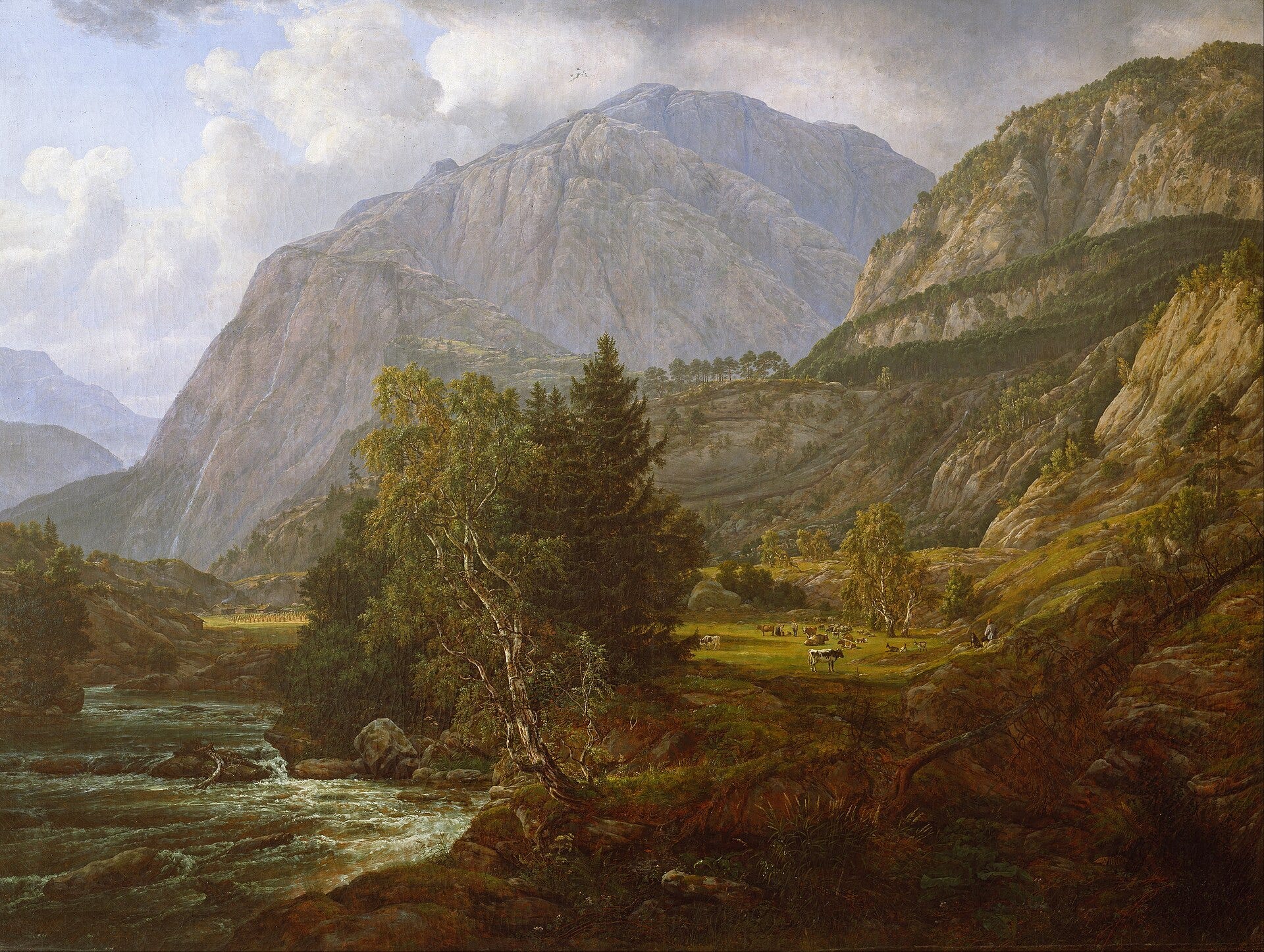
Dahl turned his country's wild mountains, waterfalls and storm-bent birch trees into large paintings, like View of Fortundalen and View from Stalheim. Norwegians call him the father of their landscape painting.
Yet Dahl left Norway at twenty-three and never lived there again. He spent his last thirty-nine years in Dresden, in Germany, seventeen of them in the same house as the German painter Caspar David Friedrich.
Cool Stories About Art is a newsletter to learn art the fun way.
Join 200,000+ readers and get:
10 new art stories / month
The entire archive of content (140+ articles)
Comment, ask questions, and chat with other readers
When Dahl was born, Norway was not a country of its own. Norway and Denmark formed a single kingdom, ruled by a king in Copenhagen, the Danish capital.
In Bergen, a schoolteacher named Lyder Sagen passed a list among his friends, the leading men of the town. He was raising money for a fisherman's son who wanted to become a painter.
The young man, Johan Christian Dahl, had spent six years in the main painting workshop of Bergen, painting theater sets and portraits. He later called them "almost years of slavery." Sagen had lent him books about art and talked to him about Norway's past.
The leading men of Bergen paid. In 1811, at twenty-three, Dahl sailed to Copenhagen and entered the Royal Academy of Fine Arts, the official art school of the kingdom, where he learned landscape by copying Dutch pictures of the 1600s.
While Dahl studied, Norway broke away from Denmark. In 1814, the Norwegians wrote their own constitution and chose a Danish prince, Christian Frederik, as their king.
Sweden, which had been promised Norway at the end of the Napoleonic Wars, won a short war, and after a few months Christian Frederik gave up the crown. Back in Copenhagen, the former king became Dahl's patron, buying his paintings, and his friend for life.
Still, Dahl did not believe he could ever live from painting in Norway, a country with "too few art lovers and works of art." In 1818, he left for Dresden, a German city famous for its picture gallery, meaning to stay a couple of years.
He would stay in Germany for the rest of his life. How could a painter who never lived in Norway again become the father of its landscape painting?
In the rest of the story, you'll find out:
why Dahl left for Italy the day after his wedding
why a church built around 1200 left Norway aboard a ship called Hope
how a book about Dahl helped bring back his forgotten neighbor, Friedrich
what stood on Dahl's easel on the day he died