
Sir Joshua Reynolds (1723 to 1792) was the leading English portrait painter of the eighteenth century and the first president of the Royal Academy of Arts in London. Knighted by George III in 1769, he painted some two thousand pictures of British society and taught the Academy's students in fifteen Discourses on art. He is also remembered for his paints, which faded and cracked.
He ran English art for twenty-three years, and the faces he painted are still losing their color on the walls where they hang.
Cool Stories About Art is a newsletter to learn art the fun way.
Join 200,000+ readers and get:
10 new art stories / month
The entire archive of content (1,000+ articles)
Comment, ask questions, and chat with other readers
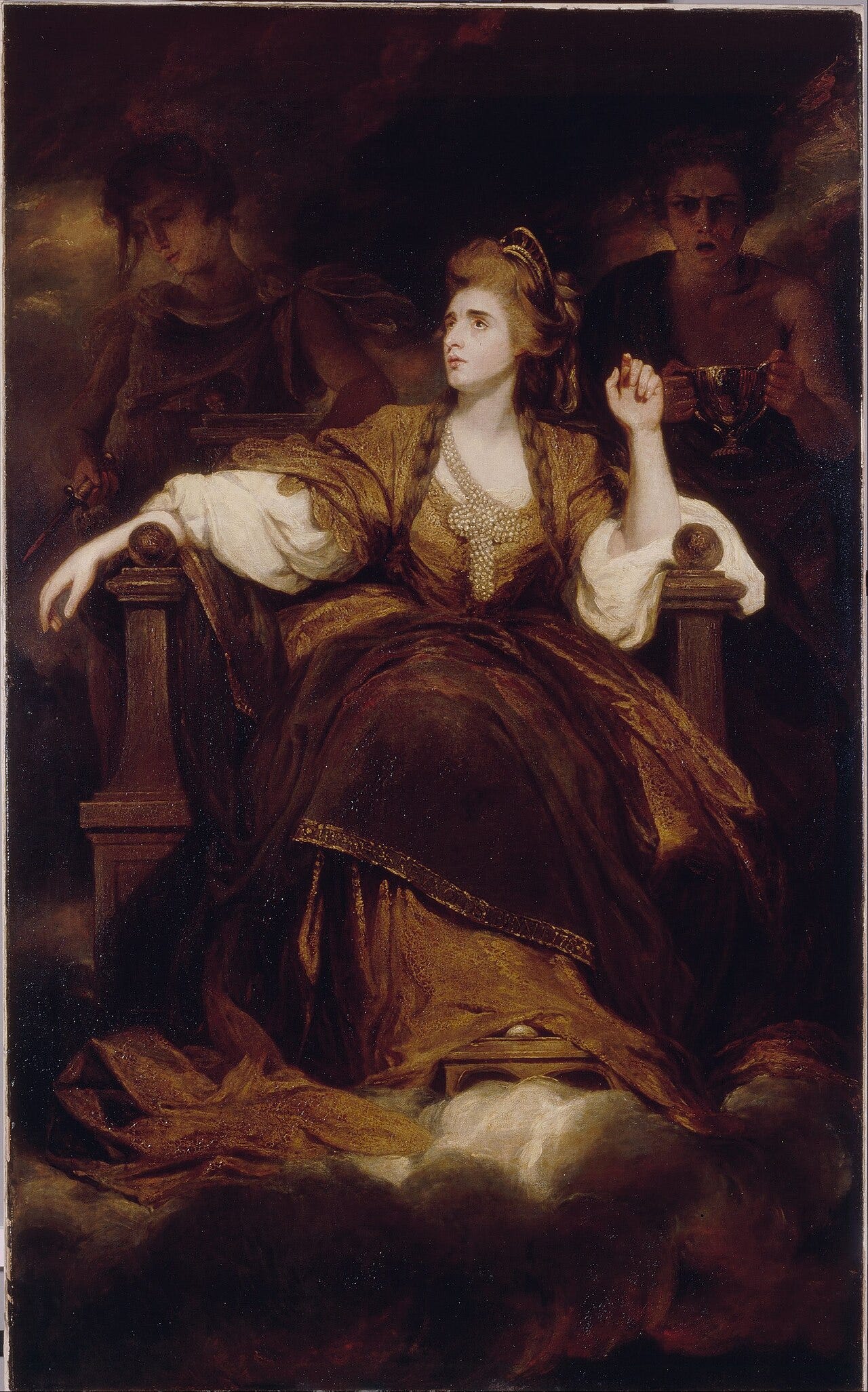
In 1784 the actress Sarah Siddons sat for him in London. Reynolds led her to the chair and asked her to take her undisputed throne, and she struck the pose at once: a queen of tragedy on an enormous seat, with Pity and Terror waiting in the shadows behind her. He gave Terror his own face, studied in a mirror.
Then he signed the picture, and not where painters usually sign. His name runs along the hem of her skirt: JOSHUA REYNOLDS PINXIT 1784. The painter James Northcote recorded the story as Siddons told it herself. Reynolds said he could not resist the opportunity of going down to posterity on the hem of her garment.
He got his wish, and the canvas has survived. Many of the faces he painted survived less well. Reynolds mixed his own colors and glazes to copy the glow of old paintings, and some of what he used proved unstable.
What You'll Discover
Where his deafness began.
Why he hesitated to lead.
What he taught every student.
What Blake scrawled in the margins.
Why so many faces faded.
What his rival wrote him.