
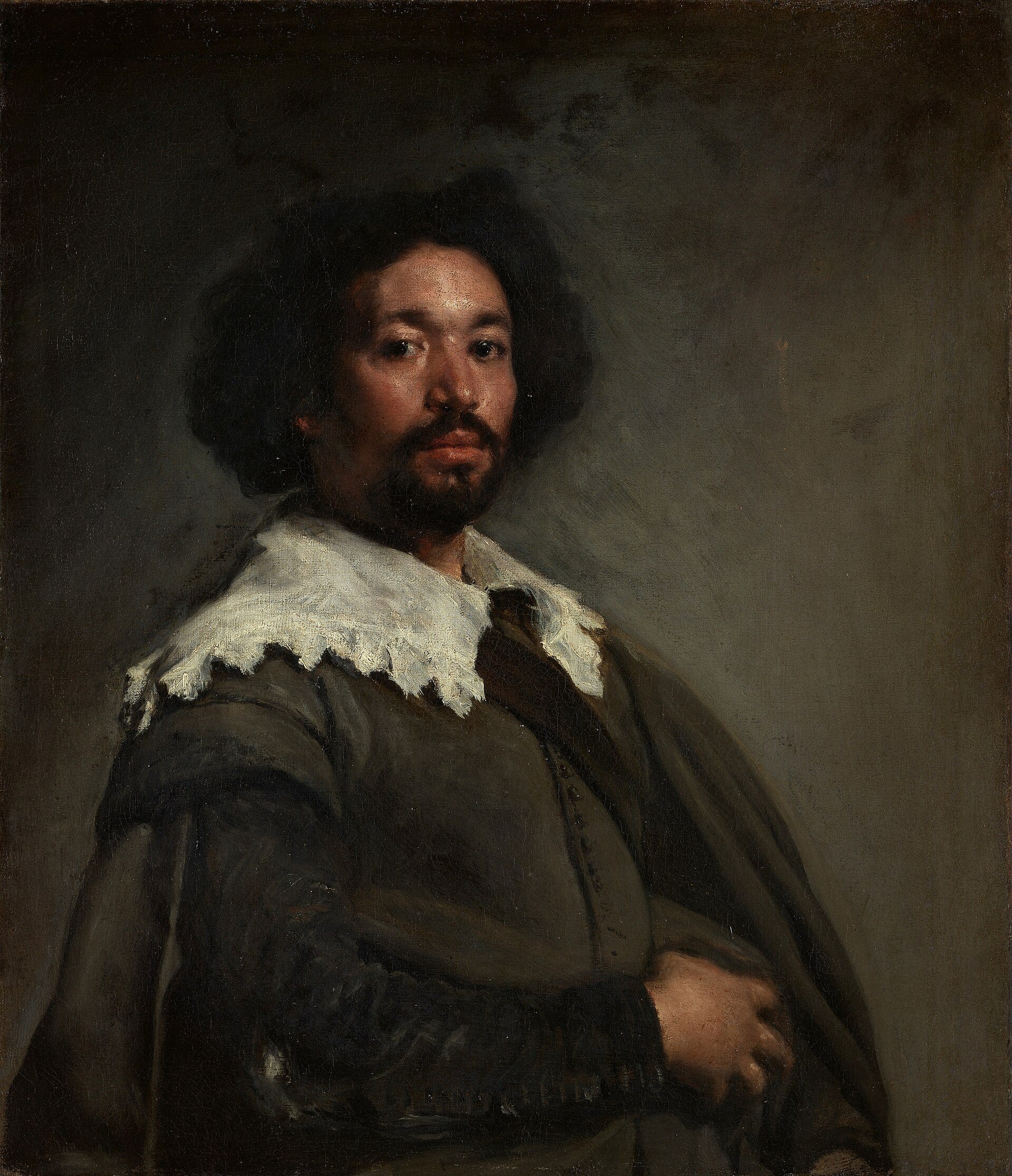
Juan de Pareja (born around 1608, died 1670) was a Spanish painter of African descent, enslaved for over twenty years by Diego Velázquez, the king of Spain's painter. Velázquez's portrait of him hangs in New York, and Pareja's own Calling of Saint Matthew in Madrid.
Cool Stories About Art is a newsletter to learn art the fun way.
Join 200,000+ readers and get:
10 new art stories / month
The entire archive of content (140+ articles)
Comment, ask questions, and chat with other readers
Velázquez painted his portrait of Juan de Pareja in Rome in 1650, and the painters who saw it there praised it above every other picture on show. The man in the portrait, enslaved by the painter who made it, later ran a workshop of his own in Madrid, a studio where he painted pictures to order.
Yet for more than two centuries after his death, Pareja was remembered mostly as the face in Velázquez's picture. Hardly anyone went looking for the paintings he had made.
Juan de Pareja was born around 1608 in the south of Spain, probably in the town of Antequera, north of Málaga. No document says how he came to be enslaved, or when and how he came into the household of Diego Velázquez, whether he was bought, inherited or given.
Velázquez, born in 1599 in Seville, a big port city in the south of Spain, became the painter of King Philip IV in 1623. In Madrid, the capital, where the king lived, Velázquez painted the king, the royal family and the nobles of the court.
Velázquez held Pareja in slavery, in his house and in his workshop. In the Spain of the 1600s, enslaved men and women worked in many painters' workshops in Seville and Madrid.
In the workshop, Velázquez had Pareja get everything ready for painting. Pareja stretched each canvas on a wooden frame and coated it with a first layer of paint. He also made the paints, and the varnish, the clear coat that protects a finished picture.
Pareja could also read and write. The first written traces of him, from the 1630s, already place him in Velázquez's household: he signed as a witness when Velázquez had legal papers drawn up by a notary, a public official who wrote and kept legal records.
Early in 1649, Philip IV sent Velázquez to Italy to buy paintings and ancient statues for the royal palaces. Velázquez took Pareja with him. The journey would last more than two years, and in 1650 both men were in Rome, the city of the pope.
How did the man who stretched Velázquez's canvases finally come to be remembered for his own paintings?
In the rest of the story
What the paper Velázquez signed in Rome really promised Pareja.
What the king of Spain is said to have found among the canvases.
What Pareja holds in his hand when he paints himself into a scene.
Who crossed the ocean in 1926 to look for Pareja's paintings.