
The Book of Judith was left out of the Hebrew Bible and of Protestant Bibles, yet its heroine has never stopped drawing artists. A young widow walks into an enemy camp and comes home with the general's head. Over five centuries, that story has served very different ends, from the political emblem of a city to a private settling of accounts between former lovers.
Cool Stories About Art is a newsletter to learn art the fun way.
Join 200,000+ readers and get:
10 new art stories / month
The entire archive of content (140+ articles)
Comment, ask questions, and chat with other readers
The Widow of Bethulia
The story itself fits in a few lines. Bethulia, a Jewish town, is besieged by the Assyrian army of King Nebuchadnezzar. Judith, a young widow, enters the enemy camp, and the general Holofernes invites her to a banquet in his tent.
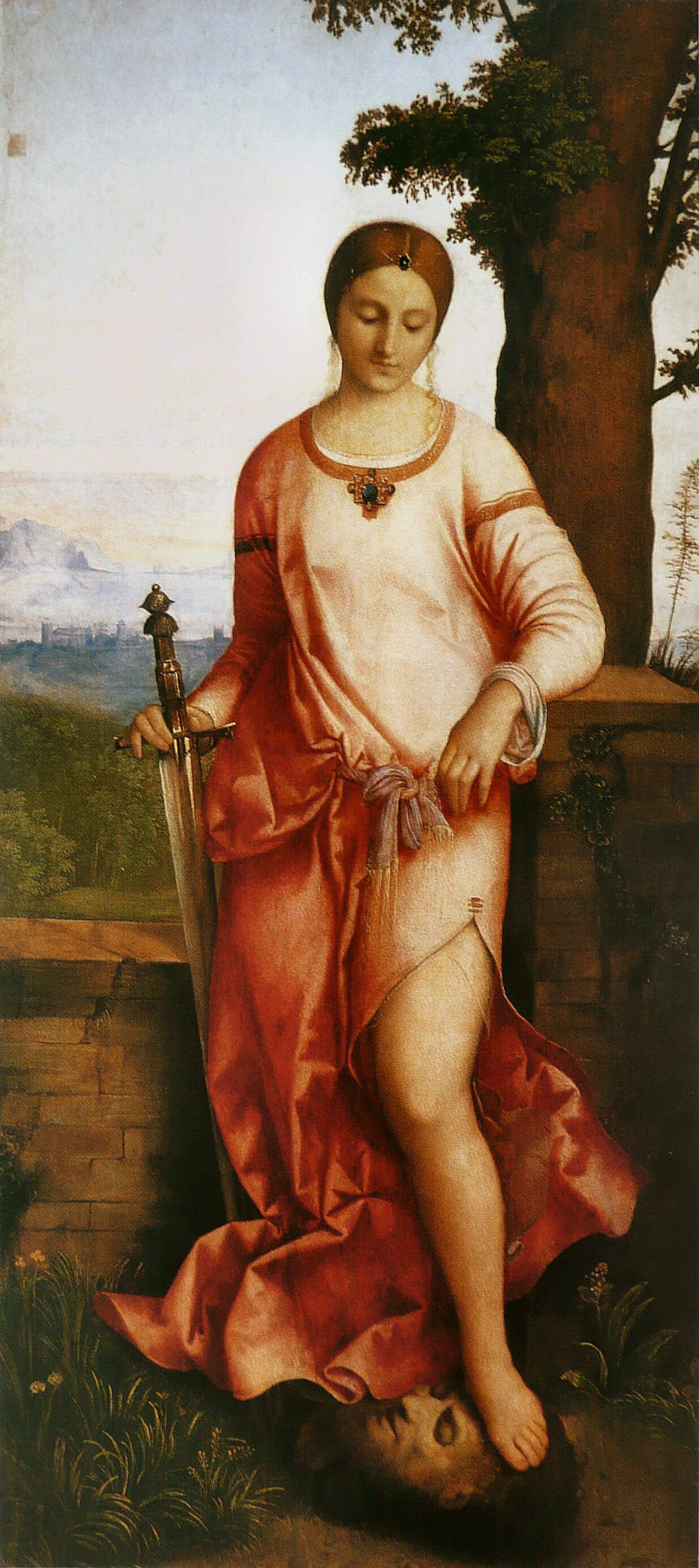
He falls asleep drunk, and she kills him with his own sword, then carries his head home in a sack with the help of her maidservant. For an artist, everything depends on the moment chosen: the feast, the blow, the escape, or the heroine standing calm after the deed.
That choice reveals what each artist thought of Judith. The versions people look for first sit beside others that are rarely shown, and each is told through one episode, in its making or in the way it was read.
12. Cristofano Allori, Judith with the Head of Holofernes (about 1610 to 1612)
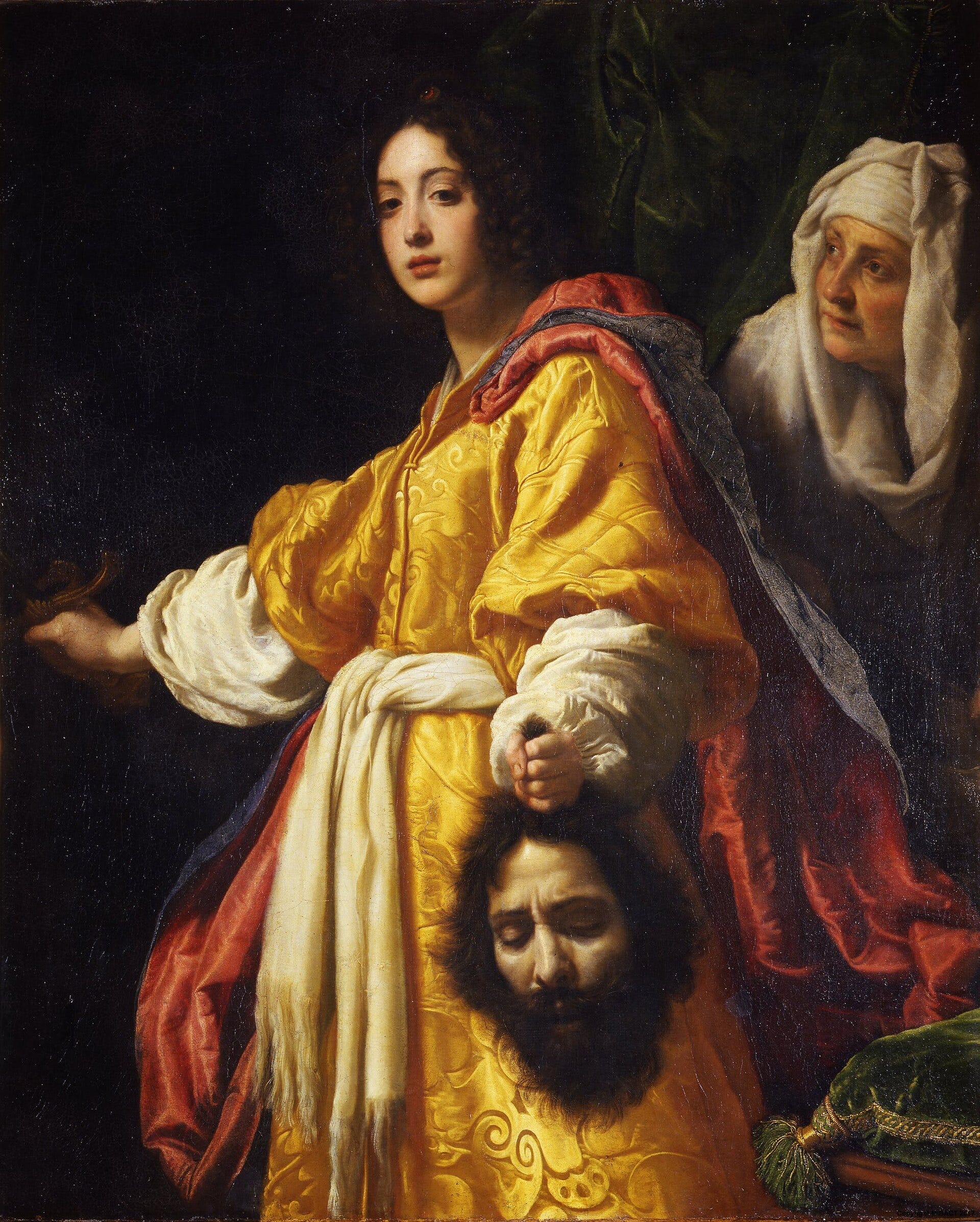
Judith wears a gown of gold and blue brocade. She carries a sword and the head of Holofernes, which she holds by the hair, and over her shoulder an old woman in a white headscarf looks up at her. All three faces were taken from real people.
Cristofano Allori painted the picture in Florence between 1610 and 1612. The names of his models come from Filippo Baldinucci, a Florentine biographer who gathered the lives of the city's artists.
According to Baldinucci, Judith has the features of Maria di Giovanni Mazzafirri, known as la Mazzafirra, a woman with whom Allori had a love affair that ended badly. The old servant behind her is the Mazzafirra's own mother.
That leaves the head, and its features are Allori's. The painter cast his former lover as the heroine and her mother as the accomplice, and he kept for himself the part of the man they defeat.
His contemporaries did not miss the allusion. The poet Giambattista Marino saw a version of the picture in Paris and understood it as a page from the painter's own life. Allori and his workshop repeated the composition several times, with the same three faces in every copy.
At a Glance
Artist: Cristofano Allori (1577 to 1621)
Painted: About 1610 to 1612
Medium: Oil on canvas
Size: 139 × 116 cm (54.7 × 45.7 in)
Where to see it: Palatine Gallery, Palazzo Pitti, Florence (Education of Jupiter Room)
11. Rembrandt, Judith at the Banquet of Holofernes (1634)
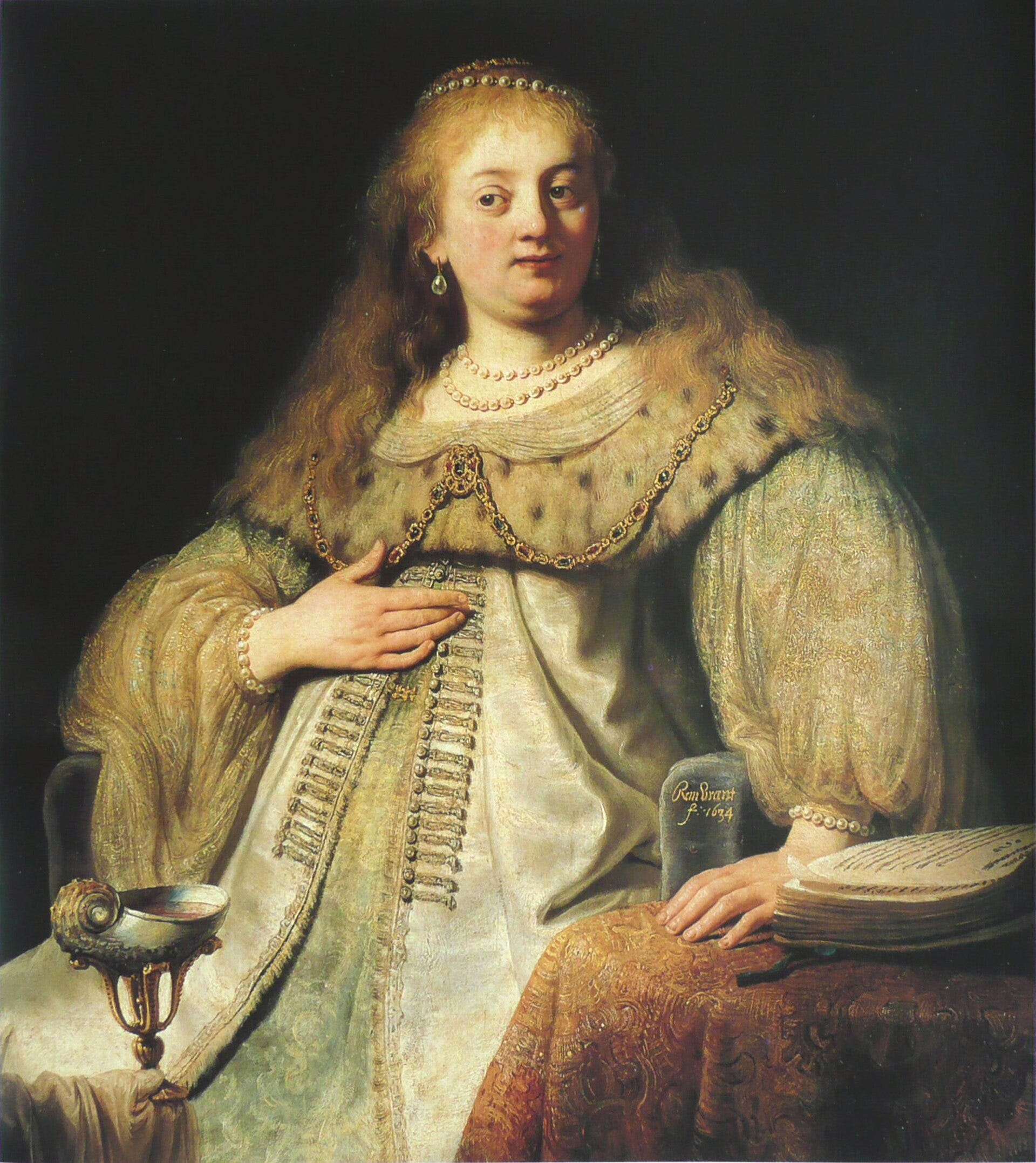
A young woman covered in pearls sits at a table laid with a carpet, one hand pressed to her chest, while a servant offers her a gilded cup. Rembrandt signed the canvas in 1634. Yet for much of the nineteenth century, in Madrid, she carried another name, Queen Artemisia, about to drink her dead husband's ashes from that very cup.